Friday, May 29, 2026

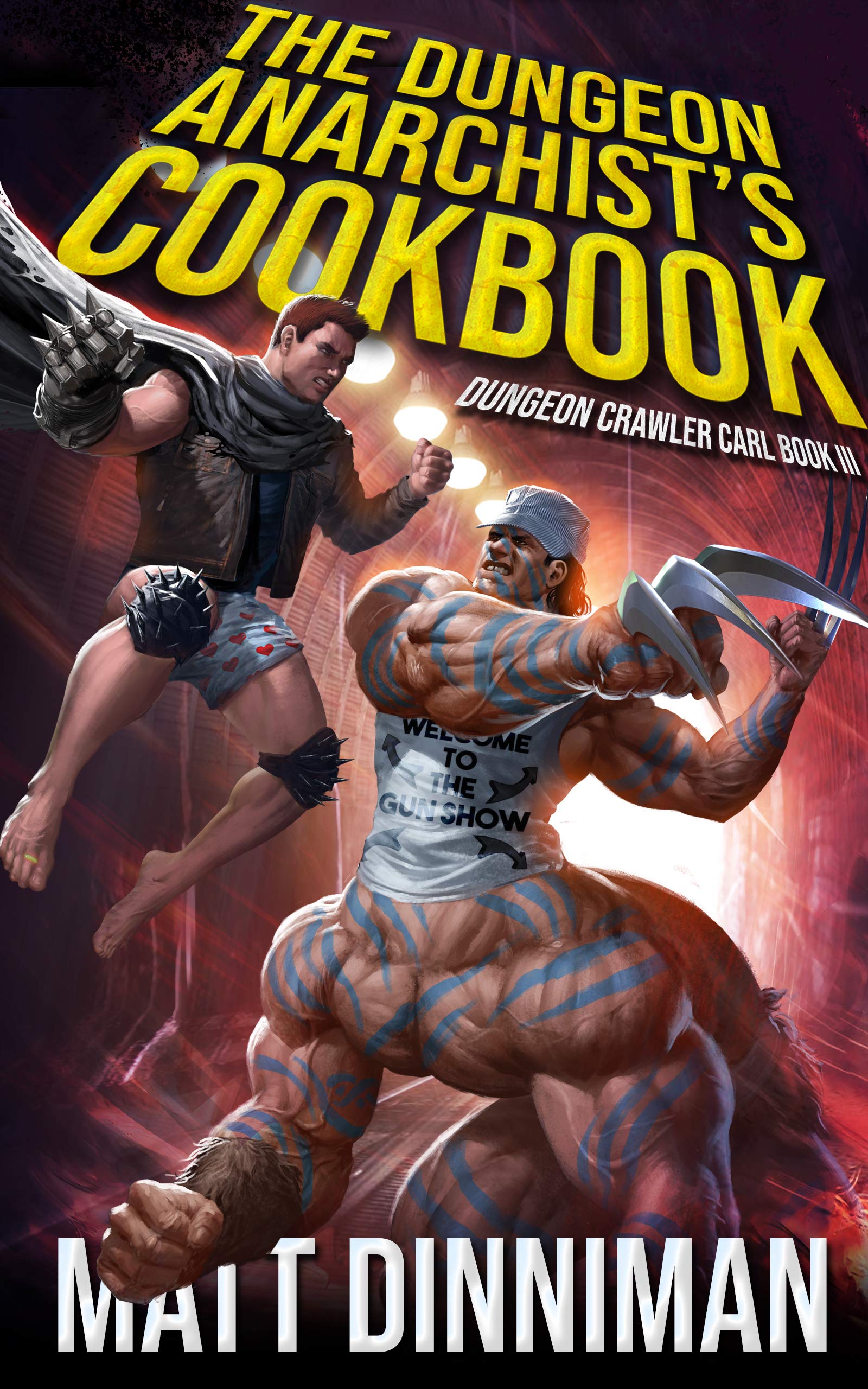
One Piece, Volumes 30-40 (Oda)

One Piece, Volumes 30-40, Eiichiro Oda, 1997-2003

(Not a review, just some notes to help me remember the things I've read. But written this way because it's the Internet, and some people will stumble across this page.)

Sometime in 2017, I made an entry for the first 29 issues of One-Piece. I read more after that, but I never made another entry. I guess I was waiting until I read another bunch of issues. For whatever reason, that didn't happen.

I will say that I took a break from the comic for a while because it did seem to drag quite a bit. This is by design. Manga unfolds slowly. But the pacing was really slow.

The break lasted long enough that when I started rereading sometime in the past year, I couldn't remember what issue I'd been up to. The first couple of guesses were incorrect. I had no idea because I hadn't posted anything. And yet I didn't fix this then, either.

Just recently, I finished Vol 41, and I'm starting volume 42. There are waits for the ebooks, but I got Volume 40-42 in one big book, so I had two choices.

In brief:

The Sky City arc finished and the Straw Hats come crashing back down to Earth -- or rather sea.

There's a short arc where the Monkey Go is challenged by another pirate to a Davy Back Fight where the losing ship must give a member of its crew to the winner.

And, finally, there's the Water 7 Arc with the Galley-La Shipbuilding Company, which is winding down, except that many people from the Water 7 arc carry over to the Eines Lobby arc and the rescue of Nico Robin.

Next update soon. Not nine years from now.


If you stumbled across my page via the Internet, please check out my short book series, Burke Lore Briefs. A fantastical foursome of flash fiction and short stories.

Thursday, May 28, 2026

Jen & Gary's Infinite (Quantum) Entanglements (Gregorio)

Jen & Gary's Infinite (Quantum) Entanglements
by Nick Gregorio (2026)


(Not a review, just some notes to help me remember the things I've read. But written this way because it's the Internet, and some people will stumble across this page.)

This book was a free Advanced Reader Copy from Library Thing. I'm encouraged (but not required) to leave reviews in exchange for the free books.

I've read my Book Club books (and the meeting was delayed because of the holiday), so I had time to catch up on other books. This should've been a quicker read but I didn't read it as quickly as I expected to. I couldn't point to any particular reason for this.

Still, I gave it five stars on Library Thing because I thought my quibbles were minor, and because I started the next book I won, which looks like it's going to be terrible. I seem to be a bit judgy with many of these Library Thing books. On the other hand, I haven't had the best of luck picking books based on the small descriptions. I would hope anyone looking at my reviews believes I'm being fair and consistent.

I'll probably give it four stars on Good Reads.


I left the following review on the Library Thing website:

Jen & Gary's Infinite (Quantum) Entanglements is a romantic sci-fi novel that doesn't take itself seriously... until it takes itself seriously so it can resolve the plot. When Gary tells Jen he loves her, the result sends him spiraling through the multiverse, landing in other versions of himself. But unlike, for examples, "Sliders" or the MCU, the worlds Gary lands in are occupied by dinosaurs, killer robots, living islands, and even crazier. And through it all, Jen is always there.

Running parallel to this, in yet another multiverse, Jen and Gari are a couple who watch over the multiverse. Gari knows its going to be a long night as she watches a version of herself tumbling through universes, wreaking havoc and leaving a path of destruction if they can't wrangle him and find a patch. Gary then procedes at a right angle to what he should do when it starts to get more serious.

The story is fun and enjoyable. If I could ding it for one thing it would be the overuse of parenthetical asides (the kind that can be funny while providing extra information (and which can be nested for humorous effect (and sometimes drop three levels deep))).


The fact that the first alternate Earth Gary landed in was a world of sentient dinosaurs, which had analogue identities to the people from his original Earth caught me offguard. I found it funny because he didn't start with something similar but a little different and then skirt off into ridiculous realms. It was there from the beginning. And if that didn't set the tone, jumping into killer robots solidified it. (To be fair, the robots had absorbed the identities of people they'd just killed.)

After this, we get Jen and Gari, who are overseers -- sort of like characters that I wrote about four or five years ago in a story that I need to get back to.

We find out that Jen and Gari is a gender-swapped universe, but Jen had a procedure to be female. This is the first instance where we see that Gary and Jen could work out together. We also find out that the original Gary was from a universe that actually did revolve around him, so when he professed his love for Jen in that world, it caused him to be propelled into null space and cause his universe to leak out into null. I never quite bought that explanation that he couldn't be with Jen in his universe.

If anything, I would've preferred seeing a bunch of different universe when something prevents them from being together until he finds one that works, or until he realizes why he's in his own way (so that there's character growth or an "arc").

Another quibbly thing: each section (not chapter) is label case file #001, #002, etc. But each world takes many of these case files, some of which are only a couple of paragraphs long. I will give credit that each case file has a title, even if it's just a sentence from one of the paragraphs. I don't know the purpose that those served.

Anyway, I enjoyed the book although I think it could've been better. I have to remind myself that these are ARCs and not final copies, so there will be typos, but occasionally I wonder if another round of editing mightve helped.


If you stumbled across my page via the Internet, please check out my short book series, Burke Lore Briefs. A fantastical foursome of flash fiction and short stories.

Wednesday, May 20, 2026

1634: The Baltic War (Weber / Flint)

1634: The Baltic War, David Weber and Eric Flint (2008)

I found a draft for this entry that was dated Jul 25, 2018.

I found it on May 18, 2026.

Apparently, I read this and never wrote it up. I honestly don't remember reading it. However, as I type this, I vaguely recall how this book had only half the cast of the previous books because this was the point where Flint started publishing multiple books per year -- year as in 1634.

What makes this discovery more amusing is that I picked up a copy of this at Philcon last November. Charles E. Gannon was doing a "coffee talk" that I attended and he had freebies that he gave away. Someone got the "Gazette" before I could reach it -- these have stories by various writers that are set in the world of the Ring of Fire, and some of these stories are incorporated into the main timeline. It's a way to find out what else is happening in the world without burdening the main books. Anyway, with that gone, I went with the book with the earliest date, so I could get to it sooner. It's sitting on my dresser, waiting to be read.

I guess I don't have to read it now.

The funny thing is that I wanted to read more of this series because it is interesting. There was too much of it to absorb to get to write for the shared world portion of it -- and now with Flint gone, I don't know what's going to happen with that anyway. But the books are thick, and it'd be a while before I could reread those first three books to get ready for book four. With a book club and Library Thing plus my own interests (and graphic novels), there just isn't time.

There isn't anything to add. I don't remember the book at all other than that I enjoyed it and planned to read more -- which I haven't done in the past six years.

Tuesday, May 19, 2026

Luminous Beings (Arnold)

Luminous Beings, by David Arnold, illustrated by José Pimienta (2024)

(Not a review, just some notes to help me remember the things I've read. But written this way because it's the Internet, and some people will stumble across this page.)

This was another graphic novel that I picked up at random at the library based on the cover. At this point, I'm looking for interesting panels that I can incorporate into a class slide presentation or worksheet or just something that I could recommend to the students.

This book isn't one of those things. I could use it as an example of poor dialogue placement, but I already have several of those. What I mean by this is that the tails of some word balloons go behind other word balloons to the point that you aren't sure who is speaking.

Other than that, I have no complaints about the layout, which seems to be standard with many graphic novels.

The book is about a "faux-pocalypse". They don't call it that. I just did. It looked like it was going to be about more than it actually was.

The story takes place over the course on one night. There are pink streaks coming out of the sky. Everyone is wearing hazmat suits, or "hazzies". The hoods have face masks that can be opened to use an inhaler (one character has for no stated reason, and it never comes into play) or to take a drink or just about any reason outside. Also, one guy (not shown) urinated behind a dumpster outside a club.

The only thing that this apocalypse seemed to do was turn all the squirrel into zombies with glowing red eyes that attack humans -- except that none are ever struck. The squirrels are always batted down and crushed behind someone's heel.

Of the four main characters, two are budding filmmakers, making a documentary about the squirrels, the end of the world, and a missing friend who went to live off the grid (and claim a reward for finding him). One of them has a secret -- she's decided to move away to go to Brooklyn College to study film-making. (Side note: I am a BC alumni, and I know that BC has one of the two best Film Departments in the city. The other is at NYU, which is about 10-20 times more expensive. One had Robert Redford as an advisor; the other had Paul Newman.)

The other two boys are friends and one of them secretly has a promise ring that he has to work up the nerve to give. As far as B stories go, it's pretty pedestrian. There are no complications, tension, drama in this.

The four follow a few clues and find the guy, who already knew the world wasn't actually ending but wanted to disassociate from the world anyway, and they make it back home by morning.

The artwork is pretty cool, primarily with pinks and purples for the night sky.

One scene that stands out was when two of them are in the club -- the boy who's 18 and the girl who's underage because the club lets in underage girls. The other two boys are outside (by the aforementioned dumpster). The couples are mixed, so everyone is free to spill what's on their mind. And here's were it goes wrong. The writer tries to do a movie trick of intercutting the two scenes and mixing the dialogue. This sometimes works in movies, because the jump cuts are obvious. It's less obvious here with the dark, near empty backgrounds with the "camera" close-up on whichever teen is speaking. It jumps from inside to outside back inside again to give the impression that the outside teen is responding to the inside teen's dialgoue. It doesn't work.

Luminous Beings was an okay read, and not something that I'll recommend. I wouldn't discourage anyone from reading it -- maybe it'll mean more to them.


If you stumbled across my page via the Internet, please check out my short book series, Burke Lore Briefs. A fantastical foursome of flash fiction and short stories.

Monday, May 18, 2026

The Parable of the Sower (1993)

Parable of the Sower
Octavia E. Butler (1993)

[AUDIO ONLY]

(Not a review, just some notes to help me remember the things I've read. But written this way because it's the Internet, and some people will stumble across this page.)

This was a random audiobook suggestion from Libby. I've heard of this book, and of Octavia E. Butler, but hadn't read it. For some reason, I thought this book was older. Then again, I find it hard to believe that 1993 was over 30 years ago.

The book is narrated by Lynne Thigpen. Normally, I don't pay attention to this, but I saw the name and remembered her from TV. She did a great job.

The timing of listening to this book was ironically amusing (it's not supposed to be). The setting is a dystopian California in 2026 where the poor huddle together behind walls for protection against the really poor who will rob, steal, burn, and kill to get want they need and take what they want. (They commit more unspeakable crimes to women as well.) Cops and firemen are next to useless, or worse. Criminals rarely get caught, and innocent people get punished.

In this instance, the country has been ravaged by climate change, wealth inequality, and social collapse. Climate change was a little ahead of its time in the early 90s, but it was typical scifi cannon fodder to set up a novel.

Jobs are hard to come by, particularly ones that pay cash. It's hard to imagine that there are still stores, and that those stores can be supplied, but they have security. Some jobs are basically indentured servants (paid in room and board, so you can never leave). And some pay in "company scrip" which can only be spent at the company store, and worthless elsewhere. The allusions to slavery are noted.

Lauren Olamina starts off as a 15-year-old. (She'll age at least three years over the course of the book.) She's also an empath. She has a condition, as others will have in the book, that she can feel other people's pain to the point where it can be debilitating. If she were to punch someone, she would feel it. This becomes problematic later on when she needs to shoot someone. She hides this condition.

The first part of the book sets up Lauren's home and family life and how bad it is. At the same time, she narrates her discovery of a new religion. She was baptised a Baptist, but she doesn't identify with that God. She writes poetry about her philosophy, which she calls Earthseed, and she refers to her writings as The Book of the Living (as opposed to the Books of the Dead).

People live together for safety. People who live alone are more likely to be robbed and killed (and raped). When a fire starts at one house, the community comes out to help, which leaves houses empty for thieves. Lauren wants to leave, and she has a to go bag. Her father says that to go bags are a bag idea because it puts everything valuable in one place for a thief to steal quickly.

The book switches gear when the really poor, the homeless, attack and burn down the entire community. It's their way of sticking it to the rich. No one here is rich, but some are richer than others.

Lauren escapes with her bag and then returns the next day along with the looters to get more of her stuff. She can't find the rest of her family, who she hopes escapes but comes to belive they're all dead.

The rest of the book concerns escaping and traveling north, trying to find someplace safe. The roads are dangerous and so are the towns. Getting into Oregon will be difficult and getting into Canada would be nearly impossible. Lauren and others that can be trusted try to form a larger group for safety as they travel north.

I enjoyed listening to this. I don't know if I would've stuck with it were I reading it.

I might listen to the sequel at some point.


If you stumbled across my page via the Internet, please check out my short book series, Burke Lore Briefs. A fantastical foursome of flash fiction and short stories.

Friday, May 15, 2026

Remote, Volume 02

Remote, Volume 02, by Seimaru Amagi and illustrated by Tetsuya Koshiba (2005)

(Not a review, just some notes to help me remember the things I've read. But written this way because it's the Internet, and some people will stumble across this page.)

I couldn't find the correct cover online, so I posted the one above from an eBay auction. It looked better than the photo I took.

I believe I found this book in a Little Free Library although I suppose it could've come from Philcom. I saw it was volume 2, but I figured there would be a recap to bring me up to speed. Not really, just a description of the two main characters.

As with all graphic novels I find (and the ones that are donated), I flip though them before I put them into my library. Like Crazy Food Truck, this one had nudity in the first few pages as the young woman from the cover steps out of the shower. Unlike CFT, she's only naked this one time. Unlike CFT, this manga gets its kick with unnecessary, gratuitous upskirt shots. This is a specific camera angle used multiple times, instead of just showing the woman in her underwear or a skimpy bathing suit. If anyone wants to discuss my concerns offline sometime, come find me, possibly at the next convention. (Also, to highlight the fact that she's wired, there is only panel where her clothing is transparent but her body and underwear are not grayed out.)

The crux of the matter: this book is not going into the rotation in my classroom. It's going back into a Little Free Library in my neighborhood -- and not the one in front of the K-5 school!

Kurumi Ayaki is a police officer who is assigned to an elite unit in charge of solving crimes that have been classified as unsolvable. She does the legwork for Kōzaburō Himuro, a recluse, a "guy in the chair", who lives in the basement of his manor and doesn't come out. He's a genius with a tragic, traumatic past.

There are 9 or 10 chapters (I forget) in this book. The first few are dedicated to the crime from the first book, which gets solved here. This segues into a second crime involving students from a local high school. Ayaki goes to investigate -- to ask questions while her boss feeds her questions. While she's there, the school is threatened will bombs in the building, so Ayaki goes under cover as a new student, which catches the interest of a number of possible suspects. (The calls are coming from inside the school.)


If you stumbled across my page via the Internet, please check out my short book series, Burke Lore Briefs. A fantastical foursome of flash fiction and short stories.

Thursday, May 14, 2026

The Case of the Culvert Puppies (Olis)

The Case of the Grounded Ferry
by Thomas Olis (2026)


(Not a review, just some notes to help me remember the things I've read. But written this way because it's the Internet, and some people will stumble across this page.)

When I won "The Case of The Grounded Ferry" a few months ago, the book wasn't ready. The author, Tom Olis, emailed me his first two books in the series to read in the meantime. I actually wasn't planning on doing that. And after reading book three, I wasn't in a hurry to read book one. However, ...

Sometimes the stars align. I'm in between book club books at the moment. I hadn't started another Library Thing book yet. And my reading goal "scavenger hunt" type list includes two entries for two books written by the same author. I had other prospects lined up, but this one was right in front of me.

The first book, The Case of the Culvert Puppies, reads better than the third. Partially, this is because the characters are introduced better here, and partially because Olis doesn't do a good job (or any job?) reintroducing them to new readers in book three. I never got a feel for them. Once again, however, almost everyone is on a first-name basis, which gets confusing, and I forget which parent goes with which child.

Speaking of adults, they play significant roles in this book. It's not all kids saving the day. In fact, they acknowledge that there are parts of the investigation that are grown-up business.

There's a Russian plot to sow discord in the area that involves stealing a dog, which escapes long enough to give birth to puppies in an illegal culvert on a property that's illegally being developed. Then a flash drive is found that has a bunch of files in it. The police and feds step in after this.

It wasn't bad. I liked it better than book three. The back of the book lists five mysteries, but the third one just came out. I hope the author makes corrections to his writing before publishing those next two.


If you stumbled across my page via the Internet, please check out my short book series, Burke Lore Briefs. A fantastical foursome of flash fiction and short stories.

Wednesday, May 6, 2026

The Greatest Pub in the Multiverse (Steuernagel)

The Greatest Pub in the Multiverse
Herman Steuernagel (2025)

[AUDIOBOOK]

(Not a review, just some notes to help me remember the things I've read. But written this way because it's the Internet, and some people will stumble across this page.)

I listened to this book in March, I believe, but apparently, I forgot to review it. I don't even have a draft file.

This is a sequel to The Bartender Between Worlds and is more of what I expected (or wanted?) in the first book. And in many ways, this is better than the first book.

The book opens with James, a computer game designer, going home from the US to the UK because his father died. His latest endeavor fell through, so he has some time. His father and late mother owned an old pub, which has been left to James. Due to the terms of the will, he can't sell it for at least a year. He and his sister give it a go.

While searching in the storeroom, they discover a portal to another world, which has been closed off for 20 years. And not just anywhere in that world, but to a pub called the Pints and Portals. Something about the key that James had opened the P∧P to other realms as well.

It's here that we run into Moira again, and she still have the demon box. They get things going. Moira has a problem that James resembles her James, who now hates her and would hunt her down for being magical. At the same time, she's falling for this James and worried about his reaction were he to find out her past of hunting down magical creatures.

I wish I wrote more of this down while it was fresh in my mind. I enjoyed the book, but it got a little confusing with the different POV chapters (this doesn't usually bother me) and sometimes I'd forget which bar that they were in. I did think it was a great way to expand the universe of the first book, which you don't actually need to read to read this own (but it will have spoilers for book 1, naturally)

If the library ever got the ebooks, I might reread these.


If you stumbled across my page via the Internet, please check out my short book series, Burke Lore Briefs. A fantastical foursome of flash fiction and short stories.

Friday, May 1, 2026

The Man from the Great North (Pratt)

The Man from the Great North
Written by Hugo Pratt (1980) -- (2017, in English)

One Man, One Adventure


(Not a review, just some notes to help me remember the things I've read. But written this way because it's the Internet, and some people will stumble across this page.)

I've been showing some videos in class about the History of Graphic Novels in the 20th century (and their precursors). Wil Eisner's A Contract With God gets a lot of credit at being the first graphic novel, or at least the first to use that term, or the first to popularize that term. It can be argued (and is argued) that none of that is true. Maybe the popularized part.

One video spoke of Italian artist Hugo Pratt and his early work. It then went on to talk about The Man from the Great North. It looked interesting, so I requested it from the library, and it was almost immediately available.

This edition, translated into English, has an important Foreward, which I read both before and after reading the comic. Some of what I read the first time didn't click as much as it did the second time.

Jesuit Joe is a French Metis Indian in Canada in the early 20th century. He's a killer, to be sure, but appears to be a "righteous" one, with his own code of ethics. He finds a Mountie's uniform in a cabin and puts it on. He likes the color. After that, he gets mistaken for a Mountie, despite his obvious heritage. He has answers for any questions about it. The actual Sgt. Fox will come after him, and Joe ends up saving the man's life a couple of times.

The story ends ambiguously in the middle of the book, but then continues. Pratt returned to the book after several years and wrote more of the adventure. It's included here. Also included are storyboards created for a movie about Jesuit Joe, because he was asked to expand certain parts. They look odd because of the rough nature of the story boards compared to the regular artwork.

Not included here is any sort of final ending. Did Pratt not have time? Did he lose interest? Pratt did, years later, write a novelized version of the book, and yet didn't expand upon the ending in any way. (I know this because the foreword says so.)

This was an entertaining book with a focus on the artwork, some of which is violent/grotesque. There isn't a lot of dialogue, so there's not a lot to read, but there's a lot to take in.

I'll have to see what else by Pratt I can find.

I enjoyed this book.


If you stumbled across my page via the Internet, please check out my short book series, Burke Lore Briefs. A fantastical foursome of flash fiction and short stories.

Monday, April 27, 2026

The Case of the Grounded Ferry (Olis)

The Case of the Grounded Ferry
by Thomas Olis (2026)


(Not a review, just some notes to help me remember the things I've read. But written this way because it's the Internet, and some people will stumble across this page.)

This book was a free Advanced Reader Copy from Library Thing. I'm encouraged (but not required) to leave reviews in exchange for the free books.

I'm reviewing it late because I recieved it late. In fact, the author sent me the first two books to read while I was waiting. I did not read those. I don't remember if I realized that this was the third book in a series of mysteries. I did NOT know that the first book was only released a year ago.

Disclosure: I released five books within an 18-month timespan, but those were all about 40 pages long and most of the material had been written long before. Pumping out three 200-page books this quickly is a lot of work. I did notice quite a few typos, but this is an ARC not a final copy, so I can't ding the author for that unless it's particularly grievous.

I left the following review on the Library Thing website:

The Case of the Grounded Ferry (by Thomas Olis) starts off great with two friends on the beach when a ferry loses control and runs aground. The girls recognize someone on the ferry, who then tries to hide, and someone jumps off the ship and runs off the beach.

The girls, their friends, and their families get caught up in a bigger puzzle figuring out how all the pieces fit together while watching out for strangers out to do them harm.

Unfortunately for me, the mystery didn't really pull me in, and the ending felt a bit cut off. I never really got the feel for most of the characters. There were a lot of them, but other than a name (usually just a first name, even with the parents), there wasn't much to distinguish them.


I will say that the names bothered me. Everyone was a first name, except for the occasional "Mon" or "Dad". The adults are also referred to by their first names, and there are a lot of them, too. Keeping them straight and whose parents were whose might've worked better with a few last names, instead of "Mr. Jenny's Father". (Seriously.) In fact, Paul (or it might've been Pete) tells Terrence to call him anything but "sir", so he calls him by whatever name someone else called him by. The last name Stourhm, or something like that, appeared a few times in the last part of the book (once where Jenny gets called her full name by her father).

The only two kids I could keep straight were Terrence, the boy with red hair who was in the middle of everything, and Emmett, Jenny's younger brother who gets kidnapped at one point. The rest of them? I couldn't picture them at all -- maybe whatever teens and preteens I saw on some show on TV at some point. Imagine young actresses playing the parts.

The people (adults and children) behave irrationally. The police don't seem to have too much of a problem with this. (They also don't seem to use last names of the people they're talking to.) And the more I think about it, the less sense the book makes to me.

**** SPOILERS ***

And in the end, it just ends. They follow Terrence who's being kidnapped. Luckily, one of the dads works for the FBI (or was it the CIA?) and has a badge. They rescue Terrence before he's pulled onto a ship that flies a flag other than the US. The cops will not interfere, even if there might be other kids on that boat. (This make sense, but ...) And that's basically it. Sometimes, that happens.

And that's the way the story ends. Sometimes that happens. Kids get shanghaied and disappear. That happens. Less than a happy ending, and less than a satisfying one.


(End Spoilers

Oddly enough, I have nothing electronic to read at the moment. I'm waiting for books to become available, and I'm not ready to start another one of these weird sci-fi books I won. Dumb as it sounds, since Olis sent me three books, and since there's an entry on my "Reading Goals" for two book by the same author, I'll at least read the first one to see if the series got off to a decent start at least.


If you stumbled across my page via the Internet, please check out my short book series, Burke Lore Briefs. A fantastical foursome of flash fiction and short stories.

Sunday, April 26, 2026

Lucky Penny (Hirsh / Ota)

Lucky Penny
Written by Ananth Hirsh
Illustrated by Yuko Ota (2016)


(Not a review, just some notes to help me remember the things I've read. But written this way because it's the Internet, and some people will stumble across this page.)

This book had an interesting cover, and it looked like a standalone story. However, given the way it's told in parts, it wouldn't surprise me if this was published in parts and then collected, nor would it surprise me if there are more books after this one.

Penny's luck is bad. She loses her job and her roommate in the same day. Her friend, Helen (the roommate), is moving away. When they go to clean out her storage locker, Penny gets the idea to rent it out and live in there. (Most of the obvious problems with living in such a space aren't addressed.) Helen also sets her up in with a job in her parents' laundromat.

Her first problem, when she arrives, is that the laundromat appears to be run by Helen's 12-year-old brother who doesn't seem to like Penny at all. Interestingly, the 12-year-old seems to always be there (maybe it was summer?) and the parents are never around. A lot of responsibility for the kid.

Penny meets her love interest when she agrees to go on a date with the guy at the front desk at the gym next door to the laundromat in exchange for the use of the gym's showers. This is her idea, by the way. The guy is a bit on the shy, timid, meek side.

Her life is chaos, but Penny manages to struggle through until her life and her luck turn around. Silly sometimes, and not entirely satisfying, I didn't hate it. And I'm glad I picked it up.

It was definitely a step up from the previous graphic novel I read.

Note: This was labeled "the Color Edition", so I'm assuming it was first published as black and white. The coloring was well-done, even if nothing in particular stands out in my mind.


If you stumbled across my page via the Internet, please check out my short book series, Burke Lore Briefs. A fantastical foursome of flash fiction and short stories.

Thursday, April 23, 2026

The Imposition of Unnecessary Obstacles

The Imposition of Unnecessary Obstacles
Malka Older (2024)

[AUDIOBOOK]

(Not a review, just some notes to help me remember the things I've read. But written this way because it's the Internet, and some people will stumble across this page.)

This is another audiobook that I should've given another listen to. (I listened to the first two chapters twice.) However, I returned it and moved on to the next book. It was a mystery, and I heard the ending, so I don't know that listening again will matter much.

The book is a sequel to The Mimicking of Known Successes, and like that one starts with missing people who couldn't fallen to their deaths for all anyone knows. But the team of Mossa and Pleiti (the Sapphic Holmes and Watson) are on the case to locate not just one but a bunch of academics who have disappeared.

And to discover why one of them was murdered, and by whom. Probably the one that tried to kill Pleiti as well.

It leads to a discovery that is similar to one that occurred in the first book, but is a bit different.

As with last time, I'm not exactly sure how this ring system works, or how the platforms are arranged on them. I'm assuming that there's a series of concentric equatorial rings that have tracks for a train (or monorails) and that the stations are built along them like little space cities.

The story was enjoyable, and I'll likely request the next book at some point.


If you stumbled across my page via the Internet, please check out my short book series, Burke Lore Briefs. A fantastical foursome of flash fiction and short stories.

Tuesday, April 21, 2026

The Pirate Princess (Frigerio)

The Pirate Princess
Written by Luca Frigerio
Illustrated by Lorenza Pigliamosche (2024)


(Not a review, just some notes to help me remember the things I've read. But written this way because it's the Internet, and some people will stumble across this page.)

This book had an interesting cover. It wasn't a retelling of a fairy tale, and it wasn't anything Disney-related or related to anything else I was aware of. And it had a promise of adventure on the back cover.

It didn't deliver on any of it.

For one thing, it wasn't a complete story. It was more of an origin story, and she wasn't much of a pirate by the end of this installment.

Second, I have no clue what the hell the artist was thinking ... or not thinking. Half of the time, the characters had no faces -- they were obscured by hats, their heads were lowered, and sometimes their heads (or just their faces) weren't in the frame of the panel. The artwork, which should've sung, was just bad.

Also, it's not like the characters were trying to hide their faces for story reasons. Their faces did get shown sometimes, which only made the other times seem odd.

Also, the fight scenes were blurred action lines, and I often hadn't a clue what had happened until I read the aftermath ... and sometimes I wasn't sure then, either.

The few pages give you an idea of how poor the storytelling will be. Two pirate ships come to battle each other. On one, we have Stephane and Maxime, who we will come to root for (and eventually see Maxime's face), and on the other is the pirate queen who is quick to slice off the head of an advisor who expresses caution or concern. The battle commences with both ships firing cannons and ...

And we turn the page, and it's a few days later, on an island, and no one from the preceding page is there.

Maxime and Stephane eventually show up to rescue Julie from the place where they originally hid her because they fear the pirate queen is coming for her. Julie also makes steampunk explosives, but we don't see too much of this late.

They sail to take her to her father. They get double-crossed by someone who kidnaps them ... and takes them to her father. The Pirate King, like the Pirate Queen, is quick to want Maxime and Stephane killed for their carelessness, despite how skillful and loyal they are.

It goes on from there, and, oh, the Queen is Julie's mother, and the Queen's son whose death the King was responsible for was the King's son and Julie's brother ... and it was all confusing and not a lot of lot piracy.

The adventures will continue, but they won't continue with me.

I was not a fan.


If you stumbled across my page via the Internet, please check out my short book series, Burke Lore Briefs. A fantastical foursome of flash fiction and short stories.

Saturday, April 18, 2026

Marvel "Tsum Tsum" Takeover! (Chabot/Baldeón)

Marvel "Tsum Tsum" Takeover!
Written by Jacob Chabot Illustrated by David Baldeón (2017)


(Not a review, just some notes to help me remember the things I've read. But written this way because it's the Internet, and some people will stumble across this page.)

Once again, I am always on the lookout for graphic novels that I can use in my classroom for Free Read Friday. I have a "Graphic Novel" class in my high school. I found Marvel "Tsum Tsum" Takeover! in a Little Free Library in my neighborhood (along with a two other Cartoon Network books that I started reading and immediately passed on).

The image above is a photo of the cover that I took with my iPad. I usually take the images from Amazon, but it had a different cover. The only matching images I could find where also photographs, so I took my own.

I must've missed the "Tsum Tsum" Craze of a decade ago. I didn't have kids back then and my nephew would've been too little. (Plus he was into stuffed monkeys and pandas that looked like animals, not sleeping capsules.)

On the Marvel side of things, I got most of the references, and recognized most of the characters, either from sporadic reading, from the movies and TV, or just from online conversation.

The basic storyline is that a crate of alien creatures was on its way to The Collector when it's lost and crashes into a roof in Brooklyn where three kids in a superhero club find it. Inside are little capsule-shaped aliens (maybe the length of a kid's forearm) who seem to like the Avengers and superheros. The kids show them videos on their phones, which includes hearing the original Spider-Man cartoon theme song and "You wouldn't like me when I'm angry." The Tsum Tsum take on the characteristics of some of the Avengers, right down to their powers.

As a backdrop to this, Ulton has been spotted in Brooklyn, and Iron Man and other heroes are trying to stop him.

As a complication, there's a mean guy living in the kids' building who is actually a low-level crook who just got out of prison and can't get work -- as a criminal. He captures the Spider-Man alien and shows it super villain videos. The alien splits into four, which become Venom, Green Goblin, Rhino, and Ultron. He then trains them to rob a bank, where they take out Ant-Man before they turn on him.

The Collector shows up. Ultron shows up. The Avengers show up. The kids help save the day but are still grounded.

Basically, a dopey story but still kind of fun. I noticed that the aliens have the red and blue Spidey suit and Don Blake Thor, but the book has the red and black Spider-Man suit (and I'm not entirely sure whose in that suit) and Thor is a woman. (I haven't seen that movie, but I remember the fake outrage about the comics.) Ms. Marvel appears but Captain Marvel does not (except in a variant cover). There is a Captain Marvel alien though.

The book is short -- 120 pages, which is four issues combined -- and the last 20 pages or so are just variant covers by different artists featuring different characters (many of which don't appear in this book).

I hope some of my students enjoy it even if they don't get the references or know who all the characters are.


If you stumbled across my page via the Internet, please check out my short book series, Burke Lore Briefs. A fantastical foursome of flash fiction and short stories.

Friday, April 17, 2026

The Berry Pickers (Peters)

Nothing to See Here
Amanda Peters (2023)


(Not a review, just some notes to help me remember the things I've read. But written this way because it's the Internet, and some people will stumble across this page.)

This book was a Pandemic Book Club aleternate selection. It was my month to select three books, and I immediately put the books, ebooks, and/or audiobooks on hold at the libraries. I started listening to this before the vote started. It recieved no votes. I listened to the audio (Chapter 1 twice), and I think I will read the book when it becomes available, particularly if it isn't until summer. (For this reason, I included the book cover, which I don't usually do for audiobooks.)

This was not a happy book, and it was a long-term story. Early on, we know that this story is being told by the characters when they are older, but it isn't readily obvious how old they are, and that makes it a little depressing.

The story has two narrators: a woman who was adbucted as a child in 1962 and grows up to realize that something isn't right, and the youngest older brother who blames himself for her disappearance. Of the two, the Ruthie/Norma is more compelling. Joe's story seems almost pointless -- his addiction and his running away from his wife (whom he didn't know was pregnant) don't add to Ruthie's story. It's not like he sees her at any point.

Ruthie is a Mi'kmaq girl from Nova Scotia who vanishes from a berry-picking camp in Maine. The story follows the aftermath for her family and the girl who grows up in a different life, haunted by fragmented memories.

There are some inconsistencies in Norma's story. She realizes things are wrong (she's not in old photos she finds before they disappear and her skin color doesn't match her family), and later reveals that she assumes that she was adopted. But there are other times where it seems that she believes that she's her new mother's daughter, particularly after she miscarries.

Side note: the miscarriage in this book carried some weight and had some fallout, so it wasn't as bad I've complained about in other reviews where it seems like a pointless trope used to generate drama or some kind of emotional earthquake.

Also, when Norma mentions she and Aunt Ruthie cleaning out her mother's house, I got the impression (it might've been stated, or I might've assumed it) that her mother had already died. By the way, this was depressing because this memory happens early in the book. Later, Norma lives the truth before her mother's death.


*** Spoilers: ***

Ruthie doesn't learn the truth until she's in her 50s, so despite being loved by her adbuctors and treated as their real daughter, her entire life was stolen from her. Her mother's problems with having children causes Norma to decide after her miscarriage that she doesn't wish to try for more children. This causes her husband to leave her, and she doesn't remarry.

Joe doesn't get to see Norma until he's on his deathbed. Likewise, he's too embarrassed to go back just to meet his own daughter, who is accepting of him, at least. Ruthie/Norma at least gets to meet some of her birth family, but her father and oldest brother have already passed away by this point.


*** END OF Spoilers: ***

Other than it being depressing, I can't find a reason to hate it or not recommend it, if you like depressing stories like this.


If you stumbled across my page via the Internet, please check out my short book series, Burke Lore Briefs. A fantastical foursome of flash fiction and short stories.

Thursday, April 16, 2026

Deep Sky (Kitasei)

Deep Sky
by Yume Kitasei (2026)

[AUDIOBOOK]

(Not a review, just some notes to help me remember the things I've read. But written this way because it's the Internet, and some people will stumble across this page.)

This was a random audiobook that I downloaded from the library because it was science fiction and it was short. I wasn't really fair to this book, as I downloaded it three different times, with other books in between, before I finished. I won't rate it, but I think, had I listened to it continuously over three or four weeks, I still wouldn't have a really high opinion of it. Also, I finished this last month, and then forgot about it. It should've been, probably, five or six entries ago.

I listen to audio books when I'm walking. However, the month of February had few walks in it because of the terrible weather and the snow.

The book starts as a sci-fi whodunit, an explosion on a ship on a one-way mission to start a new colony, which in itself was fine. But it blends in a second timeline of the women training to get picked for the mission, which was less satisfying to me. It was a way to get some information about the characters, but the competition is fierce so characters who didn't make it are included, which adds drama, but doesn't do much to solve the explosion.

Stealing from Google AI: The story is a science fiction thriller about a mission to colonize a new planet to save humanity from Earth's environmental collapse, focusing on a crew of young women who must uncover a saboteur after a lethal explosion occurs on their ship, The Phoenix. It's told from the perspective of the last-minute recruit Asuka. It blends a "whodunit" mystery with coming-of-age themes, exploring identity, belonging, and the relationships between the crew members as they navigate high-stakes survival and their own personal histories.

Me again: So the Earth is doomed, and we need colony ships. The first ship has 80 women on board and will take 20 years to get there. They live aboard the ship for 20 years -- no hypersleep. The women will also be artificially impregnated along the way so that humanity can start quickly. I was a little confused about this at first, but some of the children will be born and start to grow up on the spaceship.

The bombing forces they to solve the mystery before they can continue. Was the explosion an accident? Was it sabotage? Was it preplanned or is the saboteur on the ship? They come to believe that the saboteur is among them and need to figure it out and fix all the damage before it's too late to get back on course, or they'll live out the rest of their lives in space until the air scrubbers eventually stop working (many years from now). The children that will be born will have no future.

And, of course, there's the possibility of returning to Earth 20 years after launch, achieving nothing.

After a while, the backstories in the year before the launch bored me. Asuka, the protagonist (and narrator), is an unlikely candiate, but as events turn, she ends up being included, not through a Hero's Journey, but more through politics and bad luck for other people. It actually undermines your faith in the character to fix the problem. The resolution to the bombing was okay.

I'm not going to rate it on Good Reads because I don't know if it deserves 4 stars, but I don't want to give it 3 stars because of the way I listened to it. Maybe the Earth stories might've interested me more. I don't know.

I have no plans to read the book after listening to it.


If you stumbled across my page via the Internet, please check out my short book series, Burke Lore Briefs. A fantastical foursome of flash fiction and short stories.

Tuesday, April 14, 2026

Watchmen (Moore)

Watchmen
Written by Alan Moore,
Artist Dave Gibbons, and Colorist John Higgins (1987)


(Not a review, just some notes to help me remember the things I've read. But written this way because it's the Internet, and some people will stumble across this page.)

I know this is Moore's story, but the artwork really drives it, sometimes incredibly so. Also, I added the colorist's name (above) along with the artist because the colors and shading were a major part of the atmosphere.

Alan Moore's Watchmen started publishing around the time I graduated college. I had friends who were really into it. Finally, a friend loaned me his trade paperback -- he overestimated the speed at which I read. Anyway, I have vague recollections of the story. And I remember the extra material wasn't exactly extra -- the stuff at the end was similar to online extras for movies these days. One of the problems I had back then was that the first couple of issues had fake excerpts of a biography of one of the heroes. It was several pages of small print. I don't read comic books for multiple pages of small print. If I wanted to do that, I'd just read a book -- and back then, I didn't read that many books. This was mostly because I didn't read quickly, didn't set a lot of time aside for reading, and often picked the wrong books.

Ironically, my graphic novel class is the reason I picked this up again. I would love to share this with my students but I just can't. Nothing wrong with the story, but the copy came from my brother's apartment and it's from the 80s. I can't say that it's a first printing or anything like that, but it's valuable to me sentimentally more than monetarily. And my students are just not into my class. It's "basket weaving" to them. Many of them can't even read English, and without the use of their phones, they can't translate the text. Basically, they don't care and wouldn't appreciate it. So I'm protecting this book, and I'll find others for them.

For those unaware, this was probably the first deconstruction of superheroes. (If not the first, it was the first one to make a splash this loud!) The heroes were based on the Charlton characters that DC acquired, but the concept was so out there that the characters would be forever tainted and unusable ever again. So the serial numbers were filed off and the story redone.

Reading this nearly 40 years later, it's amazing to see not only how well it holds up but to compare it with more modern graphic novels, or even comic book collections published as trade paperbacks (but not necessarily one complete story). I don't read so many regular comics any more, but, of course, I've upped the number of graphic novels. The nine-panel per page layout is a bit of a throwback just in itself. And now that I'm teaching about these comics, I'm noticing things, such as how the story manages to switch focus at the end of the page, and when it doesn't, the first pages of the following page serve as a transition. I noticed the reuse of a lot of artwork as themes and moments (and time in general) are repeated. That must've saved a bit of time.

I actually put the physical book aside for a while and waited for the ebook to be available from the library. Regardless, I still read the physical book in class on Fridays in front of my students. But the ebook had two advantages: first, zooming in on the dialogue and the backgrounds, second, screen grabs of images that I'd like to use in class next year. I was taking photos with my phone (fair use), but they are warped from bent pages and they have light reflecting. Many websites that I visit for information about graphic novels will use images from Watchmen, so I figured this would be the best way. If nothing else, I could replace the photos I took.

Moving on...

Once again, I skipped the additional material at the end of each chapter (issue) and went back to them later. Some of the stuff that I remembered was stuff people had told me from those pages. I came back to them before the book was due back at the library. The novel was probably the worst to get through. The sheer variety of the material was intriguing, even being true the subject matter, including typos or bad typesetting. I wonder how much time and effort went into making those right, as opposed to writing the regular book. If nothing else, you got the sense that the world really thought that the costumed heroes were a little nutty particularly after the villains traded in their crazy clothing for well-manicured suits. The real enemy of the 1950 (other than McCarthyism, of course) was organized crime. Even the Superman TV show went there - fighting organized crime instead of Lex Luthor or Brainiac.

If anything, I had a better feel for the older period, the past of the story, then I might've had 40 years ago when that stuff was only 40 years old. One thing that still stands out was Rorshach's origin, or at least, the origin of his mask, which was tied to Kitty Genovese, which was something that I learned about in college or somewhat afterward. I might've heard the story before that and hadn't known the name.

I didn't remember a lot of the imagery, especially involving the Comedian. Looking at it now, it's obvious. But, hey, I think I rushed to read it the first time so I could give it back.


If you stumbled across my page via the Internet, please check out my short book series, Burke Lore Briefs. A fantastical foursome of flash fiction and short stories.

Saturday, April 11, 2026

Class Is in Session: Teaching Through the Chaos (Patt)

Class Is in Session: Teaching Through the Chaos
by Shantel N. Patt (2026)


(Not a review, just some notes to help me remember the things I've read. But written this way because it's the Internet, and some people will stumble across this page.)

This book was a free Advanced Reader Copy from Library Thing. I'm encouraged (but not required) to leave reviews in exchange for the free books.

I left the following review on the Library Thing website:

Ms. Patt's background is not my background, and her experiences are not my experiences. However, I recognize her struggles and her frustrations because they're basically universal for all teachers. (I teach a higher grade level, and in a different part of the country.)

I recognize the signs of burnout and the uselessness of yet another PD (professional development) day. Few of those ever prove helpful because they weren't practical, or because they espoused methods or technology that never got put into practice, or whatever.

The suggestions found in these pages (as opposed to any library of random PD binders) will be more helpful to any new teacher and maybe the experienced ones as well. You're not alone -- there are others around you for support, and they're going through the same things.


Nothing to add. I requested this book because it was a memoir, which is on my 2016 reading list, and because it was about teaching. And it was short. Sad to say, I'm picking a lot of shorter books that aren't in series.


If you stumbled across my page via the Internet, please check out my short book series, Burke Lore Briefs. A fantastical foursome of flash fiction and short stories.

Friday, April 10, 2026

Ghost of the Dawnlands: A Tale of the Skadegamutc (Waters)

Ghost of the Dawnlands: A Tale of the Skadegamutc
by Robert E. Waters, J.W. Harp (Illustrator) (2025)


(Not a review, just some notes to help me remember the things I've read. But written this way because it's the Internet, and some people will stumble across this page.)

This book was a free Advanced Reader Copy from Library Thing. I'm encouraged (but not required) to leave reviews in exchange for the free books.

I left the following review on the Library Thing website:

A Skadegamutc is a "ghost-witch" from Wabanaki mythology. In 1988, a sorceror from the Penobscot tribe defied death to become a ball of light. The creature takes the form of a sort of vampire/zombie to feed, and that's how it appeared when Joe Littlecloud and Horus Ruth of the VPA (Violent Paranormal Activity) department of the FBI corenered it, and almost killed it. But it played with the men's memories long enough to injure Ruth and then escape.

Littlecloud realizes that he needs to call Chimalis Burton, a FBI-VPA agent in Colorado who has a special, cermonial knife. Burton is currently on adminstrative leave while the FBI investigates the killings of federal agents while she pursued a different cryptid in Alaska, but she's cleared to assist Littlecloud in Maine.

And then the hunt is on, taking them through Maine and New Brunswick, to hunt down and corner the ghost-witch, all the while hampered by bad information being fed to them by an agent who is under the influence of the skadegamutc.

There were a few twists that I didn't expect, along with mentions of previous cases that I assume are in earlier books that I'll have to look for, ending with a satisfying conclusion.

I enjoyed this book.


My first impression was that Littlecloud and Ruth were characters from a previous book and that Burton was a character from a different book, and that this was an ultimate crossover. The descriptions online only mention Burton, so this is her book, even though she's the last major character to be introduced.

Spoiler-y stuff: the book is also an ending for some characters as well as the ceremonial knife, which may or may not be repaired in the future.

I did wonder how they were going to kill it when it could mess with their minds the way that it did. They had to get it at a weak moment, of course. I just didn't want for something that didn't work before to work now, because the timing was better. Also, the knife gets removed from the equation, even though it's the main reason that Burton was brought in.

One comment, which I probably should relate to eSpec, is that FBI-VPA is never defined in the book itself. I had to Google it.

Since it's only a novella, it was a pretty quick read.

I now own seven of these books -- 1 paper, 6 electronic -- but I've only read the last two. At least, the paperback is signed.


If you stumbled across my page via the Internet, please check out my short book series, Burke Lore Briefs. A fantastical foursome of flash fiction and short stories.

Thursday, April 9, 2026

In Utero (Gooch)

In Utero
Written by Chris Gooch (2024)


(Not a review, just some notes to help me remember the things I've read. But written this way because it's the Internet, and some people will stumble across this page.)

This past fall, I started looking for more standalone graphic novels at the library, both to read and to find examples of artwork that I could show in my Graphic Novel class.

Looking at covers and looking for anything different, I saw the cover of In Utero. Looked interesting. For a moment, I thought the book was going to be in 3-D and that I would need special glasses for it, but a quick flip of the pages informed me otherwise.

In Utero is an Australian YA graphic novel. It purportedly blends coming-of-age, sci-fi, and horror.

There's a bizarre setup where a young girl, Hailey, is dropped off at a day care program which is situated inside a deserted, run-down mall. Years earlier, there had been an "incident" in Australia, and the mall has been closed for a long time. Hailey wanders off when she meets an older teen, Jen, who isn't what she seems to be. They explored the mall, down to a flooded parking level where there is a giant egg. Jen is actually the egg, or rather, a projection of what is growing inside the egg.

At the same time, other kids have explored and found some odd kind of life forms that react to the them, much like a toy or a puppy might. When these things are discovered, Hazmat teams arrive to check all the children and staff, and to gather up the specimens. They make two mistakes: first, putting all the creatures together, and second, thinking that the canisters will contain whatever happens when there's a critical mass of these creatures.

A giant monster forms and starts looking for Jen, while authorities are looking for Hailey as well. It's up to Haily to save Jen and everyone else.

The book was mildly horrific, since it's YA. It had an interesting color palette, being mostly shades of blue, except for when it was primarily red.

It wasn't the greatest thing, or even overly enjoyable, but I was happy to read it. It was definitely something else. And I think I took a few photos of pages that I might be able to use next year if they give me the same class again.


If you stumbled across my page via the Internet, please check out my short book series, Burke Lore Briefs. A fantastical foursome of flash fiction and short stories.

Tuesday, March 31, 2026

Nothing to See Here (Wilson)

Nothing to See Here
Kevin Wilson (2022)


(Not a review, just some notes to help me remember the things I've read. But written this way because it's the Internet, and some people will stumble across this page.)

This book was a Pandemic Book Club selection. Or an Alternate. I listened to it before the final selection was made. I was the one picking the books this month.

I enjoyed this book and plan on reading it whenever it becomes available at the library, whether or not it is selected for the Book Club.

A little background: A while back, I posted an image I saw online showing postage-stamp sized covers for "the best books on Good Reads for the past 10 yeasr".

It was suggested that I select three of them for my picks for the book club. Ugh.

As it turns out, the image was bogus. It was nowhere to be found on Good Reads, nor was there any sort of page with this information. What I did find was the best books, by genre, voted on by the readers, and lists of the Top 200 books, by rating I believe, for each of those years.

Each year had 8 thumbnails in the image. As best as I could tell, four of these were fiction and four were historical fiction. Those were the only two categories. It wasn't the top book from eight different categories. Worse, sometimes the top book wasn't even one of the eight images. And still worse, three of the 80 books weren't even in the top ten of either genre or top 200 of the year.

Actually, it might've been four, but there were three books in particular that I was unable to identify. The images weren't clear enough to read a title and I couldn't find matching covers. It is possible that it was an alternate cover, which happened in at least one other case.

Getting back to my picks: I devised a scheme in a spreadsheet, using the Good Reads rating and the page count. After Copperhead, I was determined not to have anything over 500 pages, and anything over, say, 350 better by damn good AND interesting to me. Keep in mind, nothing here is genre fiction. Also of most, I checked availability at the three area libraries.

Most of the historical stuff fell into disfavor because the most popular books of the year are going to hit the same time periods. I'd sooner find another Cold Sassy Tree! And a lot of the general fiction hit a lot of the same themes. Now, some of them might've been interesting from their descriptions, and I'd read them IF one of the OTHER members of the club picked them. But they weren't going to be MY picks.

That's brings us to Nothing to See Here by Kevin Wilson. It was always going to be my number one pick, even as I struggled to find numbers 2 and 3.

A woman is hired to take care of a couple of twins that have a problem that they suddenly will burst into flames. Did I need more than that? I got my genre fiction. And it wasn't a horror book. It's not Firestarter, not Stephen King.

Lillian becomes the caretaker for her estranged friend Madison's two stepchildren, who spontaneously combust when agitated. It's a sticky situation. And the two friends have a strained history of their own.

We learn that Lillian who grew up poor and with a mother who didn't care about much of anything, got a scholarship to private high school. Madison is her roommate who instantly takes to Lillian because she's real, not someone pretending to be something, not another snooty rich person (like Madison herself, although she isn't snooty about it then). Rich kids can usually get away with anything. It won't matter because they all have rich parents. However, near the end of the year, drugs are found in Madison's room, and for once, the school is going to make an example out of her for all the other rich kids to see.

Madison's father doesn't want her daughter's life opportunites (not career opportunites, mind you) to be ruined, so he offers Lillian's mother $10,000 for Lillian to take the fall. Instead of being more lenient on the poor girl, the school kicks her out. She goes back to public school as a failure with a reputation, and no one expects anything to become of her, nor do the go out of their way to make her life better. She's a screwup. And the "college fund", of course, disappeared long before she got to college.

Flash foward a bunch of years, Madison is married to a Senator and living in Atlanta. She's been pen pals with Lillian the entire time. She calls Lillian with an opportunity to look after her two stepchildren whose mother passed away. There's just one little catch -- the children catch fire. Their clothes get singed but they're otherwise fine.

It takes time for the kids to trust her and start to do breathing exercises. They move into a guest house behind the Senator's mansion in Atlanta where they all start to grow on each other, except for Carl, who is an aide to the senator and her liaison.

Lillian does a bit of growing herself and loves and protects the kids. If I had a complaint about this book is that the story is too short -- I know, I can't believe I'm saying this. What I mean is that when would should be a big twist happens, the fallout isn't quite what it should be. Keep in mind, the title of the book is "Nothing to See Here" because stuff like this gets covered up in politics if you're rich, know enough people, and can exchange favors.

And yet, you'd think that the author would've turned up the temperature a little more. But I guess it had to be kept to a manageable, "cover-uppable" level.

I enjoyed this audiobook and reccommend it.


If you stumbled across my page via the Internet, please check out my short book series, Burke Lore Briefs. A fantastical foursome of flash fiction and short stories.

Saturday, March 28, 2026

Fox Maidens (Ha)

The Fox Maidens
Written by Robin Ha (2024)


(Not a review, just some notes to help me remember the things I've read. But written this way because it's the Internet, and some people will stumble across this page.)

This past fall, I started looking for more standalone graphic novels at the library, both to read and to find examples of artwork that I could show in my Graphic Novel class.

Looking at covers and looking for anything different, I saw the cover of The Fox Maidens. Looked interesting so I borrowed it.

The book opens with a brief lesson about The Joseon Dynasty, which ruled Korea for about 500 years, ending in the early 20th century. It also introduces the main characters and their class or station.

The story follows a young woman named Kai who dreams of being a warrior and who has been trained by her father. Her father remembers when his sisters were killed as children and were unable to defend themselves, so he allows her to train. Some question this but he runs the school. Kai's father also rose in his station by killing Gumiho, the nine-tailed fox demon, but others remember his more humble beginnings (think "new money" vs "old money").

Kai's mother was taken away as a child and brought far away work in the woods by men who are afraid of the fox demon, but know that she doesn't harm children. Kai's mother get sick and is discarded, but Gumiho rescues her. Years later, she betrays Gumiho after the fox demon raids towns now that the wards have been removed. Kai's father rescues her and kills Gumiho -- or at least believes that he did.

Kai's mother is barren, but Gumiho (who still lives) tells her that she can make it so that she can have one child, a girl. That girl, Kai, would become a fox maiden when she has her first moonblood.

Kai and her mother have to deal with this, neither wanting to worry the other. The secret gets out, and her father believes that Kai must've been killed years earlier and Gumiho took her place. He sets off to kill her again.

The story gets resolved but the ending is a bit rushed with a side character returning who was also in Kai's debt since she was a child. This one had a hard life and made bad choices, but they were the only choices she had.

Here is where the "queer" portion of the description of the book comes into play. Honestly, it just feels tacked on. I didn't find Kai any more "queer" than any other female heroine that didn't want to continue with the assigned gender roles of the time. Not until the two women get together at the end, at any rate. Nothing wrong with it, but I guess I just think that it could've been worked into the story better.

At any rate, I can't think of any other Korean stories I've read other than the following two: The Fox's Fire, by Danielle Ackley-McPhail (an American writer and my sometimes editor/publisher) contains a story with Gumiho in it, and I read a story about one man's escape from North Korea, which is an entirely different kind of story (and also nonfiction).

Next graphic novel, which I picked up at the same time, will be set in Australia. And I have more Book Club and Library Thing books to start.


If you stumbled across my page via the Internet, please check out my short book series, Burke Lore Briefs. A fantastical foursome of flash fiction and short stories.

Thursday, March 26, 2026

The Secret Winners Club (2026)

The Secret Winners Club
by Donna Galanti (2026)


(Not a review, just some notes to help me remember the things I've read. But written this way because it's the Internet, and some people will stumble across this page.)

This book was a free Advanced Reader Copy from Library Thing. I'm encouraged (but not required) to leave reviews in exchange for the free books.


I left the following review on the Library Thing website:

"Don't talk about Secret Winners Club" isn't the first rule of Secret Winners Club, but it's up there on the list.

Three middle-school students with autoimmune disorders (one is hairless, one has psoriasis, one had developed spots) join together for support each other, and to help each win, whatever it takes. Vee wants to beat her classmate swimming the IM 200 and break a school record. Sunny wants to build a winning junkbot and beat a rival student

The first thing they decide to do is find experts and get their advice and help. This starts off well, but then doing whatever it takes to win, or wanting to win for the wrong reasons, takes a toll in the way they act toward both their mentors and their classmates.

There are more complications when Trevor's absent father returns, and when new club member Jolie has her own health issues.

They learn that everyone has their own problems that they're dealing with even if it isn't as obvious, and winning doesn't mean you get to be the bully.

I enjoyed this book.


There isn't much more to add. Suspension of disbelief that these three students have these particular autoimmune diseases in the same small middle school. And then the fourth has anxiety, although she tries to claima disease to fit in.

Sunny's mom left when she was young, as did Trevor's dad. Sunny wants to win so she can be in the newspaper and maybe her mother will see it and be sorry that she left them. Not that she wants her back. Trevor hates that his father came back, which increases his anxiety levels, which can worsen his condition.

Vee is the first winner, and she becomes what she hates, and then doesn't feel good about it.

Nothing hits you over the head, not even Trev's infatuation for another boy whom he doesn't know if he's also gay or not.

The book avoids a bunch of tropes and could've gone off the rails or gotten preachy in places.

It was a quick read.


If you stumbled across my page via the Internet, please check out my short book series, Burke Lore Briefs. A fantastical foursome of flash fiction and short stories.

Wednesday, March 25, 2026

Demon Copperhead (Kingsolver)

Demon Copperhead
Barbara Kingsolver (2022)


(Not a review, just some notes to help me remember the things I've read. But written this way because it's the Internet, and some people will stumble across this page.)

This book was a Pandemic Book Club selection.

I realize that this book won a Pulitzer Prize, so my opinions don't matter much, except to me.

This book was long. Too long. Longer than it needed to be.

I listened to all 21 hours of it (and I listened to the first couple of chapters twice, like I tend to do). Despite not starting the book until I was nearly done with the audio, it will still a job to plow through it. I was reading, reading, reading, and still at 4% ... more reading ... 12%.

I made the mistake of mentioning this on the group chat about how far I'd gotten, and the moderator voted to push the meeting back two weeks. I can't make the meeting on that day. After another day or two of reading, I asked myself, why am I torturing myself. I have other things to read.

A couple of things to note:

First, I've never read David Copperfield, nor have I ever seen any kind of dramaticization. Second, I didn't even realize when the book was chosen that this was a modern retelling of it (side note: getting a little sick of those -- couldn't this Pulitzer Prize winner do something original). With a title like Demon Copperhead, I expected more horror in this version -- granted, we read two books by Brom.

The main character's name is Damon, but he gets called Demon. He's born in white trash and live a white-trash life. Any time things start to get better, they get smashed down again. And this roller coaster goes on and on, until it doesn't. Then it's over. The book could've been 100-200 pages shorter and it wouldn't have hurt the narrative. It reads like the novelization of a five-year TV series -- and by that I mean the old 20-24 episode seasons, not the current 8-10 episodes.

But was the ending worth the long ride? Again, no.

Also, there were a couple of tropes that I see often, which annoy me. One, the hero has nothing, finally gets something, gets to make one purchase in one scene, and then he's robbed of everything and left with nothing again. Recent examples of this were in the TV show "1923" and in the beginning of the book, "Kings of the Wyld". Now that I think of it, it reminds me of those old AD&D computer games, where you finish one game and move to the next where you're immediately stripped of all your possessions and start off with nothing again. Hey, if you can succeed once, you can again, right? Still, Damon could've had that bankroll for a little more than a couple pages.

A second one happens later in the book when his girlfriend gets pregnant, and Damon thinks that this will change things for the better. Within a few pages, she loses the baby after barely making a blip on the story. If this was a nonfiction book, that might be something. Here, just another way to take something away from Damon -- like when his mother was pregnant when she died.

So, basically, not a fan.

Final note: if I write another story set in some plane in the underworld, I'll be sure to add a "demon copperhead" that's at least 2 to 3 times the size that it needs to be.


If you stumbled across my page via the Internet, please check out my short book series, Burke Lore Briefs. A fantastical foursome of flash fiction and short stories.

Tuesday, March 24, 2026

Cooking with Monsters: The Beginner's Guide to Culinary Combat (Alsaqa/Truong)

Cooking with Monsters (Book One):
The Beginner's Guide to Culinary Combat
Written by Jordan Alsaqa and Illustrated by Vivian Truong (2023)


(Not a review, just some notes to help me remember the things I've read. But written this way because it's the Internet, and some people will stumble across this page.)

This past fall, I started looking for more standalone graphic novels at the library, both to read and to find examples of artwork that I could show in my Graphic Novel class. On a recent visit, I found this book and the title and cover sold me.

Imagine My Hero Academia, but it's a Cooking school for Warrior Chefs, Gourmand Academy of Culinary Combat. It looks like it could be a cartoon, but it isn't. Also, it's not manga, but definitely inspired by them. It's read from left to right, starting with the traditional front page for this country.

The world of the book is the country of Gourmand, and it's capital Gourmand City. And there's an archipalego that's full of different cultures.

The book opens with a young Hana Ozawa and Bobby Binh hunting a monster outside their village. They are overwhelmed but saved by a Warrior Chef, who slays the monster and fries it up in a pan (not really, but does prepare a meal from the meat). I forget the characters' names already, and there isn't much to go on online.

Flash forward a few years and the two characters are at Gourmand City to attend a Hogwarts type school for Culinary Arts. Students will train with Warrior Chefs, including the one we saw earlier. And here's where the drama/melodrama starts.

A broody/annoying girl named Olivia immediately is ticked off with with Hana for nothing that Hana did. It's all Olivia's baggage, but it drives a wedge between her and her classmates/friends and none of them seems to want to do or say anything about it, and basically treat them equally at fault. High school stuff where everything is blown out of proportion.

Add in a bit of "checklist fiction" to make sure that everyone is represented but it doesn't overwhelem the story (by becoming the story). In fact, I didn't see this description (not a review, mind you, but the capsule summary) until after I'd read the book:

Cooking with Monsters is Naruto with a cast of LGBTQ+ characters. It’s Percy Jackson or Harry Potter without a straight white man in the pilot seat.

Had I seen that, I might've skipped it because books that find this to be the topmost quality to promote about the book rather than its story tend to be, in my opinion, lacking on story. (Anger is a Gift comes to mind.)

There appears to be a love triangle forming, which while tired are pretty much standard in teen dramas, but this one will be determined by whether one of the three is straight or gay, unless they become bi. Again, in books that classify themselves as "queer", this sort of thing is more "fluid" than it appears to be in any high school I've actually taught at, not that I know anyone's leaning unless they put it out there for everyone to see. (And many, again, in my limited experience, prefer to be private about their feelings.)

Getting back to the book, I liked the artwork, although I used a couple of panels in my Graphic Novel class for both good and bad examples. The monsters were silly and dangerous enough with names reminiscent of Pokemon puns. The training and the fights, while no "My Hero Academia", were entertaining. I might watch an episode or two if it were a cartoon, but I don't think I'll read another book in the series.


If you stumbled across my page via the Internet, please check out my short book series, Burke Lore Briefs. A fantastical foursome of flash fiction and short stories.

Thursday, March 12, 2026

Fantastic Tales of Steampunk (Lyman)

Fantastic Tales of Steampunk
by Jeffrey Lyman (2025)


(Not a review, just some notes to help me remember the things I've read. But written this way because it's the Internet, and some people will stumble across this page.)

This book was a free Advanced Reader Copy from Library Thing. I'm encouraged (but not required) to leave reviews in exchange for the free books.

Also of note: I have been published by eSpec Books, which also published this book. Final note: I've had a copy of "The Troll King" for a couple of years, having earned it as a bonus story for some eSpec Kickstarter event. I hadn't read it yet mostly because of its size -- I've been reading all those stories in older of size in my computer folder directory.

I left the following review on the Library Thing website:

Fantastic Tales of Steampunk has five great stories. The stories range wide from creating bridges to other places to ships locked in ice and wary of sea monsters to a photographer taking photos for a police investigation aboard a dirigible that flew through the Harrow.

My favorites were "The Troll King" and "The Ring of Hours and Seconds" . The Troll King is protected by steampunk armor and has an army of similarly suited ogres. Forty-eight young men of the kingdoms must survive three challenges against ogres taking place on land, in the air, and underwater. Few are expected to survive, but ogres can be beaten. The question becomes, can the Troll King be beaten as well?

The Ring of Hours and Seconds is owned by a necromancer and must be stolen by Toten to pay off his girl's gambling debts. The necromancer makes a counter-offer, asking Toten to take on a different challenge, which could clear the debt if successful, or possibly kill him.

A nice, varied collection of stories showing what steampunk can do. Great for readers new to steampunk.

Other notes:

The first story with the bridges was a little confusing to me at first, but it picked up. The Troll King was definitely the winner with its Hunger Games vibes -- I left that out of the LT review on purpose. The arctic story was a nice change of scenery. I can't think of two many stories set in a similar location. I didn't follow the Camera story as well, but there are ghost in the blimp remaining from the Harrow, which in itself is an interesting concept.

The necromancer story has a great setup with airships taking people to different skyscrapers.


If you stumbled across my page via the Internet, please check out my short book series, Burke Lore Briefs. A fantastical foursome of flash fiction and short stories.

Monday, February 23, 2026

The Rom-Commers (Center)

The Rom-Commers
Katherine Center (2024)


(Not a review, just some notes to help me remember the things I've read. But written this way because it's the Internet, and some people will stumble across this page.)

This book was a Pandemic Book Club selection.

This has to be a trope in itself: a rom com about two writers writing a rom com. Not that I would know because I don't typically read the genre unless I'm forced to, such as by a book club. It had the right length because my problem with books or movies of this type is that everything has to build to that last moment, and sometimes that last moment takes an agonizing amount of time to get to, and not in a good way. Yes, there were still points where I made've said, oh cmon already, but the groundwork for the excuses and delays were there, so as long as those excusde had a payoff (that is, a reasonable explanation, and I mean reasonable in their own universe), I was good with that.

Two side notes: I recall one Harry Potter book were quite a few people I knew were saying, "why doesn't he just talk to Dumblebdore already???!!!". And more recently, I was covering the topic of "The Hero's Journey" for my graphic novel class, both the 17-point and 12-point versions. It did show me what I was missing in my own writing. Also, it's said that Lucas used this theory to plot out the original Star Wars. If I checked, I bet Raiders of the Lost Ark would fit as well ... except for the opening scene.

Continuing...

Emma Wheeler gets a call for a dream job to ghost write a screenplay for a screenwriting legend Charlie Yates. Charlie's manager, Logan, was Emma's boyfriend in high school but then went away to college and then came out as gay. This confused me at first, until I realized that he wasn't supposed to be the other half of the rom com couple. As I said, I don't read these things. The love interest hadn't been introduced yet.

Emma puts her life on hold, as does her younger sister and ill father, and flies to California only to find that there's no job. Charlie Yates isn't interested in a ghost writer. One thing leads to another and Emma ends up staying one night. While she's there, Charlie inquires why she thought his screenplay (for a updated remake of It Happened One Night) was "apolyptically" bad. (They use a worse word.) He agrees to hire her for a consulation. To her surprise, he takes a lot of notes. And then he spends the night reading her scripts.

By the morning, when she's calling an Uber, Charlie's trying to convince Emma to stay. However, Emma knows what Charlie really thinks about her and has no interest in staying, especially if it's just to make the screenplay "passable" instead of doing it right. Charlie knows that the screenplay won't get made, but he needs to write it for a big wig producer's mistress (who wants to star in it), so the big wig will produce his Mafia movie.

Charlie gives in and says he'll do it right.

Antics ensue, especially after Emma overhears Charlie telling Logan that he'll go back on the deal once he get the script passable and be done with it. Emma stays because she needs the money and because she thinks she can change Charlie's mnd about rom-coms.

Through it alll, he hear about everyone's tradegies and traumas, which left Emma yearning for more and Charlie cynical as hell.

In the end, it all comes together ... until it all falls apart ... but then there's a chance ... but, no, not gonna happen ... okay, fine! Fine! Have it your way! ... oops gotta go ... okay, I'll follow ...

And then it comes to the prescribed happy ending that we've been assured that all good rom-coms have because their viewers (and by extension their readers) have expectations that must be fulfilled or else it isn't a rom com.

I enjoyed the book and was happy that it read fast. It wasn't "spicy" or "sexy", which are buzzwords that I've seen, because everything is delayed until the end.

If there was any problem, it was the extended epilogue that even my kindle suggested skipping, but I kept with it. I skipped the preview of the next book, which is about a cruise ship wedding and being stuck onboard.

I started the book on audio until the ebook became available. About two-thirds of the way through, the ebook overtook the audio. But I kept listening to the audio in case I missed anything.

As of this writing, the book club hasn't met yet. It meets on Friday.

One Piece, Volumes 30-40 (Oda)

One Piece , Volumes 30-40, Eiichiro Oda, 1997-2003 (Not a review, just some notes to help me remember the things I've read. But ...