Showing posts with label historical. Show all posts

Saturday, August 15, 2026

West With Giraffes (Rutledge)

West with Giraffes
Lynda Rutledge (2023)


(Not a review, just some notes to help me remember the things I've read. But written this way because it's the Internet, and some people will stumble across this page.)

This book was a Pandemic Book Club aleternate selection. It was my month to select three books, and I immediately put the books, ebooks, and/or audiobooks on hold at the libraries. This book, however, was only available in hard cover and when it arrived, I only read about half of it before it had to be returned. I thought about keeping it late and returning it, but I didn't want to rush it, and I had other things to read, I'm sure. So I returned it and got it back a couple months later.

There is one thing about this that reminds me of Titanic, and that's the fact that this historical drama involves an event from so long ago that the narrator involved needed to be over a hundred years old. It's a framing device to make the story more compelling, I guess, but I wonder if it'll seem a little odd to folks who check this out a decade from now. Maybe not.

The other good thing about using this technique is that the narrator doesn't need to get everything exactly right. On the other hand, there are newspaper clippings which support the story.

First, the history lesson, during the Depression, two giraffes arrived by boat to New York City, and they needed to be transported to the San Diego Zoo. There was a terrible storm when the ship made port like hadn't been seen in NYC in a long time, and one of the giraffes ("Girl") injured her leg. This meant that the injury had to be watched closely and that time was of the essence to get them across the country.

Some of the characters in the book are based on living people. The protagonist, Woodrow Wilson Nickel (aka Woody Nickel) is the author's invention. He's a young teen, who fled the Dust Bowl and death and had nothing going on for him. He sees the giraffes and follows them through quarantine. The giraffes like him, and the Old Man (if his name is mentioned, I've forgotten it) hires him temporarily, but he ends up making it most of the way across the country.

They get into a few scrapes along the way. And they are followed by a young, female photographer who reportedly stole the car she's driving. Woody is quite taken with her, and she seems to like him. She is married, however, if only for the time being, and Woody is just shy of his 18th birthday (which occurs along the way).

History tells us that the giraffes made it to San Diego, but what happens to the major players?

This was an enjoyable book, so there's no reason to spoil it. But you know that Woody will end up in a nursing home at 105 where he'll quickly scribble what he remembers while he still can. (He even "sees" giraffes out his window, so his mind is going a little.)


If you stumbled across my page via the Internet, please check out my new book series that starts with, 7 Flashes of Science Fiction, seven glimpses into possible futures for our world and the worlds around us.

Thursday, July 2, 2026

Between Two Fires (Buehlman)

Between Two Fires
Christopher Buehlman (2012)


[AUDIO ONLY -- no image]

(Not a review, just some notes to help me remember the things I've read. But written this way because it's the Internet, and some people will stumble across this page.)

This was a semi-random audiobook selection. At least one person listed on their reading list on Tik Tok and the cover was intriguing enough that I looked for it on Libby.

This is the Google AI summary of the book: a medieval horror-fantasy novel set in 1348 during the Black Death, following a disgraced knight, Thomas, who escorts a young girl, Delphine, across a plague-ridden France to Avignon, as she claims to be on a divine mission to confront evil in a second war between heaven and hell. The story blends grimdark fantasy, historical fiction, and religious mythology, featuring a journey through a depraved landscape filled with angels, demons, and the risen dead, exploring themes of faith, redemption, and the struggle for humanity's soul.

I didn't give it the best of chances because there were many times that I listened for less than 15 minutes at a shot, so I was sometimes a little lost when I started again. The narrative also shifts between current day and events in the past, and I sometimes wasn't sure where I was supposed to be. When the final conflict happened, I was a little confused as to what was going on.

Still, I enjoyed it. I don't know if I'll get around to actually reading it (I have a bunch of things that I need to get to) but I might suggest this one the next time it's my turn to pick books for the book club. (Other books are likely to be Dragon Teeth and The Fourth Consort, which will be reviewed soon).

If I had a favorite scene that I think would play well on a big screen (or streaming as a series), I would pick when the fallen knight meets up with the man who took his land (and who even has his horse with him). This happens not long after the knight found a bunch of French fighters who are momentarily helpless and he backs out of the room without killing or harming any of them. The knight's battle with the lord and his men is interrupted by French attacking and massacring everyone on the field. One of the Frenchmen finds Thomas and is about to kill him when he recognizes him. He hollers to all the combatants while pointing his sword, "NOT HIM!" Thomas is the only one to survive.

I'd like to read this one.


If you stumbled across my page via the Internet, please check out my short book series, Burke Lore Briefs. A fantastical foursome of flash fiction and short stories.

Saturday, May 30, 2026

Dragon Teeth (Crichton)

Dragon Teeth
Michael Crichton (2017)


[AUDIO ONLY -- but I added the picture anyway -- maybe I'll read it later]

(Not a review, just some notes to help me remember the things I've read. But written this way because it's the Internet, and some people will stumble across this page.)

This was a random audiobook suggestion from Libby. I hadn't heard of it before, and from the cover I was thinking that it was something connected to Jurassic Park. Nope, it's connected to dinosaurs, but to the hunt for their fossils, including the discovery of the brontosaurus, with teeth so large, like giant rocks, that scientists were forced to rethink the size of the animals that help such teeth in its mouth.

The story starts with a Yale student named Johnson who makes a dumb bet with another student about going on an expedition during the summer of 1876 with one of the school's professors to find dinosaur bones. Prof Marsh originally refuses Marsh because he's made his selections already but allows him to come when he discovers that Johnson is a photographer. Johnson doesn't know anything about photography but he takes classes and gets good at it.

Marsh is delusional and paranoid, and starts to believe that Johnson is a spy, so he abandons him in Cheyenne when he allows him to oversleep while everyone else catches their train. With nowhere else to go, Johnson joins the expedition of Edward Cope, Marsh's rival who Marsh believes to be a criminal, thief, and lowlife.

I was not aware while listening to this that these two paleontologists were real people who had a real rivalry during the "Bone Wars". (Johnson is a fabrication, as is the story in general.) Also, although it was published in 2017, after Crichton's death, the book was written in 1974.

Marsh causes trouble for Cope and his men. Marsh bribes officials, poisons water, and plans ambushes to steal Cope's bones.

Johnson finds the "dragon teeth" without realizing what he found, which causes Cope to rethink how large dinosaurs could've been -- given the size of the jaw that would be needed for those teeth and the size of the head that would be required for that jaw, and so on. The timing is after Custer's Last Stand, and everyone wants to put distance between themselves and the Sioux, who will be on the move soon.

Johnson, another student (Toad), and a Snake scout named Little Wind are separated from the rest of the men when Sioux scouts approach. Little Wind drives them west. Johnson is wounded when the wagon arrives in Deadwood with the bodies of Toad and Little Wind, whom he buries.

Johnson leaves his wallet in his room, which is robbed, leaving him penniless. He wants to get out of there and get the boxes back east. (Everyone in Deadwood believes that these boxes must be valuable. No one believes that they are animal bones.) But he has no money and will be stuck there for the winter if he can't figure something out. Luckily, he still has his photography equipment and opens a studio.

One thing that annoyed me: The army comes through, and Johnson sees a way out. But Johnson is also a witness to a crime and the sheriff locks him up to prevent him from leaving. It didn't add anything to the story, except to add some false hope. (This did explain something that happened later -- how someone could've heard a rumor.)

Wyatt Earp shows up later on and plays a part in the narrative.

This was a good book to listen to. Marsh was annoying before I knew that he was a real person and that his behavior might've been toned down. And I generally dislike when someone is conveniently robbed, with no recourse, and has to continually struggle with having nothing. It makes more sense in this scenario, of course, instead of a random druggie jumping out of an alley. When I clear a few other books from my "Holds" at the library, I might borrow a copy of this one to read.


If you stumbled across my page via the Internet, please check out my short book series, Burke Lore Briefs. A fantastical foursome of flash fiction and short stories.

Wednesday, November 5, 2025

Slewfoot (Brom)

Slewfoot
Brom (2021)


(Not a review, just some notes to help me remember the things I've read. But written this way because it's the Internet, and some people will stumble across this page.)

This book was a Pandemic Book Club selection.

The meeting was a couple weeks ago, but this post slipped through the cracks as I caught up with Library Thing books and Graphic Novels for my class.

Abitha is a young English woman who'd been sent by her father to a Puritan colony in Connecticut that's looking for wives. She's married to Edward who is ten years older than her and in some ways more of a fatherly figure. Edward is also a little on the slower side and easily dominated by his older brother Wallace, who inherited all the property from their father.

Edward has worked a farm owned by his brother for nearly 10 years and has only one payment left to make. Wallace informs him that he is given the farm away to pay a debt rahter than give away the family homestead that their father founded. Abitha is furious with the both of them and finds it difficult to mind her place in this Puritan society. (She could end up in the stocks or worse.)

Abitha coaches Edward so that he can make the case that the farm was promised to him first and that he has met his part of the bargain. The reverend, who is the final say in this community, agrees with Edward, as do as two associates -- including the one who is friendly to Wallace.

Life then gets turned upside down. Abitha leaves the gate open, and their one billy goat, Samson, wanders off into a cave and falls down a deep hole. Edward later goes to find the goat and disappears into the same hole (tricked by voices from down below). Unbeknownst to any of them, there are spirits underground, Forest, Sky, and Pond, who are trying to awaken "Father" to protect the woods and the special magic tree from the newcomers who have settled in the area. "Father" is supposed to be the destroyer of all, the slayer.

He doesn't wish to be. He doesn't know who or what he is, but he knows there's more to it.

When he is spotted, he is called the Devil, Satan, and Slewfoot. I have to admit that Slewfoot was a new one on me. When he finally meets Abitha, she names him Samson, after the goat. Side note: there is stunning artwork by Brom in the book and there is different artwork for Samson and Slewfoot. The question remains, are Samson and Slewfoot the same or is he just assuming the identity of Slewfoot for this story?

Seriously, I assumed that he wasn't really Slewfoot, but I was waiting for Slewfoot to actually appear, if for no other reason than the painting. But he doesn't. So is Samson actually Slewfoot? Or are such matters in this story beneath Slewfoot's notice?

In any event, Abitha doesn't want to find herself beholden to Wallace, her only family by law, and invokes her rights as a widow to champion the affairs of her late husband. She only need deliever the corn on time and the farm would be hers. But the rain said otherwise. And she's a frail and poor widow.

Samson helps her and soon there is enough corn to pay off the debt. Wallace is perplexed and decides to steal the corn with the help of some local Indians. They wind up burning it, and one man is dead.

Along the way, Abitha, who is a cunning woman like her mother, makes charms and salves for some of the girls and goodwives of the community. It is because of this (and because of the ghost of Edward and the site of Samson) that Wallace accuses Abitha of witchcraft. It doesn't help that when Abitha is attacked, Edward's bees fly out and sting only Wallace.

So while we get to root for Abitha beating Wallace and saving her farm, there was no way that this wasn't going to end with a Witch Trial. And being that it's Brom who wrote it, we were going to get an accurate trial, which wasn't going to go well for the accused witch. And it doesn't.

When all is said and done, she is tortured and condemned. Samson can take her away to live the rest of her life somewhere else, likely in pain, or he can make her like him where she might live a few hundred years.

And then the revenge tour begins. The downside to all this is that now everything that the others said about her when it wasn't true, is now true. This causes her only friend to curse and condemn her because she herself feels condemned and doomed now. (These are Puritans after all, even if Abitha wasn't one.)

A Book Club note: several members of my book club thought that she didn't go hard enough on Wallace. Everything she did was over too soon. (I want to say half a page but it was probably longer.)

Myself: I thought the revenge tour went on too long. I got it -- she Big Mad and now she has powers. And I could note that there was plenty of exposition to say that Samson was more of a Force of Nature than a Force of Evil, but this vengeance was purely evil. At one point, I wondered if Samson was going to tell Abitha to tone it down a little (at least until she got the hang of her powers or something), but he didn't.

Also by the end, they were identifying themselves as a witch and the Devil.

This didn't take away from my enjoyment (much) because I expected this.

I realized early on that Edward wasn't going to be saved. He wasn't coming back. He wasn't "inside" Samson -- actually, he sorta was. Edward moves on to the great beyond without Abitha, and now it seems that Abitha, though she tried to love Edward, has closed the door on following him. But she has Samson.

There's an epilogue that takes place 300 years later (the 1960s), which for some reason takes place in a wooded area in Virginia. I guess Connecticut is too settled or something. It didn't really add much except to show that she and Samson (who is mentioned, I believe, but not in the scene) are still around even though they left that wood, the farm, and the Puritans behind. Abitha should be near the end of her lifespan but she appeared as vibrant as ever.

I listened to about half this book but couldn't renew it. I started reading from the beginning again (which was probably a good move -- you miss stuff listening while out walking), and I plowed through it.

A good read.


If you stumbled across my page via the Internet, please check out my short book series, Burke Lore Briefs. A fantastical foursome of flash fiction and short stories.

Sunday, September 7, 2025

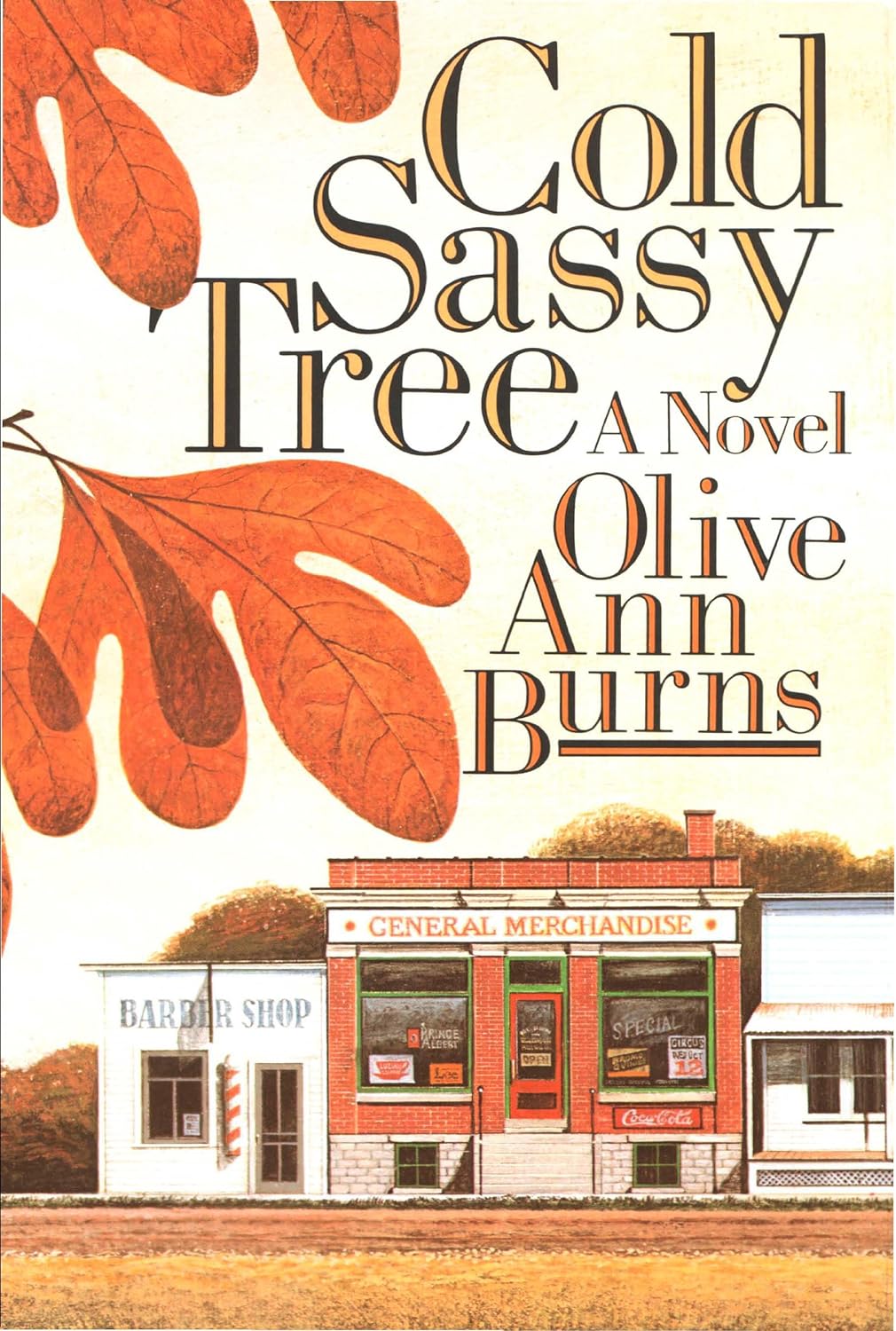
Cold Sassy Tree (Burns)

Cold Sassy Tree
Olive Ann Burns (1984)


(Not a review, just some notes to help me remember the things I've read. But written this way because it's the Internet, and some people will stumble across this page.)

This book was a Pandemic Book Club selection.

I started listening to this book before I started reading, but I eventually caught up and finished the ebook first (which my the audio less important to finish). I listened to the first chapter twice just so I had an idea what was going on.

Cold Sassy Tree refers to the sassafras trees that the town of Cold Sassy were named after even though there's only one tree left by 1906. The rest are all gone. Cold Sassy is a fictional town in Georgia.

The story is narrated by a 14-year old named Will Tweedy. It has a definite beginning but it just sort of ends. At least it wasn't open-ended (although there is a sequel where I guess the boy is grown some more.)

What stands out about this book is the folksy tone with which it's narrated, and I didn't mind the spellings that were used. (This was much better than the "stylistic choices" made in The Bee Sting). It took a moment to figure out a few words, but after that, they were familiar with repetition. "Cudn" was an amusing one for "cousin". I never did figure out why they'd sometimes end sentences with "one".

The story starts a few weeks after Will's grandmother has died with his grandfather's announcement that he's getting remarried to a woman who works in his store. Scandalous is this seems (and unseemly, too), he doesn't want to be a burden on his two daughters, so he either has to get a new wife or hire a Negro housekeeper, and he figures a wife is cheaper. Will will later learn that it isn't a "real" marriage, but an arrangement to make Miss Love Simspon his new housekeeper and not the new Mrs. E. Tucker Ruckslee.

Their story is the backdrop of learning about Will working in the store, going to school, and getting into fights. Along the way, he learns to drive the only two cars in town, and almost gets run over by a train. He is helped off the tracks by a mill girl he likes (and eventually kisses).

My one problem with this lighthearted tale is that it eventually takes a dark turn, and then gets absolutely brutal.

I could also complain that they never mention driving to another town to get gasoline for the cars since there isn't a gas station in Cold Sassy as there are only two cars before Mr. Ruckslee starts selling them.

Other than the dark parts, you could imagine that this was any boy's misadventures growing up at a particular time in history. (I won't compare it to Tom Sawyer or Huckleberry Finn because I haven't read those in a long time and I'm sure there was more and sharper commentary on society than here.) And the book could've gone on for a few more chapters before the events that bring on the ending of the book. I didn't pay attention to the timeline, but it could've been that it was a full year or a complete school year over which the book takes place.

This was an enjoyable book, and a nice change of pace from recent reads. Now I have to wait nearly a month for the meeting!


If you stumbled across my page via the Internet, please check out my short book series, Burke Lore Briefs. A fantastical foursome of flash fiction and short stories.

Tuesday, June 10, 2025

Everyone Knows Your Mother Is A Witch (Galchen)

Everyone Knows Your Mother Is A Witch
Rivka Galchen (2021)

(Not a review, just some notes to help me remember the things I've read. But written this way because it's the Internet, and some people will stumble across this page.)

This was a Pandemic Book Club selection. The meeting was postponed due to conflicts and had not taken place at the time of this writing.

I was able to get the audiobook quickly and then got a copy of the hardcover. There's a long wait for the ebook, which is surprising for a four-year-old book, particularly one that was "meh".

The book was a little better than the audio because I listened for a couple of hours and wasn't sure what I was listening to.

First thing, the book is historical fiction. The woman in question is the mother of Johannes Kelpar, and the events in the book are based on an actual incident. That being said, the author was intrigued by reading a nonfiction book about the case and decided to write her own book, a book which invents many of the characters and some of the incidents. This almost makes me wish I had read the original nonfiction book, if it's available in English. On the other hand, there are many nonfiction books that I read and think, "This should've been an essay."

I am seriously not likely to search for the original book because the incident just doesn't pique my interest enough, particularly after reading one book on the subject.

Basically, the book was boring. I kept waiting for something to happen. It's almost like this was someone's writing exercise, to write a journal in someone else's voice, and then sold it. I finished the audio a couple weeks back and I couldn't tell you how it ended.

Despite not enjoying this, I pushed forward to read the book, so I could finish it before the original meeting date. I didn't. And then a week later, I brought the book back to the library unfinished because others were waiting for it. I still have the audiobook, so I could re-listen to, say, the last hour, but I'm not sure that I will.

This will be one book that I give a medicre rating to, not because it wasn't well-written, but just because I was bored.


If you stumbled across my page via the Internet, please check out my short book series, Burke Lore Briefs. The fourth book will be available by the time you see this!

Monday, February 17, 2025

The Fairy Godmother's Tale (Marks)

The Fairy Godmother's Tale
Robert B. Marks (2025)

(Unlike most of my other posts, this post is a review. I received an ARC from Library Thing in exchange for an honest review. The review is posted there, but is also included on this page. For those who stumble upon this page, generally my posts are not review, but rather some notes to help me remember the things I've read.)

A young woman finds that she can grant wishes, causes a catastrophe, becomes a penitent, and starts a journey that stumbles through several fairy tales. Then she becomes the wife of a soldier and marches back and forth a lot before a final showdown with an adverserial wish granter.

The story opens ten years after The Peace of Westphalia. I know this because it's mentioned several times. Not being a student of history, I put the book aside to learn that the peace marked the end of the Thirty Years War, so the year must be 1658.

There's an island in the Baltic Sea off the coast of Germany that has managed to erase itself from maps and live on their own during the war. Elisa, no last name, is the daughter of a bookbinder, who realizes that she can see other people's deepest wishes. Then she realizes that these wishes have strings that she can mentally pull to grant them. She's unsure about using this power because she doesn't know if it's from God or the devil, and she's afraid that she might be declared a witch. After consulting with a priest, she grants a wish, and it turns out well. So she decides to grants the wishes of everyone on the island at once. It sets off a revolution where the royal family is put to death as well as her own family and friends. She manages to the escape as the island is engulfed in flames.

After making it to Germany, the first person she meets is the Wandering Jew, whereupon Elisa resolves to become a penitent. I know this because it's mentioned dozens and dozens of times, as she will constantly repeat it to people who already know, including the reader. After this comes a long retelling of Cinder-Ella. Elisa helps Ella's dream come true with the help of Ella's father and extended family but few actual wishes. Elisa also disovers that there is another wish granter around when that unknown person sends birds after Ella's step-family to poke their eyes out.

Ella then leaves, because she still a penitent, and stumbles through several more Grimm fairy tales, some briefly like Little Red Riding Hood, and a few that might be more obscure. During this time, France invades the Rhineland. An Internet search told me that this happened in 1687 during the Nine Years War, which is a discrepancy that does not get addressed until much later in the book. It does get addressed, but at the moment, I almost put the book down because it seemed to shatter what realism it was setting up.

Elisa finally finds out that as a wish granter, she is immortal but she hadn't noticed because she'd encountered other immortals, and she'd lost track of the seasons passing. She only finds out when she visits Ella who is now an old woman. Elisa finally meets Clever Gretel, the other wish granter who can grant her own wishes and who toys with Elisa until finally stabbing her, declaring, "I hate to tell you this, but this whole penitent thing has gotten really boring."

I couldn't agree more. It had been for a while. But that's when the book changes to very long march back and forth with the Bavarian army with her new husband during the Seven Years War. It's so different, it could be a separate book of its own. As it was, this diversion was much too long for this story.

I'd give this book three stars. If I could give half stars, I might consider 3.5. The final confrotation, which was given only a few pages, was anticlimactic. The ending wraps up the story plots a neat, but not overly satifying, way.

-----

I thought a bit about how I was going to write this. Originally, I thought I was being too harsh, but I kept reading the book, and my feelings didn't improve. If anything, this book slowed my reading momentum and I found myself playing games and scrolling social media more on the subway, even if I only had a few stops to go. It didn't win me over, which is a shame because I was hoping to leave a great review for the first book I reviewed for Library Thing.

Note that my book, A Bucket Full of Moonlight appeared on Library Thing last year. Out of 25 copies given out, I got 3 or 4 reviews. One of them from someone who obviously hadn't read the book or posted a review for a different book "by mistake." This book was a PDF file. I don't know if it was the final published edition because there were several grammatical errors that hadn't been corrected yet. A Table of Contents might've been nice, too, just so I knew how much farther to the end of each chapter.

I've already picked out a book of short stories to read on my kindle, so I can keep my daily progress going while I read a hardcover that I started a month ago but put aside for this book.


If you stumbled across my page via the Internet, please check out my short book series, Burke Lore Briefs. The fourth book will be available by the time you see this!

Tuesday, December 10, 2024

The Benevolent Society of Ill-Mannered Ladies (Goodman)

The Benevolent Society of Ill-Mannered Ladies
by Alison Goodman (2021)

(Not a review, just some notes to help me remember the things I've read. But written this way because it's the Internet, and some people will stumble across this page.)

This was recommended on the Brooklyn Public Library page as something that I might be interested in. I read it and listened to most of it. If I finish reading first, I'm less likely to finish the audio before it needs to be returned.

Note that the cover is inaccurate because even though the two sisters are twins, one is several inches taller than the other.

The book is a high society amateur detective story set in the heart of Regency London. Several stories in fact. Lady Augusta Colebrook, “Gus,” is determinedly unmarried, bored by society life, and tired of being dismissed at the age of forty-two. She and her twin sister, Julia, who is grieving her dead betrothed, need a distraction. One soon presents to rescue their friend’s goddaughter, Caroline, from her violent husband.

Along the way, they are attacked by and manage to subdue a highwayman, who isn't exactly what he appears to be. They use the man to pose as their brother, who they claim was wounded by a highwayman, to get to Caroline. When the man awakes, he sees no choice but to continue the ruse and is instrumental in getting away. Gus is terribly smitten with him as she's never been before, but he knows that they could never be together for it would ruin her, and he would surely hang.

They eventually get reunited for another case, and Gus becomes determined to prove the man's innocence.

This was an enjoyable (though a little long) book. I would read another in the series.


If you stumbled across my page via the Internet, please check out my short book series, Burke Lore Briefs.

Friday, November 22, 2024

The Hidden Palace (Wecker)

The Hidden Palace
by Helene Wecker (2021)

(Not a review, just some notes to help me remember the things I've read. But written this way because it's the Internet, and some people will stumble across this page.)

This was a sequel to a pandemic book club selection. I listened to it as well as read it. I actually finished it before we had the online meeting for the previous book.

Most of the cast of characters from the previous book is back again, with some in surprising ways.

Unlike the first book which took place over the course of a single year, this novel spans a couple of decades and we see some major events in New York City (and beyond) history unfold. We also see other characters age while the two titular characters do not. This means that there has to be some kind of shake-up, or else others would start to realize that something is wrong.

The book also introduces a younger female djinn and a second golem that gets created from the notes of the deceased rabbi. So you have to wonder if there will be some kind of love rectangle at work here as the title characters have their own relationship issues to work through.

Also back is Sophia, the heiress that Ahmed falls for in the first book. She travels all over the Middle East like some adventurer out of the Age of Exploration, traveling with two Pinkertons for protection. She leaves home with her father's blessing. She's looking for a cure to the affliction that you might've thought would've faded on its own at the end of book 1. She travels for YEARS, missing major events for her family, until she's finally forced home due to lack of funds. She helps bring the female djinn to the U.S.

There's a bit of a disconnect between the two books. For one thing, it starts with Ahmed finding his own people, but none can free him from his shackles. When he returns alone, the neighborhood is curious because they figured he'd return with a mother or a new bride. It seems that the boy he took to the Middle East is mostly forgotten.

Not forgotten, but not important, is the (spoiler for book one) wizard from the first book, who is imprisoned in the oil flask. He is connected to Chava, and she can sometimes hear him, but he's not a factor in the book other than mentioning that he's still out there.

The scope of the book is broader, too, because so much time passes in this one, allowing the author to work in the Triangle Shirtwaist fire, the sinking of the Titanic, World War I, and the women's suffrage movement. This also allows time for Anna's son, and the daughter of the rabbi who created the second golem, to grow up to become adults.

I don't see where there's room for another sequel because many doors were closed here. Many human characters either died (from old age or other means) or moved out of the neighborhood. Little Syria must give way at some point. Honestly, I wouldn't want book three to be about the wizard coming back again or even seizing the hidden palace, which also doesn't play a big part in the book.

I enjoyed this book. If a sequel comes out, I'd likely read it even though I'm satisfied with the two books as they are.

This was an ebook and audiobook.

Thursday, November 21, 2024

The Golem and the Jinni (Wecker)

The Golem and the Jinni
by Helene Wecker (2013)

(Not a review, just some notes to help me remember the things I've read. But written this way because it's the Internet, and some people will stumble across this page.)

This was a pandemic book club selection. I listened to it as well as read it.

I labeled it as a "historical fantasy" even though it takes place "only" 100 years ago or so in New York City. (I just double-checked, and it's set in 1899-1900.)

A man has a golem made as a wife who will accompany him on his trip to America. The golem is shipped in a box and is to be awoken in NYC, but the man activates her at sea. He then dies from an untreated illness leaving the golem alone at sea. When it's discovered that she doesn't have a ticket, she jumps ship, sinks down in New York harbor and walks to shore. She winds up in Little Syria in Lower Manhattan. She is befriended by a rabbi, who names her Chaya, and who tries to teach her to ask human as a disguise.

Around the same, a tinsmith, also in Little Syria, accidentally releases a djinn from a flask when he breaks the decorative markings. The djinn, who is given the name Ahmed, immediately demands to find the magician who imprisoned him, only to discover that not only is he half a world away (across an ocean of fire-killing water) but centuries have passed in the meantime. The djinn is wearing iron bracelets that he can escape from which prevent him from leaving the human form he took before being captured.

It's only a matter of time before the two meet. But one is (literally) hot-headed, while the other is more forgiving and submissive. Their personalities, as much as they have them, clash a bit. Along the way, Chava gets a job at a bakery when she befriends Anna (who hates how perfect and quick Chava is), and the rabbi's nephew, Michael, a bit of an irrelegious radical, starts to develop feeling for Chava, unaware of her true nature.

I enjoyed the book although in the beginning there are quite a few info dumps, detailing the background of various characters, a couple of whom make you wonder, why am I reading this. Those background characters will turn out to be more important to the story.

I was okay with the ending although several in my book club thought it was a little too pat. They wouldn't have minded parallels with the world centuries ago, but too much of it came back.

Our meeting was delayed, so by the time we spoke, I'd already read the sequel. This meant I had to sit out any speculation until we were done before I could tell those who wanted to know what would happen next.

I both read and listened to this book although I didn't listen to the end after I finished reading it.

Wednesday, March 22, 2023

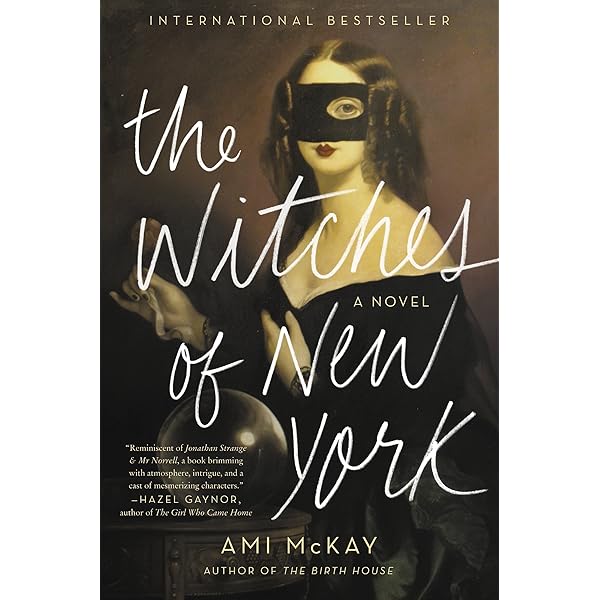
Witches of New York (McKay)

Witches of New York by Ami McKay (2023)

(Not a review, just some notes to help me remember the things I've read. But written this way because it's the Internet, and some people will stumble across this page.)

This book was one of three that was our book club was to choose from, but it didn't win the vote. After the previous month, where the ebooks were difficult to come by, I placed holds on all three books before we even voted. Since the winning book was short, and since this one seemed to be of interest, I gave it a shot. I'm glad I did.

The story takes place in New York City in the 1880s when the Brooklyn Bridge was still under construction, Cleopatra's Needle was on its way to the city (to eventually stand in Central Park) and Lady Liberty's torch, and only her torch, stood in Madison Square Park. Against all this, two witches, Eleanor St. Clair and Adelaide Thom, have a shop called "Tea and Sympathy" where they offer tea and tell fortunes. Both witches have their own specialties and their own histories. They also have a raven named "Perdu". A story from Eleanor's grimoire tells a tale that describes a bird very similar to Perdu and you're to assume that they are the same bird. Moreover, we find from a later ghost, that Perdu isn't really a bird and has an untold secret. In the author interview after the story, when asked Perdu's identity, she says that the clues are in the book, and points back to that story. So that's one mystery solved.

Side note: I learned from Good Reads that Adelaide Thom, who changed her name from Moth, actually appeared in an earlier book by McKay. There were references to her changing her name in this book but nothing came of it. Apparently, it was just to connect the characters together while allowing the character to have a new identity.

Added to this mix is Beatrice Dunn, a young woman from upstate who comes to the city. She touches the obelisk when her train is stopped to allow the obelisk to pass. Beatrice has a natural talent to see ghosts and speak with the dead.

The basic story is that there are some people who are fearful of witches (or pagans) in general, and they have a problem with the tea shop. There is a reverend who is descended from the witch hunters who wants to find one of his own. As a minor character, there is a demon that uses the reverend as a useful idiot to hunt witches so he can feed on their magic (their dead bodies).

There's a love story brewing with Adelaide, who wears a mask because of a previous acid attack that claimed one eye, and Dr. Brody, who wears a prosthetic arm to replace the one he lost in the war (Civil War, that is). Dr. Brody is interested in contacting the beyond and has a device which is, essentially, a mechanical ouija board, that Beatrice will operate blindfolded, where see can't see the responses.

The reverend kidnaps one witch (who takes her own life, after a dream with her mother) and then Beatrice. Everyone is looking for her, but the ghost of the former witch helpd her.

In the end, this is a slice of life piece, because there's no overarching story line. There are competing ones and some of them are left open. That is to say, there isn't a nice pat ending for everything. Perdu is still a bird. And the demon is still out there searching for magic, and the witches have no idea of his existence.

A little heavy at times on the feminism in that it breaks the narration to make its points, but not overly so. Frankly, I've come to expect it. Likewise, if it's a story about witches, I know that there will be an overzealous, possibly evil, priest trying to recreate Salem two centuries after the fact, as if nothing changed.

Speaking of Salem, I have two points: first, the tragedy of Salem was underscored by the fact that none of those innocent woman hanged were actually witches in the literary sense of the word. They may have been pagans, and they made have gathered herbs and brewed potions (or tea), but nothing as powerful as witches are portrayed in the "present" time. If witches had been that powerful back then, would they have been so easily captured and killed. Maybe they weren't and innocents died in their places. (hmmm, that could be a story idea.) And if any of the witches condemned to die were indeed powerful, then doesn't that take some of the stigma away from the ones who opposed them? I hope not, but it gives pause.

The second is that the author discovered in doing researched that she has an ancestor (once removed) that was hanged for witchcraft, and only because laws were changed did that woman's daughter survive. So that makes this story a little more personal.

I enjoyed this book, even more than the actual book club selection. I'm glad I read it.

Friday, April 16, 2021

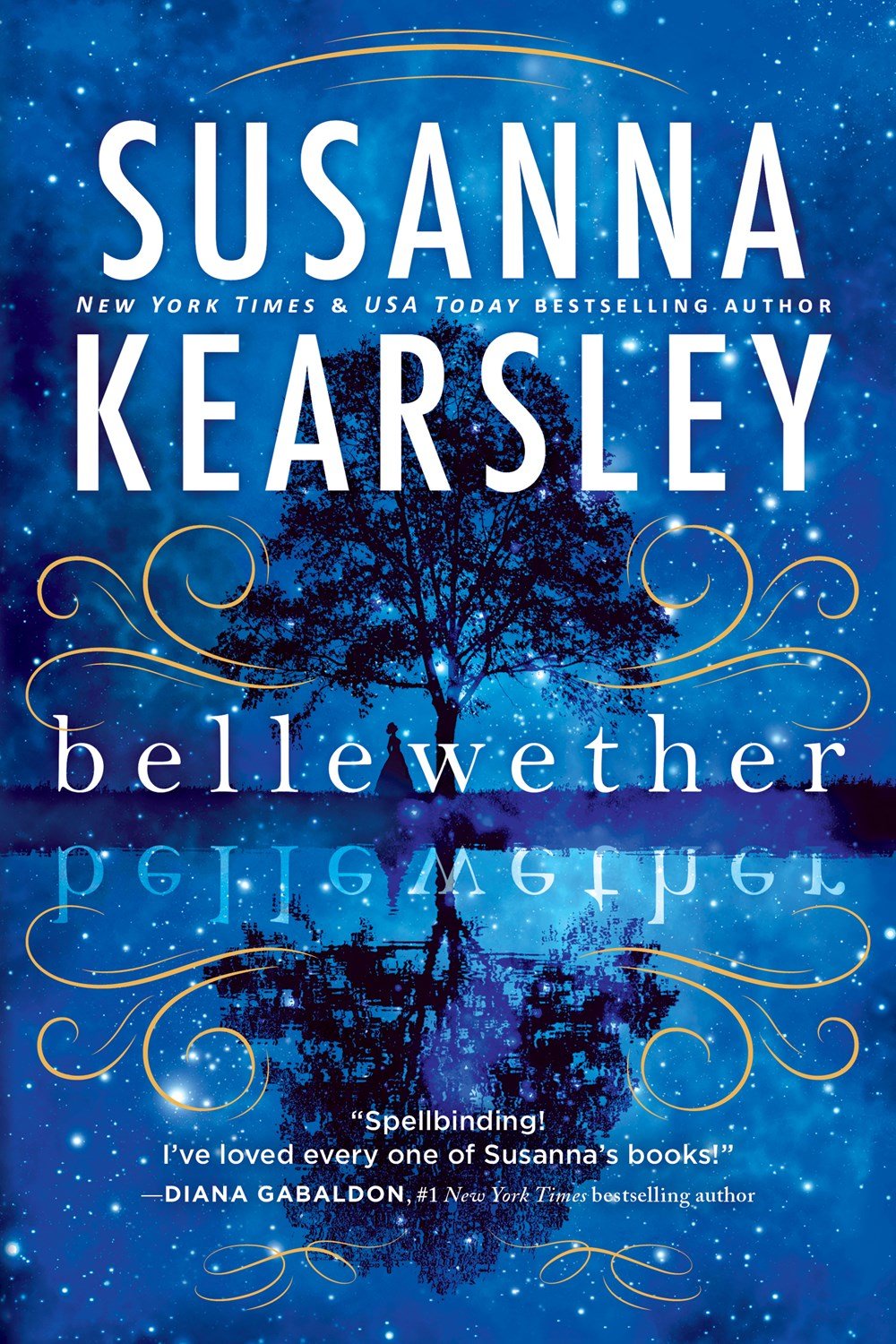
Bellewether (Kearsley)

Bellewether by Susanna Kearsley (2018)

(Not a review, just some notes to help me remember the things I've read. But written this way because it's the Internet, and some people will stumble across this page.)

The was a book group book. Yes, I've somehow become part of a book group.

The spelling of "Bellewether" is a pun on the French "belle", and it is the name of a ship and an estate in the book.

There are dual storylines taking place during the Seven Years (French & Indian) War and current day at a home above Snug Cove on the northern shore of Long Island, which is becoming a museum dedicated to the the life of a Revolutionary War hero. The hero will become Captain Benjamin Wilde, but he is still just one of the brothers of Lydia Wilde in the earlier narrative. There is also the story that a ghost haunts the museum and the woods about it, and the tale that it is a French soldier, killed by the one of the Wilde sons, when he attempted to run off with Lydia Wilde.

Charley is a descendant of the Wilde family, whose family fled to Canada during the Viet Nam War, but has come back to Long Island to look after her niece when her brother dies. She becomes the curator of the museum, much to the chagrin of a couple of board members, but she has the credentials for the job. She encounters the ghost early on and also starts to learn more of the history of the Wilde family as she goes to retrive items that were in the house according to an Inventory List made during British occupation (during the American Revolution). She also tries to find inormation behind the ghost story, which would allow them to expand the mandate of the museum. Some information is not welcome to be found. In particular, no one wanted to discover that the Captain was raised in a house with slaves. (Note that I don't think the current-day historians uncovered the entire story.)

The pre-Revolutionary story was of more interest to me. I can't say that I've read much of the Seven Years War era. Usually, it's from the 1770s onward. As for the modern-day story, most of my interest lay in uncovering the stories of the past. The ghost, which you can be certain early on is in fact a ghost even if you don't know whose, doesn't add much to the story, except as an aid to steering Charley in the right direction at times. The love stories/triangles are for anotehr demographic than me but didn't affect my enjoyment of the book either way.

Kearsley adds some historical notes at the end of the book which are of some interest, which events actually happened with real people, and how her characters and composites fit in.

Tuesday, December 8, 2020

Celts: A Captivating Guide to Ancient Celtic History and Mythology (Captivating History)

Celts: A Captivating Guide to Ancient Celtic History and Mythology, Including Their Battles Against the Roman Republic in the Gallic Wars , by Captivating History (2019)

(Not a review, just some notes to help me remember the things I've read. But written this way because it's the Internet, and some people will stumble across this page.)

Downloaded this freebie earlier in the year. It was an interesting read on my phone, but I put it aside for some reason or other. I picked it up to finish mostly because it was short and half-finished, and I wanted another entry before the year was done.

According to a webpage, Captivating History has nearly 200 books out about different cultures or people. Any number of them are free at a given time. This was interesting to read, and I wouldn't be opposed to downloading another if the subject matter appealed to me.

There is interesting stuff about the Celts, and I may go into more detail if I edit this entry later -- mostly so I can have that information closer at hand.

At one point in the first millenium B.C., (the book uses BCE, I, like one of the sources in the bibliography, do not), Celtic tribes populated most of Europe, north of Italy and Greece, and through Gaul and Iberia. And they were feared by the Greeks and Romans

Unfortunately, they didn't have a written language, so most of what we know of them comes from the Greeks and Romans. Some of this is, of course, biased. And the best you can say is that it gives us a snapshot into their culture.

Some takeaways: they were warrirors, but they were also farmers. They were raiders, but also traders. They were taller than the Romans and Greeks and fiercer. They had chieftans, but would follow another if the chieftan was defeated or fell from grace or whatever. They were loud in battle to show their fierceness.

Friday, February 14, 2020

The Soviet Nuclear Weapons Program

The Soviet Nuclear Weapons Program: The History and Legacy of the USSR’s Efforts to Build the Atomic Bomb, Charles River Editors

Another freebie with an interesting title, so I downloaded it. Not a terrible read, but bored me a little, so I took over a month to read it, because I started playing with my phone during the morning commute instead of reading.

The book runs from the Germans in the 1930s through the fall of the Soviet Union in the early 1990s. Russia got most of its knowledge through espionage, but that isn't to say that they didn't have scientists of their own working on nuclear weapons. It's just that they came late to the game.

Not much for me to say, except that I recognized some of the Soviet names from history (both reading and living it), while others were new to me.

The book had pages of links to references in the back, so you can check out its sources.

I couldn't tell from the Amazon page what year this was published. I'm guessing 2019.

Monday, August 12, 2019

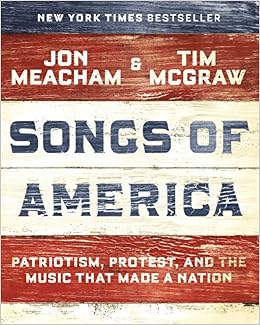
Songs of America (Meacham & McGraw)

Songs of America: Patriotism, Protest, and the Music That Made a Nation, Jon Meacham and Tim McGraw (2019)

Not really a review, just reminding myself about some of the details of what I read ...

A couple months back, I got to see Tim McGraw and Jon Meacham at The Beacon Theater. I put the names in that order because, frankly, I had no clue who Meacham was, and I was going to see and hear Tim McGraw. Yeah, it wasn't that kind of show. Not that it was bad. It was basically an evening of talk and song that promoted their new book, which was conveniently on sale in the lobby. I got my copy from the library. Twice -- there was such a demand that I couldn't renew it without waiting again.

The book analyzes how music has influenced and been influenced by events in American history, going back as far as "The Liberty Song" written by John Dickenson in the years before the first Continental Congress.

Meacham is a presidential biographer, and that experience is on display here, but as he acknowledges in the closing pages, people want to hear Tim sing more than Meacham type. During the show, I didn't think Tim sung enough, and he deferred quite a bit to Meacham during their discussions. So much so that when the two of them appeared on The Late Show, Meacham did most of the talking, and Tim didn't even get to sing.

So Meacham wrote the narrative, which is offset by boxed text where McGraw writes his thoughts and memories concerning specific songs and people who were discussed in the main text. There wasn't enough of that for my taste, but what are you going to do.

I guess it's a case of enjoying the book I got even if it wasn't quite the one I wanted.

Friday, March 22, 2019

The Battle of Dorking (Chesney) DID NOT READ

The Battle of Dorking, George Tomkyns Chesney (1871)

I don't remember where this recommendation came from, and someone I must've thought that it was one of those History channel books.

This was a disorganized, rambling mess that couldn't hold my interest for 4 pages. It was only 40-page chapter without visible breaks, and I quit somewhere in the middle of a six-page paragraph. (Not kidding.)

Now that I'm aware that this was written in 1871, maybe I'll give it another chance, but I'll likely skip ahead 20 pages or so to get to whatever action there is.

Tuesday, August 21, 2018

Lost to Time (Sandler)

Lost to Time: Unforgettable Stories That History Forgot,Martin W. Sandler (2010)

I found a list, in my own handwriting, labelled "Books to Read". I don't know when I made this list, or why, or what the source of these particular books might have been. I only know that it had to have been in 2010 or later, judging from the first book.

I was never a big History fan, but that hasn't stopped me from being interested in certain particular stories or time period, and making up for my lack of knowledge. Maybe I'm correcting my own past here.

Anyway, I reserved this from the library (Dewey Decimal 904 S), and it arrived fairly quickly. I didn't get very far into it before it had to go back. As it hadn't really gripped me, I didn't renew it.

Of the ones I read, the first one about Ziryab was the most interesting. I knew nothing about the man, never heard of him, and yet he accomplished so much. But I get the feeling that if I traveled to Spain, I'd find that he wasn't forgotten, even if people were not aware of him. I would guess that there are museums dedicated to keeping his memory alive.

The reason for this guess is that some of the later stories seem like regional heroes, who are probably known close to home, even if they didn't get the same fame or notoriety of their compatriots. See "Chapter Five: Outdoing Revere" for examples of this. Not everyone had a Longfellow singing their praises.

If you like these kinds of stories, then this book might be for you (assuming once again that anyone other than me is reading this blog).

Tuesday, July 24, 2018

The Middle Ages: A History From Beginning to End

The Middle Ages: A History From Beginning to End, 2016

I don't remember where I heard about this book or why I downloaded it a few months ago, but it was a quick read. The book is part of an Hourly History series. I don't know if that means that the book was meant to be read in an hour or that there was an hour-long program on, say, the History Channel.

In whichever case, about 1000 years of history are crammed into one book. It was split into three segments and had some interesting highlights, but not much that I can remember two months later. I guess that shows you why I really need to keep this blog up-to-date.

TL;DR: It was interesting. Didn't hate it. Better than reading the material on wikipedia. Overall, I forgot most of it already.

Saturday, November 19, 2016

History Bytes (Vulich)

History Bytes: 37 People, Places and Events That Shaped American History, Nick Vulich, 2015

I don't remember how I found this one. Maybe it was posted as a free ebook on Reddit. I don't know.

It was well-written and the bibliography, with some very old sources, shows that it was well-researched, too. If anything, however, I would have liked some references to the bibliography in the text. The tone, at times, is conversational, so it would be nice to know where some of this information is coming from.

This wasn't a book of little-known events, and for history buffs, there probably isn't much here. There was some interesting tidbits, but nothing that made me say either "I never knew that!" or "That can't be right!" But there was information about from Colonial times, the Revolution, the Civil War, western expansion and outlaws. Why 37 events? No answer, but why not?

(Aside: sure, there were probably things that, had I'd ever learned before, I'd forgotten about, but nothing so incredible to amaze me.)

Interestingly, there was some overlap with Great Train Robberies of the Old West, which I reviewed back in February. Nothing here contradicted anything from that one.

You might be able to find a lot of this information online, should you care to look for it. Question is: would you?

Quick read. Enjoyed it.

Thursday, February 18, 2016

Great Train Robberies of the Old West

Great Train Robberies of the Old West, by R. Michael Wilson, 2006

I walked into Barnes & Nobles in Park Slope and stopped at the closeout books table in the vestibule. Usually, there isn't anything "must have", but this time I saw a slim book on Great Train Robberies of the Old West, which piqued my interest. I flipped through it quickly and thought, "I'll take it." It looked like A Good Read, and it was. Nothing fabulous -- given the subject, the book easily could have been twice the size. But it presented a series of train robberies, brought out the facts and gave some background on the people involved and let you know what happened to the participants after. There was an appendix with references, which weren't just websites, but also primary sources, including hundred-year-old news articles. So the author did his homework.

I've read stuff like this which reads like expanded click-bait articles that you can find online. Others that make me wish I just went to some online encyclopedia and find my own information. This didn't. I was satisfied. That said, I read it for fun, not for research. It might be a good start if I was interested in the topic, but I'd move on to other resources afterward.

The funny thing was I didn't know how I'd feel when I got to Butch Cassidy and Sundance. Would it be skipped? Would it be the back half of the book? Neither. Their train robberies were covered the same way the others were.

My 2016 GOALS: It was a short read (under 200 pages), and it was just about the first book I picked up when I worked into the book store. Nonfiction.

Mad Dogs & Englishmen: A Tale of the Barghest

Mad Dogs & Englishmen: A Tale of the Barghest by Alan Smale, J.W. Harp (Illustrator) (2026) (Not a review, just s...