Friday, June 26, 2026

Defenders: Reign of the Bugs (Greenwood)

Defenders: Reign of the Bugs
by Leslie Greenwood (2026)


(Not a review, just some notes to help me remember the things I've read. But written this way because it's the Internet, and some people will stumble across this page.)

This book was a free Advanced Reader Copy from Library Thing. I'm encouraged (but not required) to leave reviews in exchange for the free books.

It seemed like an interesting enough premise, so I requested this book (along with maybe ten others), and this was one of the two that received last month. I was a bit behind with some other books, so I didn't get to it right away. And then when I did, I was a little sorry that I picked it.

Aliens take over the Earth, and give certain people superpowers so that they can defend the plaent from 20 invasions of the planet. This is book one, so there is a series planned from here.


I left the following review on the Library Thing website:

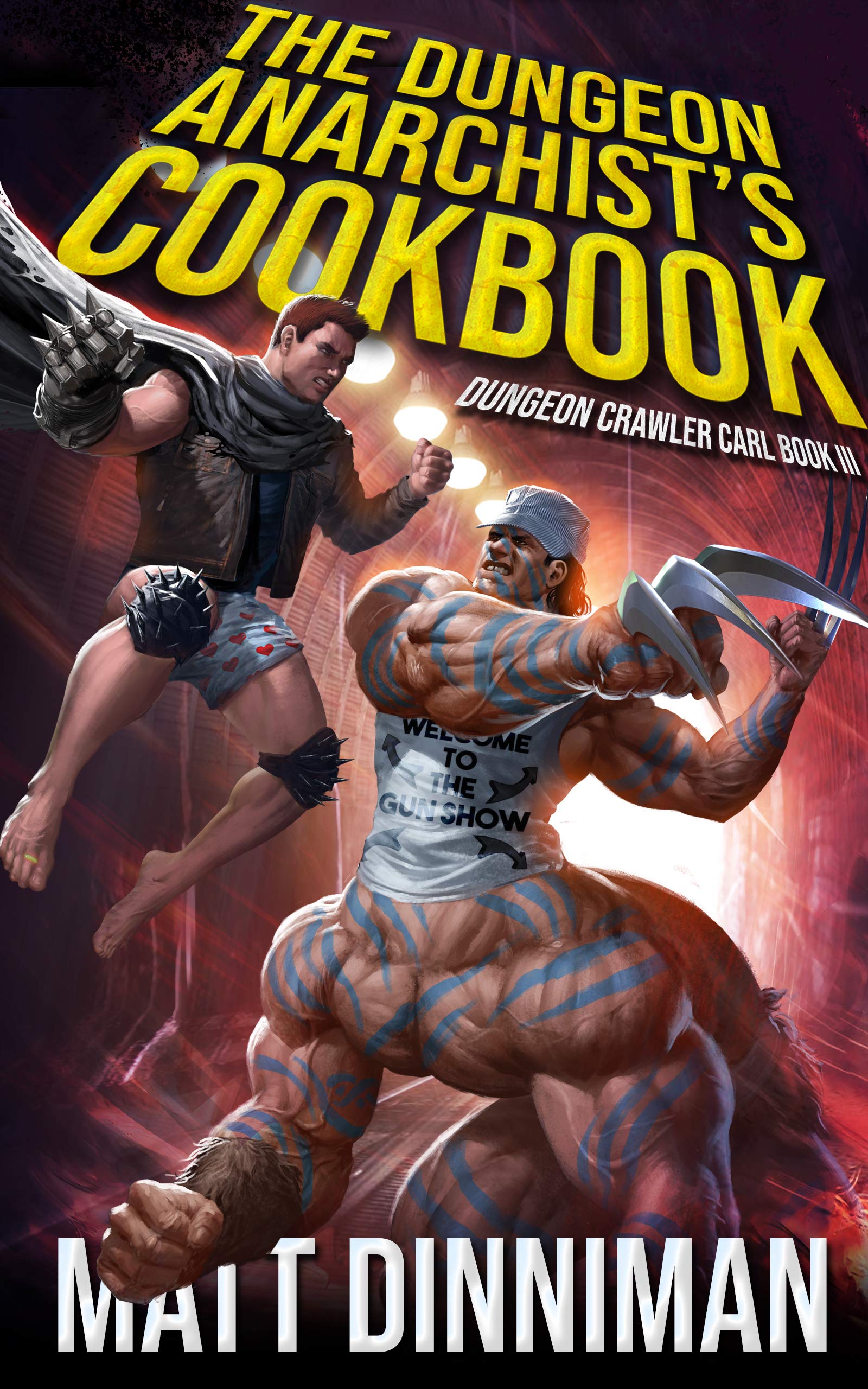
The comparison to Dungeon Crawler Carl is unavoidable, but instead of aliens creating an underground fantasy computer roleplaying game that Earth's survivors are pulled into, these aliens have created a reality show where some of Earth's population have been giving superpowers to defend the Earth from wave upon wave of invasions. Doing well gets you sponsors and better powers but not for a while. And this becomes a problem.

For one thing, a lot of the book deals with negotiations for better powers that won't come until a later round. This means that the main character, Chad, whose power is healing himself, has little to offer his team, and he tends to die a lot in the meantime. He's looked after by a Bigfoot, and android, and a leech monster (who gets refered to as literally "lecherous", which might be more amusing if she weren't a kid).

After the first space bug boss is killed, the rest is anticlimactic (with much of it happening "off camera"), and even the aliens agree. They want the heroes to fight and defend their planet, not shoot missiles at targets from afar.

There's a final side quest in Antarctica, not involving alien invasion, for a more exciting ending, and then everyone has to get ready for the next wave.


Basically, this is not a great book. And I can't even say that there's a good story under it, so if an editor stepped in to suggest a rewrite, it'd probably require a thorough redesign from the start.

As I told the author in email (and I will refrain from revealing email stuff), it reads like the two of us are at a con and Greenwood is telling me about this great story rather than telling the story. I realize that this might not make sense, but my first problem is in the narrative structure.

Other things that might've caused me to DNF the book if it wasn't an ARC: when the aliens invade, there's a very long info dump about the invasions, the tiered structure of superpowers, the frequency of each tier and their relative strengths, and other stuff; this dump ends with the alien "hanging a lantern" on the info dump, which is really just a sign of giving up on figuring out how to write it coherently and working it into the narrative when necessary; there are things other things that don't work.

In Carl the dungeon crawlers are living in a computer game, so everything acts like a game, including getting information on things. Here, everyone has information hanging over their heads with their names, their tiers, and their power set. This makes no sense because it's a reality show and these graphics would be on screen, not visible in real life. Consider the yellow lines that appear on TV at football games -- they don't appear on the field! Toward the end of the book, one character looks up at them and says, "oh, I keep forgetting about those." I don't see how any of them could forget about them, but I could see how the author (and the reader) might.

The four main heroes manage to take out the first bug boss (which was described as a space bug like in the movie "Starship Troopers", which, oddly, I haven't seen). After that, they get caught up with the military to go to South America and then to Antartica. Chad convinces them to practice their powers with a tournament, which would help them discover and develop their abilities and get an audience. While this is going on, five of the other six bugs are destroyed offscreen by missiles, annoying the showrunners. The military and the defenders, now with an indestructile superdog, sail to Antarctica along with a whale with mind powers, to find the last bug.

SPOILER: While the group of defenders is making their way through an ancient alien base under the ice, they receive word that the whale killed the bug. Done. First wave over. HOWEVER, a group of them are caught behind an unmovable wall and Chad figures that there's something that the producers would them to face, so they continue -- and find NAZIS. Except that they're not just Nazis, they're genetic clones of Nazis from WWII, including several clones of Hitler. And one Hitler has a S-tier level mecromancer power. ("Technomancer" might've been a better term, but then it couldn't be confused with "necromancer".)

Everything is televised on channels that the characters can view. These are shows on various networks (of which there are many) but they'll concentrate on any group that is doing something interesting. This means that this reality show has real-time cameras literally everywhere, but there are no cameras anywhere. I guess it's Microbots or Nanobots "or whaterver".

Through the entire book, there are side conversations with an agent trying to get good deals with sponsors (but not until the third level) which would add extra superpowers or abilities to each character, and another one trying to arrange interviews and instruct them with general tips how to survive longer. Again, a clumsy copy of Carl missing the logical structure to place these things.

My pettiest pet peeves: I had an ebook, so I couldn't toss the book across the room when I encountered the over-overuse of "or whatever" at the ends of sentences and responses of "Oh, I see." Both of these could be forgiven if each was confined to a single character that could be identified with it. Further, "or whatever" should only appear in dialogue and not in the narration. Either give me another option or delete those two words."

This was an ARC, and not a final copy, so I tried to ignore the typos, but there were a lot of them and some were some atrocious examples of misuse of language. (I didn't highlight these, so I can't reference them.)

One last thing: the only reason I had an email exchange with the author was because Greenwood emailed me asking if I could post a review by June 1 when the book launched (I was barely 20% in at the time), and I was offered the second book to review, which is launching July 1. I didn't respond to that, and I'm glad I didn't because I can't see how it could be better when they had to be written at the same time or at least during the time when the first one was being edited.


If you stumbled across my page via the Internet, please check out my short book series, Burke Lore Briefs. A fantastical foursome of flash fiction and short stories.

Thursday, June 11, 2026

Everything Is Ok (Tung)

Everything Is Ok
by Debbie Tung (2022)

(Not a review, just some notes to help me remember the things I've read. But written this way because it's the Internet, and some people will stumble across this page.)

I saw this book listed as a recommended graphic novel. I don't remember where, or if it was in one of the lists of nonfiction that I was scanning (probably). It mentioned it was from the author of "Quiet Girl in a Noisy World", which sounded familiar. I requested both from the library. This one arrived first, but I waited for the first one before reading both. What I didn't realize is that Tung has published several other books in between the two, but this one continues the themes of the first book.

And it takes those themes to a really dark place.

Tung gives an account of living through a panic account and the stress, anxiety, and depression that accompany it. She details the ongoing troubles continuing to work her first job when trying to earn commissions for her artistic work. It goes well beyond just being shy and introverted.

Unlike Quiet Girl in a Noisy World, this book isn't episodic. Each page doesn't have a (self-deprecating) punchline or even a conclusion. The narratives continue for pages at a time, particularly in the beginning of the book. We are included in her therapy sessions, and we are witnesses to her internal thoughts.

I can see why this book came so highly recommended, and I'll add it to my recommended reading list next year if I get to teach this course again. Hopefully, I can acquire a couple of copies.

I'll also check out some of her other books that are more about her life as an introvert. (One is about books.)

Note: I added "memoir" as a tag to this one because the panic attack is central to the book. I didn't add the "biography" tag because it's not really a life story.


If you stumbled across my page via the Internet, please check out my short book series, Burke Lore Briefs. A fantastical foursome of flash fiction and short stories.

Friday, June 5, 2026

Quiet Girl in a Noisy World: An Introvert's Story (Tung)

Quiet Girl in a Noisy World
An Introvert's Story by Debbie Tung (2017)

(Not a review, just some notes to help me remember the things I've read. But written this way because it's the Internet, and some people will stumble across this page.)

I looked for recommendations online for nonfiction graphic novels that I could mention to my class to show them that that not everything is superheroes. I did have an interest in history -- anything that they could tie into their studies. I've mentioned George Takei before. And I was hoping to find examples about the American Revolution with America 250 coming soon. (Side note: anything from that time period would be works of fiction. "Creative nonfiction", whatever that actually is, would be the closest thing. I've seen such books at the Dyker Heights library.)

Among every list are Persepholis and Maus, though it took time for the latter to be nonfiction because of the imagery used. A lot of other nonfiction books seemed to deal with tragic issues like war in their homeland, poverty, emigrating to America, racism. It almost made me wish for run-of-the-mill teen angst -- almost. But, I had to be honest, what tops the nonfiction charts for regular books? Usually issues. Graphic novels combine these with compelling stories to varying degrees, and the trick is to get you to care, even if for only a couple hundred pages.

Quiet Girl in a Noisy World: An Introvert's Story caught my attention as it was something that I thought I could relate to. Most people who know me would say I wouldn't know anything about being an introvert. Some people who really know me, might say otherwise, maybe. There was a period were I thought my awkward extrovert moments were covering up for my introverted tendencies. And sometimes it was the reverse.

However, over the years, I've met some real introverts, and I'm not sure that I could count among their numbers, so maybe there's something else going on.


And that digression brings me back to the book at hand. I actually got the second book first from the library, but I waited to get this one to read either one.

Debbie Tung is a cartoonist. This self-referential book is more episodic than an actual story, but it does move forward with life even if even page (or two) seems to be a standalone strip. It's more cohesive than the recently read Huda F book, Yes, I'm Hot in This. (Side note: I was attracted to the title "Huda F Cares" and then went back to the first book in the series.) The Huda book just seemed with endless "gag" strips, many of which seemed to repeat, at least in theme. Granted, that repetition could stem from the fact that she hears those comments constantly.

In Tung's book, any repetition seems to reinforce what she's already feeling, even as she moves forward with her life, or as she retreats back into the familiar in her life. And she celebrates little victories even while she's completing major achievements.

I enjoyed this book. I might buy a copy of this for my classroom next year if I'm given this class to teach again.


If you stumbled across my page via the Internet, please check out my short book series, Burke Lore Briefs. A fantastical foursome of flash fiction and short stories.

Wednesday, June 3, 2026

A Silent Voice #01-03

A Silent Voice, Volume 1-3, by Yoshitoki Ōima (2015)

(Not a review, just some notes to help me remember the things I've read. But written this way because it's the Internet, and some people will stumble across this page.)

I was out for a walk when I came across a Little Free Library on a one-block-long side street between Atlantic Ave and Herkimer Street. Inside were six of the seven Harry Potter paperbacks, a copy of the Once and Future King, and three manga books from a series called A Silent Voice. A quick scan showed by it was a teen drama and I didn't see any images that would be awkward in my classroom. (Yes, I know they've seen worse, but I don't have to bring them in.)

I read one, and then decided to read all three. I've since discovered that there were seven books, which appear to be available as ebooks. Also, there was a movie based on the series that covered the main plot lines. (A student of mine told me.) However, it seems that Netflix won't show it to me because I have Netflix with ads and their licensing agreement won't allow it to be shown on a platform with ads.

The books follow Shoya Ishida, a bully who get ostracized by his friends and years later seeks redemption. The target of his bullying is a deaf classmate,Shoko Nishimiya, who he tormented so much that she switched schools. They meet in high school. He doesn't think he deserved to be forgiven or have anything good in his life (in fact, he's contemplating suicide but doesn't go through with it), and Shoko starts to like him as he starts to care about her.

I'm enjoying it so far, and I'll probably continue reading this during the summer when I have more time. (I have other things to catch up on.)


If you stumbled across my page via the Internet, please check out my short book series, Burke Lore Briefs. A fantastical foursome of flash fiction and short stories.

Between Two Fires (Buehlman)

Between Two Fires Christopher Buehlman (2012) [AUDIO ONLY -- no image] (Not a review, just some notes to help me remembe...