Saturday, January 30, 2021

Doctor Who: 365 Days of Memorable Moments and Impossible Things (Richards)

Doctor Who: 365 Days of Memorable Moments and Impossible Things by Justin Richards (2016)

(Not a review, just some notes to help me remember the things I've read. But written this way because it's the Internet, and some people will stumble across this page.)

A lot of Doctor Who trivia, much of it repetitive, organized into little bites by date, to fit the theme of a calendar. Smartly, it's not a calendar, as that would kill the book by the end of the year.

The book iteself says that it isn't something that should be read straight through. After trying that, I have to agree. The selection of dates of things is a little haphazard, and some things are just listed on days for no particular reason at all.

While it isn't a narrative, the book doesn't work as a reference, either. Nothing is crossed-referenced (I guess because of the calendar-ish nature), so when some episodes are topics are mentioned again, a lot of backstory has to be repeated.

Each entry ends with a list of things for that date, usually the year that an episode was first broadcast, when a particular actor or historical figure was born or died, when a character's birthday might've been if it was ever referenced. Some shows set in the past or future took place on specific dates, and those get referenced as well.

There were a bunch of references to the old shows that I didn't know, and some to shows that I either remember from long ago or have seen in recent years.

An interesting book, and also a library loan, which I had to take out twice because I needed to put it down a few times and read something else.

Saturday, January 23, 2021

Principles of Zen Philosophy

Principles of Zen Philosophy by ... ( )

[NO IMAGE WILL BE POSTED]

(Not a review, just some notes to help me remember the things I've read. But written this way because it's the Internet, and some people will stumble across this page.)

I started to think of this book as being about "Zen-feld", because it was a book about nothing. Really, everything was nothing, and it seemed an advertisement for one branch of Zen or something. I got 20% or so through it and thought, "Why am I reading this?" It wasn't inspiring me. There was no helping of my self in any way.

I didn't want to start 2021 on a loss, so I waited until I posted a book I'd finished first to mention this one. It's only in the blog for completeness. It will have no tags.

Friday, January 22, 2021

Troll Hunter: Witch for Hire (Mason)

Troll Hunter: Witch for Hire
(Gretchen's (Mis)Adventures - Season One #0·5)
by P. A. Mason (2020)

(Not a review, just some notes to help me remember the things I've read. But written this way because it's the Internet, and some people will stumble across this page.)

I'm a little wary of books with many subtitles, but this is becoming the norm in these days of quick ebook publishing. I'm also not fond of the use of "Season" to describe entries in a series, unless it's actually about the seasons of the year or seasons of a TV show or similar.

I assumed the 0.5 meant this was some kind of prequel, or setup for the rest of the available books. In any case, there was a story here to be told. It might not have been the best-written, but it did it's job. I gave it 3 stars on Good Reads because I didn't think it was a two-star book. Some of the things I gave two stars to weren't very good.

It also contained Chapter 1 of the first book, which is a marketing gimmick, so I can't complain about that.

The story revolves around a witch named Gretchen, who makes potions. She has feline familiar named Mulligan, and a broom that doesn't always fly right. Plus, there's a weird spell book. She spends a lot of time down at the pub, owned by a sick, dying dwarf, where the riff raff hang out.

She gets hired by the town to get rid of a troll under the bridge, which is feeding on people's livestock. No one else wants the job. She manages to make a potion, with the help of the spell book, but by accident, the troll becomes "enchanted". I'm not sure if that's the correct term, but that's the one used. The troll becomes self-aware, developing a more of human intelligence instead of operating on a more animalistic level. Basically, it became a player character race.

Enchanted creatures have rights, so they can't chase him off any more. But Jurgen becomes Gretchen's responsibility. The troll isn't welcome at home any more, nor does he like that way of living. But he's still a troll, and people don't like him. He gets a temporary job with the silversmith, doing heavy lifting in the back, but after an allergic reaction, he winds up working at the pub.

Gretchen starts working at the pub, the Salt and Bog, because the dwarf needs help. And when the roof of cabin falls in (due to excessive water damage), she moves into the pub as well.

There's another witch, Nora, and a girl who wants a love potion so that the silversmith will fall in love with her. He's such a catch that every mother would want him for their daughters, and yet he turns them all down. Gee, wonder why (that's not really a mystery at all). And everything works out in the end, including Gretchen getting her house fixed.

I don't see myself getting the boxed set of the next "seasons". Also, this was one of the books I downloaded while looking for books with gnomes. I don't remember the gnomes. They might've been there, but if so, nothing about them stuck out in my mind that I remember them a day after finishing the book.

Wednesday, January 20, 2021

A Very Beechwood Christmas (Garrett)

A Very Beechwood Christmas:
Four Festive Magic Mini Mysteries from Beechwood Harbor
by Danielle Garrett (2019)

(Not a review, just some notes to help me remember the things I've read. But written this way because it's the Internet, and some people will stumble across this page.)

I downloaded this around Christmastime and started it in 2020, but I had to put it aside becasuse I had library books to finish. Of all things, I found it because I was searching for books with gnomes. I was thinking of writing something, and I wanted to see how other people handled them.

Well, there are gnomes here, but they aren't really the focus of the book.

Beechwood Harbor, and Beechwood Manor, are home to witches, "shifters", ghosts, and other supernatural individuals, as well as regular people who don't know that they are there. It's a haven, of sorts (not to be confused with Haven from the show, but that could be a comparison). There is a series of more than a dozen of these mysteries. I wouldn't be adverse to revisiting some of them. The downside is that I didn't always feel like I knew the characters, like maybe there was stuff I should've know. Like when you tune into a random new TV show midseason.

For once, i downloaded something free that wasn't painful to read. I liked the writing style, even if some things didn't afree with what an editor or two has told me.

The main character is Holly Boldt, although I forgot that early on, becuase her name is rarely mentioned in the first story. Keep in mind, I primarily read at bedtime, so it's a little bit from night to night, usually. The stories are connected, but they get told from different points of view. After two parts of Holly, it switches to Nick, a private detective. After that, there's the tale of a ghost cat. And someone else, a ghost whisperer (I'll edit this later). And back to Holly for what's basically an epilogue.

The story starts with learning that Santa is real, and that he's coming to Beechwood Harbor this year to soak up Christmas magic to power the sleigh and operations for the holiday trip and for the coming year. It's an annual tour of different havens around the globe. Folks in the supernatural community are excited and rolling out the welcome wagon.To regular folk, he's just another mall Santa with some rented reindeer.

Unfortunately, some rabid gnomes get loose and start messing up the town. The gnomes, it turns out, were having a bad reaction to some sweets. This leads into the next story where it seems that someone is trying to ruin Christmas, or at least prevent Santa from gathering the needed magic. This is foiled, but were our heroes too late?

And so it goes from one narrator to the next, and back to Holly. The first four would be the mysteries. The fifth and sixth are just for fun to close out the story. You can't lead all the way up to Christmas Eve with Santa and then just drop it. You need to know what happens next? How was the ride? And what will Christmas morning bring?

It was a fun book for the holiday. If I were the type to reread books, I might do that in December.

Thursday, December 31, 2020

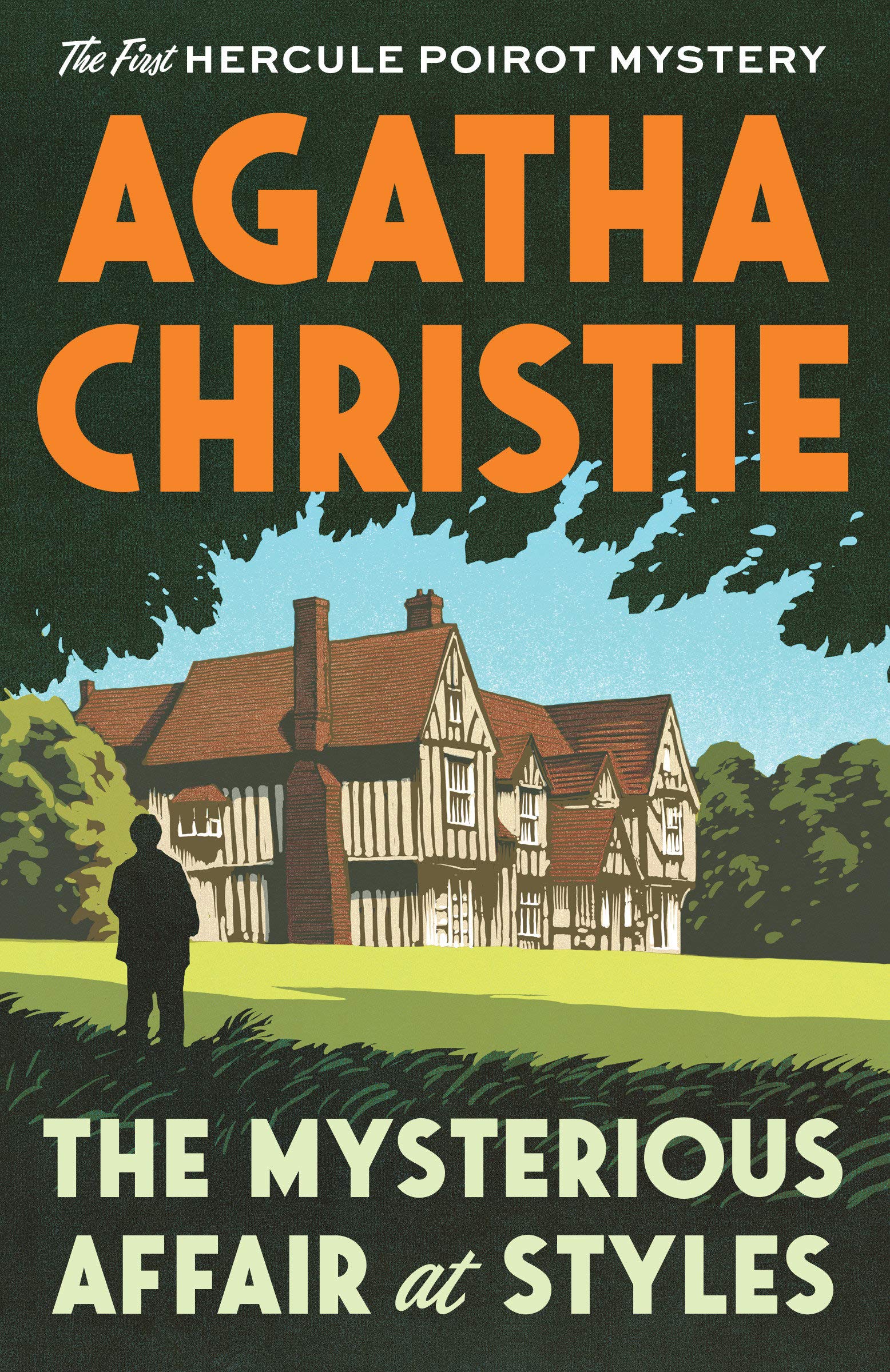
The Mysterious Affair at Styles (Christie)

The Mysterious Affair at Styles, by Agatha Christie (1920)

(Not a review, just some notes to help me remember the things I've read. But written this way because it's the Internet, and some people will stumble across this page.)

I will admit that I was looking for a couple of quick, short books to read to pad out my blog by the end of the year. An anthology of Agatha Christie books showed up online, and I thought this would be perfect. A couple of reasons: one, I just read a couple of mysteries by Sue Grafton; and two, I'd read the first book before. (Note: the image above is generic, not from the download.)

Okay, so it's been a long time since high school, and the only things I remembered about the book were Poirot, Hastings and "it wasn't strychnine, was it?" Also, back then, I didn't understand the title -- it didn't make any sense to me because I didn't know in advance that "Styles" refered to Styles Court, the estate were the murder takes place.

I knew I was in trouble when the book was front-loaded with characters whom I knew I'd never keep straight. I had trouble with the last Grafton book because of all the players. It was slow going, particularly since without a daily commute, I was reading primarily in the evening. When I didn't fall asleep, I was drowsy enough that I wasn't remembering what was going on. I think I missed part of the ending (about the third chapter from the end) which left me a little confused. At the same time, I didn't want to go back because I wanted to finish before midnight. That wouldn't happen if I kept going back.

So the question is, will I read more Christie? It is something that I should've done long ago as my wife not only has read them all but has a set of her books. (These actually my be in a relative's basement, but they still exist.) Something to think about.

As mentioned above, this was an ebook.

2020 Year in Review

My 2020 End-of-the-Year Review

It's not unusual that very little of what I read this year was published this year. What is unusual is that one of those things was actually written by me. Yay, me!

The year should have a total of 30 posts, including this 2019 Review, this entry, and, I'm hoping, one more book before the year is over.

Of the books read, most were fiction, but there was more nonfiction than usual. Some of the nonfiction came from free downloads with interesting titles or topics, like Celts or the Soviet Nuclear Weapons Program (which I remember little of now). The rest were math books, biographies and self-help/inspirational. Plus a pub quiz book.

Fiction is a mixed bag. There are at least two books I didn't finish, but there were other books I gave up on that I didn't bother to list. In the latter case, it was either because I was asked for a review and didn't wish to be mean publicly, or I gave up before I even hit 10% of it. There's also the Best of Tor.com 2016 which I made a dent in, but the book is huge, and I wanted to read other things.

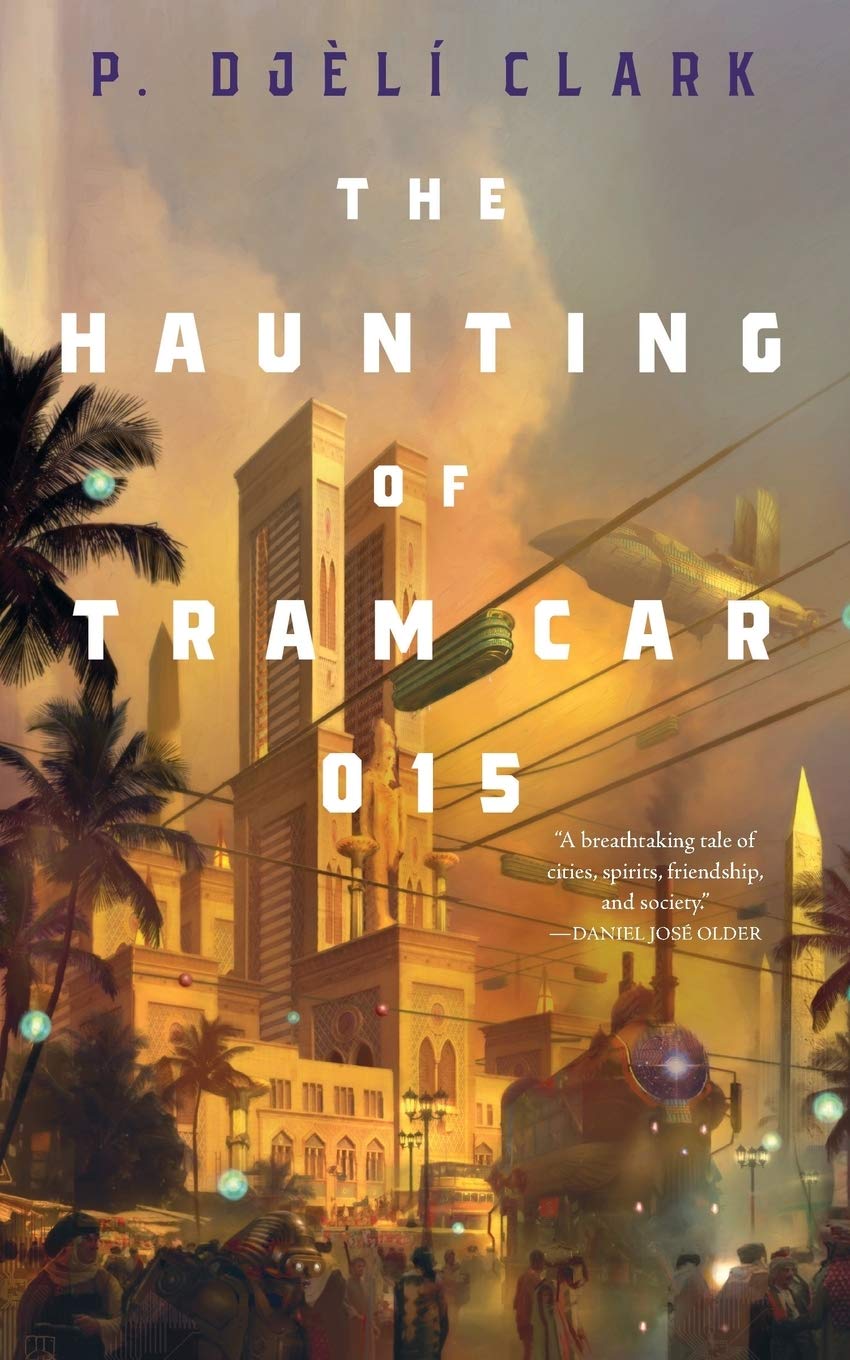
Speaking of Tor, their free ebook of the month club has given me lots to read, not that I've read a lot of it. But the timing of The Haunting of Tram Car 015 coinciding with my just finishing A Dead Djinn in Cairo was too good to pass up. That rated its own entry.

There were two Oz books (one was manga), and two Kinsey Milhone mysteries (one better than the other). And aside from the Tor book, there were a couple of anthologies (including my own): If We Had Known, and Unidentified Funny Objects. I have books 1, 2, 3 and 8 in that latter series. Book 9 will probably kickstarter in the spring, and I'll fill in some gaps. (And maybe submit something.)

Ebooks accounted for 18 of the 28 book entries. Of those, only two were library books, and most of the rest were free downloads. I think only UFO 1 and If cost money. Both of those would be among the best things I read this year. I finally read Redshirts, but I was a little disappointed, but that could be all the buildup I've gotten since it's release. I don't know what I expected of it.

On the nonfiction side, putting the math and games aside, A Sick Life and Out of the Silence were interesting reads, while The Highly Sensitive Person might give me something to think about.

Saturday, December 12, 2020

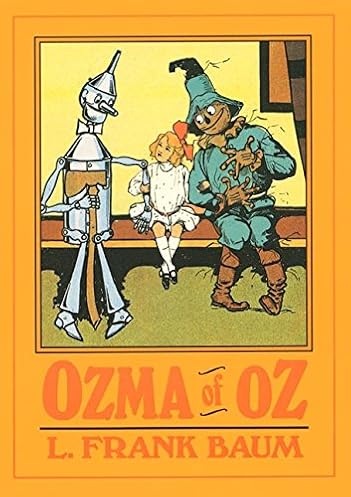
Ozma of Oz (Baum)

Ozma of Oz, by L. Frank Baum (1907)

(Not a review, just some notes to help me remember the things I've read. But written this way because it's the Internet, and some people will stumble across this page.)

I've read The Wizard of Oz as an ebook in the past few years. I read The Land of Oz as a paperback many, many years ago, and then again more recently as a rather interesting set of graphic novels. Next up in the series is Ozma of Oz. The fact that I was looking for short reads to pad out the year is not exactly coincidental.

Many years ago, I saw the movie Return to Oz when it was first released (at Radio City Music Hall, no less). I recognized a lot of the characters from "Land", except that it had Dorothy, and not Tip. Also, it had different villains, namely the Nome King (an underground rock creature of sorts, not a gnome) and the Wheelers (creatures with wheels for hands and feet, and long arms, too.)

This book starts with Dorothy and Uncle Ben on the boat going to Australia. Dorothy gets washed overboard in a storm and clings to a chicken coop for safety. In the morning, she finds a hen has also survived. The hen's name is Bill, and Dorothy calls her "Billina" instead. She discovers this because the hen is able to talk because they are close a a fairy land. Except that Oz doesn't border any oceans. Instead they wash up on the land of Ev, where their adventure begins.

Ozma and the rest of the gang from Land of Oz (except Pumpkinhead) show up in the second part of the book. They rescue Dorothy, and then take her with them to rescue the royal family of Ev from the Nome King, who has turned them into knickknacks in his palace. The King gives every member of the party (including each soldier) a chance to rescue the royal family -- and each other. If they fail to find anyone, then the searcher will also be turned into a knickknack in the palace.

If I remember the movie, Dorothy discovered the secret to finding the rest of the party. Here, it's Billina who is the King's undoing.

Tuesday, December 8, 2020

Celts: A Captivating Guide to Ancient Celtic History and Mythology (Captivating History)

Celts: A Captivating Guide to Ancient Celtic History and Mythology, Including Their Battles Against the Roman Republic in the Gallic Wars , by Captivating History (2019)

(Not a review, just some notes to help me remember the things I've read. But written this way because it's the Internet, and some people will stumble across this page.)

Downloaded this freebie earlier in the year. It was an interesting read on my phone, but I put it aside for some reason or other. I picked it up to finish mostly because it was short and half-finished, and I wanted another entry before the year was done.

According to a webpage, Captivating History has nearly 200 books out about different cultures or people. Any number of them are free at a given time. This was interesting to read, and I wouldn't be opposed to downloading another if the subject matter appealed to me.

There is interesting stuff about the Celts, and I may go into more detail if I edit this entry later -- mostly so I can have that information closer at hand.

At one point in the first millenium B.C., (the book uses BCE, I, like one of the sources in the bibliography, do not), Celtic tribes populated most of Europe, north of Italy and Greece, and through Gaul and Iberia. And they were feared by the Greeks and Romans

Unfortunately, they didn't have a written language, so most of what we know of them comes from the Greeks and Romans. Some of this is, of course, biased. And the best you can say is that it gives us a snapshot into their culture.

Some takeaways: they were warrirors, but they were also farmers. They were raiders, but also traders. They were taller than the Romans and Greeks and fiercer. They had chieftans, but would follow another if the chieftan was defeated or fell from grace or whatever. They were loud in battle to show their fierceness.

Saturday, December 5, 2020

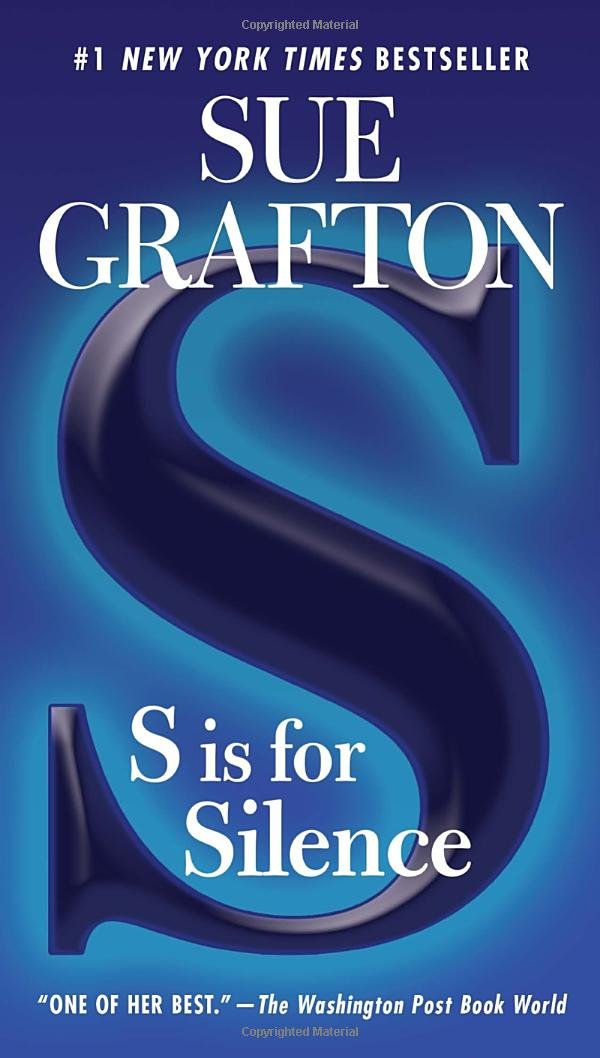
S is for Silence (Grafton)

S is for Silence, by Sue Grafton (2005)

(Not a review, just some notes to help me remember the things I've read. But written this way because it's the Internet, and some people will stumble across this page.)

After R is for Ricochet was a little disappointing, I decided I wanted to read another one before closing out the year. S is for Silence is another cold case for Kinsey Milhone. It's set in 1987 but she is looking into a mystery from the thirty four years earlier (1953).

Violet Sullivan, big on the violet theme with the color of her clothes and the smell of her perfume, left her house on the night of the Fourth of July, 1953, leaving her young daughter home with a babysitter. She was never seen again. Some thought she'd been murdered by her abusive husband, Foley. Others thought she'd fled her abusive husband. Either way, there had been no sign of her, dead or alive, since. Her daughter, Daisy, hires Kinsey's to find some answers. Kinsey is hesitant but agrees to look around for five days and report back, and let her decide if there is any reason to continue. Four slashed tires tell her that she's getting close to something and uncovering things that people want kept buried.

The book is a bit different in that it has dual narratives from 1953 and 1987. It's a little jarring at times. The narratives are not parallel. The flashbacks are usually centered on one person, and take place the weekend Violet disappeared. A couple events are retold from the opposite perspective. Nearly all center around Violet or involve her tangentially.

There are too many characters to get into, particularly since there are people back then who aren't around now. And honestly, since I didn't read straight through, I kind of lost track of who was who or how they were connected to the others either through family or work. Most of the guys are connected to Violet in some way because she chased after and slept with many of them.

Take all flashbacks with a grain of salt because of unreliable narrators. The only point of view we don't get is Violet's, which would be cheating if we knew. And nobody really knew her anyway. The rest of the flashbacks aren't told as flashbacks to Kinsey. They're outside of her story line.

I was surprised that there would be a new cold case so soon after a different one. One could imagine that writing in 2005 about 1987 about a 1953 disappearance that emerging technologies could track down some who tried to disappear and didn't want to be found. It was reasonable that Violet could be either dead or alive.

Cheney gets mentioned, but either he's busy or Kinsey is away. The retired guys Dolan and Oliphant also rate a mention early on. They would love this kind of case, but they aren't available, which is fine. The book didn't need to two of them arguing and babysitting each other. A consult with them might've been nice.

Again, for all the talk of family, there was none about Kinsey's family. It seems as if she dropped that thread, as surely as she reduced the "12 to 15 workings cases" Kinsey has at any one time to answering mail and paying bills. Just an occasional mention of filing a report, answering a call with a little more specificity or something would help.

That said, I enjoyed the book and finished it in just a few days. There will probably be a break before I borrow the next one.

It occurred to me, at this point, all the books are new to me. I stopped listening to books on tape by 2001, and probably sometime before that. It was a commuting thing. I never got past the middle of the alphabet, and they were usually in random order.

Friday, December 4, 2020

Another Dozen "Dozen" Game Books (Reed)

Another Dozen "Dozen" Game Books, Philip J. Reed (2020)

Below is a list of gaming supplements I've read through over the past few months. Mostly short, which is why there's a bunch of them, and mostly part of the A Dozen... line by Phil Reed, which is why there are about a dozen of them. Some of these might be rereads. I've added more description because this is as good a place as any to make some sort of catalogue so I can locate a supplement when I remember some unusual item that I could use in a game or a story.

The image above came from the last one I read. I noted the Elmore signature. I can't say that I'm overly familiar with Larry Elmore's work, but he did the art used on some of the cards in the old Guardians CCG from FPG, Inc.


  • A Dozen Strange Encounters (14 pages)
    some doomsday scenarios and planar gates
  • A Dozen Dungeon Hazards (7 pages, 2004)
    Open Game Content (OGC) for Ronin Arts: Fogs, Fungi, Molds & Slimes (12 examples)
    My "favorite: was my accidentally misreading "Necromantic Frog"
    But the Harmonic Mushrooms could fit into a story very easily.
    I remember oozes/slimes just damaging ("consuming") bodies, but never taking them over. Not good from roleplay, I guess.
  • A Dozen Planar Gates and Storms (8 pages, 2005)
    OGC. Ronin Arts: Fogs, Fungi, Molds & Slimes (12 examples)
    Interesting ways of how to get there, but not what you'll find there, which is a book of its own.
    Good ideas. The "storms" are things like the tornado in the "Wizard of Oz" or (not mentioned) "The Final Countdown".
    The gates are always gate-shaped like the Guardian (Star Trek), or Stargates, or Pylons (Land of the Lost).
  • Six Planar Gates (5 pages, 2005)
    Companion to the previous one. This one had more tradition gateways, although one was a carriage reminiscent of the Cóiste Bodhar, the Death Coach featured in Irish legend, not to mention Darby O'Gill and the Little People. The difference is that this one travels all the planes and will take you where you actually want to go.
  • A Dozen City Encounters (14 pages, 2020)
    Some ideas to use when the party is staying in town. Some of them might make good story prompts.
    There's a pied piper type who tells stories as a way of getting info out of kids. A half-giant leather worker who lives outside of town who will happily chat, and could be persuaded to make things. A couple other NPCs that I should make a list of. A summer festival (which might attract thieves) and an ominous fog.
  • A Dozen Adventurous Rivals (14 pages, 2020)
    Other recurring characters the heroes might meet, whether experienced or novice. Many races and classes are covered, along with what notable treasure they might be carrying. The heroes shouldn't be fighting them directly, for the most part.
  • 13 Starship Cargoes (12 pages, 2005)
    A baker's dozen, if you will. This supplement has d20 game mechanics, which are basically a foreign language to me, but I know enough that I can compare things to each other, and get a general sense.
    This is useful because my friend keeps encouraging me to write Dieselpunk, or whichever *punk that covers 1930s era spaceships that should have some plausibility to them. Thus my mind goes to cargo haulers and space cops.
    Of particular interest, the Voracious Monstrous Mantis and the Magnetic Slime, as well as the general description of the Mecha suits, which are more Aliens than Robotech. The last two pages are printable maps for cargo holds, which make me think about looking for the rest of the ship.
  • A Dozen Documents and Papers (7 pages, 2004)
    The legalise is reduced in size, taking only a fraction of the last page.
    This was a freebie extra for backing many of Reed's current projects. Some ideas might spring to mind, but mostly it was just an interesting read. Would I use any of this were I to create a story? I don't know. Includes d20 rules.
    Also included is a page and a half about Smithfield's Chocolate House, with information about real-world historical parallels. This was originally printed on his website, but after nearly two decades, who knows if it's still there. (No, I didn't feel the need to check.)
  • A Dozen Unusual Articles of Clothing (5 pages, 2004)
    Contains some examples of mundane clothing, but not the usual mundane clothing, and then some fine or enchanted versions. There's a list of garment colors by class, meaning upper or lower, along with clergy or wizard.
    The Dark Cowl of the Necromancer could spur a story by itself. Also, I learned about things like lirapipes (liripipe, when I searched online), gorgets, chaperons, great coats (okay, I knew about these), supertunics, houppelandes, tippets, and pelisses.
    Imaginary creatures mentioned include Tangtals (magical cats which could be skinned) and Thundershrikes (magical birds with colorful feathers).
    This is a little more than 4 pages, with the open-gaming license taking up most of the fifth page.
  • A Dozen Unusual Bracers and Guantlets (6 pages, 2006)
    What was likely the last of the "Dozen" series, until Phil Reed revived it last year (at least according to the intro page). Entries include BONENEEDLE GAUNTLETS (mitten-style with venomus teeth from a large spidery thing), BRACERS OF THE THIEF (handy item I could've used in a story, maybe in edits), CEREMONIAL GAUNTLETS OF THE DRAGON (valuable, but useless items, like a dragon puppet for followers of cults, with penalities to Dex), CLERIC’S GAUNTLETS OF HOLY MIGHT (holy mittens that lock a weapon in place, but no modifier?), FISTS OF THE BLOOD WIGHT (unholy mittens, basically the hands and claws of a blood wight, which bleed unceasingly, though from no detectable source [my phrasing]), GAUNTLETS OF THE ANGELIC CHOIR (shiny, feathery, extra protection but heavy so Dex penalty, do they have Luck in them?), GAUNTLETS OF THE GRAVE (clamshell design for holding polearms, dex penalty, they have arcance runes and an aura or death or fear, and usually worn by skeletons and undead soldiers ... but they're fur-lined), GAUNTLETS OF THE OOZE CHAMPION (ooze mittens that will fuse with the wearer's arms but could be removed with hot water, part of a set that gives command over oozes), HARD, SPIKED BRACERS (made by dwarves for a human, they're what they say on the tin, good in close combat for wounding and disarming), SEPULCHRAL FINGER GAUNTLETS (a sepulchral guardian, an unusual type of construct created from the remains of dead humanoids that are encased in iron, with spikes, dwarven masterwork), SKULL BRACERS (nothing special, but well-made, used by rogues), SPELLCASTER’S BRACERS (like a magician's trick, they can pull something out one's sleeve, such as a material component).
    This is actually 5 pages, with the open-gaming license taking up the last page.
  • A Dozen Unusual Materials (5 pages, 2004)
    Entries include ARCANE STONE (rare black stone from deep beneath the ocean used in jewelry and arrow heads, faintly naturally enchanted), BLACKWORK SILK (A powerful, uncommon silk woven from the web of an enchanted giant spider, blackwork has the strength of steel and the lightness of the finest natural silk), BONE OF THE UNDEAD (a powerful necromantic tool, could be useful in that Potions story I'm trying to write), DARKEST OBSIDIAN (black, volcanic glass, used artistically only), DRAGONNEL'S HIDE (the dragonnel, a foul beast that may be related to the abomination of a dragon and pteranodon, an evil creature with a massive wingspan and long, serpentine body -- sounds, familiar, I think I read this before. Oh, well.), HORROR CRYSTAL (sliver of a dead crystalline horror – an unnatural evil humanoid that’s made of crystal and glass, used artistically -- or is it?), GOLEM METAL (enchanted metals of a destroyed iron golem can, molten down and reforged into weapons or armor), GREEN (Emerald) MITHRAL (variation of the usual stuff), MOONRED HEART (a type of tree that grows deep beneath the surface world, a masterwork that will wither if brought to the surface), SCREAMING GOLD (when immersed in water, useful for alarms or diversions), SPIDER'S CARAPACE (hard deep black shell of a rare, underground spider used by drow for armor or wizard's for spell book covers), TROLL'S IRON (greenish metal from deep underground, below where dwarves dwell-- I wonder if those trolls would be tinier).
    The more I read, the more I realized that I'd seen this one before, even if I hadn't read the one before it. (The files are sorted alphabetically.) It must've been in the last list.f
    This is actually 4 pages, with the open-gaming license taking up the last page.
  • All Fall Down (4 pages, 2004)
    An independent storytelling game with random elements (dice and voting), plus counters. A little on the mark with talk of disease and depression in these days of Covid.


By this point, I have a separate directory on my hard drive, filled with Phil Reed files, so there will definitely be more to come ...

Wednesday, November 25, 2020

R is for Ricochet (Grafton)

R is for Ricochet, by Sue Grafton (2004)

(Not a review, just some notes to help me remember the things I've read. But written this way because it's the Internet, and some people will stumble across this page.)

I took a break from old anthologies and freebie downloads to revisit something more familiar. I haven't read an Alphabet book in over a year, so I was due. That said, this was a free download from the library, but it was a loan of a book that would've cost money to download from somewhere else.

It's still the 80s, around 1987, because "I Want Your Sex" is a new song on the radio. (There were other references earlier on, but that was one of the last ones, and it stuck with me.) She didn't use her portable typewriter at all, but there was ample use of payphones. Not a cellphone in sight. There were some big clunky computers and floppy disks but the action is taking place nearly 20 years before publication, which was about 14 years ago.

I don't know what the "Ricochet" of the title is supposed to refer to, except that Kinsey is just bouncing around a lot in this one.

Not that this is a review, but this wasn't one of the better ones. I still enjoyed it, but it was a bit light with several subplots working. Plus there was a note in the acknowlegdements that there was another subplot that was dropped.

For one thing, there's no case. Kinsey is hired by a rich guy, Nord Lafferty, to escort his spoiled, wayward daughter Reba home from the womens prison she's spent the last couple of years at for stealing from her employer. She's also supposed to watch over her for a few days while she gets settled in. (For one thing, Reba's driver's license has expired while in jail.)

Within three chapters, we have our subplots. Vera, from California Fidelity, and whose wedding Kinsey attended after being swept up in events from another adventure, which wasn't exactly a case, calls Kinsey and invites her to a gathering she's having. It doesn't take much to figure out that Vera is trying to set her up. She goes, there's so little chemistry that we don't even get much of a description of the guy or even a line of dialogue, and she heads out. Two things happen: one, we don't really hear from Vera for the rest of the book; two, Kinsey runs into Lt. Cheney Philips. The two have previously et, and kinsey might've been romantically interested but Cheney had run off and married some woman he hardly knew. Kinsey has sworn off married men after things didn't work out with Jonah. (And they didn't work out for Jonah, either, apparently.) Also, Dietz is in the wind, and she's okay with that. They had an unusual relationship.

Cheney ends up looking for Kinsey (and this might be my memory already fading, but he might've been the reason Vera really invited Kinsey, because Cheney lives next door). He has two things on his mind: first, the feds are looking into Beck, the guy who Reba stole from and they want to get her involved; second, he split from his wife and he wants to get involved with Kinsey. Kinsey's all for the latter, not fond of the former.

She finds herself playing friend and mother hen to Reba, watching her and trying to gauge whether she'd turn on Beck who she's obviously in love with, even though he's married. Unfortunately, some new guy at the FBI trying to make a name for himself tips Reba off to the investigation be showing her pictures of Beck leaving a motel with her best friend Onni, who is *not* Beck's wife.

Reba starts spiraling and doing what's she's going to do. Kinsey follows along to try to keep her from violating parole or destroying the feds case. At this point, she's pretty much along for the ride. About the only detective work to happen after this was tracking down a stripper in Reno who did time with Reba.

Oddly, Grafton, through Milhone, makes a comment herself that sometimes you're just a bit player along for the ride. I almost feel like Henry's family had more to do than Kinsey did. Unlike the Cheney romance, Henry's love triangle could've been removed from the book entirely. Or replaced with another story. Henry is set in his ways, and his family is going to be his family.

Speaking of family, the other branch of Kinsey's family (on the mother's side, so I can't call them Milhones) doesn't make an appearance or even rate a mention. She didn't think about them at all, despite all the family issues going on in this book.

This was a quick read for me. Practically a speed read. My last entry was only 20 days ago. I don't think I decided that quickly to download this book. In fact, I think I downloaded a freebie that I read three chapters of and told the guy that it wasn't for me. I didn't leave any reviews because no reason to be mean. He'd asked, I told him. He was grateful that I tried it out, and quite pleasant. Another thing, I haven't gotten a notice that the loan was going to expire soon, so it was probably two weeks to read, with all this other stuff I have going on.
Thursday, November 5, 2020

A Dead Djinn in Cairo, and The Haunting of Tram Car 015 (Clark)

A Dead Dinn in Cairo, by P. Djeli Clark (2016)
The Haunting of Tram Car 015, by P. Djeli Clark (2019)

(Not a review, just some notes to help me remember the things I've read. But written this way because it's the Internet, and some people will stumble across this page.)

First off, these are both novellas. The two of them together merit a separate entry as a single unit. The second book was released as part of Tor.Com's book of the month club almost impossibly coincidentally right after I read the original novella. Out of nowhere, I decided to look at my iBooks app instead of the Kindle app, then I opened Some of the Best of Tor.Com 2016, which I presumably downloaded close to four years ago. (It was likely released in early 2017.) And I started reading that novella even though I had skipped over an earlier novella in the collection because of the length. (I'll get back to it.) By the time I realized my mistake, I was committed to the story.

That book will get an entry when (and if) I finish it.

"Djinn" tells the story of Fatma el-Sha’arawi, special investigator with the Egyptian Ministry of Alchemy, Enchantments, and Supernatural Entities, who has to solve the mystery surrounded a large dead djinn. (I just looked up the department name to make sure I got it right.) She dresses "exotically" in English clothes, rather than standard Egyptian wear. Her partner for the case is Inspector Aasim Sharif, police liason with the Ministry.

The story is set in an alternate Cairo, 1912, some decades after the walls connecting realities was punctured and djinn and other supernatural creatures were able to come through. The other creatures include things that call themselves Angels but aren't really Angels. And there's something called The Rising that seem about to happen, but would be a good idea to prevent.

"Tram Car" is set in the same universe, but is not a sequel.It takes place a few months after the previous story, with a backdrop on a women's suffrage movement. Fatma gets mentioned early on, but doesn't get involved with this case. The Ministry of Alchemy, Enchantments and Supernatural Entities has to deal with a haunted tram car. Alternate Cairo has a very complex system of semi-intelligent tram cars running about the city, thanks to the presence of supernatural djinn. However, one of the cars appears to be haunting and attacked a mechanic and a female passenger. Agent Hamed Nasr and his new partner Agent Onsi Youssef are assigned to check it out. They soon learn that it's something that hasn't been catalogued before. Hamed is the department veteran, while Onsi is the new guy, who has his own unusual background and talents. Hamed tolerates most of that.

Their plan to exorcise the creature involves hiring a djinn, who don't work cheaply. The minister of transportation declines to pay for it and then informs them of the change in the law that requires MAESE needs to bear the cost. This sends Hamed and Onsi looking for alternatives as that would take a huge chunk out of their budget and leave them behind a desk for months. (The djinn haven't introduced air conditioning.)

Twists and turns lead to the discovery of what this creature is, where it came from, and how it got there -- and who is responsible for it getting there. Then there's the matter of getting rid of it, which leads to some interesting undercover work.

Both were interesting reads which immerse you into the setting. Of the two, I prefer the second, so they get better as you go.

Everything Is Ok (Tung)

Everything Is Ok by Debbie Tung (2022) (Not a review, just some notes to help me remember the things I've read. But w...