Tuesday, July 24, 2018

The Middle Ages: A History From Beginning to End

The Middle Ages: A History From Beginning to End, 2016

I don't remember where I heard about this book or why I downloaded it a few months ago, but it was a quick read. The book is part of an Hourly History series. I don't know if that means that the book was meant to be read in an hour or that there was an hour-long program on, say, the History Channel.

In whichever case, about 1000 years of history are crammed into one book. It was split into three segments and had some interesting highlights, but not much that I can remember two months later. I guess that shows you why I really need to keep this blog up-to-date.

TL;DR: It was interesting. Didn't hate it. Better than reading the material on wikipedia. Overall, I forgot most of it already.

Friday, April 6, 2018

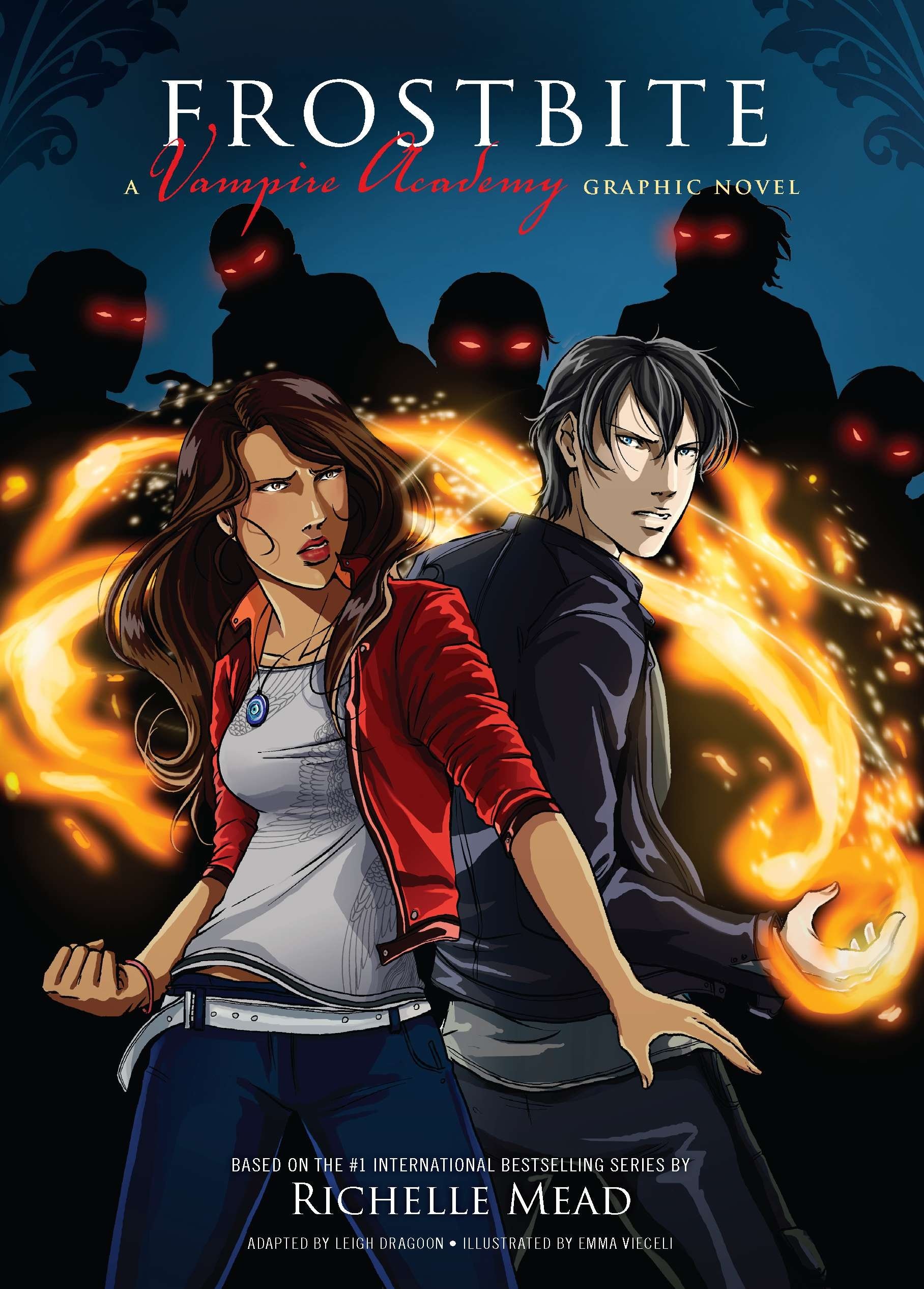
Frostbite (2008)

Vampire Academy, Richelle Mead, 2007, Graphic Novel


Frostbite, Richelle Mead, 2008, Graphic Novel

This review is about two graphic novels. The entry for the novel, Vampire Academy can be found here.

First off, I read the Vampire Academy graphic novel months ago, and could have sworn that I had an entry for it, but I don't see one. The school I'm currently assigned to has the graphic novels for the first two books in the series in their library. I figured that I'd "reread" the first book, just to familiarize myself with the characters and the story line. I'm glad I did. I needed to get used to the images of the characters. Rose in the comic looks nothing like the cover of the first novel, but that's okay because it's a different artist.

The other thing that struck me, and which wasn't really a surprise, was how much of the book had to be left out to make it into a comic. I was still able to follow along for two reasons: one, the essentials are there, and two, I'd read the book, so I could fill in the gaps.

After reading the first book, I was not opposed to reading the second installment. However, as I'm not the target audience for the book, I wasn't going to go out of my way to track down a copy. I have plenty of things to read that I never get around to. (Another reason for this blog: I can't write new entries unless I read new books, so it'll prod me along sometimes.)

The comic was enjoyable, but I thought it likely missing parts of the book. The teen drama parts fill up a good part of the graphic novel and then the ending comes rushing at you. Again, that might just be my perception because of my demographic. But it didn't turn me off from wanting to read the book, which is something.

Frostbite gives us more background about the mythos governing the two types of vampires. We also get to meet Rose's mother, and learn about their strained relationship. Not surprising that they can't have a normal family life -- they are both dhampirs. Rose is training to a Guardian, and her mother already is one. The vampire's they protect will always be their first priority. That's part of the reason Dmitri resisted Rose in the first novel (other than the whole icky age thing, and the fact that she's a student in the academy).

Speaking of which, the relationship between Rose and Dmitri moves along, not just as trainer and pupil. The twist here is that another vampire comes along wanting Dmitri to be her Guardian, and he considers it.

The other twist to this book is that the Strigoi have enlisted the aid of humans to attack the Moroi. This is discovered from the use of weapons, such as a silver stake, that Strigoi can't touch.

In the end, Rose grows as a Guardian, getting closer to her hopeful position being Lissa's Guardian.

Thursday, January 25, 2018

Grimm's Fairy Tales (Grimm)

Grimm's Fairy Tales, Jacob Grimm and Wilhelm Grimm (unknown)

The ebook has a publication date of 2012 online. The book itself has a date of 1922, which I assume is for the illustrations. Wikipedia puts publication at 1812.

Over the past few years, I have read a few books that were updated takes on fairy tales: either continuations or retellings from a different point of view, with or without "modern sensibilities". Going through some of these made me realize that I've never read the original fairy tales, even though I've had hard-cover copies of them.

I don't remember when I downloaded this book, probably a couple of years ago. Like with most fairy tale books, though, I can only read so many before I need to move on to something else and get back to it. Basically, I started this sometime last year, reading a tale or two on short train rides or when I was between books.

Most of familiar with the sanitized or "Disney-fied" versions of the stories, and many know the harsher realities. I thought I did. Maybe it was the translation, but it seemed that some of the "real" endings that I thought I knew to some tales weren't real. Likewise, it seems like there was some borrowing amongst the stories as well. Plus, some tales have similarities, like "Tom Thumb" and "Thumbkins", or similar names, like "Snow White" and "Snow-White and Rose Red". Most have similar morals and harsh penalties.

This is something everyone should read (maybe not this particular version). This edition has only 25 tales, so I could see myself downloading another one in the future. Just not right now.

Wednesday, January 24, 2018

A Brave and Startling Truth (Angelou)

A Brave and Startling Truth, Maya Angelou (1995)

I saw this in the school library, a slim volume of poetry, and I needed something to read while I was on hallway duty.

I am not going to critique Maya Angelou, but I will comment. First off, this wasn't a collection, it is a single poem, which she read at the 50th anniversary of the United Nations. It is about the people of this planet coming together, united.

To talk about my usual poetry complaints: they aren't here. This is free verse that is pleasant and pleasurable to read. The line breaks make sense. The page breaks (which would be stanza breaks) make sense.

Also, I love the imagery and word choice. Just to pick a couple of lines out:

When the curtain falls on the minstrel show of hate
And the faces sooted with scorn are scrubbed clean

Minstrel shows are offensive. The characters have faces blackened with soot (or makeup), and the players scrub them clean afterward. "Sooted with scorn" carries so many meanings here. That's what I like about poetry, when it accomplishes this.

Otherwise, poetry is not a preference of mine much any more.

Library catalog number 811 ANG C.4

Tuesday, January 23, 2018

Black Cat, Volumes 1-4 (Yabuki)

Black Cat, Volumes 1-4 Kentaro Yabuki (2006)

Unlike the last series I read, there are more than 4 volumes of Black Cat. It's an ongoing series, but only the first four were available for me to read. The series was release in 2001, with the English versions arriving in 2006.

The series follows the exploits of Train Heartnet, once an assassin for an organization called "Chronos", who now makes a living as a "sweeper" or bounty hunter. Train has a tatoo of the Roman numeral XIII, which is as much a reference to bad luck as the name "Black Cat" itself. The name "Chronos" would indicate time, and the fact that he is number 13 is a little odd, but definitely keeping with his character. He's also an expert marksman, having as much luck as skill with his pistol. He can hit other people's bullets mid-flight.

The organization he worked for, and those who know of it, believe that the Black Cat has been dead for the past two years. It's likely that there will come a reckoning when Chronos comes after him, but, thankfully, that doesn't happen in the first four books. There's time for that.

Train's partner at sweeping is Sven Vollfied, who wears an eye patch (for a reason) and follows a code of conduct. Chivalry isn't dead. His backstory, and what's so special about the eye under the patch, show up early on.

The two of them rescue a girl named Eve, who was basically bio-engineered and filled with nanites or nanobots or whatever terminology you want to use. She'll like be a superhero in her own right in the future, but right now, she's just a kid who needs someone looking after her even if she wants to be useful to Sven and Train. She can morph parts of her body by concentrating so that, for example, her arm can become a sword.

Recurring in the first books (and on the cover of Volume 1) is Rinslet Walker. (There are times I read that as "Ringlet" -- I need new reading glasses.) She's a thief who hires the sweepers when it meets their mutual interests. She gets something valuable, and they get a bounty.

One of the problems so far is that Train and Sven are in a bit of debt from bills (no loan sharks or anything nefarious), so they could use one big job to pay it off. But even when they manage to score a big one, the money seems to get away from them pretty quickly. It may be a running gag, but it'll get old fast.

As mentioned before, Chronos is not looking for Train, but there is another organization that is forming, called Apostles of the Stars, and they intend to challenge and topple Chronos. Its leader is Creed Diskenth, who is surprised to learn Train is still alive. Train beat out Creed to be XIII in Chronos. (Numbered people are the important ones. Or the important ones get numbers.)

Where it will start to get wearisome is that everyone will have special powers and abilities. This will, in effect, make Black Cat less special. (This was a problem I had with One Piece, where eating the Devil fruit should've been bad for pirates, but it seems every powerful pirate had done just that!) We have people who can cut themselves and manipulate their blood or touch a person and raise their body temperature to explosive levels.

And even though we've met Number II in Chronos, who seems somewhat normal, who knows what powers I, and III-XII will possess?

Will that stop me from reading farther? Probably not. I'll probably start looking for these in the library before summertime.

Monday, January 22, 2018

Life's Little Instruction Book, Vol III (Browne)

Life's Little Instruction Book, Vol III H. Jackson Browne, Jr. (1995)

I probably picked up this little gift-book edition sometime in the late 1990s and it's been sitting on a shelf or in a box ever since. You could classify it as self-help or inspirational or something like that, but it's a list of 500+ things that you could or should do to make your life, or the lives of those around you, better.

This is the kind of thing you could probably find on a list on the Web somewhere. Even in 1995, this could probably be found on a "listserv" or a place like "cathouse.org". (I have no idea if that site still exists, and I'm not checking.)

Most of these instructions are short, pithy one-liners, reminders of advice that your parents or grandparents might've told you. There are things that they told you that you should do, but you didn't know why, so maybe you don't. But then you realize, what if you did? Would things be better?

Suggestions are both general and specific, and sometimes brief and rapid-fire. The specific ones aren't too bad, but they could be problematic. For example, if it says to hike a particular piece or watch a specific movie, you run the risk of filling the book with these. It doesn't need to be (and it isn't) a travel brochure.

Spoiler Alert: here's a page from near the end of the book

"Teach by example Commit yourself to a might purpose Live simply Think quickly Work diligently Fight fairly Laugh loudly Love deeply Plant more flowers than you pick Remember that all important truths are simple Rescue your dreams Include your parents in your prayers"

A quick read, but don't read it too quickly. Read a few pages, and think about them. If it's a book that you're likely to keep, circle or highlight some of the items. Maybe color-code them.

Me? I've had it long enough without reading it. I'm leaving it on the bookshelf of the Teacher Center at my current school before the end of my assignment here.

Note: This was one of the last two books I read in December, finally getting a write-up.

Sunday, January 7, 2018

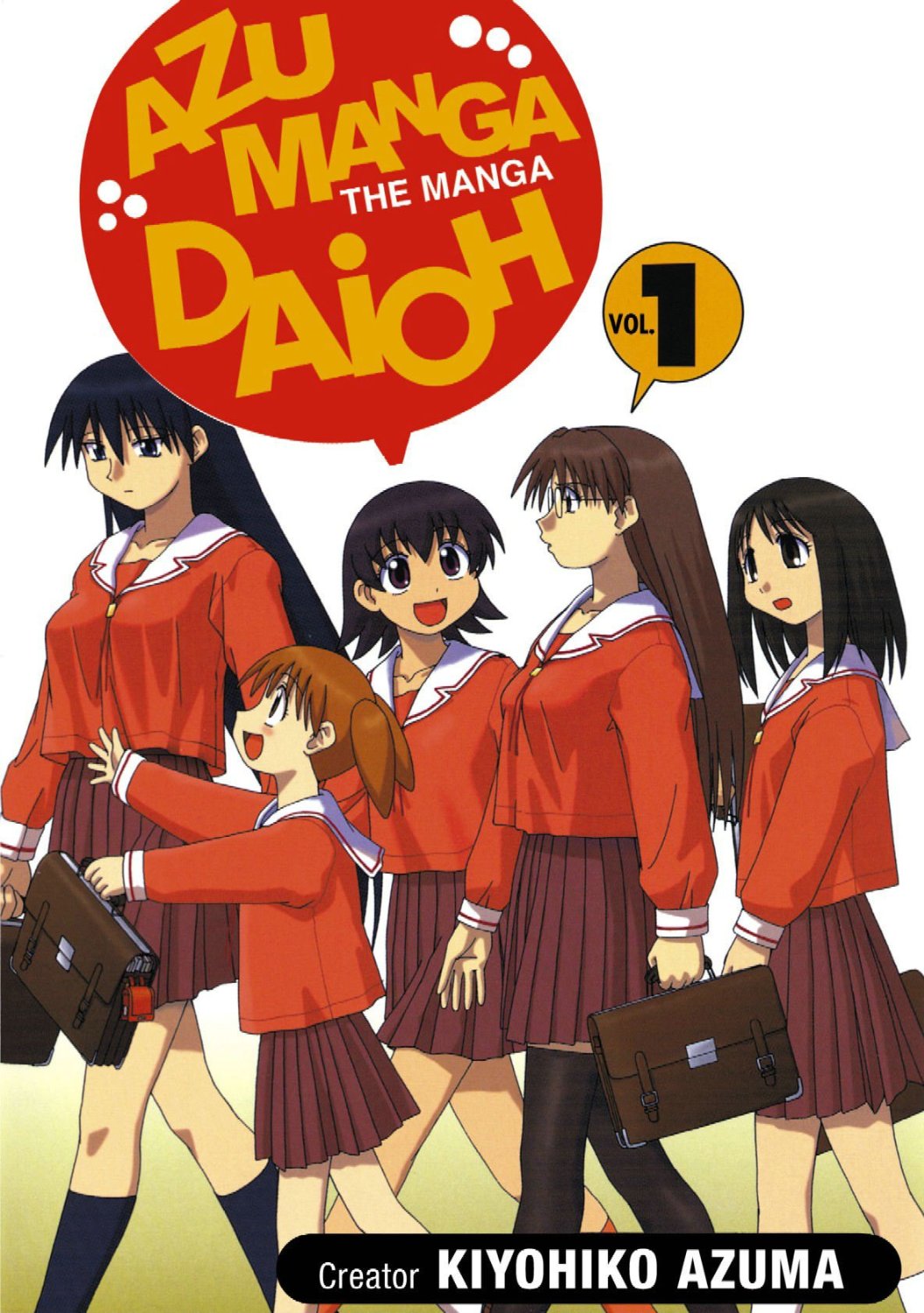
Azumanga Daioh, Volumes 1-4

Azumanga Daioh, Volumes 1-4 Kiyohiko Azuma (2000-2004)

I had a recent assignment in the Library of the school to which I'm currently assigned. I spent part of that day organizing the manga shelves. Part of the reason for this was to scope out something new to read.

Oddly, despite all the volumes, the choices where slim. I wanted something where the first volume wasn't missing nor were there any early gaps in the sequence in case I got interested and the story dragged out for multiple books. Of the ones that qualified, quite a few were romance books, which I wasn't interested in. And one seemed to be about chess, which was a maybe. But I saw the four volumes of Azumanga Daioh, so I took the first one. It wasn't objectionable, so I borrowed the other three as well.

First off, I'm not the target audience. Secondly, I understand that there's animation of the series (doesn't surprise me), and if it were available on some platform I currently subscribe to, I might check it out.

Basically, the four books tell the story of a group of girls as they go through high school, each book being roughly a year in the life. There are boys at the school, but rarely seen, and there's no romance (or lovestruck teens, wishing from afar) to be found in these pages. Also, there are two teachers, one the girls' homeroom teacher and the other the P.E. teacher, are important. (I originally thought it was going to deal more with them.) As for male teachers, the only one there, which I guess would've been comic relief back then, is a little too creepy today. Although he's married with a daughter, he likes looking at teen girls. (He doesn't try to date them or anything, but it's creepy.) Also, he's drawn in a style that suggests that he's an anime character that always SHOUTS his lines. I didn't like him.

As for the girls, well, some of them were a little interchangeable. The artwork was small and the characters wore uniforms. Between some of them, the only difference is the way their hair is drawn and maybe their eyes or mouth -- until they're shouting or being expressive, when I wasn't sure who was who. (At least once, I didn't know if it was a student or the teacher.)

One exception was Chiyo Chan, who at the age of 10, was placed in high school. She was also wealthy and had a summer home that the girls and their two teachers went to each year. She didn't seem to get any bigger over the four years.

Another is Sakaki, who was the tallest. She was quiet, brooding one who actually wanted to be friends and included in things. She also wants to pet stray cats, but they always bite her hand. It's a running gag, which takes an interesting turn later on.

Yomi is the second tallest, has lighter hair, and wears glasses (sometimes you can see her eyes through them). Her main concern is her weight, although her later concern is getting into college or university.

Tomo and Osaka round out the cast, except that Osaka is not her real name, it's where she's from. They except her to have a certain attitude (in the English translation, it might as well be a Brooklyn attitude), but she isn't like that at all.

The format of the books looks like four-panel vertical strips, two columns to a page. Each column had its own title, but I stopped reading those for the most part. At least once in each book, the format would switch up to a more traditional comic format, which was welcome. The biggest problem I had was the small print was sometimes a killer on my eyes, even with reading glasses. Yes, I used my phone's camera's zoom lens a couple of times.

While I enjoyed these books, they weren't anything great for me. They had good moments and I'm not sorry I read them. The four books are the entire series.

I'm assigned to this school until the end of the month, so I might try to sneak in a few more books. Oddly, one comic I considered taking out was checked out by a student before I had a chance. (I can't deny the students -- it's their library!) However, it's supposed to be back this week. I'll make an exception for Richelle Mead's Vampire Academy because I've read the first book and there were two graphic novels on the shelf. However, I didn't want to read the second without re-reading the first to get familiar with the characters again.

Friday, January 5, 2018

A Reminder for People Finding this Blog through Search Engines

Thank you for visiting my blog. This blog is a list of my recently read books. It's actually meant for me to keep track of the things I've read with a few notes about what the book was about or the characters involved.

That's how it started. I don't mean for it to be a "book review" site, although it will sometimes read like that. I try to avoid spoiling ending or anything in case someone stumbles onto this page by accident. Once I remind myself what a book was about, I should remember the ending. And if I don't, well, then it wasn't worth remembering.

Comments are welcome, as are suggestions based on other things I've read.

Fact checking is welcome, as well, as I type from memory. For the purpose of this blog, while I desire accuracy, it is not mandatory. However, corrections can be made if I'm way off on something.

-- Christopher Burke

O is for Outlaw (Grafton)

O is for Outlaw Sue Grafton (1999)

Up until now, we've only had glimpses into the earlier life lived by Kinsey Milhone before she became a detective, and we've even discovered, as she did, that what we knew wasn't totally true. We know she'd been orphaned, and raised by her aunt. We know that she'd been a cop, and married twice. We thought we knew that she had no other living relatives, until they suddenly showed up and we learned more about them.

Now we get to learn more about her ex-husband from her short-lived first marriage. First off, his name is Michael Macgruder, aka Mickey, and secondly, well, we learn about his past more than his present. He doesn't get to say much in the here and now.

Kinsey doesn't have a case this time. She's on her own. In fact, she'll even be a suspect before it's over. The novel opens with Kinsey getting a call from someone who has a box of her old possessions, report cards, yearbooks and the like. The caller had bid on the contents of an unpaid storage locker in the hopes of finding treasure, and now he's offering to sell Kinsey back her stuff so he can make back what he overpaid. Kinsey realizes that the locker must've belonged to Mickey, her first husband, who she walked out on. This bothers Kinsey because Mickey was always good with managing money, so, she believes, he must've fallen on hard times. This spurs her on to investigate, if she can just get a fix on where he's living, because he's also good at hiding in plain sight.

To further complicate matters, in with her possessions is a note from an old acquaintance from 15 years earlier, pretty much admitting that she had had an affair with Mickey during their brief marriage, but also that it coincided with an infamous incident that got Mickey kicked off the police force. Mickey had an alibi for a death that Kinsey thought he might've had a hand in. Mickey even wanted her to lie for him regarding the events (without telling her the truth of where he was). That was the end of the marriage.

Now feeling guilty, she starts tracking down the folks who hung out at the old bar back then. It isn't long she finds out that Mickey has been shot with a gun that he had bought her but that she had left behind. He's on life support, and she is a suspect. Now she has more reason to find out what happened to Benny Quintero, a Vietnam vet, that night 14 years earlier.

As with the rest of Grafton's books, you have to keep in mind when they take place. Even though it was 1999 when published, it takes place in the mid-80s. In fact, there's even a reference to the events of L is for Lawless happening only a few months earlier. In this case, the action takes place 14 years after some events that occurred during the Viet Nam War.

Go with it, and you won't find yourself "doing the math" when she's in Louisville, Ky (on her own dime), looking through high school yearbooks.

As with her other books, I enjoyed reading it. I did put it down for a couple of weeks in the middle (due to real world events, really). I would have liked a little more information about Mickey, maybe some exchange between him and Kinsey, closure or whatever, but I won't complain about what we got.

On a sad note, I finished it one night at the end of December, right before bed, and the next day, I read that Sue Grafton had passed away. I don't know if she had planned a finale for the characters in any way, or if "Z is for Zero" would have been just another case, but now we'll never know. I wouldn't want Kinsey's swan song ghost-written by someone else. Better than it remain unpublished.

Wednesday, January 3, 2018

2017 -- The Year in Review

One of the problems I always have with lists of the "best" books of any given year is that I rarely get to read books in the year that they are published. I guess I rely so much on word of mouth for new things, and if they are popular, I won't see a copy of it.

Secondary problem, I'm at a point where I have way too many books, so I don't purchase too many. I might get a new book as a gift, or if I'm getting it signed by the author, which hasn't happened for a new release since I worked in midtown Manhattan.

My reading time could be summed up as follows: before bed, on the subway (not buses), and lying around in the pool. (Yes, in the pool, so my choices are limited -- no ebooks, obviously.)

Looking at this blog, there were 20 entries from 2017. One of those had two books, and another mentioned 30 volumes of manga read over a 12-month period. Assuming half of those were read in 2017, that's 35 books, which isn't bad.

Add to that a few more books that weren't written up yet, and that brings the total to 40. Not horrible, actually.

I think that my summer challenge turned into an interesting experiment, but too many of the books at my local library were reference books, not suitable for summer reading, and I found myself picking up quite a number of "young adult" selections. Nothing wrong with that, in general, but at least one was aimed at a middle school audience.

I'm not looking into any "goals" or "challenges" this year. If one comes along that interests me, fine. Otherwise, that's fine, too.

The books that I've been reading are generally large, and my time devoted to them (especially if I'm driving) is short. Not a good combo if the plan is to read N number of books. I mused the thought of tracking pages, but even this is silly given some content. For example, last year I read a book of poetry, a photo essay, and a book with large print. For that matter, I couldn't say how many pages ebooks have because it depends upon the font size.

So, no goals. Plans? Well, I have to read some more Eric Flint before Heliosphere, NY this year, where Mr. Flint will be one of the guests of honor, and a mini-1632 convention will take place within the larger sci-fi convention.

I will continue to read more of the recently departed Sue Grafton, eventually, though not likely in 2018, getting to Y is for Yesterday, which will, sadly, be the final letter of the alphabet.

I will finish at least two books of fairy tales that I've started but put aside because I can only read so many before my mind wants something else.

I will get more of the paper books off my shelf and out of the house even as I bring in my electronic ones.

There will be more manga and more math books, and possibly a manga math book!

There will be words, pictures, poetry, and whatever may come along that strikes my interest.

And there will be write-ups, summaries and reviews, even as I re-evaluate just who I'm writing this blog for.

Looking forward to 2018, which has already started, and I'm already reading.

Wednesday, December 6, 2017

N is for Noose (Grafton)

N is for Noose Sue Grafton (1998)

After a couple of false starts going through some "between books" books, I returned to Sue Grafton, starting the second half of the alphabet. (I'd say the end is in sight, but, of course, the last two books have yet to be written.) As always, the action takes place a few months after the previous installment, so even though the book was published in 1998, the action takes place sometime in the 80s. Specific dates aren't mentioned, but you have to keep in mind the technology. Granted, even if it were 1998, Kinsey likely would not have had a cellphone (or even a Blackberry) and pay phones would still be around. The Internet, as we know it, would be in its infancy. But that doesn't exist here.

The story opens in Nevada, for a change, as Kinsey Millhone is caring for her boyfriend, Robert Dietz, who is recovering from surgery. Once he's able to get around on his own, there isn't any need for Kinsey to play the domestic, so she prepares to drive home to Santa Teresa, California. On the way back, she stops at Nota Lake, California to check in with a possible client, referred to her by Dietz.

Selma Newquist is a recent widow after her husband, Tom, who worked for the local sheriff's department, died out on the road. There's no murder mystery here -- Tom died of a heart attack. There isn't anything to suggest it was anything more that that. However, Selma is convinced that something was bothering Tom in recent months, and she hires Kinsey to investigate to see if she could find what troubled him. She reluctantly agrees, figuring that if no leads turn up in a few days, she'd call it off and go home.

Her inquiry has two sides: interviewing friends, family members and coworkers at the Sheriff's department, and going through the papers and bills in his office at home. The interviews review that Tom was well-liked, but Selma? Not so much. Also, there may or may not have been another woman involved. People are happy to help, but in a small town, no one likes a snoop.

The main clues are phone bills showing out-of-town calls, a missing police notebook and some doodles and numbers on a desk blotter, which include a noose, as in the title. Coincidentally, the odd phone calls go to Santa Theresa, giving Kinsey reason to go home. Another reason to go home: someone follows her car around the neighborhood one night, and then breaks into her rented room and breaks her fingers. So there's definitiely something there that someone doesn't want found, likely dealing with Tom's last case, but his notes are missing -- not in his house, the car, the scene of his death, or the sheriff's office.

There are minimal appearances by the usual Santa Teresa players, and the newfound family members don't get a mention this time. No weddings or any personal, non-investigation events of any consequence.

A murder in Santa Teresa links up with another five years earlier in Nota Lake. The victim in the second case was a person of interest in the first. But by the time Tom got there, he'd already run off. Next anyone heard, his body was found, months after his death.

So I enjoyed this one like I enjoy most Kinsey Millhone stories. Grafton usually finds a different take on a story instead of a straightforward procedural. (Her first novel in this series had her solving a crime for someone who had already been found guilty and served the sentence.) However, this one seems to lead Kinsey around until the facts fall into place when they're needed to. For instance, she interviews one hotel clerk, who has some information about another man who visited, but she didn't get to talk to the other one before being called back to Nota Lake. So a key piece of information isn't gathered -- in this case, a description of the man, where even knowing black or white could telegraph the ending. Likewise, when the notebook is finally found, along with the phrase "the key is on the desk", it's readily apparent that the "key" is a cipher key, not a physical one to a lockbox somewhere. (Because any physical key or physical safe would have been previously found and vetted by this point.)

Kinsey also "hangs a lampshade" on the fact that so many of the people she'd met in Nota Lake had five-letter names. I wish she hadn't. While she's trying to figure out want this string of coded numbers might mean, it might've been neon lights saying, It's a Name!

And I may not be the greatest sleuth, but I crack the code using the info provided at least a chapter before Kinsey. Granted, she might not have been at 100% at the time.

As with the last book, when the ending came, i thought it unraveled a little too quickly, and I might've like a little bit more of an epilogue. Sure, the case is over, but for all the added info in the middle of the story unrelated to the case, maybe a little explanation after the fact would be nice. Or even just a deputy showing up and making arrests? Maybe that's just television bias.

Moving on to O is for Outlaw soon. I'll check the library for an ebook.

Tuesday, December 5, 2017

Bleed, Blister, Puke, and Purge (Younker) -- Summer Reading Challenge

Bleed, Blister, Puke, and Purge: The Dirty Secrets Behind Early American Medicine J. Marin Younker (2016)

My Summer Reading Challenge was technically over, as was summer itself, but how could I pass up a title like this one?

This is definitely a case of Know our Audience. I'm sure there are pretty of kids interested in all the gruesome details when explained in such an icky way.

It was a quick read, and a quick look into how America was lagging in the field of medicine from the founding right through the Revolution. In many cases, the "cure" or "treatment" was worse than the illness, and patients were likely better waiting out a disease.

The colonies (and the States afterward) didn't have great medical schools, or medical training, or medical libraries, etc.

Spoiler: Things got better, of course. But in the meantime....

Library catalog number: YA 610.97 Y

Fairest of All (Valentino)

Fairest of All by Serena Valentino, Illustrated by Fiona Marchbank (2023) A Villains Graphic Novel Adapted from Serena Valentino's b...