Wednesday, September 30, 2020

Unidentified Funny Objects, Volume 1 (Shvartsman, ed.)

Unidentified Funny Objects, Volume 1, by Alex Shvartsman, ed (2012)

(Not a review, just some notes to help me remember the things I've read. But written this way because it's the Internet, and some people will stumble across this page.)

Okay, maybe this is a little bit of a review because I'm not really going to make notes about the stories.

UFO is an annual humore anthology. Number 8 was "Kickstarter-ed" earlier this year. I participated (and submitted a story unsuccessfully) and as an add-on, I bought Volumes 1, 2 and 3.

The first volume contains nearly 30 stories of fantasy, sci-fi, and "real life" (in a somewhat warped way). The stories are not necessarily UFO or alien in nature. That's just a cool title.

The humor ranged from mildly amusing to irreverently hysterical to what the hell did I just read? There were a couple I couldn't remember by the time I finished them -- particularly if I was reading them at bedtime and they knocked me out.

That's not a big criticism though. It's reflective of the nature of humor. No two stories are alike, so there's bound be some that you won't find funny. They may not be the same ones that I didn't find funny. And it's probably the reason that I read it from cover to cover without a break. Many times, I put anthologies down for a while after a few stories.

Sunday, September 13, 2020

Fantastic Voyage (Asimov)

Fantastic Voyage, by Isaac Asimov (1966)

(Not a review, just some notes to help me remember the things I've read. But written this way because it's the Internet, and some people will stumble across this page.)

Note: the book is a novelization of a science-fiction film directed by Richard Fleischer and written by Harry Kleiner, based on a story by Otto Klement and Jerome Bixby. The novel was printed first, but Asimov didn't create the story behind it. He just made some "smart writing" out of it.

As the pandemic was just gearing up and teachers were required to report to school, even as the children were not, I found myself in an Englsih/Language Arts classroom. The teacher had left some books "to be taken". Yes, they were meant for kids, but I left all the ones that kids would read. I don't believe that Fantastic Voyage would have been taken by anyone other than an adult of similar age to my own. A hardcover book, it still has the label from the school library shelves.

I've never seen the movie, though I remember parts of it on TV when I was younger -- my older brothers might've been watching it, and clips might've appeared on shows about movies and special effects. I remember picking up a copy of the paperback a long time ago as well. Probably in high school. I didn't get very far into it. Perhaps had I seen the movie, I might've done better.

The same is true now: I would've gotten through it faster had I seen the movie and been more familiar with the story. As it was, the first few pages were a little tedious introducing the characters mostly through dialogue. After that, it sailed pretty well. The pun wasn't intended, but what they hell, I'll own it.

The story is set in a backdrop of the Cold War, but no enemy is mentioned. Just "them" or "the other side". A defecting scientist is attacked en route to a secret base and suffers a brain clot. It's inoperable and he's going to die if something drastic isn't done. The problem is that not only does no one know his secret, but they don't know if the "other side" knows it.

Pioneering research has been done in miniaturization, with a semi-reasonable explanation for where the extra mass goes. Now the limit is being pushed to shrink a team to the size of a bacteria, but it can only be sustained for an hour. After that, it will undo itself automatically. The team has that one hour to save Bendes' life and make their way to safety.

Actually, it's fairly routine, and the mission could be completed in under ten minutes without complications. But, of course, there are complications. Those complications could be accidents, or they could be the work of a saboteur working for the "other side".

The team consists of Capt. Owens who controls the sub; Dr. Michaels, who is mentioned as a pilot but is basically the navigator; Dr. Peter Duval, who is going to operate on the blood clot with a laser; Miss Cora Peterson, Duval's assistant; and agent Charles Grant, a soldier who is put in charge of the mission

Michaels scanned as much of the circulatory system as time allowed, and he navigates the sub through its journey. Miss Peterson -- I went back to double-check this -- is only a year out of graduate school with her Masters degree, so she isn't a "doctor" or anything, but she is Duval's assistant, and he won't procede without her.

Grant is put in charge to make final decisions after getting input from all concerned because any one of the crew -- even Grant himself, but he knows he's okay -- could be working for the "other side" to make the mission a failure, so that the patient dies. There are many times when the doctors think they fail have failed and should call to extracted, but Grant doesn't abort a mission until he sure that every avenue for sucess has been tried. Grant also serves as the non-scientist (like many of the readers) who has things explained to him.

At 180 pages, it was a quick read. It gave a brief tour of the circulatory system without being bogged down in technical terms. There was a sample chapter of Forward the Foundation which I didn't bother reading. (I listened to Prelude to Foundation and remember little of it.)

This was my "pool read", the book I took to read in the pool in the yard, not worried if it got wet.

Sunday, August 23, 2020

A New Look at Arithmetic (Adler)

A New Look at Arithmetic, by Irving Adler (1964)

(Not a review, just some notes to help me remember the things I've read. But written this way because it's the Internet, and some people will stumble across this page.)

This was another math book removed from the libary of William E. Grady High School, which would have been disposed of by the Math Dept had I not rescued it. (Said rescue will likely end when scifi conventions start again, at which point, I will attempt to "pass it on.")

It has diagrams by Ruth Adler. When I taught at Grady, the Math Coach was named Jill Adler. Had I read this book sooner, I might've inquired if she were related. You never know.

I found this book amusing to begin with because it was geared to folks who needed to learn the "new math" of the 60s, as opposed to the new math of the past decade. The one reason that I was aware that there was new math in the 60s was because of a Tom Lehrer song.

In any case, the first chapter goes into great detail about sets. What's funny is that I remember learning about sets in early years of grade school, but they sort of fell of the radar after a while. And when I began teaching, students weren't too sure about what a set was. They only knew Venn diagrams from English classes where there would compare and contrast texts.

There isn't much to see about this book because I've covered a lot of the same material with the prior math books. If I could say one thing, it's that I found myself skimming and skipping ahead not because it was becoming confusing and unreadable but because it was very familiar material and tended to plod on longer than I needed.

If I had to say something else, the negative would be the confusing things about naming sets after numbers (or vice versa?) and then summing 2 + 3 to get 5, when the examples until then should give you 3. The positive would be seeing the method for finding square roots by hand that I had to do way back when. Obviously, this got very tedious for more than 3 significant digits.

I acutally have a couple more math books, but I have regular books that need to be read, in print and ebook formats, including one I don't mind taking into the pool with me. Those are next.

Friday, August 21, 2020

Wolf's Empire: Gladiator (Christian and Buchanan)

Wolf's Empire: Gladiator, by Claudia Christian and Morgan Grant Buchanan (2016)

(Not a review, just some notes to help me remember the things I've read. But written this way because it's the Internet, and some people will stumble across this page.)

In the spring of 2019, I attended a science-fiction convention, Heliosphere NY. The announcement for 2020 stated that Claudia Christian of Babylon 5 fame was going to be one of the two Author Guests of Honor the following year. I was unaware that she cowrote a book, but I immediately signed up for 2020 and put the book on reserve at the library.

Fast forward a bunch of months, and the library deletes the request and says it doesn't have the book. A few months after that, Christian and Buchanan cancel because of a "scheduling conflict". Shortly after that, the con goes online because of the pandemic, and the library finds the book and sends it to my local branch.

And then the libraries closed, so I had plenty of time to read the hefty tome. I needed it. Especially because I put it down a few times.

The quick review, even though this isn't really a review, is that it's way too long. And I knew it would be a saga from the colon in the title.

The story is set in a future where the Roman Empire never fell. Instead, it grew and took over the galaxy, which got divided into the seven houses, like the seven hills of Rome, with each house still having a presence on Earth. Throughout all that time, it's still a patriarchal society, although women can pursue many occupations and be fighters and gladiators.

Accala Viridius is a noblewoman who becomes a gladiator, training with a semi-intelligent boomeranging super-discus, which also appears to be one of a kind, because nobody else uses one despite how amazingly useful it is. Her mother and brother are killed when the planet they were on was bombed by another house. Now she wants revenge against that house. Her father just wants her to not bring shame to the family. She tries to enter the Imperial Games where she confront and even kill her enemies. Her father prevents this from happening. In the end, the Sertorian house, which bombed that far-away planet and murdered her family, wants her to join their side. After some convincing from her uncle, a high muckety-muck in House Wolf, she becomes a mock-Hawk. As the action unfolds, you would think it was a Hawk's Empire, not the Wolf's. And that is what that house aspires to.

The Imperial Games, which are supposed to settle any civil war, are set to take place on that same planet Accala's family perished on. There's a long trip with training and proving herself, and then a gruelling race. The race makes absolutely no sense.

Each house sports a team with 8 players for the entire gladitoral combat. But first there's a gruelling trek across the hostile planet with combat between the houses. One wouldn't expect all the combatants to survive the trip to the arena in the first place. In fact, many don't, but more survive that you might expect. Granted, the Sertorian team is cheating through the use of ambrosia to make them superhuman, and it's still difficult.

Not even halfway through the book and you're screaming to get to the arena already, or just blow the whole thing up. Okay, so the latter happens.

If I have another problem with the basic story it'd be this: in many tales, the protagonist loses everything but then rises to become a hero in spite of it. In others, the hero has to lose everything before they can truly become great. This is the latter, where so much is lost, you have to stop and wonder -- "Wouldn't a real hero have been able to prevent some of this? Any of this?"

Many characters lose everything near and dear to them, friends, relatives, limbs, their lives ... but some of them get better. It gets to the point where they could literally be taken apart and put back together again. But are they still human?

I couldn't wait to get to the end of this, and I don't feel any need to run out and get the next book. Since the library didn't list another book, that would be another strike against it.

Note: over 500 pages.

Sunday, July 19, 2020

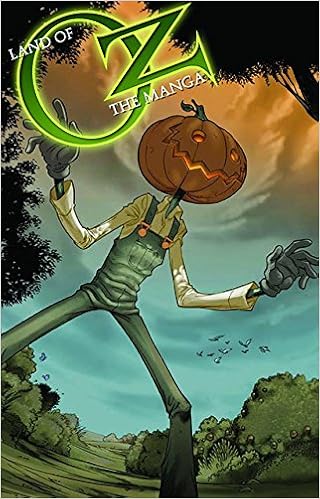
Land of Oz - Manga (Baum)

Land of Oz, by L. Frank Baum, illustrated by David Hutchison (2009)

(Not a review, just some notes to help me remember the things I've read. But written this way because it's the Internet, and some people will stumble across this page.)

The first time I read the story of The Land of Oz was the Marvel Treasury of Oz treasury edition comic. It followed the joint DC/Marvel edition of The Wizard of Oz, which told the sotry of the movie, not the original novel.

At some point after that, I'm sure I read the book itself. I know we had a copy in the house. Oddly, despite having a copy of The Wizard of Oz on our bookcase, I never read it. Not until I bought my first Palm Pilot and it was one of the books included. (At the time, people made fun of me for reading on something that small.) And there was the Disney movie Return to Oz with Dorothy, instead of the main character Tip, which covered a lot of the same material and featured quite a few of the same characters.

This version of The Land of Oz is similar to, but inferior to my memory of, the Marvel edition. There's really nothing "manga" about it. The Scarecrow is drawn oddly, and the Tin Woodsman is definitely a manga-type image, but other than that, nothing.

Worse, even though the pages read from the back, the individual pages are read left to right, as usual. And then there are the "splash" pages. the ones that cross two pages in an actual printed book. In these cases, you swipe to go to the next page on the left to see an image that you know should be on the right. This was confusing. Of course, splash pages of this type would be confusing in ebook form regardless.

I'm not summarizing the story because I do that to remember things. There's nothing here I'm likely to forget.

There were 8 or 9 issues and I read them quickly over a few nights. I didn't look to see if Ozma of Oz was available as a comic. I'd probably prefer to read that as a novel first.

Tuesday, July 14, 2020

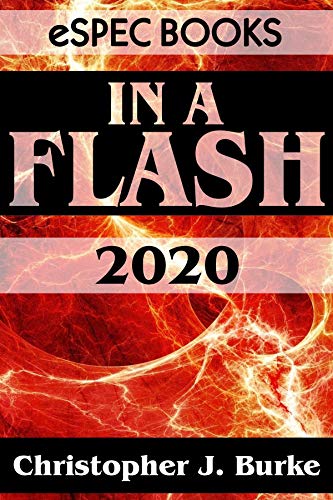
In A Flash: 2020 (Burke)

In A Flash: 2020, by Christopher J. Burke (2020)

(Not a review. More of a blatant plug.)

Still, it counts as a book read because I read the galleys cover to cover, looking for problems.

20 flash fiction stories -- disclaimer, some appeared, in slightly different form, in the eSpec Books blog when they won monthly Flash Fiction contests.

The stories range from fantasy to science fiction to "realism", which is a catch-all, really. The Realism section gives you horror, noir, and pirates. (Not at the same time.)

$1.99 for the ebook. The paperback is forthcoming.

Amazon: https://www.amazon.com/Flash-2020-Christopher-J-Burke-ebook/dp/B08CWQTYBR

Wednesday, June 10, 2020

Cogwash (Kobren)

Cogwash, by Max Kobren (2018)

(Not a review, just some notes to help me remember the things I've read. But written this way because it's the Internet, and some people will stumble across this page.)

(Okay, maybe there's a hint of review, because there isn't really much reason to remember much about this novella.)

A free download, from where I don't remember. It might've been reddit, and the person might've asked for a review, so I downloaded it. And then I read it because it was short and I just finished something else.

Anyway, unlike the overwritten self-published books I read recently, this one is a bit underwritten. It could use more details, and, again, an editor. There are, for example, dialogue sequences that need work. You aren't always sure who is talking. One person does something and the other says something in the same paragraph. Or both talk in one paragraph.

There's a prologue that really only sets up the first chapter, and the first chapter is really just a prologue for the rest of the book. We advanced enough to have robots. Then everything collapsed. So we still have robots and hover vehicles, but it's like the Old West out there, which gangs running the towns.

The big "reveal" isn't foreshadowed so much as telegraphed way in advance. However, the characters in the book don't see it because they think the guy is dead. No one could have survived being dumped in bandit territory like that. Which, come to think of it, it wasn't really explained how he could survive. The only shocking thing is that the other character from Chapter 1 doesn't make another appearance.

Terminology nit: I get that he wants to evoke the Old West (even though it's the future, after some bad times), but "hover coach" and "hover horse" get old fast. And anyone living in those times would just call them a "coach" or a "horse", particularly since the non-hover variety are nowhere to be seen. Moreover, you'd think someone might say "car" or "bike" (or "cycle").

Similarly, when every gun is a "plasma thrower", there really isn't much need to keep saying "plasma thrower". Also, the slug from this gun (is it a handgun? a rifle?) can temporarily take down a robot but when the doctor takes one in the shoulder, he's fine. He's had worse than that. Not that there are any other doctors around who can patch him up.

For all that, I didn't hate this book, and unlike the previous book of this caliber, I stayed with this one to the end. With work, it could be a book for middle graders. (He might have to remove the one more particularly grusome attack, but that's just me, and probably change the reason for the first sherrif's departure.) Middle schoolers might also appreciate the cipher in the text that seems to be there for no reason other than to have a cipher in the text. It was obviously not a date (because no dates are given) but the next most obvious cipher didn't make much sense. Except that it was the most obvious thing (which gets explained painfully) and there was a reason for it in the story, although no reason why robots would be babbling it over and over.

(Note: it's so obvious a code that I translated the final message in the back of the book in my head without using a pencil. I just read it. Maybe a little slower than I would read this paragraph, but it wasn't rocket science.)

I added the "Steampunk" tag, but it really isn't. It's robots in the new Old West, but otherwise, not really steampunk-y at all.

This was a quick one-day read. Nothing serious.

Sunday, June 7, 2020

Life (Yao)

Life, by Lu Yao, translated by Chloe Estep (1982)

(Not a review, just some notes to help me remember the things I've read. But written this way because it's the Internet, and some people will stumble across this page.)

This was another book that I downloaded during Amazon's World Book Day promotion. I picked it mostly because it was near the top of the list and it was short. Yes, I wanted to squeeze a few more books in.

Life takes place in a peasant village in China, and in a nearby city. Everyone has their place dictated to them, and moving up is no easy task. The rules can be manipulated, but doing so has its consequences.

Many people follow old ways, and tradition is strong even in the ones who don't. But change is coming. Then again, it isn't there just yet.

The story centers around Gao Jialin, who is educated, but didn't place into university, so he went back to his village and became a teacher. Unfortunately, he gets displaced from this job by Gao Minglou, a village leader, in favor of the leader's son. (I was a little confused here if there was a relation between these two Gaos, because Gao Minglou seems to be some relative to the other muckety-muck, Liu Liben, aside from the fact that their families are connected through marriage.)

Jialin winds up doing the work of a peasant, so much so that he works his hands raw from overdoing it with the tools.

He also falls in love with Qiaozhen, the second eldest child of Liu Liben, who was never sent to school. The oldest daughter, Qiaoying, is also uneducated and married to Gao Minglou's son. The youngest daughter, Qiaoling, went to school. The similarity in names sometimes confused me with the oldest and youngest, as they aren't mentioned as much.

Although Liu Liben didn't educate his oldest daughters, he still wants better for them than the life of a peasant's wife. He is important in town, and he can marry them, he believes, to the sons of better off families. However, Qiaozhen shows no interest in any suitors or matchmakers. She's in love with Jailin. To many, it looks unseemly. To others, it's modern love.

When threats and schemes don't seem to work to discourage this relationship, a new solution is arrived at. Basically, in modern corporate parlance, they kick the problem upstairs. That is, get rid of the unwanted person by giving them a promotion and sending them elsewhere.

Jialin gets a job as writing reports in the city, and he becomes very good at it. He has less time for Qiaozhen, and she starts to seem more simple to him. At the same time, he meets Huang Yaping again. He knows her from school, and she works at the radio station. She is datng Zhang Kenan, another old friend from school, but she doesn't love him. She falls in love with Jialin, and tells him so. She convinces him that they should each break up with their other love interest, so they can be together, and then move to a bigger city together.

But Life has a way at laughing at the plans of ordinary mortals, as politics and petty revenge rear their heads.

It was an intereting read, although it took longer than I expected because I only read it at meals. Before bedtime, I tended to drift off, no matter how long I kept at it. (So, not engrossing.)

Tuesday, May 19, 2020

InQUIZitive, Volume I & II (Dhar)

InQUIZitive - The Pub and Trivia Quiz Game Book: Omnibus Volume I & II, by Sumit Dhar (2013)

(Not a review, just some notes to help me remember the things I've read. But written this way because it's the Internet, and some people will stumble across this page.)

A few of these popped up, and who doesn't like trivia? (No, seriously, if you're not a trivia fan, you are way too serious.)

I'll count this as one book because there was no delineation between the two volumes. Altogether, there were 40 quizzes of five questions each. I've never attended a "pub quiz", so I do not know the format of those.

These quizzes were generally a paragraph of background information leading to a question. Sometimes the answer was obvious from hints in the text. Other times, that was only true if you'd heard of the answer in the first place. (There was a company I guessed from the translation of two words, but I never heard of the company.)

The annoying things: first, there are questions where it is not obvious that the answer is someone or something that is fictional. Second, the answers repeat the entire questions over again, often just to add three or four words. Third, there were at least five questions (which would be an entire quiz) which were repeated word for word in later quizzes. Finally, there are a couple of "India-specific" quizzes, meaning that you need to have more than just a passing knowledge of India to answer them.

Some of the quizzes I pondered a while so I could work out the answer, or at least a good guess. Others, I just breezed to the answers because I figured I'd never get it (and most of the time, it turned out that I wouldn't have gotten it had I waited, either).

Other than that, it was a quick read before falling asleep or during breakfast.

Moving on to something else, and then I'll pick up the next book in the series.

Friday, May 15, 2020

Dark Space

Dark Space: Humanity is Defeated, by Jasper T. Scott (2014)

(Not a review, just some notes to help me remember the things I've read. But written this way because it's the Internet, and some people will stumble across this page.)

Back in college, I might've said, "Wow, I wish I could write like this." Now that I'm much older, I read this and think, "Dame! I'm glad I don't write like this."

It's not good.

The cover says "over 200,000 copies sold". Well, I downloaded mine for free (legally), and it makes me wonder how many of those 200,000 copies were free downloads. This popped up in BookBub, or some mailing list. I've downloaded too many free ebooks that weren't very good, so I checked on the reviews. There were over 5000 ratings of them and mostly 4 and 5 star. I guess those can be purchased, or found through mailing lists. The actual reviews are less pleasant.

The book opens with Ethan in the middle of a space fight. Not much of a picture is painted, and what little information that is given is sprinkled with technobabble, but not the usual technobabble. It's brand new technobabble. Now, normally, I wouldn't repeat myself so much, but this book does, and quite often. It seriously needs an editor.

The prologue reads like Battlestar: Galactica fanfic, right down to using "frek" instead of "frak". The first paragraph should've served as a warning at how bad it would be, but before the first page ended, I was reading about the "continuous stream of pulse lasers". I know what was meant, and normally I could forgive that phrasing, but I was already on notice. And, frankly, any of another half dozen words or so wouldn't have made me bat an eye. Maybe I'm splitting hairs about "continuous stream of pulse lasers", but it's indicative of the rest of the writing.

After the prologue battle with the ISS fighters is completed, Chapter 1 starts "Two Days Earlier". Never a good sign. Worse, Ethan isn't even a fighter pilot yet. Just a cargo pilot who is an ex-con, and the lady with him isn't the Gina he was worried about in the prologue.

Okay, so how did he get from here to there in two days. Yes, I stayed with this (unlike a recent book) to see where it was going. I didn't want to give up on two out of three books at 10%.

I made to almost 50% before I was satisfied that it wasn't going anywhere that was worth the ride.

Ethan owes a loan shark money for his ship. Selling his ship won't even pay of the debt. So he decides to join the ISS where the crook can't touch him, but he gets abducted before that can happen. Next, Ethan is forced to impersonate a dead ISS soldier who the bad guy had killed, so he can carry out some hare-brained mission. He had a special holo disguise and a vocal disguise to match. But he blunders through things in ways that anyone would immediately see that something was wrong. Particularly if they touched him and pierced the holo disguise.

Was there a story there. Possibly. Not worth going through.

DO NOT BUY THE SIX BOOK SERIES. Some people think if there's six books, it must be a good series. Nope.

Saturday, May 9, 2020

Out of the Silence: After the Crash (Strauch)

Out of the Silence: After the Crash, by Eduardo Strauch Urioste with Mireya Soriano, translated by Jennie Erikson (2017)

(Not a review, just some notes to help me remember the things I've read. But written this way because it's the Internet, and some people will stumble across this page.)

This was a free download from Amazon for it's World Book Day. And, yes, I chose this one to read first because it was the shortest, and I wanted something quick to read electronically. (I have a printed book I'm in the middle of, but I'd rather read it outside, if the weather would cooperate.)

The prologue is Eduardo Strauch Urioste recalling when someone had found his lost wallet and passport that he had lost many years ago, and decided it was time to open up and tell his story. The story of a plane crash he survived. As I started reading it, I suddenly thought to myself -- Wait! It's not that plane crash, is it?

Yes, it was. I remember the incident, but honestly didn't know any of the names involved. I was young at the time, and I haven't seen the movies.

It's the story of a rugby team flying from Uruguay to a match in Chile that crashed in a cordillera in the Andes, the Valley of Tears. I didn't even know what the word cordillera meant.

They weren't immediately rescued. In fact, they were up there for months, long after the food ran out. I wasn't sure that I wanted to read this, but I did. I know that they resorted to eating the bodies to stay alive. Thankfully, this was not something that was dwelt on. (I heard from others that they dwelt on it too much in the film -- and I know that South Park used it as a plot device in an early episode.)

The conditions they had to live through, and the support they gave each other, were astonishing.

The rescue comes about halfway through the book, followed by many pages of photos. After that, there's some info about life afterward, but not much. Strauch spends chapters recalling the ordeal thematically, which was a good choice. And the final portion of the book relates his return visits to site with other survivors, and other people including the man who found his jacket, with his wallet and passport. The concluding chapter is by Eduardo's wife.

Sunday, May 3, 2020

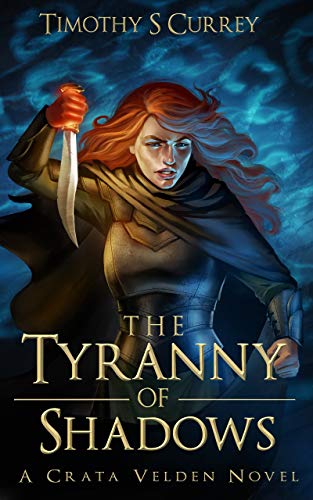
The Tyranny of Shadows (Currey)

The Tyranny of Shadows, Timothy S. Currey (2017)

(Not a review, just some notes to help me remember the things I've read. But written this way because it's the Internet, and some people will stumble across this page.)

If you can't say something nice, say something on your personal blog that no one will see.

This was a freebie on reddit in the freeEbooks directory, posted by the author asking for honest reviews. It came just as I was finishing Redshirts, so I thought I would give it a shot.

I lasted through 10% of the book, and only went that far because I wanted to give it a review, which I wasn't going to do after only 3%. Who knows? Maybe it got better after a bad start, but by 10%, I hadn't felt it started, and I was breezing through a lot of superfluous language while not really knowing what was going on, if anything actually was.

The main character is an assassin but he has problems approaching a nobody cook and getting him outside where he can kill him. He gets an assist from another (the woman on the cover). The two are supposed to be working together. Or something. At first, I wondered why it wasn't written first-person since the narrator is in the mind of the main character so much, but then the point of view switches to the second character. (Nothing wrong with this, but it was still too much in his head.)

For all their arguing, which doesn't really very much at all, except that they like to argue and that they both seem immature and amateurish, they use the orders from the cook they killed to gain access to the kitchen of their actual target. And then dispatch the "Prime Cook" (I'm not making that up) off-screen by oven-cooking a roast. This is pretty much mentioned in passing. Other times, it felt like I was being told about the story instead of being told the story.

I gave it to the start of the third chapter, and then I switched books on the kindle.

There might be a story in here, and a good editor might have helped to bring it out. It read like a second draft that needed a rewrite -- or at least a red pen through the excess words. I would hope that the author makes enough money to hire an editor, or a couple of English majors, to either help update this book, or help with his next one.

Howver, I see that this writer not only released a second book earlier this year, but he has a third book slated for release the day after this blog entry posts. The first two books have a total of 15 reviews. Mine is one of them.

Everything Is Ok (Tung)

Everything Is Ok by Debbie Tung (2022) (Not a review, just some notes to help me remember the things I've read. But w...