Sunday, July 11, 2021

They Were the Best of Gnomes ... (Wills)

They Were the Best of Gnomes, They Were the Worst of Gnomes: Tales from a Second Hand Wand Shop (2012)

(Not a review, just some notes to help me remember the things I've read. But written this way because it's the Internet, and some people will stumble across this page.)

Sometime before last Christmas, I was curious about gnomes, trolls and halflings because of a character I'd written a little bio about but had no story for. I was curious what was out there. So I downloaded a few free titles, including A Very Beechwood Christmas and Troll Hunter: Witch for Hire.

I also downloaded three books in this series. Now that summer is here, I started to read the first one. Unlike most books that I usually wait until I'm 10% into before giving up, I bailed at about 2-3%. (I actually went back for that extra 1%.) The writing was distracting, including some ridiculous footnotes to information that either should have been in the text or eliminated completely.

All that aside, it didn't grab me enough to overlook the problems, which I'll do if I enjoy the story being told. That's why I try to use 10% as a threshold (expandable to 20%, if it's on the bubble). This one just didn't do it for me.

If anyone who randomly finds this page in a search result wants to let me know with as little spoilers as possible what would be in store for me if I read on, I might reconsider. But until then, I have a large TBR pile, particularly with ebooks, so I'll move on.

Saturday, July 10, 2021

I Heard God Laugh (Kelly)

I Heard God Laugh: A Practical Guide to Life's Essential Daily Habit by Matthew Kelly (2020)

(Not a review, just some notes to help me remember the things I've read. But written this way because it's the Internet, and some people will stumble across this page.)

When I saw the title, I thought of the old joke about telling God your plans and hearing God laugh. The author references this later in the book.

This was an inspirational book that was given to me one Sunday on the way out of Church. I saw the title but didn't actually pay attention to the subtitle. So it didn't turn out to be what I thought it might be. Rather than inspirational stories about life, it was a detailed guide to daily praying. Nice to read, even while floating on a tube in the pool on a summer morning, but not much more that that.

Will I take this to heart? Time will tell. Maybe as my life changes. Maybe I'll plan out the rest of my life first, and listen for the response.

Wednesday, June 30, 2021

ANALOG PLUS 50: Analog Science Fiction/Science Fact June 1971

ANALOG PLUS 50: Analog Science Fiction/Science Fact, June 1971

The sixth issue in my ANALOG PLUS 50 series. For anyone finding these reviews, my purpose is two-fold: enjoying some "classic" sci-fi, and looking for stories that I think could be adapted for TV broadcast since so much of what shows up on anthology shows is rough to awful.

At some point, I'll stop numbering, but probably not until I do this for at least a year. If I do this for a year.

The endo fo the month caught up with me before I finished (what with school ending and all). I shall finish it presently. But I'm posting a partial list.

In this issue:

This will be updated shortly.

The Editorial: "Bargain Spacement", by John. W. Campbell. John watched the Apollo 14 splashdown on color TV and it was astonishing. The pictures were phenomenal because the capsule re-entered the atmosphere almost exactly where it was expected to be. And it comes down to the human factor.

Apollo 13 might have been an argument for an unmanned program, and yet it is a better argument for a manned one. It was the men onboard who took care of the situation, with help from the people on the ground. Because of this, the mission wasn't a total loss. Likewise, some things went wrong on Apollo 14 that would have caused the entire mission to be scrubbed if the crew hadn't handled it. Software on the ground can overcome hardware problems in space if there's a man in space to fix it.

Novelette: "Glory Day" by James H. Schmitz, with an illustration by Kelly Freas, showing the large face of a man screaming, but there are circles coming out of his head, like it's psionic. In the forground on the facing page is a small image of a woman(?) covering her ears to block out noised. The caption on the next page reads, Telzey was in a spot, but she wasn't the type to howl about that. She got someone else to do it for her.

Telzey Amberdon is back! Again! And she's captured again and facing possible or proable death! Just a month later! This is my third Telzey story, and now I'm wondering if there were any in the period before I started reading. I'm also wondering how I didn't pick up on two MAJOR spoilers mentioned above in the image and the caption.

Telzey and her friend Trigger, another psi, were on a space yacht when they were attacked. They woke up in a room with all there belongings. They were on Askanam, in the Balak of Tamandum (planet, "city", name of city). It's the city that Casmard, the owner of the yacht, is the Regent for. There is intrigue to be had as the temporary Regent plans to make Casmard abdicate, and Casmard fears that Telzey and Trigger will be killed in order to get to him. Likewise, the navigator Kewen is imprisoned, and will be thrown into the arena games. There is an attempt on the women's lives which would have killed non-psis, particularly ones not carrying hidden pistols.

It turns out that there are other psis on the planet with differing abilities who are free to use their abilities as long as it plays into the local culture and superstitions. One of them knows Telzey. He lets her know that he's planning on taking over, and she shouldn't interfere. Don't do anything. But like Bugs Bunny says, "I do-ed it!"

Joking aside, I enjoyed this one more than last month's, with the exception that the ending comes a little out of left field and isn't forshadowed at all -- except by the artwork. As far as filming this goes, if the other stories get developed for television, then there isn't a problem getting an hour out of this story. A lot of speaking parts with diverse roles.

Short Story: "The Swan Song of Dame Horse" by Te Thomas, with an illustration by Leo Summers, showing am explosion (most likely figurative) coming from the back on a man's head. The man has his hand at his own throat. There is a man in the background smiling, holding up a bottle. Over that man's head are the letters P.V. The caption reads, Heorin, more than any other thing, is the cause of the collapse of our great cities. But there might be a permanent cure!

Angie Grecca has a herion habit that he manages like clockwork before things get bad enough to make him careless. However, when he shoots up, nothing happens. He believes he was sold a bag of sugar. So he goes to another dealer and buys more. Same thing happens. He can't get a fix and starts to crash. He decides that he's going to turn those two in as crooks because he spent a lot of money for sugar. He winds up at the hospital to detox, and he's not alone. And the morphine isn't doing much to help him.

Angie gets picked up by a "George Raft" type mafiosa who is going to drop Angie in the river. Angie explain what happened. George doesn't buy it but he listens long enough that he lets Angie investigate. He discovers that there's a chemist named Dr. Linden Grey who has come up with a virus, or more correctly a pseudovirion, or P.V., that cab be spread to illegal herion fields which will add a chromosome into the user with will eliminate anything in the morphine family in the body.

This could be filmed except for the slides of Grey's vacation, since no one does that any more. Likewise, they'd need a better reference than George Raft.

Science Fact: "Alpha-wave conditioning" by K. C. Keefe. There is no image. The caption reads, "Or how to "turn on" without drugs, or twenty years practice at Zen meditation!"

There was a bunch of stuff about Yogi and Zen and medication and alpha waves. It didn't hold my interest and I skipped to the end about halfway through. There was one interesting passage that I took a screenshot of that had this summary: the Yogi attempts to withdraw himself from the world of illusion (Maya) for he believes the sensory world to be illusory. The Zen meditator places himself totally within the world and maintains sensitivity toward all of the data presented to him for he blieves that there is no illusion, and that all is real, and that enlightnmnet means to have the entire personlity fully awake to reality. The average subject in a "normal" state of consciousness is one of presonal relevance: if the stimulus isn't going to "do" anything (to me or for me) why pay attention to it?

Novelette: "The Habitat Manager" by S. Kye Boult, with an illustration by Michael Gilbert, showing two very alien-looking creatures, one is down on all six legs and it's head is shadowed, the other is upright (though possibly "rearing up") with four limbs (with 3 starfish-like fingers) and a huge mouth of many small teeth. The caption reads, "They were very helpfully seeing to it that The Scientitst found exactly what he expected. Wasn't that what he'd sought to find?"

A very odd, alien story. Enjoyable, but overly long and unnecessary complications. At the center of it is the story of a alien lander (from an Earth-like planet, presumably) touching down on the planet, but it fails to work. Now, a second lander is on the way. The planet is inhabited with sentient Trees and Bushes and Mosses and Bacteria and Grazers and Runners, along with really alien creatures like a Communicator and the Habitat Manager, who is a flat rectangular piece of living matter. All the creatures on the planets are moving out of the path of the lander's orbit and from the crater where it is supposed to land. Not because they are hiding, but because they think that this is the way the Scientist who sent the experiment expects it to be. So they are providing him with the answers that he is looking for.

This in itself is an amusing idea, but it gets bogged down in the details. Added to the being and the end of the story, the H.M. is getting ready to undergo mitosis, which adds nothing to the story, except for some comments early on that one might mistake for discussion on the abortion debate that would hit the Supreme Court two years later. However, I think I could be reading too much into that.

Were this picked to be filmed, I would strip it down to the story of a lander coming to the planet and all the flora and fauna hiding are hiding from it. Add it the twist that they think they are actually helping. The costume would be ridiculous (or ridiculously expensive), so play it for laughs and leave out the mitosis subplot and possibly the herd of Grazers getting too close to the landing crater only to be chased off by the Runners.

Analytic Library: I recognized the names of the stories from February and March, but for many of them, I've have to go back to my reviews to get the specifics. Well, I guess that's the main reason I keep this blog. The serial got the top slot, followed by Polywater Doodle in February and The Missing Man in March.

Short Story: "With Friends Like These..." by Alan Dean Foster, with an illustration by Leo Summers, showing a farmer behind a plow being pulled by a horse being approached by insect-like humanoids that came from a nearby spaceship. The caption reads, "It is not necessarily ture that the ideal friend is some strong entity who will fight effectively against your common enemy. That needs qualifications!"

There's a Federation in space and it's at war with a culture called the Yop. The aliens are coming to Earth for help. Earth has been locked under a protective shield for tens of thousands of years, since the time of the Old Empire-Terran Wars, when the Earth wouldn't get in line with the rest of the Empire. Since that time, the Empire has fallen, and the Federation has arisen. It turns out that the Terrans have not been idle, and have just been waiting for someone to turn off the shieldl

Serial: "The Outposter" by Gordon R. Dickson, part 2 of 3. "Bluff is well-known as a major factor in winning at poker. It's at least equally important in business and diplomatic deals. But it gets a little tough when your oppositie number is an alien whose psychology and physiology you don't know!"
I'll get back to this later. As it is by Gordon R. Dickson, I will definitely get back to it.

The Reference Library , by P. Schuyler Miller.
There is an intro about Stanislaw Lem, whom I haven't read (to my knowledge), followed by a discussion of the Science Fiction Book Club, which I used to be a member of (in particular, they would release hardcover editions of books only available in paperback). Books reviewed include: Gadget Man by Ron Goulart, The Year of the Cloud by Ted Thomas and Kate Wilhelm, Ringworld by Larry Niven (which I've listened to on cassette), The Year of the Last Eagle by Leona Train Rienow with Robert Rienow, and a couple of checklists.

Brass Tacks: was absent this month.

On to June, and whatever else is in the TBR stacks in Kindle, iBooks, and the physical nightstand.

Tuesday, June 29, 2021

Amora: Stories (Borges)

Amora: Stories by Natalia Borges (2015)

(Not a review, just some notes to help me remember the things I've read. But written this way because it's the Internet, and some people will stumble across this page.)

The cover says "Natalia Borges Polesso, translated by Julia Sanches".

This book was part of Amazon's World Book Day 2021, when I downloaded 10 books. Like in previous years, it is likely that I won't read more than 2 or 3 of them. I still haven't read most of the previous books. This one is from Brazil and is described as An exquisite collection of stories exploring the complexity of love between women.

I'm not the target audience for lesbian literature nor is it something that I would think to seek out. Maybe if a friend gave me a book and asked my opinion, that would be a different matter. Anyway, I didn't let the subject matter prevent me from cracking the electronic cover.

I got about 30% of the way through the book. Maybe I'll come back to it when I'm between books and the file is still on the app. I don't know. I might have gotten hooked had it been one long narrative, but of the first bunch of short stories, none of them grabbed me. I don't know how many were pseudo-autobiographical but it was obvious that Borges was drawing on her past experiences.

If I had one problem with it, it was the continuous stream of thought and text. It may have been an appropriate writing style but a couple of stories just seemed to run on to me and were a drag to read.

Anyway, I gave it a shot, and decided to move on. If you found this page while surfing the Internet, don't take this as anything more than one person's opinion.

After this, I'm reading more Sherlock Holmes and Analog and there's another book club book coming up.

Thursday, June 24, 2021

Learning to Breathe (Stephens)

Learning to Breathe by Robin Stephens (2021)

(Not a review, just some notes to help me remember the things I've read. But written this way because it's the Internet, and some people will stumble across this page.)

A short collection of poetry that I found when the author's spouse posted a link on free ebook board. I don't read a lot of poetry, but I made it all the way through and I didn't hate it. That's saying something, I guess.

I don't particularly care for free verse with no apparent meter or rhyme or reason. Okay, the poem's do have reasons for exisitng, but I couldn't always figure out the feeling or emotion behind them. And after reading the description on the Amazon page, I think I missed out on a bit.

Tuesday, June 22, 2021

Kings of the Wyld (Eames)

Kings of the Wyld by Nicholas Eames (2017)

(Not a review, just some notes to help me remember the things I've read. But written this way because it's the Internet, and some people will stumble across this page.)

The one thing that absolutely kills me is that this is a first book. There's a lot that went into this. This book was recommonded at a recent virtual convention (I believe it was a panel at Balticaon) when someone asked about humorous books. I like humor.

That said, this book is half humor and and half serious (and seriously dark, at times). The premise is amusing: that the monster-hunting parties of yore was akin to rock stars, and one of the greatest, Saga, has to "get the band back together". I wondered if this was going to be anything like Legend, and it was nothing like that. It went its own way. (I do notice that David Gemmel is listed on the Amazon page as an inspiration, along with the Hitchhikers Guide.)

Twenty years have passed and Clay Cooper now has a simple life spending his days guarding a town gate. He has a wife and young daughter and his killing days are behind him. One night leaving the ale house on his way home, he runs into the former Golden Gabe, leader (or at least "frontman") of Saga. His grown daughter joined a band and she's on the other side of the monster-laden Heartwyld in the town of Castia that is under siege by hordes from the last "druin". He needs to save her.

Clay is reluctant to go, but is convinced by his own daughter. They don't get very far before they are robbed of what they own (including his sandwiches and extra socks). You start to wonder if they're ever going to get where they're going.

The rockstar fandom metaphors came fast and furious, including having bookers to get gigs fighting monsters, and playing arenas (like modern collesiums) instead of hunting in the wild. There were points in the narrative that I wasn't sure that the author knew how he was going to get from point A to point B (and there was a lot of traveling in there). Most of the scenes seemed to sever a purpose other than to add an extra fight for the purpose of fighting. Likewise, added characters usually served some purpose other than being cannon fodder or the "price to be paid" to achieve something.

And unlike that Space Gladiator book, the people here healed in ways that fit the narrative without getting crazy with killing and reviving.

It could've been funnier, and some of the jokes were in places I don't find humor because the topic is either overdone or low-hanging fruit.

An enjoyable read, and I might find the sequel sometime.

Tuesday, June 15, 2021

An old Year-end Review for 2003

While cleaning up my hard drive, I found files where I kept track of the books I read for a given year. Someone had given me the idea (back in the 90s, I believe) to open a text file, and add the name of the book I'd read. What follows below looks like an "end of the year" post made to a bulletin board somewhere. If it's 2003, it's past my time on Usenet. Many of these may have appeared elsewhere in this blog, if not the entire post itself. I'll post these files one per month.

2003: The Year in Review

I know this is a couple of weeks late, but what the hey, I'll post it anyway.

Books read in 2003. Not many as I drove to work for most of the year, losing my prime reading time on the subway. (At bedtime, I'm usually too exhausted to get more than a handful of pages. Teaching will do that.) And getting 12 teaching credits took up a lot of time. (Textbooks are excluded from my list.)

Anyway:

The Lord of the Rings: The Two Towers, J.R.R. Tolkien. I was reading it when the year started, having never read it before.

Congo, Michael Crichton: Library sale book. Enjoyed it.

Mostly Harmless, Douglas Adams: Mostly crap.

Some "Buffy" book about Faeries by the author of Ghost Roads (another Buffy book I read a couple of years back). Actually, it was a good thing that I had read Ghost Roads because the author makes a lot of Buffy references, most of which I think I caught, from the show. When she tossed in a G.R. character reference, I was thrown at first. (Hey, that's non-canon stuff!)

Harry Potter and the Prisoner of Azkaban, J. K. Rowling: Probably my favorite one to date (though subject to change). I was totally taken in by this one, waiting for something so fricking obviously to happen and then have an alternate that I didn't suspect happen.

Destiny's Road, Larry Niven: Enjoyed it, very much. A world-building travelogue with a story wrapped around it so that you dont' realize that you have a world-building travelogue. (That's the way to do it.)

Kingmakers Sword, Ann Marston: First part of a trilogy I stumbled across a few years back. I found part I in the library. Great book, and it didn't matter that I know how some of it would turn out because I had read part II.

The Western King, Ann Marston: I had to reread it after part I. Still as good on the second read-through. Better, because I had part I as an intro this time.

(part three is on reserve at the library)

Holes, Louis Sachar: Saw the movie, so I read the book. I'll rank it as the best movie adaptation of a kids book that I've seen. Enjoyed the book, and appreciated that there was a little more to some of the characters in the book.

Star Trek: The Next Generation: Dyson Sphere: Thought it would be good, but I didn't particularly care for it. Like the use of Hortas, hated the story and the ending. Added Note: I didn't write down the author's name?

Harry Potter & the Goblet of Fire, J. K. Rowling: Didn't thrill me as much as the others. The "one year per book" rule was a little strained as was the Tri-Wizard Tournament. Could've been shorter.

Harry Potter & the Order of the Phoenix, J. K. Rowling: OK, I'm caught up with the Potter books now. Liked it better than four, but I thought that some of it was either forced or unnecessary.

The Harry Potter books weren't a re-read. They were a first read. I was late to the party with those. I was initially turned off by online friends who complained how Scholastic Books had overly "Americanized" the first book.

Monday, May 31, 2021

ANALOG PLUS 50: Analog Science Fiction/Science Fact May 1971

ANALOG PLUS 50: Analog Science Fiction/Science Fact, May 1971

The fifth issue in my ANALOG PLUS 50 series. For anyone finding these reviews, my purpose is two-fold: enjoying some "classic" sci-fi, and looking for stories that I think could be adapted for TV broadcast since so much of what shows up on anthology shows is rough to awful.

At some point, I'll stop numbering, but probably not until I do this for at least a year. If I do this for a year.

Overall, this one was a mixed bag, but maybe it's the novelty of what I'm doing wearing off. If this stops being fun and becomes more of a chore, I'll end it.

In this issue:

This will be updated shortly.

The Editorial: "Pollution Paranoia", by John. W. Campbell. There are three kinds of pollution: actual, political and hysterical. It's the latter two that prevent us from taking care of the first one, or any other problem. Grandiose solutions to non-existant problems (yes, there are problems, but not the PROBLEMS! the hysterical folks point out or the political folks want credit for "doing something" about -- like getting the naturally-occuring amount of mercury in the oceans, and therefore in the sea life like tuna, out of the water) divert resources from actual problems that could have long-term meaningful solutions.

One thing to keep in mind: It is impossible to cheat the Universe. You can balance the laws of the Universe, but you can't break them. The Universe will demand its due. You will pay the cost of time or energy, or the Universe will collect in the end (regardless of unconscionable injustice or evil oppression -- the Universe doesn't care).

Basically, we need good judgment and not paranoia.

Serial: "The Outposter" by Gordon R. Dickson, part 1 of 3.
I'll get back to this later. As it is by Gordon R. Dickson, I will definitely get back to it.

Science Fact: "Men to Mars" by Walter B. Hendrickson, Jr. There is an image of a Space Station Concept of 12-man space station by North American Rockwell's Space Division, Downey, CA. The caption reads, "With the current state of NASA's moth-eaten budget, the hardware for a Mars expedition is not being built. But that doesn't mean thinking and planning about the problem has stopped!"

This was a great read, even if all the dates have passed. You have to figure the windows of opporutnity can be recalculated, and the science may have improved a bit. Then again, for all I know, some of the suggestions may have been shown to be unworkable now that we've had people in space for over a year. It was also ambitious, given that this was printed in 1971, not long after the Apollo 13 incident. Given the lead time required in publishing a magazine, Apollo 14 might not have even launched yet when this was scheduled to be printed. Likewsie, the proposed dates for the mission were only a few years away, in the mid-to-late 70s. But should the need arise for a hard sci-fi setting for any story I'm writing (not likely), I might revisit this one.

Novelette: "Company Planet" by James H. Schmitz, with an illustration by Kelly Freas, showing a woman in a jacket the length of a minidress, walking in the midground, and an alien cityscape in the background. In the lower right, in the foreground, we see a seated woman (covered with tattoos or an elaborately designed skin-tight suit) with a tail. A muscular "man" except he has the head of some other kind of animal (flat head, long snout). There is a woman in a skimpy outfit standing with wild hair that appears somewhat floral. The caption reads, Telzey was generally competent enough to take care of herself -- and her enemies for that matter! But this time she was up against a very stacked deck indeed!

Telzey Amberdon is back, only four months after her first story. (At least, I think it was her first -- it was the first that I saw.) This time she's on the Company Planet of Fermilaur, which consists of a resort area and little else. The resort has a spa where body modifictions can be made, such as the ones shown in the image, or just lengthing the leg bones to make one taller (and then the follow-up procedures to adjust the rest of the body to match). Telzey is there at the behest of the parent's of a friend to convince the friend not to go through with any mods.

It is known that Telzey is a telepath, but not known that she is a psi, which isn't the same. Psis are much more powerful than simple telepaths. She's given a service guide named Uspurul (whom, in my head, I kept calling "Usurpul") to talk up modifications like they were modern time shares but also to get an idea of why she is there. There are things going on on Fermilaur that COS Services wouldn't want known, but what? (By the way, I went through the beginning again, and I'm not exactly sure what "COS" stands for, other than the Company.)

Telzey meets with Keth, an investigative reporter for a newscast service, who is always on the lookout for a story, but not there chasing any story in particular. Now the folks at COS have to worry that the two of them have been sent there to uncover what's really been going on.

Unlike the last story (SPOILER), there's only one Telzey in this story, so if she were played by twins in an adaptation of "The Telzey Toy", only one sister would be needed here. It would make as good a story for TV as the previous one, better, in my opinion. Plenty of speakng parts for a diverse cast. Solve the mystery, get the story, don't get killed before it's over, with a sci-fi backdrop.

Short Story: "Not Stupid Enough" by G. H. Scithers, with an illustration by David Cook, showing a stone statue of a bearded, bald man, with several birds (or bird-like creatures) on it. The caption reads, The fact that an alien's cursons violate the ethics of your people does not prove that they're wrong. It may simply prove they are, indeed, alien!

Novelette: "Culture Shock" by Perry A. Chapdelaine, with an illustration by Leo Summers, showing people in hooded cloaks in the foreground protesting. There's a sign reading, "Death to All Aliens" and another that looks like it starts with "GOD is". There looks like a fire or explosion happened in the background. The caption reads, A man may not be what he thinks he is -- but he can put a lot of effort into trying to be!

There was more going on in this story than I could keep track of or, honestly, wanted to. It didn't help that I fell asleep a few times in the middle of reading this one. Mankind has been visited by aliens from Epsion Eridan (aka Ran, which is not mentioned in this story). They are four feet high, six feet long and four-legged. They are obviously more scientifically advanced than us. There are people who don't want them here, and they are mostly in the GIMITI society: God is Made in Terrain Image. Then there's Dr. Michael O'Hara who is the director of Project Ozma X, which, despite the work it does, will have it's budget slashed by half very soon by the UN President Ownouchai. There's a Communications and Cryptographic (C and C) dept and a special Public Relations and Information (PuR) section. There are a bunch of people who are nonconformists, or nonconies who work for the government. And there's a credible assassination attempt against the Eridanians as they travel around Earth.

A little too much going on, and that isn't all of it. I might've enjoyed a short story based on this novelette. That said, just because I didn't "get it" doesn't mean that there wasn't a good "protect the alien ambassador" story that could be adapted out of it. All the elements for adaptation are there, except that the aliens would require good CGI or puppet work, or get modified into something that could be played by human actors of any particular type. I'd cut a lot of the government bureaucratic stuff, though, mostly because I wasn't particularly interested.

Novelette: "Peace With Honor" by Jerry Pournelle, with an illustration by Vincent Difate, showing a bare-legged, bare-footed man in an overcoat, swinging a sword. There's half a wheel on the ground (with a shadow) and a car heading toward a wooden covered bridge which turns into more of a steel trestle.The caption reads, Given infinite mobility, you have absolute immunity. But if there is a place you want to be -- thereby you're limited!

Politics and dirty tricks, set in a future with a United States and a "Co-Dominium" still in a Cold War with Russia. I'm not exactly sure what makes this science-fiction even with the type of dirty trick to be pulled, or the mention of Lunar bases (non-essential) and other places that could be out there or just someplace on Earth I'm not familiar with. I wonder how much of this some of stuff was known to the public 50 years ago. Now anyone who follows politics just assumes it, especially from the other side, if not from their own political allegiance (where they might excuse it and explain it away).

The longer one stands in office, the more corrupt they become, probably out of necessity, but also just out of tolerance for other corruption. And there's a theme of That's Just How It Is, and the country wouldn't last long under the idealist candidate who doesn't understand how the world works or how the game is played. A bit cynical, and then it gets close to home for the point-of-view character.

This could be filmed, though it's primarily men, and a bit dated and sexist, but some of the men in the room can be gender swapped to bring it up to date. But I don't think it would make a satisfying segment of a sci-fi anthology show unless something else were added in. And I wouldn't be one to presuppose that I could do better than Jerry Pournelle. In any case, I did enjoy the story for the intrigue.

The Reference Library , by P. Schuyler Miller.
Books reviewed include: More Issues at Hand by William Atheling, Jr (aka James Blish), The Universe Makers by Donald Wollheim, The Pulps: Fifty Years of American Pop Culture by Tony Goodstone, Tower of Glass by Robert Silverberg, Mutants by Gordon R. Dickson, Nebula Award Stories Five by James Blish (ed.), Index to the Science Fiction Magazines, 1969 (compiled by Anthony Lewis), Behind the Walls of Terra by Philip Jose Farmer, and Aliens 4 by Theodore Sturgeon.

Brass Tacks: Nothing much to think about except a few lengthy letters about the fallacies of the "Now Generation", which Campbell believes isn't all sweetness and idealism. It also wasn't an age group but a philosophy.

On to June, and whatever else is in the TBR stacks in Kindle, iBooks, and the physical nightstand.

Sunday, May 16, 2021

The Oracle Year (Soule)

The Oracle Year by Charles Soule (2018)

(Not a review, just some notes to help me remember the things I've read. But written this way because it's the Internet, and some people will stumble across this page.)

The was a book group book. Yes, I've somehow become part of a book group.

The book follows Will Dando who becomes known as "The Oracle" because of a Site he operates (it's refered to with a capital S) where he lists some predicitions which come true. Will had a dream where he was told 108 predictions. He writes them in a notebook, but he can't forget them, even after he burns the notebook.

Will has a friend named Hamza who helps him operate the site and sell some of the predictions for more money than they know what to do with. Some of the predicitions seem like nothing, other than obscure bits that will prove to people that his predictions will come true. But after a while, they start to come together in a way that shows that they're interconnected, and Will is afraid what the consequences will be. He can't seem to pull the plug on the Site, and starts to feel that the Site is controlling him, despite his free will to decide his actions. He demonstrates this to Hamza and his wife Miko by blindly walking out into traffic on a busy road and crossing to the other side unharmed. The Site needs him.

Enjoyable story, for the most part. There's a televangelist that decides that the Oracle is a threat to business, and his is probably the weakest part of the story, but some of his decisions will drive later action. He's an easy fall guy. Then there's President Green, who is up for re-election, and can't make any statements on the Oracle until he knows who it is. He's a bit more believable than the televanglist, and the people who work for him as stereotypical government flunkies and operatives. Then there's The Coach, who's a freelancer outside of government who gets things done by any means necessary, including threats of and actual violence, torture and possibly death. Not to mention bringing down the power grid for much of the world, causing many deaths, just to find the name of one person.

This brings to mind (to me) two things in the book, and I'm not sure which annoys me more: that they telegraphed taking out so much of the world's power grid even before they set that into motion, of when they finally get into the code, the hacker sees a programming comment that instantly reveals to him the identity of the woman who set up the Site. If the phrase in the comment had been foreshadowed, I didn't recall it, and there was nothing to suggest that these two should know, or be aware of, each other.

Problems aside, it was a decent enough book which kept my attention mostly. I didn't read the preview of the next book, not am I in a rush to read another one.

Friday, April 30, 2021

A Bushel of eSpec stories

(Not a review, just some notes to help me remember the things I've read. But written this way because it's the Internet, and some people will stumble across this page.)

I've particpated in a bunch of Kickstarters over the past few years. As a result, I wind up with not only a bunch of books to read, but bonus stories and gaming pdfs as nice little extras. These get sorted into folders on my hard drive. So I decided to knock off a few of them while I'm between books.

Since my last foray in reading short stories was a "peck" of eSpec, I'll call this one a "bushel", but don't expect four times as many stories, or even four times the length. It'll be until whenever I stop and post it. The batch should all be from eSpec Books bonuses and stretch goals, unless something else sneaks in.

In order that I read them:

  • Feeding the Mouth that Bites Us by L. Jagi Lamplighter was originally published in Dreams of Decadnece (date?). No spoiler, that mouth belongs to a vampire. The story is told from the perspective of Hannah, the lovestruck victim who despite giving up only a cup of blood every other week to her lover Ambrose, has lost all of her energy of the past year. While out walking by Central Park, she encounters a group of nuns handing out flyers. She reads it later to discover that they have a clinic that specializes in the very collection of symptons which Hannah suffers from and which no doctor has been able to diagnose. This leads her to the Order of St. George's Clinic, where she's finally able to breathe freely, and where she learns more about the nature of vampires. A fun read.

  • The Wedding Night: a Death and the Crone vignette by Megan Mackie. It's porn. Maybe the kind you'd find on HBO or Netflix, as opposed to other outlets, but that's what I found myself reading. It's literally the wedding night of the subtitular couple, and you're a witness to all the action. There's no plot, or as my editor might point out, no conflict. I assume these two characters, and perhaps this scene itself, were plucked from other works. I haven't read any Mackie that I recall (and this I would recall). Both characters are old and have been married before, but both have a youthfulness about them.

  • Seeing Red by Danielle Ackley-McPhail was originally published in In All Their Glory (2010). Samantha is a faerie who freezes when you sees the color red, particularly red caps. "Redcaps" are a type of malevolent, murderous goblin found in Border folklore, and they want to murder her. To overcome her hesitation, she organizes a game of capture the flag, using red banners, but soon she has to confront her fears head on.

  • The Fiber of Being by Jodie Lynn Nye was originally published in Heaven and Hell (2002). Jasper is dead, and Michael and Gabriel given him lessons on being an angel. Raphael shows up at one point, too. The Fiber of being is that piece of humanity that Jasper retains that angels do not have. It's what will allow people to rise higher than angels, who are as they were created. It takes Jasper a while to get the hang of it. (Nye cowrote The Death of Sleep with Anne McCaffrey, which I read quite a while ago.)

  • Alien Invasion of Earth by Keith R. A. DcCandido, Special eSpec Books Kickstarter Reward Edition (date?). Dr. Phillips P. Phillips, PhD meets with General Blunt at the Pentagon to discuss an unnatural object in space heading toward Earth. What follows is 7 pages of farce or satire, except those are usually funny. (Note: humor is subjective.) It isn't until the middle of the story that we learn that the story takes place during the Eisenhower Administration, which "explains" the use of the word "Negro" earlier. It also become alternate history very soon after this point. Phillips might seem progressive by having a black (Negro) and a female graduate student working for him, who he insists be brought along with him to assist him, but he berates them and treats them poorly to the point of being annoyed that they involved the gerneral about the UFO without telling him (even though they got him to sign the letter they sent). The general later mistakes the two of them (Lamont Johnson and Maria Chen) for an errand boy and a secretary, because, you know, it's the 50s. The one thing that is universal about the story is the higher-ups getting credit (and rewarded) for work of their underlings. I had an Assistant Principal who was quite smugly proud of himself at the bonus he got from his department doing more work.

  • On Rocky Ground by L. Jagi Lamplighter was originally published in Bad-Ass Faeries (2006). It starts This story is dedicated to the Freeman Children. It features the Prospero brothers, Erasmus and Mephisto, as they scale Monte Musine in the Italian Alps, along with Mab Boreas, who is an Aerie One. (I don't know what the Prospero brothers are, but they've lived a long time.) They are lugging ground giant bones and salamander poo as a payment to the Oreads, who are feminine rock-type creatures. They run into problems with a grumpy gnome. Hilarity ensues.

  • Reflections of Amontillado by Ty Drago was a special eSpec Kickstarter Rewards edition (????). It starts With respectful apologies to the master. The narrator is Antonio Santino Argestelli Fortunato, a merchant and a student of no art but business, who happens to love wine. He is married to the Lady Fortunato, who doesn't appear in the story. The tale takes place in northern Italy, where he is approached at a carnival by Monstresor, whom in the opening of the story was refer to as a friend and a foul murderer. Monstresor is the last of a family of wine makers as swamp has overtaken his lands and spoiled his vintage, forcing him to sell off land and let go of his servants. He lures Fortunato there with the promise of an Amontillado (which I had no idea what that was, other than a wine of no particular note). From there it plays out like Poe, in a tale I was first exposed to in a Bradbury story, similarly in a House of Ghosts comic (or another series of that ilk), and even in an episode of Dark Shadows. However, this tale doesn't end there.

  • A Brief Battle for the Throne by Jeffrey Lyman was originally published in Bad-Ass Faeries: In All Their Glory (2011). The story starts in London, 1850, when Lord Broggon of the Hobgoblin Tribe tries to go through the Door to Fairie but something is blocking it. The building the Door had been attached to has been demolished and the Door should just attach itself to the new structure. Unfortunately, the new building is the King's Cross station for the new iron rails being laid along the ley lines in England. They are blocked off from King Oberon. What to do? A Council meeting of hobgobins, elves, ogres, pixies and others try to come up with a solution. Instead, the tribes end up taking sides and a ninety-year war commences.

  • Undine the Boardwalk by Keith R.A. DeCandido was originally published in It's Elemental (2013). I don't get the pun of the title, if it's supposed to a play on "Under the Boardwalk". The story is set in Key West, mostly at Mayor Fred's Saloon, where a band named 1812 plays. The main character is named Cassie, who we find about about a quarter of the way through the story that she is a "Disir", a fate goddess, and sometimes referred to as a "Dis". She learned this from the king of the Norse gods, and previously had to stop Loki. So this is a series story. Only a couple of people know about Cassie's background. One is Bobbi, a member of 1812, and Rance, an FBI special agent. Jana, a friend of Bobbi's since childhood, and a friend of Cassie's since she moved there, doesn't know. Jana is also in the band. Jana has a new love in her life named Russ and everyone seems to love this guy, except Cassie, Bobbi and the old curmudgeonly Larry. Cassie doesn't know know why she doesn't like him, but she doesn't, and that's good enough for Bobbi. (There's also a crack about Russ having two middle initials -- so "pretentious".) By day, Cassie is a diver at Seaclipse.

    Rance runs a background check and finds that Russ lives on a boat with his mother, so Rance, Cassie and Bobbi take a trip. The boat has "rusalka" etched on the prow. Looking that up, I found that a "rusalka" is a Slavic water elemental, usually malicious. Cassie can see its ugly true form through its glamour while the other two see an older woman who can still pull off a bikini look. Russ, however, looks human, so they figure that his father (who wasn't listed on his birth certificate) is also human. The mother, who goes by the hman name Anne, is horrified that her son is going to marry a human because it will only end in tragedy for both of them, and she speaks from experience. So they have to break up the couple, and get Jana out from under Russ's spell before it's too late. And then we find out more about Russ's parentage.

  • Tag Team Match with Hell by Patrick Thomas, C. J. Henderson, and John L. French. Kickstarter Rewards edition (????). It is listed as A DMA Casefile, which stands for Department of Mystic Affairs. The copyrights and trademarks list Murphy's Lore and "Bullfinche's Pub" gets a shout-out in the first paragraph. Bianca Jones is listed as a trademark of John L. French; she appeared in the story "Cold Iron", which I read recently. I don't recall reading any story including Lai Won, by C. J. Henderson. This is more of a CW crossover (not of "Crisis" propotions) than the Avengers getting together. Lai Won is a "psychometrist", which is mentioned often, but I wasn't exactly sure what that meant. (I was on the train, so I didn't have a dictionary available. It turns out that it's a real thing, someone who administers psychological tests. Yeah, that's not what she does.)

    The story leaves NYC quickly (no Bullfinche) and heads down to Baltimore, which is Jones's home turf. Jones had worked with Agent Karver once before but not his partner Maddi Cobb, or Lai Wan. Wan has called in a marker because of something horrible that she experienced when she accidentally touched a DVD. From there is gets disturbing in subject matter as it involves a demon granting a bunch of people eternal youth 50 years ago, and they end up as children. They make money by making black-maret pornography. It's enough to make everyone sick, including the reader, which is, I guess, the point. On the cosmic reading balance scale, this tips the story so heavily that no amount of light-hearted banter is going to lift it back up again. (And the banter between Karver and Cobb seemed a bit forced, but it was also tossed out there for the benefit of the two other occupants in the car.)

    I was only familiar with Bianca Jones before this story, and she had the least to do with it, even though it took place in Baltimore. Maybe that's why they decided to set it in Baltimore.

  • Vein Glory by Christopher L. Bennet, Kickstarter Reward edition (????). Not surprisingly, it's a vampire story. Vincent Shahan wakes up after a couple centuries in cryo-suspension, having been misplaced during the upheavals in the past. This is understandble. His doctor, Dr. Corazon Lee, is a vampire, and is most of the population. That's a little less understandable. Advancements have led vampires to suffer fewer ill effects and not require fresh human blood. The only cure for disease is vampirism and medical research has come to a halt. But there's more than meets the eye with Shahan

  • The Inner Light by John L. French, Kickstarter Reward edition (????). John L. French is the editor of an upcoming angels & devils anthology that I will be included in. This story takes place in Bethlehem on the night of the birth of Jesus from the perspective of the angel, Nika, who was sent to watch over Maryam during childbirth. Nika faces off against five of the Fallen. Any doubts are met with a voice reminding her to "TRUST YOUR INNER LIGHT."

  • Thursday, April 29, 2021

    ANALOG PLUS 50: Analog Science Fiction/Science Fact April 1971

    ANALOG PLUS 50: Analog Science Fiction/Science Fact, April 1971
    The fourth issue in my ANALOG PLUS 50 series.

    At some point, I'll stop numbering, but probably not until I do this for at least a year.

    This was a less impressive issue than the past few.

    In this issue:

    The Editorial: "Ecological Collapse", by John. W. Campbell. An ecology can collapse but Ecology keeps going, albeit in a different form. Campbell starts by talking about one of the greatest Earth-changing elements ever: oxygen. It altered the atmosphere and what life could live on this planet forever. From there, it's on to other types of pollution, like thermal pollution from nuclear reactions. They can heat rivers, and that could kill off the current wildlife in those rivers, but it could spark other life to move into those rivers. There are lots of side effects to consider, good and bad.

    Novelette: "The Unreachable Stars" by Stanley Schmidt, with an illustration by Kelly Freas, showing a background of skyscrapers against a night sky and the outline of people in the midground. Above to the left is what appears to be the head of some kind of feline animal humanoid species. The caption reads, There are choices which, once made can't be reversed -- and typical of these is the choice of immediate desire over long-term need!

    First thoughts: the title, to me, invokes "The Impossible Dream" from Man of La Mancha, which was a 1965 musical, but the movie didn't come out until 1972.

    The story is set in a far (at least I hope far) future when space has been abandoned and forgotten, and Earth is overpopulated. Anthon Hillar goes to the Regional Planning Director Olaf Karper about a discovery. He's unearthed some books from a crypt of a 21st century eccentric at one of the new energy and food complexes in Kaliforn. Bypassing his chain of command, he showed them to Mylo Gotfry, a professor of Ancient English in a government school. He thinks they are important. They are books about the stars and other worlds. Olaf doesn't seem interested and Anthon is afraid a coverup will take place instead of talking about going out there (not that there's money to go out there when there are people to feed and house). Anthon goes AWOL trying to figure out what to do next, wondering if the books are a hoax, when a voice in his head tells him, "They're not a hoax." Ozrlag, the feline-like alien, is trying to influence Anthon mentally, much to the consternation of Mizhjar. They're trying to get information about Earth, and they already know about Mylo. They want him to go to the crypt and get the other books. In the end, Ozrlag has to join Anthon and they are confronted by Karper, who predicted their movements. There's a little twist in the epilogue.

    Interesting story, without a lot of speaking parts, and only two short, feline aliens needed, which could be either male or female. None of the speaking parts are tied to any race or gender. Despite the grand scale of the story, most of the sets would be simple, and everything else could be handled with establishing shots and montages to suggest overpopulation and the brink of starvation. It could be adaptable, but from these past four months, it woouldn't be one of my top choices.

    Science Fact: "Real Science for Real Problems" by John R. Pierce. The caption reads, It isn't obvious that Bell Laboratories runs a major educational "univeristy" -- but it does, because it has to. Educational psychology is, consequently, highly important to the Labs. And because it is a business -- utility commissions and stockholders alike want expenses down! -- Bell Labs has been applying the "Schwartzberg test" to educational psychology for years. Any theories have to work! [(P)] In the process of learning how to learn, the "University of Bell Labs" has developed solid proof that students should not be allowed to determine how they are to be taught, and what is "relevant"! The Editor

    Fifty years old, and still relevant when it comes to student learning. At the time, the Bell System was the largest university instituation in the country after the U.S. Government itself. By applying research, Bell was able to shrink one course from 7 weeks to 7 days, and they had better results. And through tests, they discovered that students didn't always choose the best methods for learning and retaining information. Credit for programmed instruction is credited to B. F. Skinner, whom I learned about somewhat in an Educational Psychology course a long time ago.

    There's some information that's interesting, at least as a historical note, so it's worth finding a copy of the article.

    Bell increasing relied on programmed instruction instead of lecture and text books. In front, when the programs, there often wasn't a teacher in the room. It also showed that if there were breaks in the text to asks relevant questions about what they just read or saw, there was better retention of the material. Of course, just because programmed instruction can be evaluated doesn't mean that a course has been appropriately assessed. It's possible that people will score well on the test questions without taking the course at all. Or that seasoned employees will do better than recent graduates just starting. That shows that the course didn't work as advertised.

    One outdated piece of trivia, people remembered phone numbers longer if the chunks were reversed. Most people would make calls to the same area code and usually to one of a handful of exchanges. It was only the last four digits that changed the most. And yet, as you dial, those are the four digits that get forgotten by the time you dial them.

    Novelette: "Heart's Desire and Other Simple Wants" by W. Macfarlane, with an illustration by Vincent Difate, showing a bare-legged, bare-footed man in an overcoat, swinging a sword. There's half a wheel on the ground (with a shadow) and a car heading toward a wooden covered bridge which turns into more of a steel trestle.The caption reads, Given infinite mobility, you have absolute immunity. But if there is a place you want to be -- thereby you're limited!

    I honestly have no idea what was going on in this story. Despite a line like, "I thought my operation was secure with baffles, dead ends, double bluffs and a chain of command trustworthy as a paperclip necklace. I figured I was safe as the nissing side of a Mobius strip", I'm not sure where it went off the rails. Maybe if I reread the portion in the middle.

    Arleigh Ravenshaw takes his order from General Craddock, who tells him he's a marked man. It seems to be an X-Files situation where they investiage alien artifacts, witchcraft and odd occurrences. Craddock sends Ravenshaw on a cross-country trip that starts in Saratoga Springs and leads him down South and then out West. His first stop seems to be a couple of New Age hippies (but, again, this is written in 1970) and it's long on conversation, and then it moves on, and on, and on. Maybe I was dulled by this and didn't pick up the common thread. When he gets to a town called Nak-a-tosh, he phones a woman named Mrs. Aubray Chalmers, which brings him to a coven and a ceremony that he's about to take part in. One of the women involved was named Nell Rowley whom Ravenshaw managed to not ogle ("goggle") by ogling another woman instead. It wasn't until I was writing this up that I realized that Nell Rowley was mentioned very early in the story and is known to both Ravenshaw and Craddock. I missed this.

    Anyway, Rowley grabs Ravenshaw and pulls him out of the coven before anything stupid happens. They flee in a car, and the coven gives chase. And some point, this road trip takes a major detour as they start hopping, leaping, jumping or sliding between dimensions and realities. Start thinking about something (like a bridge) and it appears. This causes problems as they are moving around in alternate realities acting odder than a $2.50 bill, which actually exists. They finally figure a way back, but I really haven't a clue what was going on. If someone wanted to adapt it, they'd need to leave out a lot of the beginning and explain what was going on better.

    Serial: "The World Menders" by Lloyd Biggle, Jr., with an illustration by Kelly Freas, showing a line of hairy humanoids walking, one with a torch, two carrying another who seems to be passed out or injured, and a female seems to be dancing. The caption reads, Third of Three Parts. One of the problems that has never been adequately considered is "When is a slave not a slave, so freeing him is impossilbe." That unconsidered problem presents aspects that make it inherently insoluble.

    This Part 3 of 3, so I chose to wait to read this. I may do a separate entry for two or three serials.

    Short Story: "Higher Centers" by F. Paul Wilson, with an illustration by Vincent Di Fate, showing a dog looking at two people, one standing, and one getting up, on top of some kind of platfrom, and a second platform has a lamp that looks to be projecting the title "higher centers", and there's a flat skyline and two moons. The caption reads, The efficient way of doing things is to have a strong, centralized Center of Command that makes all the decisions. Well-l . . . at least as long as the thing works at all . . .

    The higher centers refer to parts of the brain. Spoiler: unraveling a mystery on another as to why some people are having trouble breathing, and can't sleep for more than an hour at a time. Side effects include the government screwing everything up because affected employees cannot function properly, and people are starting to riot. Due to some kind of accident (I'm not sure what), the people suffering have a problem where their higher centers have taken control over some body functions that the lower centers should handle, such as breathing. No solution is offered, and the problem with be passed onto another authority.

    This story is too cerebral to make a good sci-fi story. Even as a medical drama, it fails because there is no solution to the problem.

    The Analytical Library: The top five stories from January 1971, when I started reading. Gordon R. Dickson's serial takes the top spot with an incredibly low score (low is good), and "The Telzey Toy" was next. I liked that one. I couldn't argue with the placement of the rest of the stories. I had to think about the titles a moment to remember much about them.

    The Reference Library , by P. Schuyler Miller.
    Books reviewed include: Dread Companion (Andre Norton), The House in November (Keith Laumer), The Dark Symphony, and Anti-Man (both by Dean R. Koontz), and The Stainless Steel Rat's Revenge (Harry Harrison). Also there are mini reviews of books reprinted in hardback: The Stainless Steel Rat (Harry Harrison), The Wanderer (Fritz Lieber), I Am Legend (Richard Matheson), A Gift From Earth (Larry Niven), Nightwings (Robert Silverberg), and Rebirth (John Wyndham).

    Brass Tacks:
    Stan was incorrect to assert that 3,000 tons of coal dust could cause a 3 kiloton explosion -- it's closer to 33, but since it isn't efficient, at a 10% rate, he'd be close. Rick Cook gave an update to his bacteria article published in November 1970. (I haven't seen the article but I skimmed then skipped most of the letter.) Drugs are bad enough when they're good, but when they're cut with arsenic, rat poison or such, they're even worse, and the users don't know what they're getting. (Sounds like getting pharmaceuticals over the Internet!) Pot and alcohol are also menaces. And a couple more editorial responses.

    On to May, and whatever else is in the TBR stacks in Kindle, iBooks, and the physical nightstand.

    Friday, April 16, 2021

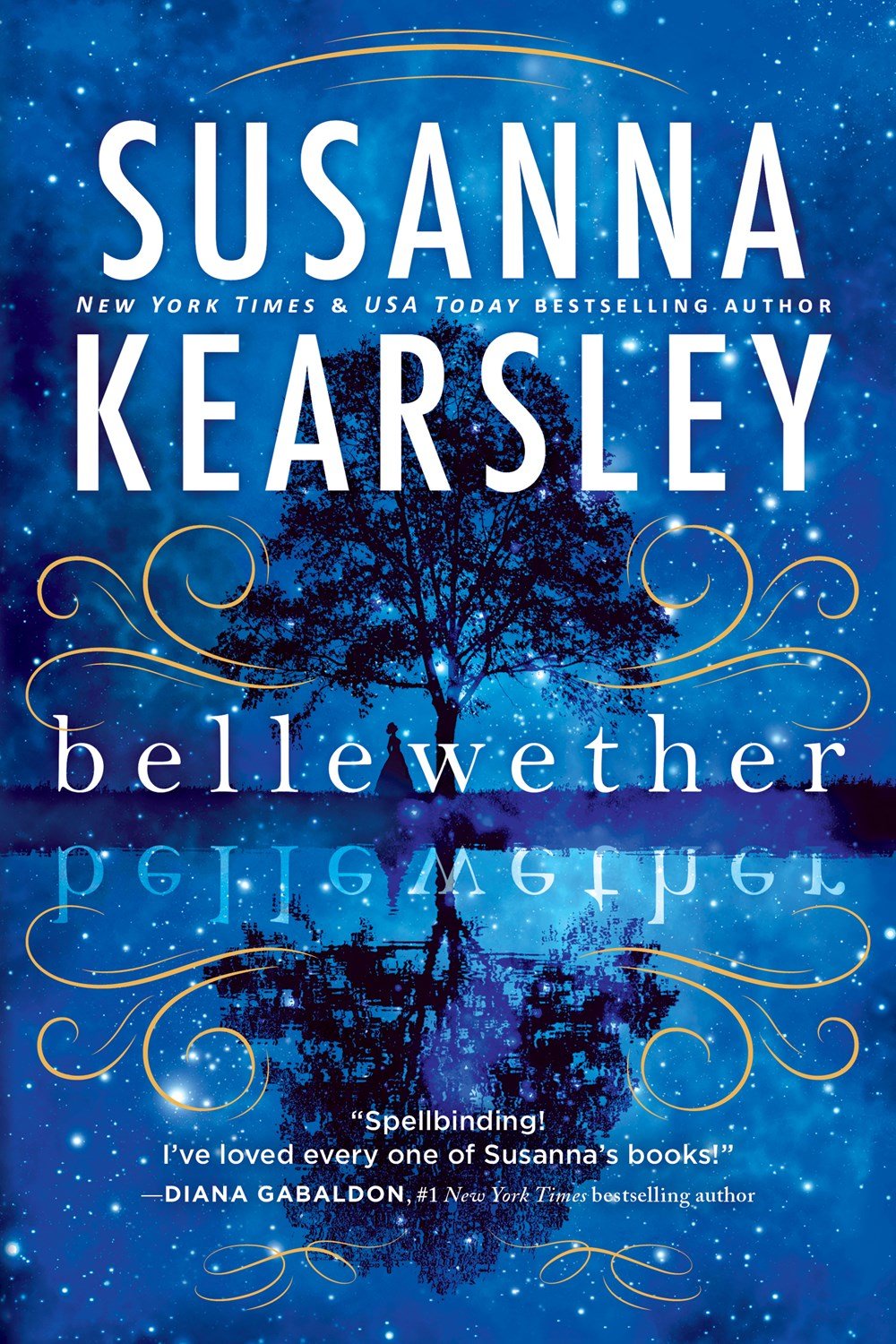
    Bellewether (Kearsley)

    Bellewether by Susanna Kearsley (2018)

    (Not a review, just some notes to help me remember the things I've read. But written this way because it's the Internet, and some people will stumble across this page.)

    The was a book group book. Yes, I've somehow become part of a book group.

    The spelling of "Bellewether" is a pun on the French "belle", and it is the name of a ship and an estate in the book.

    There are dual storylines taking place during the Seven Years (French & Indian) War and current day at a home above Snug Cove on the northern shore of Long Island, which is becoming a museum dedicated to the the life of a Revolutionary War hero. The hero will become Captain Benjamin Wilde, but he is still just one of the brothers of Lydia Wilde in the earlier narrative. There is also the story that a ghost haunts the museum and the woods about it, and the tale that it is a French soldier, killed by the one of the Wilde sons, when he attempted to run off with Lydia Wilde.

    Charley is a descendant of the Wilde family, whose family fled to Canada during the Viet Nam War, but has come back to Long Island to look after her niece when her brother dies. She becomes the curator of the museum, much to the chagrin of a couple of board members, but she has the credentials for the job. She encounters the ghost early on and also starts to learn more of the history of the Wilde family as she goes to retrive items that were in the house according to an Inventory List made during British occupation (during the American Revolution). She also tries to find inormation behind the ghost story, which would allow them to expand the mandate of the museum. Some information is not welcome to be found. In particular, no one wanted to discover that the Captain was raised in a house with slaves. (Note that I don't think the current-day historians uncovered the entire story.)

    The pre-Revolutionary story was of more interest to me. I can't say that I've read much of the Seven Years War era. Usually, it's from the 1770s onward. As for the modern-day story, most of my interest lay in uncovering the stories of the past. The ghost, which you can be certain early on is in fact a ghost even if you don't know whose, doesn't add much to the story, except as an aid to steering Charley in the right direction at times. The love stories/triangles are for anotehr demographic than me but didn't affect my enjoyment of the book either way.

    Kearsley adds some historical notes at the end of the book which are of some interest, which events actually happened with real people, and how her characters and composites fit in.

    Murphy's Lawless: Mission Critical

    Murphy's Lawless: Mission Critical Charles E Gannon, Griffin Barber, Chris Kennedy, Mike Massa (2023) [AUDIO ONLY -- no ...