Showing posts with label book club. Show all posts

Tuesday, March 31, 2026

Nothing to See Here (Wilson)

Nothing to See Here
Kevin Wilson (2022)


(Not a review, just some notes to help me remember the things I've read. But written this way because it's the Internet, and some people will stumble across this page.)

This book was a Pandemic Book Club selection. Or an Alternate. I listened to it before the final selection was made. I was the one picking the books this month.

I enjoyed this book and plan on reading it whenever it becomes available at the library, whether or not it is selected for the Book Club.

A little background: A while back, I posted an image I saw online showing postage-stamp sized covers for "the best books on Good Reads for the past 10 yeasr".

It was suggested that I select three of them for my picks for the book club. Ugh.

As it turns out, the image was bogus. It was nowhere to be found on Good Reads, nor was there any sort of page with this information. What I did find was the best books, by genre, voted on by the readers, and lists of the Top 200 books, by rating I believe, for each of those years.

Each year had 8 thumbnails in the image. As best as I could tell, four of these were fiction and four were historical fiction. Those were the only two categories. It wasn't the top book from eight different categories. Worse, sometimes the top book wasn't even one of the eight images. And still worse, three of the 80 books weren't even in the top ten of either genre or top 200 of the year.

Actually, it might've been four, but there were three books in particular that I was unable to identify. The images weren't clear enough to read a title and I couldn't find matching covers. It is possible that it was an alternate cover, which happened in at least one other case.

Getting back to my picks: I devised a scheme in a spreadsheet, using the Good Reads rating and the page count. After Copperhead, I was determined not to have anything over 500 pages, and anything over, say, 350 better by damn good AND interesting to me. Keep in mind, nothing here is genre fiction. Also of most, I checked availability at the three area libraries.

Most of the historical stuff fell into disfavor because the most popular books of the year are going to hit the same time periods. I'd sooner find another Cold Sassy Tree! And a lot of the general fiction hit a lot of the same themes. Now, some of them might've been interesting from their descriptions, and I'd read them IF one of the OTHER members of the club picked them. But they weren't going to be MY picks.

That's brings us to Nothing to See Here by Kevin Wilson. It was always going to be my number one pick, even as I struggled to find numbers 2 and 3.

A woman is hired to take care of a couple of twins that have a problem that they suddenly will burst into flames. Did I need more than that? I got my genre fiction. And it wasn't a horror book. It's not Firestarter, not Stephen King.

Lillian becomes the caretaker for her estranged friend Madison's two stepchildren, who spontaneously combust when agitated. It's a sticky situation. And the two friends have a strained history of their own.

We learn that Lillian who grew up poor and with a mother who didn't care about much of anything, got a scholarship to private high school. Madison is her roommate who instantly takes to Lillian because she's real, not someone pretending to be something, not another snooty rich person (like Madison herself, although she isn't snooty about it then). Rich kids can usually get away with anything. It won't matter because they all have rich parents. However, near the end of the year, drugs are found in Madison's room, and for once, the school is going to make an example out of her for all the other rich kids to see.

Madison's father doesn't want her daughter's life opportunites (not career opportunites, mind you) to be ruined, so he offers Lillian's mother $10,000 for Lillian to take the fall. Instead of being more lenient on the poor girl, the school kicks her out. She goes back to public school as a failure with a reputation, and no one expects anything to become of her, nor do the go out of their way to make her life better. She's a screwup. And the "college fund", of course, disappeared long before she got to college.

Flash foward a bunch of years, Madison is married to a Senator and living in Atlanta. She's been pen pals with Lillian the entire time. She calls Lillian with an opportunity to look after her two stepchildren whose mother passed away. There's just one little catch -- the children catch fire. Their clothes get singed but they're otherwise fine.

It takes time for the kids to trust her and start to do breathing exercises. They move into a guest house behind the Senator's mansion in Atlanta where they all start to grow on each other, except for Carl, who is an aide to the senator and her liaison.

Lillian does a bit of growing herself and loves and protects the kids. If I had a complaint about this book is that the story is too short -- I know, I can't believe I'm saying this. What I mean is that when would should be a big twist happens, the fallout isn't quite what it should be. Keep in mind, the title of the book is "Nothing to See Here" because stuff like this gets covered up in politics if you're rich, know enough people, and can exchange favors.

And yet, you'd think that the author would've turned up the temperature a little more. But I guess it had to be kept to a manageable, "cover-uppable" level.

I enjoyed this audiobook and reccommend it.

Update: June 2026:

After a delay, we held our online book club meeting the first Friday in June. It's fair to say that everyone considered this a "Top Five" book from what we've read so far. It was universally liked. Ironically, the moderator mentioned that this book came up as a selection a couple years ago -- no one else remember that. And that time, it didn't get any votes at all. He said he'd let us know which two books it was up against.


If you stumbled across my page via the Internet, please check out my short book series, Burke Lore Briefs. A fantastical foursome of flash fiction and short stories.

Wednesday, March 25, 2026

Demon Copperhead (Kingsolver)

Demon Copperhead
Barbara Kingsolver (2022)


(Not a review, just some notes to help me remember the things I've read. But written this way because it's the Internet, and some people will stumble across this page.)

This book was a Pandemic Book Club selection.

I realize that this book won a Pulitzer Prize, so my opinions don't matter much, except to me.

This book was long. Too long. Longer than it needed to be.

I listened to all 21 hours of it (and I listened to the first couple of chapters twice, like I tend to do). Despite not starting the book until I was nearly done with the audio, it will still a job to plow through it. I was reading, reading, reading, and still at 4% ... more reading ... 12%.

I made the mistake of mentioning this on the group chat about how far I'd gotten, and the moderator voted to push the meeting back two weeks. I can't make the meeting on that day. After another day or two of reading, I asked myself, why am I torturing myself. I have other things to read.

A couple of things to note:

First, I've never read David Copperfield, nor have I ever seen any kind of dramaticization. Second, I didn't even realize when the book was chosen that this was a modern retelling of it (side note: getting a little sick of those -- couldn't this Pulitzer Prize winner do something original). With a title like Demon Copperhead, I expected more horror in this version -- granted, we read two books by Brom.

The main character's name is Damon, but he gets called Demon. He's born in white trash and live a white-trash life. Any time things start to get better, they get smashed down again. And this roller coaster goes on and on, until it doesn't. Then it's over. The book could've been 100-200 pages shorter and it wouldn't have hurt the narrative. It reads like the novelization of a five-year TV series -- and by that I mean the old 20-24 episode seasons, not the current 8-10 episodes.

But was the ending worth the long ride? Again, no.

Also, there were a couple of tropes that I see often, which annoy me. One, the hero has nothing, finally gets something, gets to make one purchase in one scene, and then he's robbed of everything and left with nothing again. Recent examples of this were in the TV show "1923" and in the beginning of the book, "Kings of the Wyld". Now that I think of it, it reminds me of those old AD&D computer games, where you finish one game and move to the next where you're immediately stripped of all your possessions and start off with nothing again. Hey, if you can succeed once, you can again, right? Still, Damon could've had that bankroll for a little more than a couple pages.

A second one happens later in the book when his girlfriend gets pregnant, and Damon thinks that this will change things for the better. Within a few pages, she loses the baby after barely making a blip on the story. If this was a nonfiction book, that might be something. Here, just another way to take something away from Damon -- like when his mother was pregnant when she died.

So, basically, not a fan.

Final note: if I write another story set in some plane in the underworld, I'll be sure to add a "demon copperhead" that's at least 2 to 3 times the size that it needs to be.


If you stumbled across my page via the Internet, please check out my short book series, Burke Lore Briefs. A fantastical foursome of flash fiction and short stories.

Monday, February 23, 2026

The Rom-Commers (Center)

The Rom-Commers
Katherine Center (2024)


(Not a review, just some notes to help me remember the things I've read. But written this way because it's the Internet, and some people will stumble across this page.)

This book was a Pandemic Book Club selection.

This has to be a trope in itself: a rom com about two writers writing a rom com. Not that I would know because I don't typically read the genre unless I'm forced to, such as by a book club. It had the right length because my problem with books or movies of this type is that everything has to build to that last moment, and sometimes that last moment takes an agonizing amount of time to get to, and not in a good way. Yes, there were still points where I made've said, oh cmon already, but the groundwork for the excuses and delays were there, so as long as those excusde had a payoff (that is, a reasonable explanation, and I mean reasonable in their own universe), I was good with that.

Two side notes: I recall one Harry Potter book were quite a few people I knew were saying, "why doesn't he just talk to Dumblebdore already???!!!". And more recently, I was covering the topic of "The Hero's Journey" for my graphic novel class, both the 17-point and 12-point versions. It did show me what I was missing in my own writing. Also, it's said that Lucas used this theory to plot out the original Star Wars. If I checked, I bet Raiders of the Lost Ark would fit as well ... except for the opening scene.

Continuing...

Emma Wheeler gets a call for a dream job to ghost write a screenplay for a screenwriting legend Charlie Yates. Charlie's manager, Logan, was Emma's boyfriend in high school but then went away to college and then came out as gay. This confused me at first, until I realized that he wasn't supposed to be the other half of the rom com couple. As I said, I don't read these things. The love interest hadn't been introduced yet.

Emma puts her life on hold, as does her younger sister and ill father, and flies to California only to find that there's no job. Charlie Yates isn't interested in a ghost writer. One thing leads to another and Emma ends up staying one night. While she's there, Charlie inquires why she thought his screenplay (for a updated remake of It Happened One Night) was "apolyptically" bad. (They use a worse word.) He agrees to hire her for a consulation. To her surprise, he takes a lot of notes. And then he spends the night reading her scripts.

By the morning, when she's calling an Uber, Charlie's trying to convince Emma to stay. However, Emma knows what Charlie really thinks about her and has no interest in staying, especially if it's just to make the screenplay "passable" instead of doing it right. Charlie knows that the screenplay won't get made, but he needs to write it for a big wig producer's mistress (who wants to star in it), so the big wig will produce his Mafia movie.

Charlie gives in and says he'll do it right.

Antics ensue, especially after Emma overhears Charlie telling Logan that he'll go back on the deal once he get the script passable and be done with it. Emma stays because she needs the money and because she thinks she can change Charlie's mnd about rom-coms.

Through it alll, he hear about everyone's tradegies and traumas, which left Emma yearning for more and Charlie cynical as hell.

In the end, it all comes together ... until it all falls apart ... but then there's a chance ... but, no, not gonna happen ... okay, fine! Fine! Have it your way! ... oops gotta go ... okay, I'll follow ...

And then it comes to the prescribed happy ending that we've been assured that all good rom-coms have because their viewers (and by extension their readers) have expectations that must be fulfilled or else it isn't a rom com.

I enjoyed the book and was happy that it read fast. It wasn't "spicy" or "sexy", which are buzzwords that I've seen, because everything is delayed until the end.

If there was any problem, it was the extended epilogue that even my kindle suggested skipping, but I kept with it. I skipped the preview of the next book, which is about a cruise ship wedding and being stuck onboard.

I started the book on audio until the ebook became available. About two-thirds of the way through, the ebook overtook the audio. But I kept listening to the audio in case I missed anything.

As of this writing, the book club hasn't met yet. It meets on Friday.

Saturday, January 31, 2026

The Cartographers (Shepherd)

The Cartographers: A Novel
Peng Shepherd (2022)


(Not a review, just some notes to help me remember the things I've read. But written this way because it's the Internet, and some people will stumble across this page.)

This book was a Pandemic Book Club selection.

The meeting was last night, according to when this was posted, but I wrote this yesterday, so the meeting hasn't happened yet. I might include an update.

The book starts with the murder of a prestigious reseracher at the Central Branch of the New York Public Library. His estranged daughter, Nell, who used to work with him, is called to the library by the cops and her former coworker. A mystery three decades old starts to unravel at this point and it centers on a old, seemingly worthless, road map that Nell found in what is referred to as "the Junk Box incident."

She was fired for arguing with her father when he was in fact her boss. He coworker Felix, a fellow intern, was fired at the same time. Swann, a kindly uncle-type figure, had always looked out for her and had hoped that she'd be able to come back.

Nell and Felix are both cartographers. Felix ends up working with maps for a big company, while Nell winds up creating fake relicas of old maps (with dragons and sea sprites added) in a cramped office in Crown Heights, Brooklyn.

Nell follows what clues (and what maps) she has to figure out this mystery, and as she does, she learns about this mysterious group, the Cartographers, that's something of a legend in map-collecting circles. Mild spoiler: they were her parents and five friends from school. They were all together on the day her mother died and Nell suffered burns in a fire in a cabin in upstate New York when Nell was three years old.

Each time she meets one of them, we get a little more of the background of what happened back in those days related to her. And every time, when learn that there were more secrets among the group other than the biggest secret: Agloe, a phantom settlement that only appears if you have the correct map. And it was only on one map. And every copy of that map is missing, stolen by collectors.

It turns out that someone out there would kill for that map. And then have a secret way into and out of the library and other places as well.

Edit: I'll put this here because it seems like a good place. Overall, everyone in the book club seemed to enjoy the book overall, but everyone also had a problem with the ending and with the motives of the villain -- and everyone else's, really, when you get down to it.

End of edit

I enjoyed this book, and I wasn't overly happy with the ending, but I rolled with it. Likewise, when police and murder are involved but there's a fantastical element at work, there's a bit of disbelief suspension at work.

But there was one thing that I did have to call out: for how well researched this book is -- Agloe in particular was a real place at one particular time because of a phantom settlement on a map -- there was a glaring error that someone should have caught. They flee from police and he up to the town through the Lincoln Tunnel and then spend hours on I-95.

I-95 does NOT go to upstate New York! They were on that highway for maybe 20 minutes, unless they secret went through New England.

Now, this should be a quibble. If the author had invented, say, State Road 145, I wouldn't have thought twice about it. But not only is I-95 a major thoroughfare -- BUT THIS IS A BOOK ABOUT MAPS!! How do you get something like this wrong? Especially when they're using a road map!

That aside, I enjoyed the book unfolding. I didn't think the stakes were high enough for some of the reactions the characters had or the actions that they took, but by the end, things were explained to not be as they seemed. Still that ending.

Second edit: One of the group members complained about one character morphing into a Bond villain.

I enjoyed this book, and now that the audiobook became available, I might listen to it for the next couple weeks.


If you stumbled across my page via the Internet, please check out my short book series, Burke Lore Briefs. A fantastical foursome of flash fiction and short stories.

Friday, December 19, 2025

Cast the First Stone (Warren) -- repost

Cast the First Stone
David James Warren (2021)

(Not a review, just some notes to help me remember the things I've read. But written this way because it's the Internet, and some people will stumble across this page.)

This was a book club selection. I decided to make a separate entry rather than update the entry from June. That's the blog biz for you. And there was so much time between the two readings that this make sense. The last time (that I recall) reading after listening, it was closer in time and there were no other grand revelations to discuss.

I listed Cast the First Stone as one of my three picks for the book club. My other choices were Sea of Tranquility, which I read after, and Gods of Manhattan, which I haven't read. Gods was rejected mostly for being a kids book.

Overall, the book was well-received. A couple of people would be interested in the second book, or at least hearing about what happens next. It was a pretty straightforward book, so there weren't a lot of questions for discussion. Mostly, what did we think of the plot, characters, and situation. What do you think will come next?

We did compare it to other time travel books that we've read previously.

Also of interest is that David James Warren doesn't exist. There are three authors for this book: Susan May Warren, James L. Rubart, and David Curtis Warren. So I each of the three supplied one name even though Susan and David have the same last name.

It was just as enjoyable the second time around, and it's eassier to review what I missed or what happened while I was falling asleep, as opposed to rewinding when a loud truck or train passes by.


If you stumbled across my page via the Internet, please check out my short book series, Burke Lore Briefs. The fourth book will be available by the time you see this!

Wednesday, November 5, 2025

Slewfoot (Brom)

Slewfoot
Brom (2021)


(Not a review, just some notes to help me remember the things I've read. But written this way because it's the Internet, and some people will stumble across this page.)

This book was a Pandemic Book Club selection.

The meeting was a couple weeks ago, but this post slipped through the cracks as I caught up with Library Thing books and Graphic Novels for my class.

Abitha is a young English woman who'd been sent by her father to a Puritan colony in Connecticut that's looking for wives. She's married to Edward who is ten years older than her and in some ways more of a fatherly figure. Edward is also a little on the slower side and easily dominated by his older brother Wallace, who inherited all the property from their father.

Edward has worked a farm owned by his brother for nearly 10 years and has only one payment left to make. Wallace informs him that he is given the farm away to pay a debt rahter than give away the family homestead that their father founded. Abitha is furious with the both of them and finds it difficult to mind her place in this Puritan society. (She could end up in the stocks or worse.)

Abitha coaches Edward so that he can make the case that the farm was promised to him first and that he has met his part of the bargain. The reverend, who is the final say in this community, agrees with Edward, as do as two associates -- including the one who is friendly to Wallace.

Life then gets turned upside down. Abitha leaves the gate open, and their one billy goat, Samson, wanders off into a cave and falls down a deep hole. Edward later goes to find the goat and disappears into the same hole (tricked by voices from down below). Unbeknownst to any of them, there are spirits underground, Forest, Sky, and Pond, who are trying to awaken "Father" to protect the woods and the special magic tree from the newcomers who have settled in the area. "Father" is supposed to be the destroyer of all, the slayer.

He doesn't wish to be. He doesn't know who or what he is, but he knows there's more to it.

When he is spotted, he is called the Devil, Satan, and Slewfoot. I have to admit that Slewfoot was a new one on me. When he finally meets Abitha, she names him Samson, after the goat. Side note: there is stunning artwork by Brom in the book and there is different artwork for Samson and Slewfoot. The question remains, are Samson and Slewfoot the same or is he just assuming the identity of Slewfoot for this story?

Seriously, I assumed that he wasn't really Slewfoot, but I was waiting for Slewfoot to actually appear, if for no other reason than the painting. But he doesn't. So is Samson actually Slewfoot? Or are such matters in this story beneath Slewfoot's notice?

In any event, Abitha doesn't want to find herself beholden to Wallace, her only family by law, and invokes her rights as a widow to champion the affairs of her late husband. She only need deliever the corn on time and the farm would be hers. But the rain said otherwise. And she's a frail and poor widow.

Samson helps her and soon there is enough corn to pay off the debt. Wallace is perplexed and decides to steal the corn with the help of some local Indians. They wind up burning it, and one man is dead.

Along the way, Abitha, who is a cunning woman like her mother, makes charms and salves for some of the girls and goodwives of the community. It is because of this (and because of the ghost of Edward and the site of Samson) that Wallace accuses Abitha of witchcraft. It doesn't help that when Abitha is attacked, Edward's bees fly out and sting only Wallace.

So while we get to root for Abitha beating Wallace and saving her farm, there was no way that this wasn't going to end with a Witch Trial. And being that it's Brom who wrote it, we were going to get an accurate trial, which wasn't going to go well for the accused witch. And it doesn't.

When all is said and done, she is tortured and condemned. Samson can take her away to live the rest of her life somewhere else, likely in pain, or he can make her like him where she might live a few hundred years.

And then the revenge tour begins. The downside to all this is that now everything that the others said about her when it wasn't true, is now true. This causes her only friend to curse and condemn her because she herself feels condemned and doomed now. (These are Puritans after all, even if Abitha wasn't one.)

A Book Club note: several members of my book club thought that she didn't go hard enough on Wallace. Everything she did was over too soon. (I want to say half a page but it was probably longer.)

Myself: I thought the revenge tour went on too long. I got it -- she Big Mad and now she has powers. And I could note that there was plenty of exposition to say that Samson was more of a Force of Nature than a Force of Evil, but this vengeance was purely evil. At one point, I wondered if Samson was going to tell Abitha to tone it down a little (at least until she got the hang of her powers or something), but he didn't.

Also by the end, they were identifying themselves as a witch and the Devil.

This didn't take away from my enjoyment (much) because I expected this.

I realized early on that Edward wasn't going to be saved. He wasn't coming back. He wasn't "inside" Samson -- actually, he sorta was. Edward moves on to the great beyond without Abitha, and now it seems that Abitha, though she tried to love Edward, has closed the door on following him. But she has Samson.

There's an epilogue that takes place 300 years later (the 1960s), which for some reason takes place in a wooded area in Virginia. I guess Connecticut is too settled or something. It didn't really add much except to show that she and Samson (who is mentioned, I believe, but not in the scene) are still around even though they left that wood, the farm, and the Puritans behind. Abitha should be near the end of her lifespan but she appeared as vibrant as ever.

I listened to about half this book but couldn't renew it. I started reading from the beginning again (which was probably a good move -- you miss stuff listening while out walking), and I plowed through it.

A good read.


If you stumbled across my page via the Internet, please check out my short book series, Burke Lore Briefs. A fantastical foursome of flash fiction and short stories.

Sunday, September 7, 2025

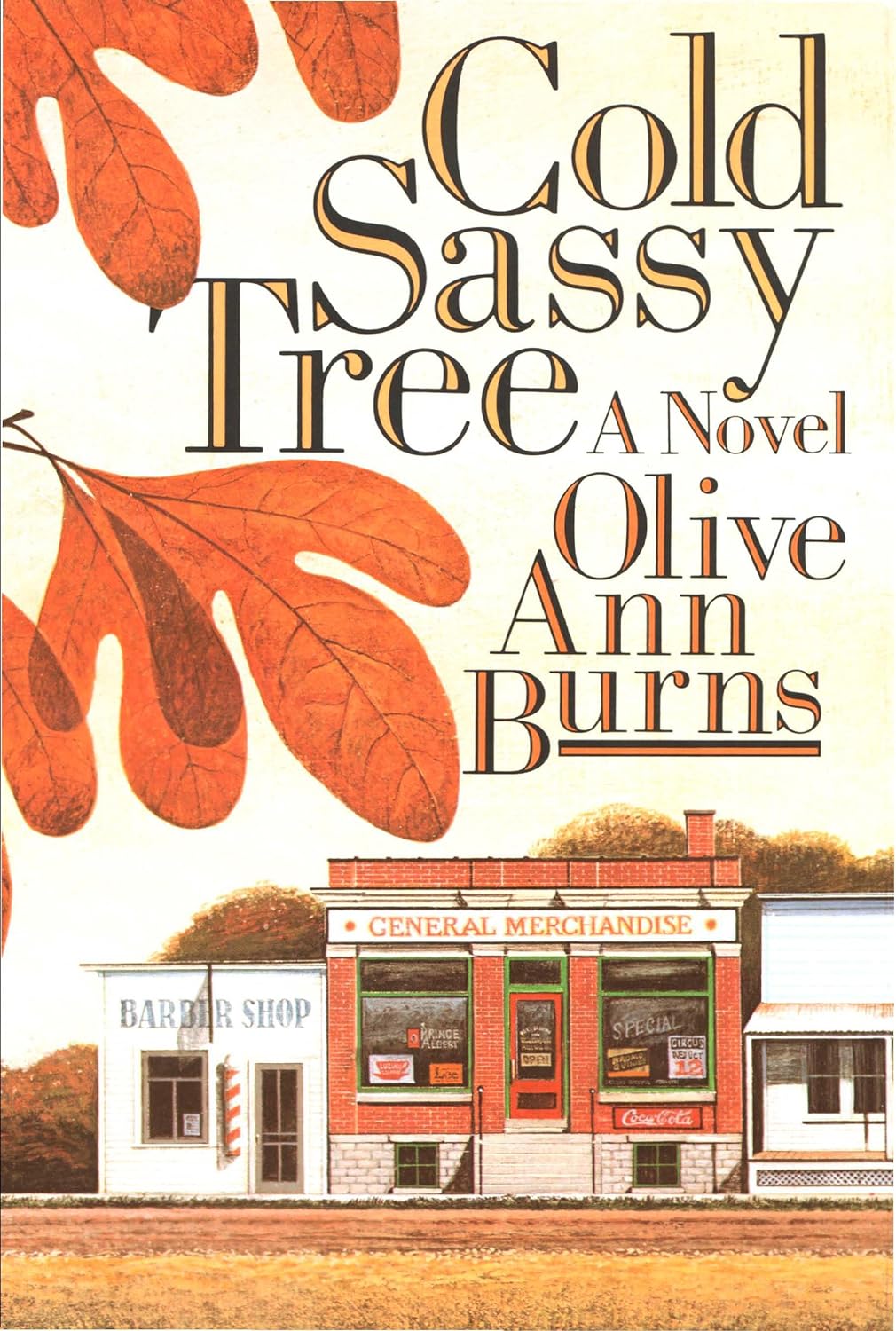
Cold Sassy Tree (Burns)

Cold Sassy Tree
Olive Ann Burns (1984)


(Not a review, just some notes to help me remember the things I've read. But written this way because it's the Internet, and some people will stumble across this page.)

This book was a Pandemic Book Club selection.

I started listening to this book before I started reading, but I eventually caught up and finished the ebook first (which my the audio less important to finish). I listened to the first chapter twice just so I had an idea what was going on.

Cold Sassy Tree refers to the sassafras trees that the town of Cold Sassy were named after even though there's only one tree left by 1906. The rest are all gone. Cold Sassy is a fictional town in Georgia.

The story is narrated by a 14-year old named Will Tweedy. It has a definite beginning but it just sort of ends. At least it wasn't open-ended (although there is a sequel where I guess the boy is grown some more.)

What stands out about this book is the folksy tone with which it's narrated, and I didn't mind the spellings that were used. (This was much better than the "stylistic choices" made in The Bee Sting). It took a moment to figure out a few words, but after that, they were familiar with repetition. "Cudn" was an amusing one for "cousin". I never did figure out why they'd sometimes end sentences with "one".

The story starts a few weeks after Will's grandmother has died with his grandfather's announcement that he's getting remarried to a woman who works in his store. Scandalous is this seems (and unseemly, too), he doesn't want to be a burden on his two daughters, so he either has to get a new wife or hire a Negro housekeeper, and he figures a wife is cheaper. Will will later learn that it isn't a "real" marriage, but an arrangement to make Miss Love Simspon his new housekeeper and not the new Mrs. E. Tucker Ruckslee.

Their story is the backdrop of learning about Will working in the store, going to school, and getting into fights. Along the way, he learns to drive the only two cars in town, and almost gets run over by a train. He is helped off the tracks by a mill girl he likes (and eventually kisses).

My one problem with this lighthearted tale is that it eventually takes a dark turn, and then gets absolutely brutal.

I could also complain that they never mention driving to another town to get gasoline for the cars since there isn't a gas station in Cold Sassy as there are only two cars before Mr. Ruckslee starts selling them.

Other than the dark parts, you could imagine that this was any boy's misadventures growing up at a particular time in history. (I won't compare it to Tom Sawyer or Huckleberry Finn because I haven't read those in a long time and I'm sure there was more and sharper commentary on society than here.) And the book could've gone on for a few more chapters before the events that bring on the ending of the book. I didn't pay attention to the timeline, but it could've been that it was a full year or a complete school year over which the book takes place.

This was an enjoyable book, and a nice change of pace from recent reads. Now I have to wait nearly a month for the meeting!


If you stumbled across my page via the Internet, please check out my short book series, Burke Lore Briefs. A fantastical foursome of flash fiction and short stories.

Friday, August 15, 2025

The Bee Sting (Murray)

The Bee Sting
Paul Murray (2023)


(Not a review, just some notes to help me remember the things I've read. But written this way because it's the Internet, and some people will stumble across this page.)

This book was a Pandemic Book Club selection. It was also a 600+ page slogfest. If it had not been for the book club, I would have DNF'ed it 100 pages in -- by 200 for sure. As it was, I still had 150 pages to go when the meeting happened. I had already been spoiled that the book was left open-ended, which after 640 pages is a little outrageous. During the meeting, I discovered just what it was that was left open-ended. I was satisfied that I didn't need to read this book.

At the point where I considered dropping this book, I wrote the following on Good Reads:

First, there are no quotation marks, which gets a little confusing. Then almost all of the other punctuation disappears. Then there’s a slog of a chapter that’s literally 100 pages long, and you want to k!ll yourself instead If this hadn’t been a book club book, I wouldn’t have pushed on as far as I did, and I still couldn’t bring myself to finish it. I just didn’t care about anybody, how their lives were or where they’d end up, or even about that bee sting A good editor would’ve cut between 2-300 pages from this monstrosity. If there was a reason for it to be this long, I never got to it.

After the meeting, I was happy to put that book aside and read something else, The Bartender Between Worlds, which I enjoyed very much.

I started reading the next Book Club pick, but then I decided that I would power through this book.

Let me say right off: it didn't get better. It got worse. For the last 100 pages or so, it switched to Second Person POV, because it needed a fresh layer of Hell. And it applied this to all the different POV characters that it had. It wasn't using it to make the reader the POV character.

Yes, playing with the format might've been a storytelling tactic. It was an absolutely abyssmal choice.

The icing on the wedding cake came in Part III when it switched to a script format, except it wasn't a script. Just the formatting on the page was so you'd know with Second Person POV was involved in this bit. The main reason for the script, as far as I can tell, was because all the players were being brought onto a single stage so that open-ended ending could take place.

I never got the answer to my question, why this book had to be so long. On the other hand, they did address the "bee sting" in a way that explained why it was important enough to be the title of the book, and like so much that came before it, everything is a lie.

In the end, every adult is morally reprehensible for one reason or another, and when faced with a moral quandary tend to fail.

But, I got through this book and can return to next month's book, which is already better, and not quite as long.


If you stumbled across my page via the Internet, please check out my short book series, Burke Lore Briefs. A fantastical foursome of flash fiction and short stories.

Friday, June 27, 2025

Kiss Number 8 (Venable)

Kiss Number 8
Colleen A.F. Venable,
Ellen T. Crenshaw (Illustrator) (2019)

(Not a review, just some notes to help me remember the things I've read. But written this way because it's the Internet, and some people will stumble across this page.)

This was a Pandemic Book Club selection. I was working during the meeting, which is a shame because Venable was invited to take part.

This is a graphic novel, which takes place in 2004. (I forgot that little detail between the first and second times reading the book, and everything in the story suddenly seemed dated. Oh, right.)

The story opens with Mads detailing her lackluster first kisses, particularly the first seven boys she kissed. Given what I knew of the book, I wasn't surprised that this led up to kissing a girl in a car. The girl tells her to get out of the car. There's more to this moment that will be revealed much later.

The story then rewinds a little bit. Mads has two friends, almost by default from where they all live, Cat, who's the fun, crazy one, and Laura, who's the dependable, boring one. Laura has an older brother, Adam, who's started to notice Mads more and more.

Mads goes to Tornadoes ballgames every week with her dad. (The Tornadoes are a nod the the Brooklyn Cyclones, who play in Coney Island, close to the author's home. Go Cyclones!)

Mads is going through typical teenage growing pains and such when she overhears a phone call her father gets from someone named Dina. She also finds a letter with a check for her, and a picture of someone named Sam.

She thinks her father is or was having an affair, and then later comes to realize that both her parents are lying to her. This causes her to spiral a little and act out with Cat.

It becomes more obvious that she is attracted to Cat, who is attracted to boys.

With Laura's help, they track find information about Sam, who used to be Samantha, and the story takes a new twist.

This was an enjoyuable book with the two stories intertwining. It wasn't preachy, and it's most devastating scenes are shown by Crenshaw in a flashback while the narration is stating that the opposite is happening. This is how some stories get twisted and passed along.


If you stumbled across my page via the Internet, please check out my short book series, Burke Lore Briefs. The fourth book will be available by the time you see this!

Tuesday, June 10, 2025

Everyone Knows Your Mother Is A Witch (Galchen)

Everyone Knows Your Mother Is A Witch
Rivka Galchen (2021)

(Not a review, just some notes to help me remember the things I've read. But written this way because it's the Internet, and some people will stumble across this page.)

This was a Pandemic Book Club selection. The meeting was postponed due to conflicts and had not taken place at the time of this writing.

I was able to get the audiobook quickly and then got a copy of the hardcover. There's a long wait for the ebook, which is surprising for a four-year-old book, particularly one that was "meh".

The book was a little better than the audio because I listened for a couple of hours and wasn't sure what I was listening to.

First thing, the book is historical fiction. The woman in question is the mother of Johannes Kelpar, and the events in the book are based on an actual incident. That being said, the author was intrigued by reading a nonfiction book about the case and decided to write her own book, a book which invents many of the characters and some of the incidents. This almost makes me wish I had read the original nonfiction book, if it's available in English. On the other hand, there are many nonfiction books that I read and think, "This should've been an essay."

I am seriously not likely to search for the original book because the incident just doesn't pique my interest enough, particularly after reading one book on the subject.

Basically, the book was boring. I kept waiting for something to happen. It's almost like this was someone's writing exercise, to write a journal in someone else's voice, and then sold it. I finished the audio a couple weeks back and I couldn't tell you how it ended.

Despite not enjoying this, I pushed forward to read the book, so I could finish it before the original meeting date. I didn't. And then a week later, I brought the book back to the library unfinished because others were waiting for it. I still have the audiobook, so I could re-listen to, say, the last hour, but I'm not sure that I will.

This will be one book that I give a medicre rating to, not because it wasn't well-written, but just because I was bored.


If you stumbled across my page via the Internet, please check out my short book series, Burke Lore Briefs. The fourth book will be available by the time you see this!

Wednesday, April 23, 2025

The Silent Patient (Michaelides)

The Silent Patient
Alex Michaelides (2019)

(Not a review, just some notes to help me remember the things I've read. But written this way because it's the Internet, and some people will stumble across this page.)

This was selected as my Pandemic Book Club's selection for this month. I listened to it first, and then started reading the hardcover from the library.

This turned out to be an unsual experience in that in the past, I've started listening first because the audiobook is usually available before the ebook. Print books are usually available first but I tend to read print books more in the summer when I'm off. Carrying hardcovers back and forth to work (and along for all the walks I take) isn't preferable. Anyway, once I get an ebook, I generally catch up quickly to the point where I've listened to and then finish the ebook. Generally speaking, if I finish the book electronically, I'm less likely to finish listening to it.

This time, I finished the audiobook before I even opened the print edition. And I almost didn't bother reading it at all. Why? Because I was annoyed with the ending. So much so that I didn't want to actually read the book I'd listened to. However, since this is a reading blog, I will at least read until I have the online group meeting. If I'm not finished reading by then, I might not finish at all.

Okay. So why didn't I like this book? What was wrong with the ending. Also, I am aware that this is the third book in a row, where I hated the ending, but each for different reasons.

I can point to three specific problems: First, the narrator is unreliable; second, the narrator withholds information while telling a very long-winded story with a lot of details; third, the events are not documented chronologically and we are not told that it is not chronological. What I mean by this is that some scenes are actually flashbacks but we are not told that these are flashbacks. And I imagine the ending is worse in the audiobook because there really seems to be a tonal change in the narrator's voice while reading the epilogue (or the last portion).

Other points: the book is called "The Silent Patient" but should be called "The Bloody Pompous Psychoanalyst Who is Full of Himself". He's the story, not the patient. There's a side plot about his wife having an affair, which doesn't seem to have anything to do with anything, but when it actually does later on, it's more annoying than revealing. And the reasoning why the silent patient is silent is unsatisfying at best, even when he gets her to talk again.

Knowing the ending before I starting reading the print book left me open to question why he's actually doing some of the things that he's doing. It's the opposite of rereads when you see the subtlety worked into the narrative and say, "Oh, that's why he did that!". The second time, things make less sense. There are reasons I supposed, but again, unsatisfying.

The story: Alicia Berenson is a famous painter who is married to a fashion photographer (Gabriel) and who infamously kills her husband by shooting him in the face, or so we're told. From the time she is found until the present, she is mute. She either cannot or will not speak. She is committed to a mental hospital (the Grove) instead of prison. The trial was a newspaper sensation for a while.

Theo Faber is a criminal psychotherapist who is intrigued by this case and takes a position at the Grove so he can take her on as a patient. He left a good position for one that might not be there in six months, as the Grove is not doing well financially. While working the case, he acts like a detective, visiting surviving family members and others associated with her painting career. He does eventually get her to talk about the case.

Ther eisn't much more to say about the book or the other characters. I will add that someone on the discussing list for my book club mentioned that htey saw the "twist" coming long before I knew that there would be a twist instead of a simple resolution.

Again, this was an audio book and a hardcover. The ebook hadn't become available before the meeting.


If you stumbled across my page via the Internet, please check out my short book series, Burke Lore Briefs. The fourth book will be available by the time you see this!

Saturday, April 5, 2025

Fall Into Temptation (Score)

Fall Into Temptation
Lucy Score (2022)

[NO IMAGE, AUDIOBOOK ONLY]

(Not a review, just some notes to help me remember the things I've read. But written this way because it's the Internet, and some people will stumble across this page.)

This was a Pandemic Book Club alternate selection. The wait for the ebook and audiobook were so long that I got a print book. This, of course, was silly, because by this point, Starter Villain, had already been selected so there was no urgency to read this. However, I'd forgotten which month this was for and was thinking that it was a choice for April. And then the library told me that I couldn't renew it because someone was waiting, so I have to dive in, reading this on the train every day. As it is, it's more than a week overdue. It may have been reported "lost" and I may have accidentally purchased it.

The book says that it is a "Blue Moon Romantic Comedy". Blue Moon is the name of the small town. The Library says that it is book 2 in the series, but the "Also By" page lists seven other titles, along with six other series and a set of standalones.

A capsule review: It not a will they or won't they with Beckett and Gia, it's when will it happen, and how will they handle the fallout, consequences, and repercussions. The romance level is moderate (by my own reckoning) but could be considered "mild" or "tame" by others. There are ample descriptions but they aren't vulgar. For comparison, New Beginnings was basically nil.

Beckett Pierce is the young, handsome mayor of Blue Moon. He returns from a vacation wedding to find that his associate has managed to rent out the house behind his house to a mother of two. One of the first itmes of business is cutting the ribbon at the new fitness center (renvoated by a new owner). He spots the owner (Gia/Gianna) working out the night before and is suitably impressed by her form. The next morning, he rescues her from being locked in the studio's bathroom. Beckett later discovers that she is his new tenant.

To add to the intrigue, Beckett goes to the family's farm, where the three brothers are starting a brewery, only to run into Gia and her kids. Beckett, whose father is deceased, has daddy issues and now his mother is dating someone and it's getting serious. And it turns out Gia's father is the boyfriend of Beckett's mother.

Between this and the landlord situation, the relationship is considered by the two of them to be off-limits, forbidden fruit, nothing can possibly happen ... except for every time that the two of them are alone with each other. And, of course, the whole town knows.

The first book appears to be about one brother and his new girlfriend, who quit her job and came to Blue Moon, so I wouldn't be surprised if the third book is about the third brother getting back together with his ex who is in this book but they still aren't on speaking terms.

Do I plan to read any more of this series, or even of this genre? I'm not counting on it. Maybe I'd buy a book if the author is doing a signing in my neighborhood. That said, I enjoyed the book for what it is, and I'm happy to read different things that I might not have read otherwise. And it wasn't trashy.

This was a March read even if I didn't get to post about it until April.

Paperback, if case I'm checking at the end of the year.


If you stumbled across my page via the Internet, please check out my short book series, Burke Lore Briefs. The fourth book will be available by the time you see this!

Sunday, March 30, 2025

Suburban Hell (Kilmer)

Suburban Hell
Maureen Kilmer (2022)

(Not a review, just some notes to help me remember the things I've read. But written this way because it's the Internet, and some people will stumble across this page.)

Updated 4/23/25

This was a Pandemic Book Club alternate selection. The audiobook becam available while I was reading Starter Villain. I haven't included an image because that's my rule if I only listen to it. That said, I've had the paperback from the library on my nighstand for a couple of weeks and the ebook should be available soon. Since nothing about it turned me off, I will likely read it and update this post.

A capsule review: It starts with breaking ground for a she-shed and then turns into a Poltergeist possession novel. Poltergeist is referenced in the text.

I'll keep this brief until I edit it.

In a small planned community in the suburds where everyone knows everyone, one person, Liz, suddenly starts acting weird. Amy notices and tells her concerns to Jess and Melissa. But it isn't until after an incident with some dead bunnies that it gets creepy. And then Liz tries to kill Amy in a ditch where something evil or demonic is trying to attach itself to her.

This leads to learning about demonic possession and exorcism, as well as learning more about the area the development was built upon and who lived -- and died -- there. The good guys eventually win, but there's an epilogue that unravels the entire thing.

I have to say, I hate epilogues like that. They basically say, "Nope, we failed. Evil will continue to win unless we do it all again and again.

That in itself won't stop from reading the book, but I don't think I'd do a sequel that follows the story unless I get a strong recommendation from someone I trust. As it is, this is out of my "comfort zone" for pleasure reading.

Update: Both the paperback and the ebook became available, so I was able to read the ebook. I finished it right before it was due back. (I might've turned off my wifi so the book didn't disappear for an extra 12 hours.) Reading it, I picked up on some details that I might've missed while I was listening, particularly at the beginning when I was learning who was who. Things get lost in audio, if only because I'm passively listening while I'm out walking. Also traffic and other noise sometimes interferes with it.

That said, not much changed in my enjoyment. The book was good, but the ending was not. The epilogue didn't make sense, and it undermined the resolution of the plot.


If you stumbled across my page via the Internet, please check out my short book series, Burke Lore Briefs. The fourth book will be available by the time you see this!

Saturday, March 22, 2025

Starter Villain (Scalzi)

Starter Villain
John Scalzi (2023)

(Not a review, just some notes to help me remember the things I've read. But written this way because it's the Internet, and some people will stumble across this page.)

This was a Pandemic Book Club book. The ebook became available pretty quickly.

A capsule review: If you like John's Scalzi's Redshirts but though it fell apart toward the end, then this book is for you!

That might not be the greatest of reviews, but fans of Redshirts will buy and love this book. People who liked the idea of Redshirts but not necessarily the execution will enjoy this one more.

The one thing off about the book is the cover. As much as I like the picture of the cat in a suit, the tagline "Meet Your New Boss" is misleading. Also, the main cat we interact with is female, and cover cat is wearing a male's suit and tie. Granted, that could be how the most enterprising female cats dress. In any case, the cats aren't the boss, although they might rank higher in the company than others, including the dolphins (who aren't happy about that).

Charlie is a substitute teacher who's living in his deceased father's house while he gets his life together. His much older half-siblings want the house sold already as the estate attorney keeps reminding him. (There's a clause in the will that allows Charlie to remain there.)

The one thing Charlie wants to do is buy an old pub now that the current owner is thinking of retiring. He hasn't got the money for it, and his piece of the house isn't enough collateral. His family would have nothing to do with it (or for that matter, with him, being a much younger half-brother).

His life changes when Mathilda “Til” Morrison shows up, introducing herself as the assistant of Charlie's estranged Uncle Jake who recently passed. Charlie initially wants nothing to do with him since Jake couldn't be bothered with Charlie. He finds out that this wasn't entirely true and that there were reasons. Morrison wants Charlie to stand for Jake at his wake and Jake's company would make it worth his while. For one thing, they'd buy Charlie's house through a shell company and then gift it to him.

The wake fills with business associates including one guy who is ready to stab Uncle Jake's corpse just to make sure. Charlie, in the heat of the moment, prevents it by pushing the guy. The stabber, suitably impressed, allows Charlie to live. Apparently, no one is there to mourn and everyone is there to make sure that Jake is actually dead.

By the time it's over, Jake heads home where he finds his two cats, Hera, who he's had for a long time, and Perseppone, who he recently found and adopted, sitting on the curb across the street from his house. He stops to get them, then sees someone in his bedroom. That someone sees him looking back and disappears. And then the house blows up.

Charlie isn't doing so well.

And then he finds out that his Uncle Jake was a Villain, like in James Bond, and that there's an entire community of villains, like SPECTRE, which might've been influenced by the real group.

Charlie flies to a volcano island lair and starts to learn the business. In a couple of days, he's expected for a special convocation in Italy where the other members will size him up and decide what to do next.

Antics ensue.

It was a fun novel and a quick read. I didn't really have any problems with it. Scalzi played with the usual tropes.

...

Anyway, this should've been posted a while ago. I don't remember if there was anything else I wanted to add.

The book club hasn't met yet to discuss this book, but I've already started on future possible books.


If you stumbled across my page via the Internet, please check out my short book series, Burke Lore Briefs. The fourth book will be available by the time you see this!

Sunday, January 26, 2025

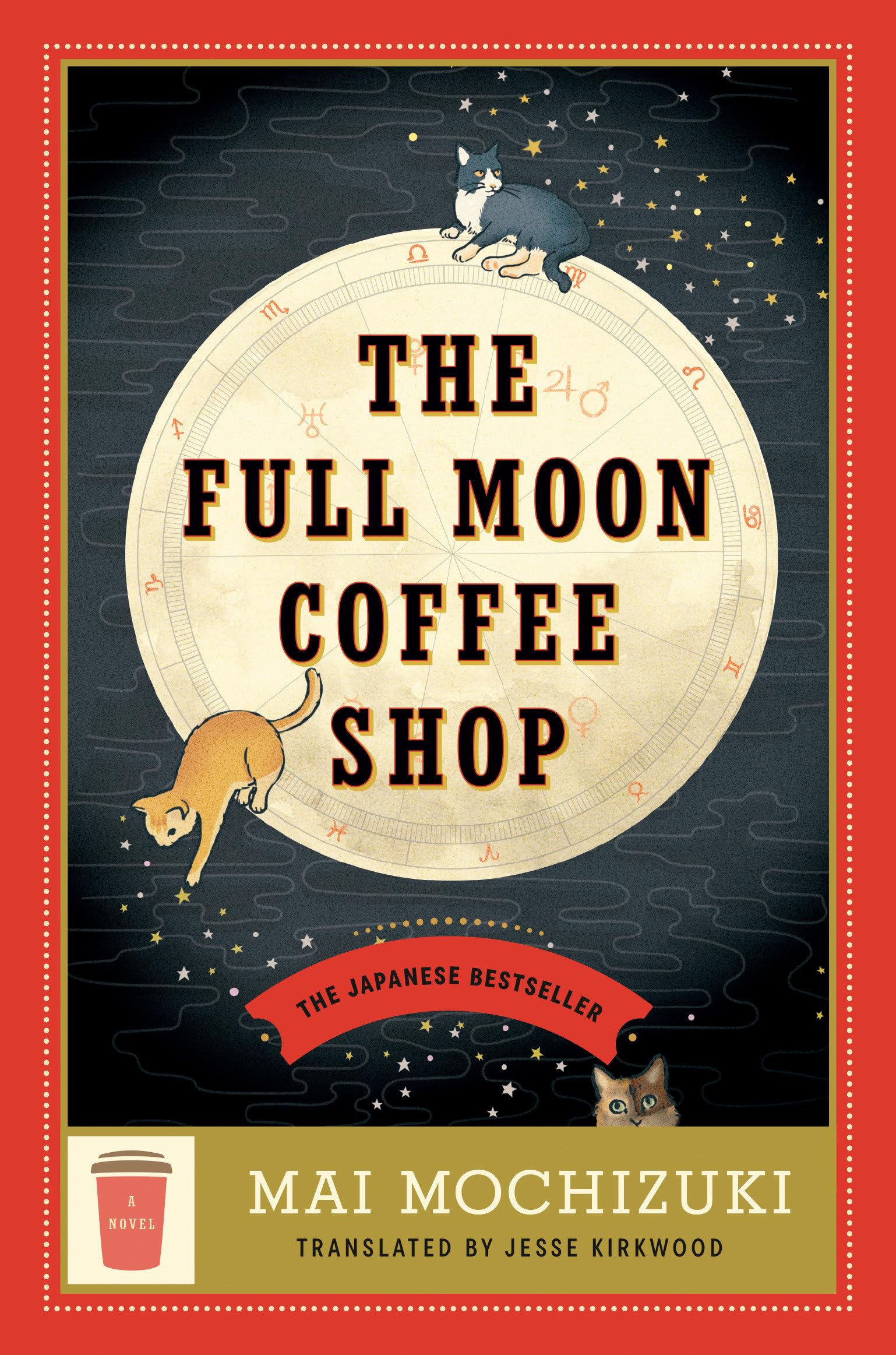
The Full Moon Coffee Shop: A Novel (Mochizuki)

The Full Moon Coffee Shop: A Novel
Mai Mochizuki
Translated by Jesse Kirkwood (2014)

(Not a review, just some notes to help me remember the things I've read. But written this way because it's the Internet, and some people will stumble across this page.)

This was a Pandemic Book Club book. Both the ebook nore the audiobook had months-long waits at all three libraries, so I finally requested the hardcover. I had that in two days. It's a quick read. It's not a novella -- it was over 200 pages. The book was published in Japan, where it is set, and was translated into English by Jesse Kirkwood.

The story is broken up into three parts with an epilogue that ties it all together.

There's a coffee shop that only appears when the moon is full, and it doesn't have a fixed location. It appears to people who may be lost and need some directions. And it's run by cats with names like Mercury, Mars, and Uranus (who can appear human). It's not an actual shop, but a cart that has tables and chairs set up in front of it. If you sit at one of their tables, you can't order anything. They will bring you what you need. And they will read your star chart stating which planets are in whatever house, and what that might mean when applied to your life.

In the first part of the book, a romance screenwriter is now writing story lines for side characters in romance videogames, the kind that can conclude happily but leave the player wishing for the better character, so they keep playing. She gets a call from a producer about a script she sent. The other woman wants to meet her in person. The producer doesn't realize that the writer doesn't live in that neighborhood any more because she's downsized a bit.

The lunch meeting doesn't go well. The producer tells the writer that the network wouldn't go for it. It seems like the stuff that used to be done and doesn't reflect today's trends. The writer is shocked that the producer came all that way to deliver bad news, so she doesn't advocate for herself. The producer notices this.

The writer then finds herself in the company of the cats and learns more about herself. She makes a decision and decides to focus on making the best script for the videogame she possibly can.

In the second chapter, the producer is having a crisis. She wanted to see the writer because she remembers her as a substitute teacher from when she was a child. But the meeting went so poorly that she never had a chance to tell her. The producer has a couple of problems. One is love-related, and the other is affair-related. She has to fire an actress who had an affair with a married man because the public would be outraged and wouldn't accept her in the kind of roles that she plays.

By the time the day is over, the producer is drinking with the cats and set her straight on a thing or two.

In the third part, the fired actress gets her stars read and we find that everyone seems to be connected, going back to the same school. The substitute used to walk a group of kids to school, and all of them are important to the story and the cats. They remember every day passing the house of an old man who used to have his window open and would play piano. One day, he wasn't playing. The substitute teacher was worried and checked on him. He'd collapsed in his home. The kids got help for him.

As one might guess, things start to work out for all the people to whom the Coffee Shop appeared to. And in the epilogue -- IF YOU FOUND MY PAGE BY RANDOM CHANCE AND HAVEN'T READ THE BOOK, THERE IS A SPOILER COMING AFTER THE DASHES ---

--------------

--------------

And in the epilogue, we find out that the old man was a symphony conductor who wasn't satisfied with his life. One night, he met the cats at the Full Moon Coffee Shop. After that, he quit conducting to focus on being the best piano player that he could be. He loved playing music for the children who walked past his house every day. And he remembered the kindness that they gave him. And as a reward, he asked the cats to look after the children and the teacher who helped him.

A touching ending that tied the book together more than I thought it would be.

I enjoyed this. This was the third hardcover book of the year, and it was only the middle of January! (Yes, I'm behind with my reviews!)

Next up, a YA book that I found a bunch of books in the series before misplacing all but the first somewhere in my house.


If you stumbled across my page via the Internet, please check out my short book series, Burke Lore Briefs.

Tuesday, December 31, 2024

The Most Wonderful Crime of the Year (Carter)

The Most Wonderful Crime of the Year
Ally Carter (2024)

(Not a review, just some notes to help me remember the things I've read. But written this way because it's the Internet, and some people will stumble across this page.)

This was a Pandemic Book Club book. It came available from the library about 3 days after I finally bought a copy of it. As it was, I didn't finish it in time for the book club meeting, but that was pushed back a week, so I haven't missed it yet. I'll update with reactions.

The book deconstructs mystery writing when a writer and her "nemesis" are suddenly invited to an event for Christmas and flown to England without a clue where they are going. Maggie Chase is a successful writer who has a horrible life -- her ex-husband now lives in the house she paid for with her ex-best friend, and Christmastime is filled with nothing but bad memories. Worse, she can't stand Ethan Wyatt, the Leather Jacket Guy author who is a relative newcomer and a bit of a rival.

Working on my assumptions, this is practically made for a Hallmark Christmas movie. (Not surprisingly, the author has written at least one of those.) It's a rom-com and a mystery as the two of them come together, partly out of self-preservation, and partly because they unravel their interwined past and start to understand what was going on back then.

The trip brings them to the estate of a reclusive fan, Eleanor Ashley, the Duchess of Death, author of 99 best-selling novels, with rumors about number 100. She's in her 80s now, but that still means that she'd been churning them out for quite a while. Maggie (not Marcie, now) is her biggest fan. Ethan acts like he doesn't know he she is but also turns out to be a fan, having read the books with his mother before she walked out on the family.

There's a cast of characters, like someone assembled in Clue or Murder by Death, mostly relatives of some sort, along with another writer, the butler, and a police inspectror.


If you stumbled across my page via the Internet, please check out my short book series, Burke Lore Briefs.

Wednesday, December 11, 2024

What Kind of Mother (Chapman)

What Kind of Mother
by Clay McLeod Chapman (2023)

(Not a review, just some notes to help me remember the things I've read. But written this way because it's the Internet, and some people will stumble across this page.)

This wwas a Pandemic Book Club pick. Otherwise, I'm not much into horror. For this month, the book selected was one of several that were written by Clay McLeod Chapman, who joined us for most of our book discussion. I participated and had a few things to say without trashing it.

Madi Price has returned to Brandywine, Virginia where she grew up. She is the mother of a 17-year-old daughter who is currently living with the girl's father who didn't want anything to do with her for many years. He's doing well, but Madi is living in a room in an old motel that was converted into a strip mall (and not a particularly good one). Madi goes to the weekly market to read fortunes like her mother used to. She doesn't have any gift. But as soon as she meets old boyfriend Henry McCabe, she has a vision associated with his missing son.

Henry's wife killed herself and his son disappeared. He's sure that he's still out there somewhere. He hangs up posters with computer technology aging his son's image.

Madi finally gives Henry a reading and leads him out into the waters around Brandywine, whether they come across a duck blind -- and Skyler, who has been missing for five years.

But, of course, it's not really Skyler. Henry doesn't want the authorities involved and Madi is freaked out. She wants to get away and take this boy to a hospital to be checked out. But it's not even a real person.

And that gives away enough. I had plenty of problems with this, such as the fact that Henry knew from the start that his son wasn't still out there despite being so convincing and hanging up flyers for five years and putting up with things people say. Henry finally does a 180 in his opinion, which almost seems organic but it's overshadowed by Madi going off the deep end in suddenly choosing Skyler, who'd she'd been suspect of, at the expense of her actual daughter. Her turn is overexpected. And then it gets crazier by the ending.

So, no, as well-written as it may have been, I didn't enjoy the book at all. Others into creature-based horror with mommy issues might feel otherwise.

This was an ebook and I didn't listen to too much of the audiobook.


If you stumbled across my page via the Internet, please check out my short book series, Burke Lore Briefs.

Thursday, November 21, 2024

The Golem and the Jinni (Wecker)

The Golem and the Jinni
by Helene Wecker (2013)

(Not a review, just some notes to help me remember the things I've read. But written this way because it's the Internet, and some people will stumble across this page.)

This was a pandemic book club selection. I listened to it as well as read it.

I labeled it as a "historical fantasy" even though it takes place "only" 100 years ago or so in New York City. (I just double-checked, and it's set in 1899-1900.)

A man has a golem made as a wife who will accompany him on his trip to America. The golem is shipped in a box and is to be awoken in NYC, but the man activates her at sea. He then dies from an untreated illness leaving the golem alone at sea. When it's discovered that she doesn't have a ticket, she jumps ship, sinks down in New York harbor and walks to shore. She winds up in Little Syria in Lower Manhattan. She is befriended by a rabbi, who names her Chaya, and who tries to teach her to ask human as a disguise.

Around the same, a tinsmith, also in Little Syria, accidentally releases a djinn from a flask when he breaks the decorative markings. The djinn, who is given the name Ahmed, immediately demands to find the magician who imprisoned him, only to discover that not only is he half a world away (across an ocean of fire-killing water) but centuries have passed in the meantime. The djinn is wearing iron bracelets that he can escape from which prevent him from leaving the human form he took before being captured.

It's only a matter of time before the two meet. But one is (literally) hot-headed, while the other is more forgiving and submissive. Their personalities, as much as they have them, clash a bit. Along the way, Chava gets a job at a bakery when she befriends Anna (who hates how perfect and quick Chava is), and the rabbi's nephew, Michael, a bit of an irrelegious radical, starts to develop feeling for Chava, unaware of her true nature.

I enjoyed the book although in the beginning there are quite a few info dumps, detailing the background of various characters, a couple of whom make you wonder, why am I reading this. Those background characters will turn out to be more important to the story.

I was okay with the ending although several in my book club thought it was a little too pat. They wouldn't have minded parallels with the world centuries ago, but too much of it came back.

Our meeting was delayed, so by the time we spoke, I'd already read the sequel. This meant I had to sit out any speculation until we were done before I could tell those who wanted to know what would happen next.

I both read and listened to this book although I didn't listen to the end after I finished reading it.

Tuesday, October 8, 2024

Remarkably Bright Creatures (Ven Pelt)

Remarkably Bright Creatures
by Shelby Van Pelt (2022)

(Not a review, just some notes to help me remember the things I've read. But written this way because it's the Internet, and some people will stumble across this page.)

This has been sitting as a draft since July. I honestly thought I'd posted it. Oops.

This was a pandemic book club selection. I listened to it as well as read it.

This was a first novel, and it was a very good one. What put it over the top was that portions of the book were narrated by a Giant Pacific Octopus named Marcellus (McSquiddles, but he's not a squid) who can escape his tank and wander around the aquarium. Thankfully, Van Pelt realizes that too much of a good thing would be bad, and Marcellus's chapters are more like short interludes.

That said, Marcellus makes the book. Without his point of view, the rest of the book would be a little monotonous and "by the book" with coincidences and missed chances. The octupus elevates it. Also, at one point, Marcellus lets out a large spoiler, which is good, because it was obvious where that story line was going. (Basically, if it didn't go there, most of Cameron's story wouldn't be needed.)

Tova Sullivan is a widow who works the night shift cleaning up the aquarium. Her son died in a boating accident for which she doesn't have any sufficient explanation. She befriends Marcellus who she discovers has found a way out of his tank. Unfortunately, he's trapped himself and needs her help or he'll perish. She never reports this. Marcellus has been know to move around and sample the fish in the other tanks.

Cameron lives in California with his aunt. His mom left a box of stuff for him. It's mostly junk but she finds a class ring that he believes belongs to the father he never knew. Suddenly, down on his luck and basically lazy and good for nothing Cameron is on his way to Seatle.

Paths cross, things are slowly (very slowly) revealed, and the first one to notice in the octopus.

Some stuff is resolved but some mysteries remain because there's no way to get a full explanation. But there's closure, so maybe that's the next best thing.

I enjoyed this book. It was one of the better club picks and such an improvement of the Witches book. (No link -- you wanna know, go find it!)

Sunday, July 7, 2024

A House with Good Bones (Kingfisher)

A House with Good Bones
by T. Kingfisher (2023)

(Not a review, just some notes to help me remember the things I've read. But written this way because it's the Internet, and some people will stumble across this page.)

I would not have expected to have read another T. Kingfisher book so soon. The last one I read, What Moves the Dead was good, not necessarily great, nor something that screamed "read more" to me. However, I needed something to listen to on my phone while I was out walking. I went to Libby for ideas. I wanted a short, fantasy audiobook, preferrably under 8 hours. Many were much longer.

Anyway, "A House With Good Bones" appeared, and I gave it a shot. It sounded good enough that I borrowed the ebook, caught up to the audio, which then got left behind.

Instead of mushrooms, this book gives us ladybugs and roses and vultures and some old magic.

Samantha Montgomery is an archaeoentomologist, someone who studies insects and other arthropods recovered from archaeological sites, usually associated with human remains and middens (aka "dunghills"). Her site is shut down but her room has been sublet, so she has no place to go except to her mother's house (which belonged to her mother before her) in North Carolina, traveling across most of the country to get there. When she gets there, things are a little strange and her mother is behaving oddly. And there are weird things about the house.

Sam thinks her mother is started to develop dementia or something similar. She doesn't understand why the interior of the house was repainted ecrue or why there's a portrait of a Confederate wedding hanging in the hall.

And, more weird, there are no insects in the yard on the rose bushes. But there is a sudden infestation of lady bugs that she can't explain. And then there's the portrait that shows what clearly seems to be a child's hand coming out of the ground beneath one of the rose bushes.

Mom's not crazy, and grandma's not gone. Others on the lane know that there's something wrong with the house.

If I have a quibble, it's with the climax of the book, which takes all the action ... somewhere else. I'm not exactly sure where it was or how any of the vultures managed to find their way there. I understand that they didn't need realism at this particular point, but the book went to extraordinary lengths to make the creepy, unimaginable into real, believable things. This was a little disappointing and could've been closer to home, as it were.

One last side note: I have to say that "a house with good bones" isn't a common expression in the Northeast, USA. At least, I don't think it is. It's not one that I've heard. The only other reference I have is the song "The Bones" by Maren Morris, where she sings "the house won't fall when the bones are good", which made me wonder right from the start if the house was going to fall. (Oddly, I assumed that the song was talking about a personal relationship with two people, not the actual structure of their dwelling, allegorically speaking.)

This book was written before "What Moves the Dead" and contains a preview for it at the end of the book.

I enjoyed this, both in audio and ebook, although I abandoned the audio once I caught up reading.

Everything Is Ok (Tung)

Everything Is Ok by Debbie Tung (2022) (Not a review, just some notes to help me remember the things I've read. But w...