Showing posts with label anthology. Show all posts

Tuesday, August 11, 2026

Bourbon Penn 21, July 2020

Bourbon Penn 21, July 2020


(Not a review, just some notes to help me remember the things I've read. But written this way because it's the Internet, and some people will stumble across this page.)

I've been aware of Bourbon Penn from the Submissions Grinder, but I hadn't actually seen a copy until a couple of conventions ago. Now I have three print editions (perfect for pool reading). A quick check tells me that the stories are available online for free (https://www.bourbonpenn.com/issue/21), so I could read these whenever I'm at my desk.

This was an interesting collection (over 150 pages long, so I can count it as a book) of odd science fiction and fantasy, and I enjoyed most of them (as well as pool time).

A quick rundown of the stories:


  • "To Inherit Hunger" by Crystal Lynn Hilbert starts off with a child being able to see her mother's hallucinations. It's a condition that her mother inherited from her father. They become more real and tangible as time goes on, causing brain damage and finally death. Jillian starts to figure out that her mother's condition could be something else, and she tries to solve it logically, but her mother doesn't cooperate. At one point, she forces her mother's hands above her hand to see if she can touch the birds flying overhead -- and her mother tells her that there's nothing there. Jillian is showing symptons. There is a puzzle to solve and a twist in the conclusion.
  • "Patchwork" by Maria Dones confused me a little, switching between two worlds: a princess and a dragon, and the popular girl sitting on the bus next to a dorky kid who can help with an assignment. The ending left me scratching my head a little as to which was which.
  • "Unnamed Government Agency" by Josh Pearce suffered from my reading it in two parts over two days. The second day, I was having trying remembering the first. You have "Men" in black, codenamed Eye, Ear, and Voice, which name the function that the mainly serve, investigating some weirdness or other. There were also characters named Aural and Iris, unless they were Ear and Eye, or maybe a different Ear and Eye. I didn't follow this one, and it left me confused but not in a good way. It wasn't quite as X-Files as I would've liked. But I did like that someone was Eyes of the group, etc.
  • "Carrion Coast Highway" by Barton Aikman is a post-apocalyptic tale (I assume) with the two main characters searching for a farm that they'd heard about. There's a bit about beached whales and another with animals on the mountains jumping off and ascending (which was unexplained, except that it doesn't work for humans). It just ends in a less than satisfying way. It also ends with a plot hole, or a plot gaffe. It mentions in the closing pages that they stole the car, and that they used a rock to break a window. However, when they arrive, they say they don't need the car any more and toss the key on the seat. Okay, so then why did they need to break a window if they had a key? This was also just a subplot to show that they weren't nice people. (In fact, they're bad people.)
  • "Blow Flies" by Erin K. Wagner doesn't seem to have an obvious speculative element in it unless I'm oblivious, or unless the guy that I thought was dead was actually undead. A woman gets a message for her husband from his parents that he never wants to see that see to come quick because there isn't much time. She goes instead. She isn't exactly welcome as it isn't her house and the note wasn't for her. This one didn't do anything for me.
  • "Disappearer" by Jason Baltazar had it's good points and dull points. It did manage to go in a direction that I didn't expect, which was nice, but the plot after we learn of Maddox's condition -- he accidentally makes things disappear -- is a bit cliche to the point of embarrasment. Granted, the author is Salvadoran, so I can assume he's writing the half-white, half-Salvadoran Maddox from some kind of experience, but the behavior of the drunk cop in the story (who used to date Maddox's mother) would've been over the top in the 1950s. Maddox has a smart mouth, and Officer Ferrin isn't just going to arrest him, he's ready to put bullets into him for resisting arrest. The officer even calls in that Maddox is armed without giving a location. I don't remember him taking a backup weapon from anywhere (glove compartment?) to plant as evidence of that. The bright spot is that Maddox doesn't make Ferrin disappear, which one might expect as he's trying to escape.

I didn't recognize any of the author's names from any other magazines or from conventions. Their bios indicate that they've all been published elsewhere in magazines that I've heard of although not necessarily have read.

The cover doesn't go with a story. It's by Fintan Magee and is titled "The Plague". There's no story (meaning an explanation) behind it, but Magee does get a much longer bio than the authors do.

Final words: I enjoyed a few of these, but it didn't really give me any idea what kinds of stories to write for this magazine, but I'm pretty sure that the ones I have available wouldn't be accepted if I sent them. (They are a lower paying market, but they do pay.)

And I'll probably read the next one of these instead of switching magazines.

This one will be going into a Little Free Library in the neighborhood.


If you stumbled across my page via the Internet, please check out my short book series, Burke Lore Briefs. A fantastical foursome of flash fiction and short stories.

Wednesday, January 21, 2026

No Man's Land (McPhail)

No Man's Land
edited by Mike McPhail (2025)


(Not a review, just some notes to help me remember the things I've read. But written this way because it's the Internet, and some people will stumble across this page.)

This book was a free Advanced Reader Copy from Library Thing. I'm encouraged (but not required) to leave reviews in exchange for the free books.

Also of note: I have been published by eSpec Books, which also published this book.

If this wasn't an ARC, it might've stayed on my electronic TBR pile for a while because I haven't read a lot of military science fiction. I have read novels by certain authors, and I have read stories that appeared in anthologies where military scifi wasn't the overall theme.

This isn't my first M SF anthology, but it's the first one I finished. Not that I didn't like the previous one, but anthologies are easy to put aside when a book club book comes along.

I left the following review on the Library Thing website:

The title "No Man's Land" refers to both the military aspect of the book as well as the fact that the protagonists of all the stories are female. This is the fourth book in the Defending the Future series, but it's not a shared universe. All the stories stand alone. The stories take place in a near future with more realistic science.

There are a dozen stories in this anthology. Some of them take place on battlefields in the middle of war zones while other have dangers in more unexpected places. There are ambushes, traitors, set-ups, double-crosses, and even training exercises that get real, with the stories turning faster than the military equipment they're piloting.

If I were to pick a couple of favorites, I'd start with "Godzilla Warfare" by Maria V. Snyder where Sgt. Val Harris's mission to defuse a bomb on a colony planet that Earth is at war with becomes more than it seems. In "Live Fire" by Deborah Teramis Christian, Simikan Amisano has been cybernetically synched with her weapon and with the techs of her tactical weapons crew becomes the human interface of the ship's armament -- but danger can still come from within.

You don't need to have read the previous books to enjoy this one. However, after reading it, you might want to go back for the other volumes in the series.


More of a breakdown of the stories, which doesn't belong on Library Thing:

I did want to get more into each individual story, but it's been a couple of weeks now since I read the book and started this post. The first story was the ambush for a goal that was deemed more important than the individual lives of the surviving soldiers, and a good place to start the anthology. Set the tone. The double-cross bomb defusing story was well done and as mentioned above, a favorite.

A couple of clunkers, for me, included the traitor on board sabotaging the ship with the POV character running down all the suspects including the robot and I knew I'd be disappointed in the ending if I'd guessed correctly, which I had. Another one had the sole male character who could best be described as ignorant and worst as misogynistic who seemed to be a living straw man argument or someone channeling a time several hundred years in the past. Except that the ladies seemed to think this was somewhat typical behavior. Anyway, for me, the story got lost in the commentary on human nature.

I may edit this as the week progresses, but I wanted to get this post up already because I have a manga and two audiobooks that need posting.


If you stumbled across my page via the Internet, please check out my short book series, Burke Lore Briefs. A fantastical foursome of flash fiction and short stories.
Sunday, September 3, 2023

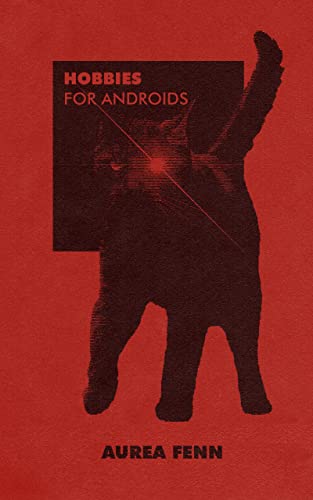
Hobbies for Androids (Fenn)

Hobbies for Androids
by Aurea Fenn (2023)

(Not a review, just some notes to help me remember the things I've read. But written this way because it's the Internet, and some people will stumble across this page.)

This book was from Free Ebooks on reddit. The image of the cat with the laser eye was confusing. Android cats didn't appear until halfway through and I don't care any having a laser eye. And if you think about it, it would've been popular with the kittens. Likewise, there aren't a lot of hobbies for these androids. They mostly have duties, even the one that paints. There was one that mused about having his own interests instead of performing anothers, but that turned into an android takeover story and not a particularly good one.

This is a collection of short stories, ranging from a few pages to over 30. The lead-off story was about a music promoter in debt so when he discoveres his star dead in bed, he has an associate ready an android to sing at the concert. They then conspire to hide the body for a while. It was a little disappointing for a lead story, but the second story continues the story line. This had me thinking that maybe it was going to be one story, which would've had me ligthen up a little on the first story. While the payoff for the second story was better, the two should've been combined into one. It wouldn't even have been the longest story had that been done.

My biggest complaint is that most of these stories are just scenes, or they have a primary scene that takes up the majority of the narrative. Once in that scene, it defaults to a lot of dialogue. Just a lot of talking, occasionally punctuated by an adverb or adjective to tell us what they're feeling instead of showing. I'm sure everything was clear in the author's head, but it doesn't always translate onto the page.

As for the self-publishing, minor errors that seep in that I hope I don't duplicate if I try to self-publish, but I probably will. That said, an editor might've found the grammatical mistakes (according to reddit, there was an editor), but they didn't suggest improvements to the stories. And they didn't catch all the mistakes. I nearly shut the book when a fellow was trying to get medical advice from a fortune teller machine (insert commentary about being unable to afford it). A worker tells the guy "you can't use that in a palace of medical care". I read that four times before it dawned on me that it should have said "you can't use that in place of medical care". A bit of a difference.

I stuck with it at 10%, 20% and 50%, points where I'd usually bail. After that,I found myself trying to power through it. It got frustrating when one story is about a gambler in a casino betting on horses using a combination of inside information and programming probabilities, and it's clear that the guy knows next to nothing about actual horse racing. This would be okay, but the waitress who serves him and works in the place seems to know just as little and can't figure out that he doesn't know what he's talking about despite the fact that he's winning and winning big, betting all his winnings on each subsequent race. Following the narrative, it becomes obvious that this is because the author knows very little about horseracing and imparts very little knowledge about it to the reader. What is shared suggests that the author assumes that the reader knows nothing as well.

One thing I do know: a bet for the horse to come in 1st, 2nd or 3rd is a bet to SHOW, not a bet to PLACE. A place bet is for 1st or 2nd only. And for all the races and all the bets, I think only one horse was every named, the rest are numbers, but numbers where? If someone was betting on a horse, they might mention the number 4 horse in the third race at Belmont, not just number 4. Nor would they mention about 30 horses running, because a) the betting form tells you the exact number of horses, and b) no race would have 30 horses in it. The Derby has 20 and that's a lot but it's the Kentucky freakin' Derby.

I didn't think I'd get this worked up over one story, but it was toward the end and the fact that it was so poorly written is so distracting. A good editor would've suggested some tweaks. (Sidenote: my editor asked me the name of a spaceship in one of my stories, and pointed out that I said it was the flagship of the line, so something that important should have a name. I spent as much time (or more) thinking about that as I did writing the first draft of the story.) Also, the ending is out of left field and not in a good way. Even after the part when the guy is forgetting about the woman calling and texting me and trying to run off with the waitress.

Anyway, some good ideas, but not very well executed.

Friday, December 23, 2022

Miracle of Deck 34 and Other Yuletide Tales (Olsen/Ashby)

Miracle of Deck 34 and Other Yuletide Tales by Kaki Olsen and Scott Ashby (2021)

(Not a review, just some notes to help me remember the things I've read. But written this way because it's the Internet, and some people will stumble across this page.)

Last year and this year, I participated in a Santa Book Exchange, where someone buys a copy of my book, and I buy a copy of someone else's book. It's all done mostly randomly. Last year, I included my "In A Flash 2020" in the fantasy category, so this year, I picked science fiction, since the book is roughly half of each.

The book I had to buy was Miracle of Deck 34 and Other Yuletide Tales, which worked out well for my December Christmas reading. It doesn't appear to be on Good Reads, so I may have to add it. However, I don't want to be the first one to rate it.

There are 24 stories (which, I admit, I didn't notice at first because I didn't read the blurb). This means that I could've read it like an advent calendar, except that I didn't get it until the second week of December.

(Side note: I did tweet out an Advent Calendar of my own because I have 24 published stories that I own the rights to, plus my first story, which was a work for hire.)

The book started well enough, but little things wore on me after a while. The writing isn't quite there. You could watch an episode of Star Trek or The Love Boat or any cop show to know how to talk to a captain. And some of the stories aren't really stories. Something is going to happen, and then it happens. And then the story just stops. In several instances, the ending is given away in the title and once we get to that reveal, it's done.

Speaking of titles, most are puns or take-offs on Christmas songs, lyrics or movies. Note the "Deck 34" of the title referencing Miracle of 34th Street. Santa appears in a few of the stories.

The pair started with the titles and wrote the stories, so some are most "prompt-ish" than others. I can recognize this because some of my prompt stories suffer from it. There have been times that by the time I'm done with the setup, the prompt that spurred the story is out of place and needs to be removed. One story spent a lot of time explaining how to make a fire in the rain and when it was done, oh, look, a shelter was built at the same time.

And, I'll confess here in fairness, I've been told by an editor that some of my stories were good but they just stopped. (I even noticed that when I read one in particular in front of an audience. My voice was high like I was about to read another sentence, but there was no more to read.

The book was enjoyable, but I wish it had had another round of editing to punch it up a little.

Wednesday, November 23, 2022

Steampunk!

Steampunk!: An Anthology of Fantastically Rich and Strange Stories edited by Kelly Link and Gavin Grant (2011)

(Not a review, just some notes to help me remember the things I've read. But written this way because it's the Internet, and some people will stumble across this page.)

I wish I'd written this one up sooner, but I hadn't written earlier books yet. Also, I hadn't thought at the time that I might want to write something about the individual stories.

There was a call for story proposals for an upcoming steampunk anthology which will be published for an upcoming Steampunk convention. It will be handled by eSpec Book, which has published stories that I've written. I would've liked to have proposed a story. However, to be honest, I don't know much about Steampunk. I know the gears and the clockwork stuff and the flying ships and the steam and goggles and stuff, but not what actually makes a Steampunk story.

So I went looking for an anthology. Actually, I looked for novels first, but I kept finding romances with steampunk settings. When I discovered the anthology, I realized that I could get a bunch of different takes on what makes a steampunk story. Basically, a lot of things. For one thing, anything done by Jules Verne is fair game. Also, "The Island of Doctor Moreau" (H. G. Wells) isn't off-limits either.

Stories can be Victorian up through World War I. I don't remember any set in the Wild West, but there are analogues (read elsewhere) between Edwardian/Victorian England and the upper crust of the American West. This is good to know for writing, because I might want to set it in the American West. On the other hand, Long Island, NY was underdeveloped at the time and yet so close to NYC. But I digress.

I did find a review which broke down the list of stories. I rememeber from the authors' bios that all of them have multiple credits to their name. The ones I remember, I will comment on. Unfortunately, the book has already gone back to the library, so I can't go back and peek at it. Also, I read the stories in the book over a period of a couple of months while I was reading other things, so some of the details of the earlier stories may be fuzzy.

n particular:

"Some Fortunate Future Day" by Cassandra Clare set the stage for the book. It took place during the war (WWI). A girl, Rose, is home alone in her mansion, cared for by automatons built by her father, who also built friends for her (life-sized dolls). An injured soldier comes to the house that she (and the robots) care for. She fantasizes that the soldier will take her away and that they will live happily ever after. The soldier sees her as a child, however. The girl then uses a time travel device of her father's (not out of the realm of possibility given the setup), to go back a few days so that she can try to win the soldier all over again. When she goes back, the device remains where it was, so it can be used again. (I don't recall if that means that there will be two instances of the girl now.) I enjoyed the story. If this were the benchmark for the series, then it was set high, say 4 out of 5.

"The Last Ride of the Glory Girls" by Libba Bray. I think it took a while before I realized that this was set on another planet and not in the old West. There are Pinkerton detectives, so I assumed it was some alternate history with gadgets. Not an issue, but it threw me a little. The girl is good with gadgets, and you know she will not recognized by many for her talents because she's female. She overcomes a bad situation. Good story.

"Clockwork Fagin" by Cory Doctorow is, I imagine, a steampunk "Oliver Twist". I say, I imagine, but I've never read it or seen a film (or musical), just adaptations into other mediums and genres. There's a horrible orphange filled with kids with injuries from jobs that kids shouldn't be performing, but did back then. The new kid kills the creepy man who runs the place, but which clockwork technology, they manage to fool people into thinking he's alive until they can come up with another plan. The problem they face is, if discovered, no one knows who would take over the orphange (could be worse) or if the kids would wind up worse off. A pretty good story and made use of clockwork stuff in a belieavable way. The stuff exists, and they adapt it.

"Seven Days Beset by Demons" by Shawn Cheng was a seven-panel comic which was a little difficult to read in kindle. Each day is a deadly sin. It didn't do much for me as it was a concept story/art piece.

"Hand in Glove" by Ysabeau S. Wilce. Okay, this one I think I remember. It was weird. There's a detective and a constable solving murders. The constable wants to use fingerprints but the detective doesn't like the modern methods. The fingerprints indicate that a dead man was a murderer. The investigation leads to a Frankenstein-like setup. If I recall correctly, the mad scientist is an uplifted chimp (the term "uplifted" is not used -- in fact, I don't recall if they address it at all). The doctor is re-animating bodies, but the problem is that most bodies have something wrong with them usually related to the cause of or the aftermath of their death. So parts get taking from multiple bodies. (If I'm remembering correctly, a hand is animated and walks alone, and it might've been the murderer's hand. Again, it was a while ago.)

"The Ghost of Cwmlech Manor" by Delia Sherman was a little odd from where it started and then where it went, but that isn't a bad thing. Unexpected, which isn't bad. Victorian setting and the name is definitely Welsh. (I googled how to pronounce it.) A young maid helps her young master with the help of the ghost of one of her ancestors. She works as a housekeeper because there's no future for a blacksmith's daughter -- certainly not as an engineer.

I don't mind stories that bring this to mind, so long as the entire anthology isn't filled with them -- unless, of course, that's the theme of the anthology, as opposed to "steampunk" -- so long as this is woven into the plot and not a soapbox placed on top of the plot's throat.

This was one of the more enjoyable stories. The can never be certain when you have a ghost story because you expect the ghost to be real, but then if it is, you expect that it has some rules or at least reasons for its actions or lack of actions.

"Gethsemane" by Elizabeth Knox. I really don't remember much about this at all, which is odd because I know it's religious allegory and I usually remember those. (Particularly if really good or really bad. Maybe it was neither?) It takes place (Google search) on a fictional island in the South Pacific, part of the Shackle Islands (which aren't real, either). I think there was magic and mysticism and making people blind and dependent on you and stuff I wouldn't associate with stemapunk. But there was something steampunk-y about it, I'm sure.

"The Summer People" by Kelly Link. I don't remember much about this one either. I could be confusing this one with the previous one. Maybe the summer people have all that power. I don't remember.

"Peace in Our Time" by Garth Nix. I don't remember hating it, so there's that. An end of the world story, I think. (This is why I need to make notes sooner.)

"Nowhere Fast" by Christopher Rowe. In the future a lot of stuff is outlawed by the government, and some people like it that way because that stuff was bad (like oil and cars and stuff). Not much to say about it.

"Finishing School: A Colonial Adventure" by Kathleen Jennings is a comic about a girl who built a flying machine. I don't remember much about it becasue (again) comics in kindle are difficult to read.

"Steam Girl" by Dylan Horrocks. Two young misfits fall in love.

"Everything Amiable and Obliging" by Holly Black. I believe that this is the story with the young woman who rejects all suitors because she's in love with her personal automaton. That machine is connected to the house. When there relationship is severed, the house reacts badly to the point where the house, which is supposed to serve and please everyone, only cares for the one mistress. In the end, she weds the automaton. This story couldn't have been written 100 years ago. Actually, it could have been written by Verne or Wells but it would've ended differently. This ending would never have sold. The house would've burned down instead with the maid inside the house, or being dragged out over the shoulder of her father or one of her many suitors. The automaton might have even pushed her into whichever man's waiting arms. Actually, I could write that -- except that I'm rubbish with romance stories, not to mention Regency settings.

"The Oracle Engine" by M.T. Anderson. Steampunk in Ancient Rome. The Romans were brilliant engineers and this kicked that up a notch. It's a story of revenge of a young boy against the rich and powerful Crassus, who allowed the boy's home to burn and his father to die because the father could not afford Crassus's price to douse the flames and save the house. The boy grows up to be an engineer and approaches Crassus about building an Oracle Engine that could, given all the needed information, foresee victory or defeat in the future. And he's willing to build it for the fame that his engine will bring. Crassus heads to the Middle East on a campaign that traditional omens predict doom. He lets the enemy move about freely while awaiting the Oracle's programming to be completed. He has it tested, and then kills the young man who built it so he could make no more. He tells them that he knows who he is. Before Crassus finally launches his campaign, he has the engine checked for sabotage and finds a coin, with no memory of giving that coin to the young boy who would grow to make the engine. The coin would have altered the results. Instead Crassus hears prophecies that he believes means victory but are actually the kinds of things said by the gods and oracles to the players in tragedies before they fall. And his company falls. Revenge is had. (SPOILER, sorry)

So I can see why it took me a while to finish becuase there was a dry spell in the middle with a handful of stories that didn't do much for me, and which I barely remembered. It did finish strong, however, with the Crassus tale. Ancient Rome i not what I think of when I think "steampunk", but as I mentioned before, given Roman engineering, it actually makes a lot of sense to place a story there. Probbably moreso than in any other place at any other time in history, outside of the traditional origins.

So now I have a slightly better understanding of steampunk, except that the story I had in mind doesn't fit with any of these. I'm happy to see zeppelins, but I wanted to see flying ships, actual ships that flew. And maybe I'll still write that.

Sunday, July 17, 2022

ANALOG PLUS 50: Analog Science Fiction/Science Fact June 1972

ANALOG PLUS 50: Analog Science Fiction/Science Fact, June 1972

Update the photo

June came and went along with the last of the school year and an exess of overtime grading Regents exams. As a result, I fell behind on this blog and have felt too tired to catch up with it along with my math blog. Life happens. I'm back. For now. I'll still be reading even if I'm not posting about it. I don't want to neglect this blog for 4 years, like I did once before.

The June issue of Analog has a noveltte by Joe Haldeman, which was the only name I recognized aside from the serial by Harry Harrison. I'll read that one separately.

For anyone finding these reviews, my purpose is two-fold: enjoying some "classic" sci-fi, and looking for stories that I think could be adapted for TV broadcast since so much of what shows up on anthology shows is rough to awful. Additional Note: I do NOT work in television. I just watch it.

In this issue:

The Editorial: "The Mystic West". Fifty years ago, a war between science and poetry, technology and the arts. Silly but presented sensibly.

Novellette: "Hero", by Joe Haldeman with an illustration by Kelly Freas, showing several men in spacesuits, armed, running across an alien landscape, at night. There's an explosion in the background., A couple have fallen. The caption reads, With a highly-advanced technology, you'd hardly expect warfare to be anything but push-button automation, right? Wrong! The infantry is still the Queen of Battle, even out among the stars."

Taking place in the far future, 1997, the Earth is an war with the Taurans. No one has seen them yet, and they were given that name because they came from somewhere from the constellation Taurus. The military leaders fought in the last earth war, which took place in Asia in the 1970s. The planet that most of the action takes place on is Charon, which is not the moon of Pluto (not discovered yet). For that matter, Pluto is still a planet and probably larger than we now know it to be. Charon in the story is twice as far out as Pluto is. That's where the training is, and mistakes are death. Also, the only ride home is the go the distance with the mission.

The hard science is understandable for me, but that's also because I'm older and reading more of it. It's moralisti at the end where the Taurans aren't as dangerous in a land battle, but they'll likely be ready for us the next time Earth encounters them.

This could be a good movie or shot TV series. Given that the Expanse does so well, it could try to copy its success. Except that this is much smaller. On the other hand, more open-ended. There's a lot of female representation in the military and the role could be any nationality, so you have diversity. Something worth filming but possibly similar to other things that have already been filmed -- particularly after Hollywood writers get through with it.

Short Story: "Klysterman's Silent Violin", by Michael Rogers, with an illustration by John Schoenherr, showing a simple image of a man in the background playing an electronic violin while wearing a pair of headphones. There's the face of a man in the foreground who appears to be annoyed. I don't know if there's something on his forehead or if it's just a bad image of his hairline. The caption reads, "The path of scientific research sometimes takes unexpected turns -- and so does the path of evolution."

The story is told in the form of journal entries. I just scanned the text looking for the name of the writer, who is in charge. I figured that there might be dialogue in one of them. I didn't see it. Klysterman is a scientist who works on his violin in his spare time. There is a female scientist named Ludmila W., and there appears to be a love triangle. Except that it isn't. Klysterman seems interested in her, and she seems interested in him and his violin. The projet leader tries to separate them -- for her sake, of course, because he's a ne'er-do-well, or something -- going so far as to put her on his research project. It doesn't help.

The narrator becomes more erratic in his tale as it goes on and I thought it was going to be beause of the "silent" violin actually driving him mad. Nope. Doesn't happen and that's a missed opportunity.

Instead the plot resolves around augmented wheat rust, which is allowed to germinate so it could be studied. No, I didn't fully understand the reasons for this. Klysterman takes an interest in the project. It appears that the rust has psychedelic properties. And in the end, the rust's mutations expand so far as to cause a mutation of Klysterman and Lucinda W, which they undergo willingly.

This could be interesting visually but I don't know if it could be done cheaply enough such a short story. It could be the last (short) segment of an hourlong anthology show.

Science Fact: "Strong Poison 2", by arl A. Larson

It was long and I didn't read through much of it. It could have ideas to be used in writing, maybe. I don't recall Strong Poison 1, whenever that was published.

Novellette: "The Darkness to Come", by Robert B. Marcus, Jr., with an illustration by John Schoenherr, showing a large black bird-like creature with human-like arms and hands not attached to its wings. The caption reads, In a situation where fats are scarce, faith counts as much as logic. But when the faithful reach the wrong conclusion, they still cling to it stubbornly!

Jans Deriae is an old scientist. He takes pills (which appear to be illegal) to prolong his life. He has calculated that the world (Rangi) is cooling because it is moving away from the primary sun, which would be obviously if the clouds would get out of the way. The population of the world lives underground and most have never seen the sky through gaps in clouds.

Jans Deriae has realized that the world has traveled through the dark of space from one star to another but it has now passed that star. The world won't survive another trip through the darkness.

He's opposed in the scientific community, so none will listen to him, and they ridicule him. He finds a way into Chamber of the Gods, which is off-limits to all. He learns the truth that the "gods" were just men, from a planet called Earth, and they set in motion a plan to save Rangi. But the gods even acknowledged that their machine were fallible and left instructions on what to do if the planet did not enter orbit about the new star on its own. (Diagnostic says that the surface sensors froze.) Now it needs to be fixed before he can be stopped.

An enjoyable story, which could be made with a good budget or an austere one. (Not too austere, make sure they look like bird people, not people with beaks and a few feathers.)

Short Story: "Out, Wit!", by Howard L. Myers, (no initial illustration) The caption reads, As was pointed out long ago, "It ain't what you say, it's the way you that you say it!" that counts.

The story is told in the form of letters between D. R. Dayleman, Editor of the the North American Physical Journal in Virgina and Harmon McGregor, Chairman of the Department of Physics at Grandview University in Ohio. It concerns recommendations of a former student who goes on to make a presentation that includes a joke that is not well-received among his colleagues. He becomes an outcast and the two correspondents are all "woe is me" about it.

As time passes however, science marches on and breakthroughs are made. The chairman is unable to ascertain how he came upon a certain idea, as it doesn't appear in any scientific literature, and assumes that it was just germanating in the back of his mind for a long time. In the end (some ten years later), there's a note about the young man who never amounted to anything in life, going crazy, and they really dodged on, didn't they. Of course, it was the young man's initial idea.

Not only could it be filmed, but it's likely that something of this sort has been. Obviously, there would have to be more than random correspondece. And one would think that the replies to these letters would come much sooner.

I recognized the name, but I couldn't remember from where. The Analytical Library shows that he wrote "War in OUr Time" in March 1972, which I remember had a sequel story a month or two later.

Serial: "A Transatlantic Tunnel, Hurrah!", by Harry Harrison, Part Three of Three.

I'll get to this soon, I hope.


The Reference Library , by P. Schuyler Miller. Reivews include The Lathe of Heaven by Ursula K. LeGuin, A Choice of Gods by Clifford D. Simak, The Devil is Dead by R. A. Lafferty, Russian Science Fiction Literature and Criticism: A Biblioraphy" by Darko Suvin, and Orin by Piers Anthony.

Brass Tacks: Several letters about the illustration of a nude man extending a raised middle finger and the sex that appears in the pages of sci-fi as of later (ie, early 1970s).

I hope I read July's issue before July ends. I also want to read the Harrison serial. On top of this, I seem to have it in my head that I need to keep my daily Kindle reading streak going, and pdf files don't count toward that goal. So other books have to be sprinkled in, even if its only a dozen pages per day.

Tuesday, May 31, 2022

ANALOG PLUS 50: Analog Science Fiction/Science Fact May 1972

ANALOG PLUS 50: Analog Science Fiction/Science Fact, May 1972

Update the photo

The may issue of Analog has stories by Clifford D. Simak and Isaac Asimov, as well as the continuation of the serial by Harry Harrison.

For anyone finding these reviews, my purpose is two-fold: enjoying some "classic" sci-fi, and looking for stories that I think could be adapted for TV broadcast since so much of what shows up on anthology shows is rough to awful. Additional Note: I do NOT work in television. I just watch it.

In this issue:

The Editorial: "Life Cycles". There are complex carbon molecules in interstellar space. Not life, not even pre-life, but the building blocks for life.

Short Novel: "Solo Kill", by S. Kye Boult. with an illustration by Leo Summers showing a winged creature with a beak, carapace, and taloned feet is on the ground in the foreground. There's a small plane flying over some high mountains on the left page. On the right page, there is another plane flying lower and trailing something. There are more winged creatures, including on taking off. The caption reads, Competing species may battle each other until one of them is driven into extinction. An intelligent species can speed the process -- but pays a cost of guilt.

I saved this for the end of the month to read. Halfway through I was losing interest but still reading. Actually, I didn't expect to get past the first few pages where there is a battle between two different winged creatures, neither of which is in a plane. The one that wins is the protagonist for the story, Baron Amarson, who can fly a plane. The other creature was one of "The Drak" which seem to be more animalistic in nature. This was a battle of honor for the Baron.

We're later introduced to the Rivermen, who appear to be the scientists. They have machines that measure celestial movements. There's one large red sun and a smaller yellow sun distant from the planet.

I'm not sure if I will finish this because as I went back to review the text to type some things above, I couldn't remember reading some of the pages that he passed by. Did I forget them? Did I skip them while I was falling asleep and didn't notice?

I was also distracted by continued references to flying above the mole where "mole" was obviously a place. Apparently, the fifth definition in Websters is a place formed by masonry and large stones, and the sixth is a harbor formed by a mole. Also, the machine I described above is apparently called an "orrery".

Maybe I should've known these things, but they were distractions. And since I was reading a PDF, the dictionary wasn't an option.

Anyway, it's a long story with different sets and winged creatures, so I don't know if this is something that an anthology series would want to take on. It could be a movie in its own right if a screenwriter could make it interesting and accessible.

Serial: "A Transatlantic Tunnel, Hurrah!", by Harry Harrison, Part Two of Three.

I'll get to this next month.

Short Story: "Lunch Box", by Howard Waldrop with an illustration by Kelly Freas showing an alien landscape and a lunar lander of some kind. The caption reads, Intelligent creatures can recognize the benefits of high tenchology -- even if it's not their own!

I didn't make note of Myers name when I started reading this, but it became obvious with the mention of Radge Morimet and a reference to "war in our time" that this was a sequel last month's story.

Science Fact: "Celestial Mechanics", by Rowland E. Burns. The caption reads, If you wonder why the astronauts don't whip out their trusty slide rules and quickly compute a new orbit when something goes a little wrong -- try this basic course in "Celestial Mechanics and why it drives people nuts." There *is* a solution to the three-body problem ... only it can't be worked out. To catch up to a ship ahead of you in orbit, you must slow down! Rowland E. Burns is a NASA orbital mechanics mathematician and knows the frutstations of which he speaks.

Sounds like it'll be over my head. If I can get back to it, great, but it's 27 pages long, so maybe not.

Short Story: "The Observer", by Clifford D. SImak with an illustration by Kelly Freas showing a volcano in the background with a large Sun-like object with a human eyeball in the center of it. There is what looks like a snake-like staff or the underside of some kind of creature. There are weird looking trees which look like vertical stalks with large tomatoes on top of them. The caption reads, To make a workable data-gathering system, you must understand what kind of information is being sought, why it's being sought, and -- ultimately -- who is the seeker.

The first of two "big names" that I wanted to read. It seemed like the story was going to be about an AI that became self-aware. It later seemed to be an actual person, or something that used to be a person, which has its memory erased after every mission. It remembers things and then realizes that it has remembered things.

In the end, it senses that it has been cut off from whoever launched it because it knew too much and was no longer of any use to them.

This could be a quick short story. It doesn't need much except a studio backlot or a remote section in the desert. A little cerebral though.

Short Story: "Mirror Image", by Isaac Asimov with an illustration by Leo Summers a seated man and another standing near him, both looking at a giant robotic head, which seems to be speaking. The caption reads, Lije Bailey could understand how two humans could tell exactly equal but opposite stories -- one of them was lying. But robots can't tell lies, it's a violation of the Laws of Robotics. And here were two robots telling exactly the same story ... except that they contradicted each other on every point.

With the exception of the I, Robot, I have not read any of Asimov's robot novels. (Amusingly, I used picked up a used copy of a book thinking it was Caves of Steel when it was in fact The Currents of Space, which is an Empire novel, and I was wondering where the robots were.)

I know of Elijah Bailey and R. Daneel Olivaw, but not much about them. (Like, I might've guessed that the R. stood for "Robot", but I didn't know that for a fact.)

The robot has worked with the private detective before, and he contacts him about a Spacer problem -- a case of theft among two Spacer academics, old elderly and ready to retire, and one young and new in the field. Each has a robotic assistant that supports their master's claim. Olivaw is allowed to contact Bailey, who must solve the problem from his living room because Spacers would never allow an Earthman on their ship.

Bailey figures out that under the Laws of Robotics a robot could lie to protect its master's career and public image. He even applies enough logic to the situation to get one of the robots to recant its testimony. Olivaw is pleased. However, Bailey tells him that he isn't done because the robot might've changed his testimony from truthful to falsehood for a logical reason.

Bailey figures out the problem based on human nature, and the fact that the young academic would be much more likely to consult the older fellow than vice versa, while the older academic would want one last hurrah while his younger college would have over a century ahead to make a name for himself. (Spacers live long lives in space.)

This requires one set, two humans, and a couple of retro-looking robot masks. It could be filmed tomorrow except that Asimov stories probably cost more to option. This one could be a good test to see of filming a novel might be successful.


The Reference Library , by P. Schuyler Miller. Reivews include Riverworld by Philip Jose Farmer, many years after the fact as Miller had always assumed it to be fantasy and not sci-fi, The Transvection Machine by Edward D. Hoch, Science Fiction: The Future by Dick Allen, 20 Years of Analog/Astounding Science Fiction Science Fact compiled by Jan A. Lorenzen.

Brass Tacks: A letter from Leslyn Campbell Randazzo, John W. Campbell's youngest daughter. A couple of readers sound off about a January letter. Someone else liked "Ecology Now" after thinking that they wouldn't. A letter about "Galactic Geopolitics", a complaint about an illustration of a vessel that should've had a gaff and boom on each of two masts, and a couple more round out the column.

Can I keep up with June? It depends if I read other things as well. I already figured out that reading more than one magazine a month wouldn't work unless I quit my book club and deleted most of my kindle library.

Thursday, August 5, 2021

The Adventures of Sherlock Holmes (Doyle)

The Adventures of Sherlock Holmes by Sir Arthur Conan Doyle (1892)

(Not a review, just some notes to help me remember the things I've read. But written this way because it's the Internet, and some people will stumble across this page.)

I wouldn't label this as a "reread" even though I read parts of it before. Back in high school, when I wasn't much of a reader, I thought a book of short stories would be a good choice. And what could be a better choice than Sherlock Holmes? I didn't read many of the stories, and the only one I remember anything about is "The Adventure of the Speckled Band". So that one is a reread, but the book itself is not.

I revisited this book several times over the past few months, reading inbetween other books.

First is "A Scandal in Bohemia" which finds Dr. Watson visiting his old friend Sherlock Holmes, who still resides at 221B Baker Street. It is the 20th of March, 1888. A man, who claims to be a Bohemian nobleman, wishes to hire Holmes, and it turns out that he is secretly Wilhem Gottsreich Sigicmond von Ormsein, Grand Duke of Cassle-Felsten and hereditary King of Bohemia. He's traveling incognito because of a delicate matter. He is being blackmailed over a photograph of him and a woman, Irene Adler, whom he had a liaison with. Holmes is on the case, but it takes an unusual twist.

Comments: The opening of the story reuniting the pair goes on for several pages. I was glad that I had a dictionary available at a touch of a word -- my high school English teacher, Mr. G., would have been proud that I looked up the words I didn't know. Most of these had to do with the different types of carriages or the clothing that they wore. I should go back and make notes of these for my writing.

Adventure II is "The Red-Headed League". A red-headed man, Jabez Wilson, who is a pawnbroker, comes to Holmes with a case. He respoded to an advertisement for the Red-Headed League, which was formed at the behest a woman's estate, to hire redheaded men. Wilson spends a few hours per day transcribing the Encyclopedia Britanica. But, of course, there's more to this.

Adventure III is "A Case of Identity", which starts with callbacks to earlier cases, such as A Study in Scarlet, The Hound of the Baskervilles, and even, "A Scandal in Bohemia" for this very book. Then Miss Mary Sutherland comes in asking Holmes to help locate Mr. Hosmer Angel, who got into a stagecoach on the way to the wedding chapel and vanished. Holmes told her that he isn't likely to be found because he concludes that the man doesn't exist. He then unravels his identity.

I'll be briefer because I let some time pass been updates and I've already started to forget some of the details I might have noted.

Adventure IV is "The Boscombe Valley Mystery". Holmes becomes involved when a man is killed and his son is charged. Thanks to Holmes, the son is released because of the presence of a third man.

Adventure V is "The Five Orange Pips", which takes place in November 1891, less than 30 years after the end of the American Civil War. It involves a man who moved to the U.S. but who returned who dies shortly after getting a letter with five orange pips in it. The letter is inscribed K.K.K. Yes, that one. Holmes investigates the best he can and hopes for as good an outcome as can be expected.

Adventure VI is "The Man with the Twisted Lip", which involves the disappearance, and possible death, of a man at an opium den. He was seen their when his wife followed him into town. It had an interesting beginning in that Watson is at Holmes when a woman calls upon him to say that her husband was missing, except that she knew where he was. Watson goes to the den and finds the man and convinces him to go home. (He also convinces him that he has been there two days longer than he thinks he's been there.) While there, a man gets Watson's attention. It turns out to be Holmes in disguise, investigating a beggar who rents a room above the den.

Adventure VII is "The Adventure of the Blue Carbuncle". The object in the title is a gem which has recently been stolen. It comes into Holmes possession inside a Christmas goose, which along with a worn top hat, was left behind as an attempted mugging. Holmes investigates to find how the gem came to be in the goose before a likely innocent man is sentenced for it.

Adventure VIII is "The Adventure of the Speckled Band". This is one of the stories I remember reading when I took this book out of the library in high school. I probably picked it out becuase it was one of the shortest stories, but I remembered it because of the twist. And also because I wondered why anyone would call out, of all things, "the speckled band". I guess that's a 19th century British thing.

Adventure IX is "The Adventure of the Engineer's Thumb". Dr. Watson attends to Victor Hatherley, who had his thumb cut off. He is an engineer who hasn't gotten a lot of business who gets an extremely handsome offer to repair a machine that (he was told) compresses Earth. Everything is done in secret. He recounts the tale to Holmes, who investigates.

Adventure X is "The Adventure of the Noble Bachelor". Lord Robert St. Simon approaches Holmes to report that his new American bride, Hatty Doran, has disappeared right after the wedding. The maid is a suspect, but Holmes believes it is not at all what it appears. (It never is, right?) Lestrade appears and unwittingly gives Holmes the last piece of the puzzle he needs.

Adventure XI is "The Adventure of the Beryl Coronet". The coronet is a national treasure which is given to a banker to secure a short-term loan with much discretion. The beryls are precious gems which are irreplaceable, and there are 37 of them on the gold coronet. The banker awakens in the middle of the night to find the titular item in the hands of his ne'er-do-well son and a corner of it, along with 3 stones, is missing. If it's not the son, that it must be someone in the house.

Adventure XII is "The Adventure of the Copper Beeches". Violet Hunter consults Holmes about the situation that she has been approached for. She is a governess without a family (they moved away), and one possible employer will pay handsomely but has odd requests. (This is 100 years ago and a family book.) One of these is to cut her hair short. She initially objects to this. Holmes doesn't think she should take it, but she yields and cuts her hair. Soon enough, she contacts Holmes about mysterious goings-on and someone being kept a prisoner in that hosue.

Comparitively, I prefered Holmes to Poirot, although the latter was one story which introduced the characters whereas this is a collection of 12 stories. And any fall flat, they're likely to be forgotten.

Now I'll need another book between books. Of course, I still have the Pirate's Who's Who and several Tor "Best of" books. This was a free download.

Tuesday, June 29, 2021

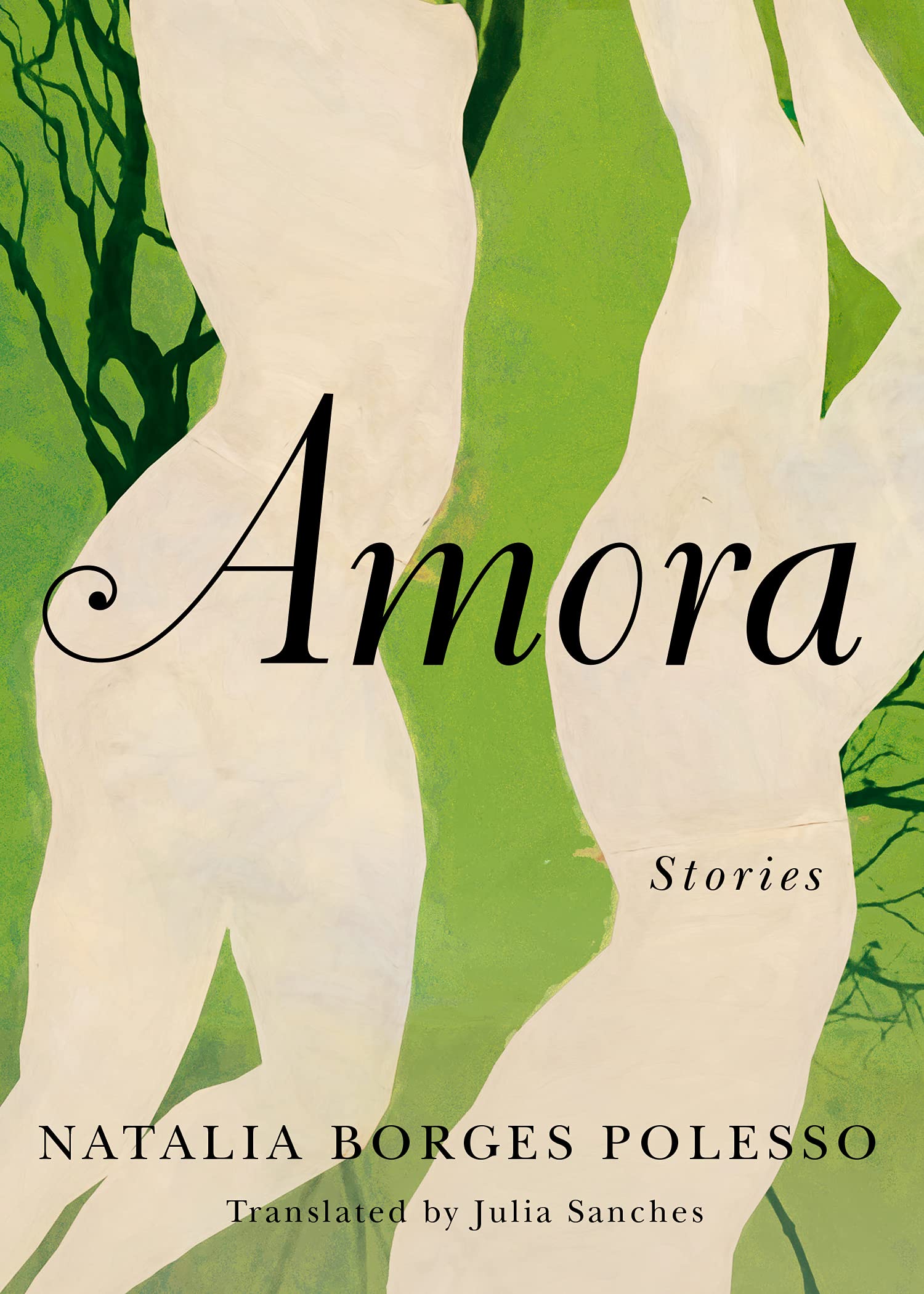
Amora: Stories (Borges)

Amora: Stories by Natalia Borges (2015)

(Not a review, just some notes to help me remember the things I've read. But written this way because it's the Internet, and some people will stumble across this page.)

The cover says "Natalia Borges Polesso, translated by Julia Sanches".

This book was part of Amazon's World Book Day 2021, when I downloaded 10 books. Like in previous years, it is likely that I won't read more than 2 or 3 of them. I still haven't read most of the previous books. This one is from Brazil and is described as An exquisite collection of stories exploring the complexity of love between women.

I'm not the target audience for lesbian literature nor is it something that I would think to seek out. Maybe if a friend gave me a book and asked my opinion, that would be a different matter. Anyway, I didn't let the subject matter prevent me from cracking the electronic cover.

I got about 30% of the way through the book. Maybe I'll come back to it when I'm between books and the file is still on the app. I don't know. I might have gotten hooked had it been one long narrative, but of the first bunch of short stories, none of them grabbed me. I don't know how many were pseudo-autobiographical but it was obvious that Borges was drawing on her past experiences.

If I had one problem with it, it was the continuous stream of thought and text. It may have been an appropriate writing style but a couple of stories just seemed to run on to me and were a drag to read.

Anyway, I gave it a shot, and decided to move on. If you found this page while surfing the Internet, don't take this as anything more than one person's opinion.

After this, I'm reading more Sherlock Holmes and Analog and there's another book club book coming up.

Wednesday, September 30, 2020

Unidentified Funny Objects, Volume 1 (Shvartsman, ed.)

Unidentified Funny Objects, Volume 1, by Alex Shvartsman, ed (2012)

(Not a review, just some notes to help me remember the things I've read. But written this way because it's the Internet, and some people will stumble across this page.)

Okay, maybe this is a little bit of a review because I'm not really going to make notes about the stories.

UFO is an annual humore anthology. Number 8 was "Kickstarter-ed" earlier this year. I participated (and submitted a story unsuccessfully) and as an add-on, I bought Volumes 1, 2 and 3.

The first volume contains nearly 30 stories of fantasy, sci-fi, and "real life" (in a somewhat warped way). The stories are not necessarily UFO or alien in nature. That's just a cool title.

The humor ranged from mildly amusing to irreverently hysterical to what the hell did I just read? There were a couple I couldn't remember by the time I finished them -- particularly if I was reading them at bedtime and they knocked me out.

That's not a big criticism though. It's reflective of the nature of humor. No two stories are alike, so there's bound be some that you won't find funny. They may not be the same ones that I didn't find funny. And it's probably the reason that I read it from cover to cover without a break. Many times, I put anthologies down for a while after a few stories.

Tuesday, July 14, 2020

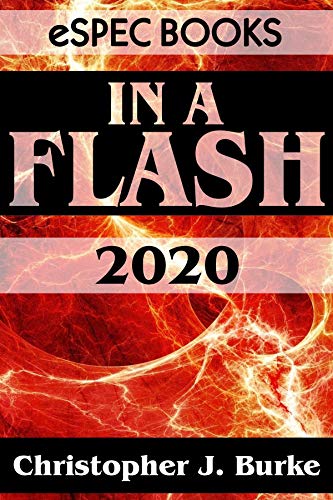
In A Flash: 2020 (Burke)

In A Flash: 2020, by Christopher J. Burke (2020)

(Not a review. More of a blatant plug.)

Still, it counts as a book read because I read the galleys cover to cover, looking for problems.

20 flash fiction stories -- disclaimer, some appeared, in slightly different form, in the eSpec Books blog when they won monthly Flash Fiction contests.

The stories range from fantasy to science fiction to "realism", which is a catch-all, really. The Realism section gives you horror, noir, and pirates. (Not at the same time.)

$1.99 for the ebook. The paperback is forthcoming.

Amazon: https://www.amazon.com/Flash-2020-Christopher-J-Burke-ebook/dp/B08CWQTYBR

Sunday, January 19, 2020

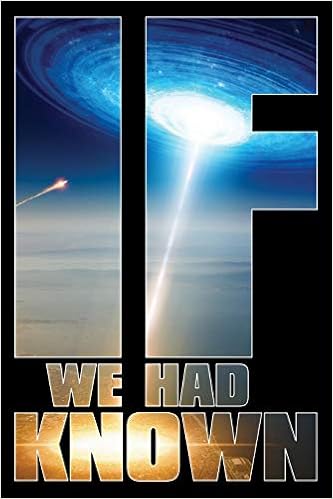
If We Had Known (McPhail, ed)

If We Had Known, Mike McPhail, ed (2017)

(Not a review, just some notes to help me remember the things I've read. But written this way because it's the Internet, and some people will stumble across this page.)

First book of the year. (Okay, so I started it last year.) And look at the cool cover!

If We Had Known is a collection of cautionary tales of the future: what we might find out there, and what may happen to us right here. My fear going in was that it would be a collection of depressing stories, like those episodes of The Twilight Zone where that final twist just kills you. Thankfully, that isn't the case. They aren't all cheery, either, to be sure, but humanity doesn't get wiped out over and over from mistakes made because we didn't know.

The book starts off with an essay on having a necessary enemy, which turns into a fictional account before it's over, that goes through the space race and the Cold War, and pondering should we lie about an alien invasion coming, if only to get us off the planet? The greatest threat to humanity may be never leaving our planet's surface.

It's the next two stories that really get the book rolling: "The Steady Drone of Silence" by Danielle Ackley-McPhail, and "The Last Man on Earth" by Jody Lynn Nye. The former is a military sci-fi rescue/recovery mission to uncover what went wrong, where we learn that science and the military may have different end goals for any discovery or new technology. If the latter, the cumulative effect of genetic manipulation over generations may eventually reach an evolutionary dead end. (Those shouldn't be spoilers -- they're really starting points.)

Note: Danielle Ackley-McPhail is the Publisher of eSpec Books, which published this anthology, and also the spouse of the editor. Neither of those facts were the reason her story is included. Jody Lynn Nye is listed elsewhere in this blog for co-writing The Death of Sleep.

Most of the stories deal with encounters with alien races or cultures when either we go out there, or they come to us (or our colonies).

The final entry, "The Third Heaven" by Robert Greenberger, was more of a character piece than a story, but I enjoyed it, and thought it ended the book well. It was mostly a conversation between the ship's AI and a religious scientist. During the long boring months in space transit, the main character starts questioning her religious beliefs and looks to the AI for guidance. It doesn't speak down or mock in any way, which I appreciated.

There is a follow-up book, with a similar looking cover, that I have to purchase before the month is out.

Saturday, March 9, 2019

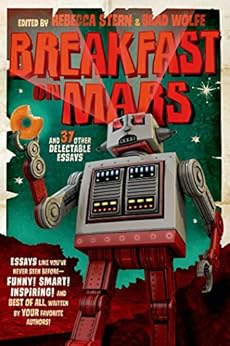
Breakfast on Mars (Stern & Wolfe, ed)

Breakfast on Mars And 37 Other Delectable Essays, Edited by Rebecca Stern & Brad Wolfe (2013)

The cover states "Essays like you've never seen before -- Funny! Smart! Inspiring! And Best of All written by YOUR Favorite Authors"

The last part is overblown in that not only are they not my favorite authors, I don't think I've ever heard of any of them, let alone read any. That said, soe of them were funny and smart. Inspiring? Maybe about my writing, but not about the subject matter.

I picked up this book in a box at a school I was working at in the fall. The idea of the collection is that students tend to be bored with essay writing, and there isn't a lot of inspiring essays out there that are relatable for students. So this book is intended for teachers to use with students, so that the students will respond. Each essay, whether personal, persuasive, or information, is based on a response to a different writing prompt. And each should be fun to read.

Some of them were fun. Some were just odd, but that was okay. But a few seemed like standard essays, and a couple seemed like they'd been written before they even saw the prompt.

The overall affect was like catching up on an eclectic bunch of TED Talk podcasts, with topics all over the place. I enjoy some of those, while I listen to others on double speed, or skip through them entirely.

And while the personal stories were interesting, the introduction promised breakfast on Mars, showering with spiders, and humans needing tales. That's what I wanted to read. "It's on Like Donkey Kong" was a nice bonus. (That phrase is so well-established in my circles that we can parody it into something else). Likewise the comparison of Princess Leia and Queen Amidala. So of the other entries, I've already forgotten, even when I like back at the table of contents page.

I did like reading the prompt at the top of each essay, and I toyed with repeating them either here or on my (private) writing blog, but do I really want to type up 39 prompts? One-handed, while holding the book open with the other? Probably not.

For anyone who stumbled upon my personal reading blog, if this sounds interesting, check it out.

Thursday, October 19, 2017

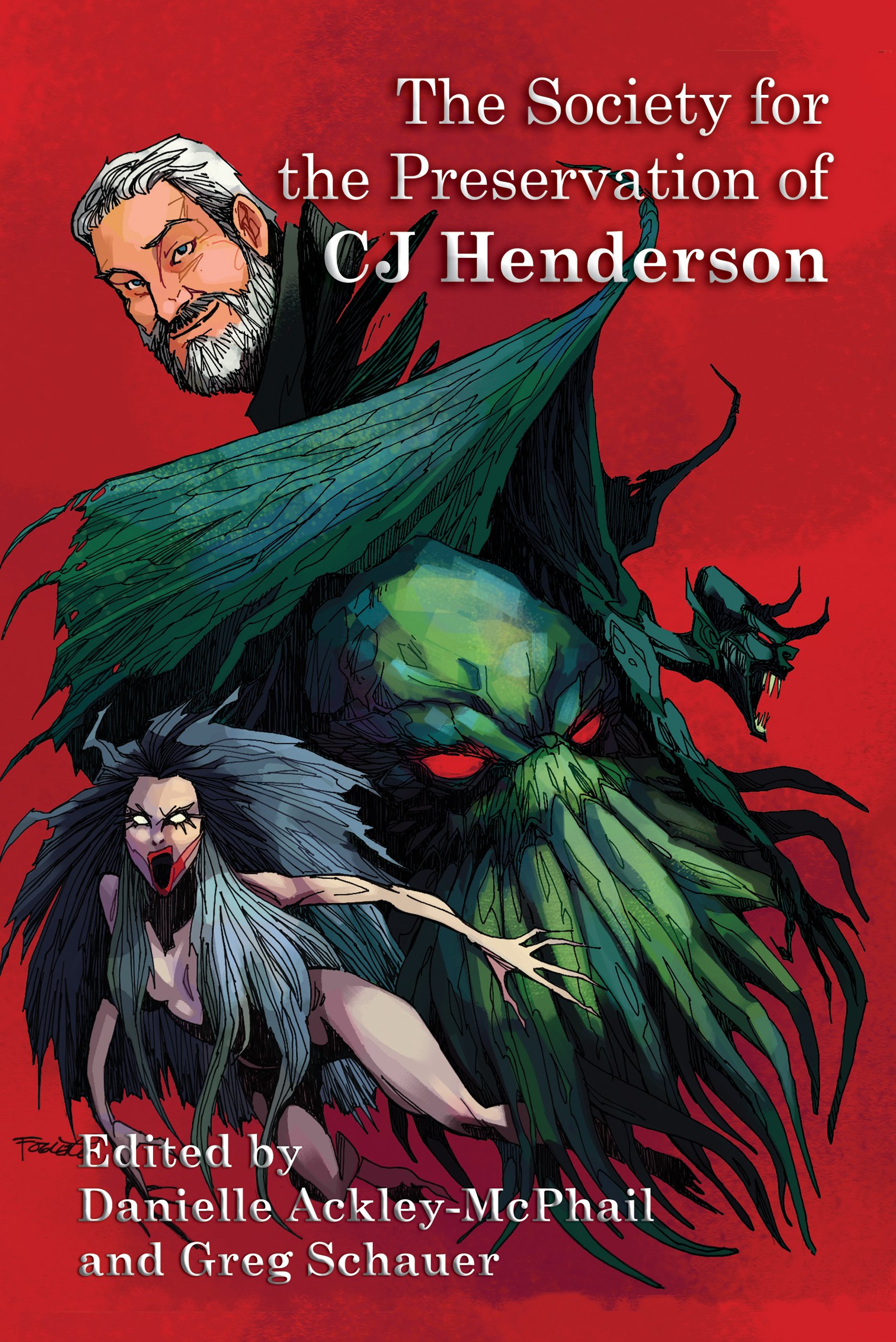
The Society for the Preservation of CJ Henderson (Ackley-McPhail & Schauer, ed)

The Society for the Preservation of CJ Henderson Danielle Ackley-McPhail & Greg Schauer, ed (2014)

Disclosure: I've met CJ Henderson. I would have to say I knew of him, more than that I knew him. He was a fixture at a science fiction convention I'd gone to almost every year for over two decades. I can't say how much I'd actually talked to him in that time, but he was a person you could talk to, whether in the Dealers Room during the day or the Con Suite in the evening.

I can also add that in 2014, I was in his house with many other people, but he was only there in spirit. When CJ died in 2014, family and friends held an "Afterlife Launch Party" in his honor. The family had hoped for a large turnout, but many that he knew from the convention circuit lived anywhere in the tristate area as well as up and down the Eastern seaboard (and elsewhere, too, but those were the ones likeliest to make it). I also learned that he lived about a 15 minute walk from my house. So I made the trip, and met a lot of familiar faces, and a few not-so-familiar. I discovered a couple days after that I'd met a favorite artist of mine without knowing it was him. But I digress.

This anthology was put together when CJ was ill. He had even seen most (if not all) of it but didn't get to see it published. Shame on me for waiting three years to finish it, but I have a habit of putting down anthologies in the middle (because I can), reading something else that came along, and then getting back to the first book. (In my defense, Danielle, if you're reading this, some of those books were other eSpecbooks!)

The anthology includes stories by John L. French, Jean Rabe, Patrick Thomas, David Boop, Danielle Ackley-McPhail, Jeff Young, Leona Wisoker Robert M. Price, Leona Wisoker, and James Chambers, and CJ's presence is felt in all of them. Stories are inspired by his works or his mythos and feature either a character based on one of his or a character based him CJ himself. (He appears in one story as himself, in another as a bard who is the son of Hender, etc.). All of pleasant to read -- with one exception. The foreword for one story included a warning that Henderson himself would've found the story disturbing, and warns the reader might wish to skip that one. I prefer to avoid disturbing things -- I have enough trouble sleeping -- so I skipped over that one.

Hard to pick a favorite, but I might possibly pick the lead-off story just for setting the tone for the rest of the book. But a later story hits home the theme of perseverance, particularly if you want to be a writer. If I didn't want to be a writer, I might not be writing these reviews. I'm not always sure whom I'm writing this reviews for: myself or the wandering web surfer? Never count out the flying monkeys.

Enjoyable anthology, possibly disturbing.

Tuesday, November 8, 2016

The Magazine of Fantasy & Science Fiction (Van Gelder, ed)

The Magazine of Fantasy & Science Fiction, March 2002, Gordon Van Gelder, editor

Catching up on my reading list, this is the first of several posts in the days ahead. >P?First off, okay, it's not a usual book. However, at 160 pages of mostly fiction, this one issue of the long-running genre magazine has more reading material than some of the actual books that I read.

I have quite a few SF/F magazines in the house. Most of them are issues of Analog because I had a subscription for a number of years, and I never could keep up with them. Where this issue of Fantasy & Science Fiction came from, I'm not sure. There's nothing to indicate that it was mailed to me (no label, or glue), so my guess would be that it was a freebie at a science fiction convention somewhere, most likely Lunacon, which is held (almost) every March.

I have a pool in my yard. I don't sit in read by the pool very often. On the other hand, I've started to like reading in the pool. This means no ebooks (obviously) and no books that I would care about if I "lost". That is, if they took the plunge. These decade-old magazines fit the bill nicely.

I can't say that I was ever a regular read of F&SF but this had a decent selection of stories. Also of note: there wasn't an editorial column up front, and of the "departments", Paul Di Filippo's Plumage From Pegasus: Press One For Literature read like another short story. Added bonus: to my knowledge, I've never read anything by Di Filippo before, but I have two novels in my closet in yet another "To Be Read" pile.

The stories covered a broad spectrum of the genre. There was a religious-based story, which I didn't quite understand, but didn't hate, and a cute retired superhero tale.

On the downside, the novella "Coelacanths" by Robert Reed left me scratching my head.

Albert E. Cowdrey's novelette left me wondering what I missed in his previous writing. This entry, "Ransom", was his third story in F&SF. It started in a different century than his prior two, so I thought I was safe. However, it quickly time-traveled farther into the future, into territory I felt that I should have been more familiar with. I must've put it down a few times before the actual story got going.

So there was some good, some bad, some ugly, but nothing to stop me from picking up another issue. Except that the summer is over, the pool is covered and I have stacks of books to read.

Tuesday, August 2, 2016

The Side of Good (Ackley-McPhail, ed)

The Side of Good, Danielle Ackley-McPhail, ed., 2015

First off, this is a bit of a cheat for me, because this is only half of a book. The printed edition of The Side of Good is actually a flip book: if you flip it, you will find The Side of Evil. If you order the ebook, you will get two downloads, each with its own cover (as seen above).

As the names might suggest, this pair of books are anthologies filled with stories of Super Heroes and Super Villains. I get the Heroes precedence and read their tales first.

Editor Danielle Ackley-McPhail has assembled seven stories by Gail Z. Martin and Larry N. Martin, Bryan J. L. Glass, John L. French, Walt Ciechanowski, Kathleen O'Shea David, Robert Greenberger, and James Chambers.

The stories range from the non-powered to the super-powered to the oddly-powered (is it really a superpower?). They not only deal with their heroics but how their actions impact their own lives and the ones around them. And when does it get to be too much?

If I had to pick a favorite, I might go with "Making a Difference", by Robert Greenberger, which reads like an old indie-comic low-powered hero on a motorcycle story, emphasis on old. "Ghost Wolf" by Gail Z. Martin and Larry N. Martin, would come a close second. For fans of Kathleen David, if you're expecting puppets to play a role in her story, you won't be disappointed.

You won't be disappointed with The Side of Good unless you're, say, Lex Luthor. In that case, flip the book over.

* * *

Current reads:

  • ebooks: mostly short story anthologies, flipping back and forth, The Side of Evil or The Weird Wild West
  • hardcover (for commuting w/o an ereader): Once Upon a Time (she said)
  • manga: started getting One-Piece books from the library. Number 11 has been "in transit" for over a week now.
  • in the pool: old paperbacks and sci-fi mags that I don't mind if they get a little wet and won't cry over if they fall in. Right now, an old issue of The Magazine of Fantasy & Science Fiction from 1987

Reminder: for anyone stumbling across this site. These entries aren't really meant to be reviews. I mostly write them for myself because I have a tendency to forget about some of the books I've read -- either about the characters or plot of a book, or sometimes even the book itself. But writing summaries is boring, especially for anthologies, and some of my friends actually like reading this blog, so I'm trying to make it more enjoyable to read, which is all I can ask in a book.

Thursday, April 7, 2016

Analog's Lighter Side (Schmidt, ed.)

Analog's Lighter Side, by S. Schmidt, ed, 1982

Anytime I get any kind of notice that some online catalog now has magazines, I check it out. Unfortunately, those magazines are usually either scholarly journal-type publications or popular newstand magazines of the slick and glossy variety. They don't ever have, for example, old science-fiction magazines.

One of the first ones I search for is Analog because I had a subscription from the late-80s to the mid-90s. The problem was I never seemed to have time to catch up with them, so I let the subscription lapse. Anyway, while searching for Analog, I found an anthology, Analog's Lighter Side, a collection of humorous stories, edited by Stanley Schmidt, who was the editor I remember (and could possibly still be editing it today).

The anthology is from 1982, which meant I'd likely never read any of the material before. As you can see from the Table of Contents above, most of the stories date from before I was born (and before Schmidt's reign). How these stories in particular were chosen, I don't know. I read Schmidt's introduction where he acknowledges that humor is subjective and even mentions that one story plays it so straight that you won't see the humor until it's done. Whatever. I tried to enjoy it, but it's a bit dated.

For example, the future tech seems silly, even quaint, in earlier stories, given the advances of the last half century (especially the past couple decades). And at least two stories make like of characters with drinking problems -- being drunk is central to the story. Less enlightened times, sure, but they were back-to-back and I worried the rest of the book might follow suit.

Where it fell apart for me was "The Gentle Earth" from 1957. It was an okay story, but it just seemed to go on and on, pointlessly. It could've been half the length. And it wasn't particularly humorous. More like "Funny Things Happened on the Way to the Invasion" as things are misunderstood and keep going wrong. The final payoff wasn't the effort. I should have skipped the story, but I got so far into it, I wanted to know how it ended ... even if I kept falling asleep. I was on this story when I renewed the book, and I finished the story sitting at a table in the library so I could drop it in the bin.

I then skimmed "A !Tangled Web", which was a little more promising, but I hate when sci-fi and fantasy writers put symbols or punctuation into language and then don't give a clue as to how such things are supposed to be pronounced. Amusingly (hey, it's "lighter"!), given my computer background, I alternated between "not" and "bang" to stand in for the exclamation point.

Final verdict: meh. Maybe I'll borrow it again this summer and read the rest. Or not.

Goals: A good part of the book was written before I was born. It's an anthology. And it was intended as humor. So I covered some bases.

On Earth as It Is on Television (Jane)

On Earth as It Is on Television Emily Jane (2023) [AUDIO ONLY -- no image] (Not a review, just some notes to help me reme...