Showing posts with label literary. Show all posts

Tuesday, July 14, 2026

Heracles: Lion of Nemea (Kin)

Heracles: Lion of Nemea
by kin (2026)


(Not a review, just some notes to help me remember the things I've read. But written this way because it's the Internet, and some people will stumble across this page.)

This book was a free Advanced Reader Copy from Library Thing. I'm encouraged (but not required) to leave reviews in exchange for the free books.

I usually avoid series books, but this was based on the 12 Labors of Heracles (Hercules), so I didn't really worry about it being open-ended. And it is the first book in the series. (The second was offered the following month.) It also helped that it was a short book.

I will say that while I'm familiar with the idea of the 12 labors, I couldn't name them all any more than I could name all of the Seven Wonders of the Ancient World. I didn't watch that many movies or read that many books.

Note that the author's name is given only as "Kin".

I left the following review on the Library Thing website:

This was a fun little read although it was long on introspection and short on action until the final third of the book when Heracles fights the lion. I enjoyed this book and look forward to the next one.


I realize that this wasn't much of a review but it was a short book and not a lot happens.

I enjoyed the book, but it was slow and there wasn't a lot of action until the last third of the book. In the prologue, Heracles' wife is dead and he had her blood on his hands but that's all we get. Then he's on the road, traveling, going somewhere or nowhere. He confronts one village who won't let him stay a night or have anything to eat. Later, he's beset on by bandits whom he dispatches quickly enough, getting hurt along the way. It's not until the end where he's climbing a mountain that he seeks out whatever creature is up there (We know: it's in the title of the book!), and to rescue a father and son.

There is a lot of detail about the mountain and you almost just want him to get there already.

Finally, there's so action where Heracles, wounded and bleeding, kills the lion with bare hands and the strength in his battered body.

He returns to the town the boy is from and tells them the lion is dead and the man is covered in rocks in a cave to protect his body from vultures. Then he walks on without asking to stay.

End of story.

I guess you would classify this kind of writing as "literary" although that usually means that there isn't a speculative element. Not that any are mentioned here, but this is Heracles we're talking about.

It was enjoyable, and I'd read the next one if I won it.


If you stumbled across my page via the Internet, please check out my short book series, Burke Lore Briefs. A fantastical foursome of flash fiction and short stories.

Thursday, January 18, 2024

Signal Fires ( Shapiro)

Signal Fires
by Dani Shapiro (2022)

(Not a review, just some notes to help me remember the things I've read. But written this way because it's the Internet, and some people will stumble across this page.)

This was a pandemic book club pick. It received a mixed reviews.

A car accident and its subsequent coverup affect the lives of a family of four -- and likely the family of the deceased -- as well as a family that doesn't even move into the neighborhood for years.

The book opens talking about all the possible future of Misty Zimmerman should see survive this night. I thought we'd see some of this. We did not. The girl who dies is pretty much an afterthought except for when (some characters believe) she extends her influence from the beyond, enamating from the tree under which she died.

The book then jumps to the 21st century. And then back to 1999, and 2010, and all over the place. I was curious if this book would work better as a linear narrative, not that I would read a copy of it should someone present me with one, but it sees like the structure and the feelings replaced the plot of the novel, as little of it as it was.

Biggest complaint among the club members is that not one of the characters were likable, least of all the fellow you weren't supposed to like, the only one always referenced by his last name, Shenkmen. The mothers in the book get short shrift. They get pushed aside pretty quickly without much to do.

Shenkman is not a great father, and it doesn't help that he doesn't know how to get through to Waldo, who appears to be on the spectrum, which may have been a result of the umbilical cord being wrapped about his neck during his delivery on his kitchen floor by Dr. Ben from across the street. Note that after his birth, the two families apparently never spoke to each other again despite living across from each other for a decade.

After Waldo runs away and gets rescued, Waldo explains about super galactic clusters. Rather than getting upset again, Shenkman has a change and calmly asks Waldo to tell him more about the super clusters. In any other novel, this would be a significant turning point. Instead, ten years later, Shenkman, suddenly a widower, is the one reaching out to Waldo (not that Waldo ever reached out to his dad), and Waldo is basically a little shit. If the point was too little, too late, something should've been said ten years earlier that Waldo was going to resent his father forever.

Instead, Waldo finds friendship in the man who delivered him, who is the same man who covered up a crime in 1985. He's not a particularly good man, especially when compared to Shenkman. Again, basically no one was found to be a likable person in this book.

It was interesting but there was much to it. Just a lot of jumping around, two off-screen deaths, and an affair that gets forgiven (offscreen) and leads to a confession at an AA meeting without any consequences. The one thing that everyone appreciated was that it did take the Covid shutdown into account in its timeline and it affected the characters. Needlessly inserting politics wasn't appreciated.

This was another book that I listened to (read by the author) and read concurrently. This may become a thing for me.


I also write Fiction!


You can now order my newest book Burke's Lore, Briefs: A Heavenly Date / My Damned Best Friend, written by Christopher J. Burke, which contains the aforementioned story and a bonus story.
Order the softcover or ebook at Amazon.

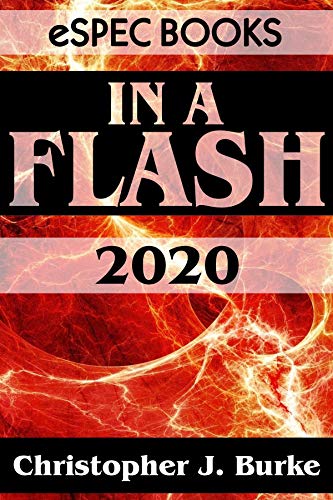
Also, check out In A Flash 2020, by Christopher J. Burke for 20 great flash fiction stories, perfectly sized for your train rides.
Available in softcover or ebook at Amazon.

If you enjoy it, please consider leaving a rating or review on Amazon or on Good Reads.


Sunday, July 23, 2023

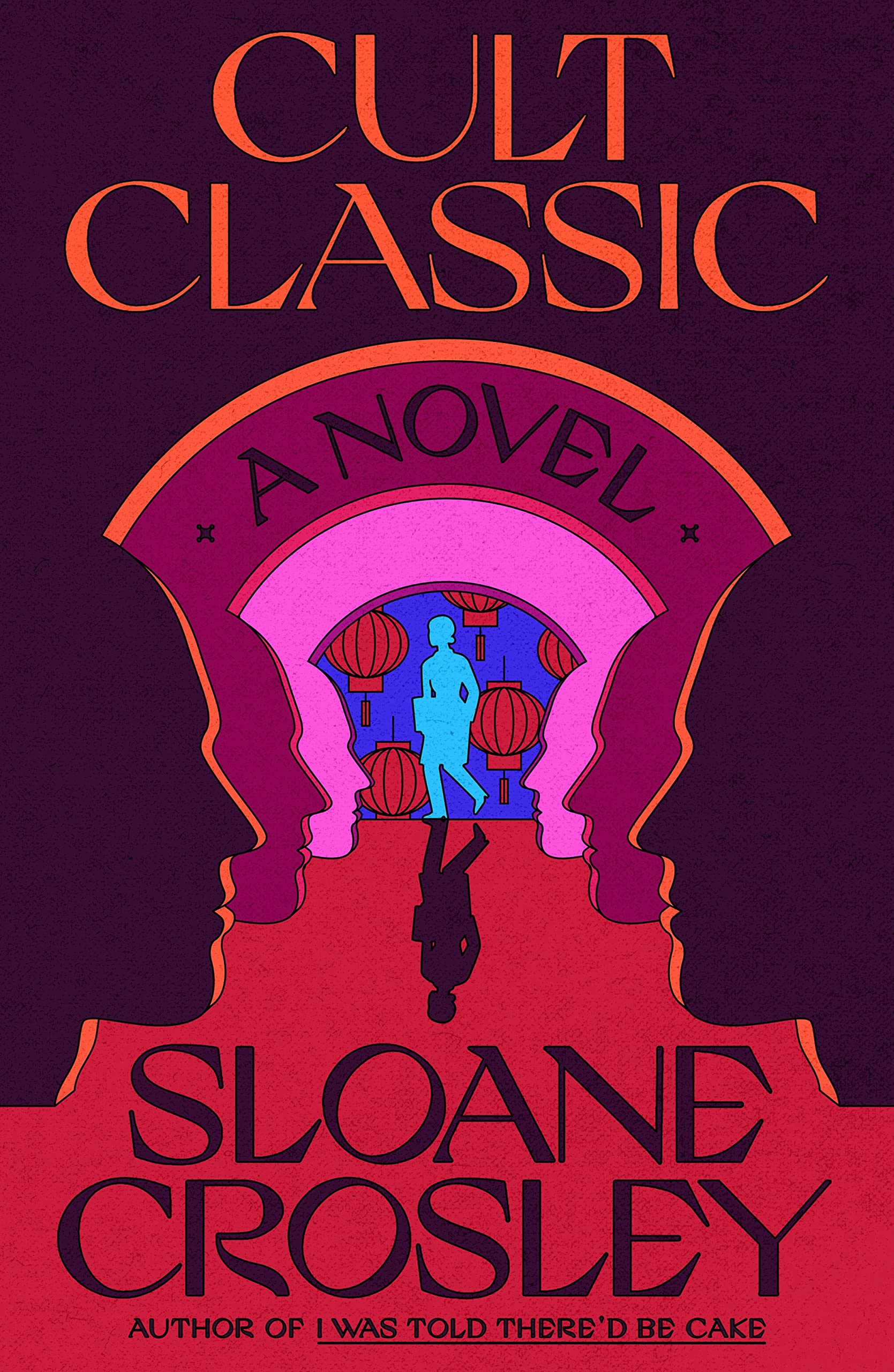
Cult Classic (Crosley)

Cult Classic
by Sloane Crosley (2022)

(Not a review, just some notes to help me remember the things I've read. But written this way because it's the Internet, and some people will stumble across this page.)

This was a Pandemic Book Club selection

We haven't had the zoom call yet, but advance word in the messenger chat is that it's a thumbs down, all around.

I don't know what to expect from many club books because I tend to read them electronically, so I don't have the back cover like I used to have. I did read a synopsis on Good Reads when I voted (and I think I voted for this book -- I honestly don't remember), but I'd forgotten whatever it said.

Basically, think of me as a scifi/fantasy guy who watches a lot of only movies, a lot of "classics", some of which have a "cult" following. So I didn't know what this was really going to be about. About nothing I would've expected.

The prologue goes on about ghosts waiting their turn, winning a lottery, to return to Earth for three minutes, and wait could they do with those three minutes. This has absolutely nothing to do with the rest of the book, unless it's supposed to be an allegory for some of the old boyfriends she runs into.

Next up is a brutal Chapter 1 that runs for about 45 pages when every other chapter is a more reasonable 10-15. Within each chapter, the narrator, Lola, goes off on many tangents, digresses about whatever, recalls weird events and comes back to the present. It's lmost like there's a string of short stories with the most tenuous of connections holding them together that gets woven into the story. The story itself is one that will leave you wondering for about 80% of the book what they actual story is.

The book isn't terrible. It's just not good.

Lola used to write for Psychology Today, working for Clive, who was a typical cheap rich person. In the beginning of the book, in that long into or in the prologue, we discover that Clive is dead. The story that is told is about when he was alive, so I'd forgotten that he was dead by the end of the book. One of those things. Actually, it's probably better that she was upfront about it, otherwise, the ending might've seem too convenient.

Lola's friend is named Vadis, but I found from the audiobook, it's pronounced "Voddy", rhymes with "Toddy". And the author reads the book, so she should know. (Of course, she should be more interested in what she's reading, too. Sometimes, she sounds like it's dull.) Vadis and Clive bring Lola to an old synagouge where they have a cult of some kind working. Vadis knows that Lola is having second thoughts about her engagement to "Boots", who I kept forgeting was her finance and kept thinking was her cat.

Lola had run into two of her ex-boyfriends in the past couple of nights. Clive says that that's because he is making Lola a test case for his new program. Each night she'll walk around Chinatown and she'll attract one of her former boyfriends and see if she still has any feelings for them. She can work through her anxieties to see if she really wants to marry Boots.

Lola doesn't buy into this nonsense, and she's the one calling it a cult. Clive is definitely the spiritual leader, and everyone is working for him for free.

After another boyfriend appears, Lola starts to believe that there might be something to it, so she keeps returning to the synagouge (Clive has a weird name for it based on a weird old painting), and answering questions.

The story doesn't actually present itself until it's nearly over. Basically, there's a twist, but it's not like there was much to twist in the first place.

Is this the worst book the book club has covered? Far from it. Was it good? Not really.

UPDATE: General consensus from the Zoom call was the book was not well-liked and the protagonist was not well-liked. (Note that the participants were majority female, 5-3.)

Wednesday, June 8, 2022

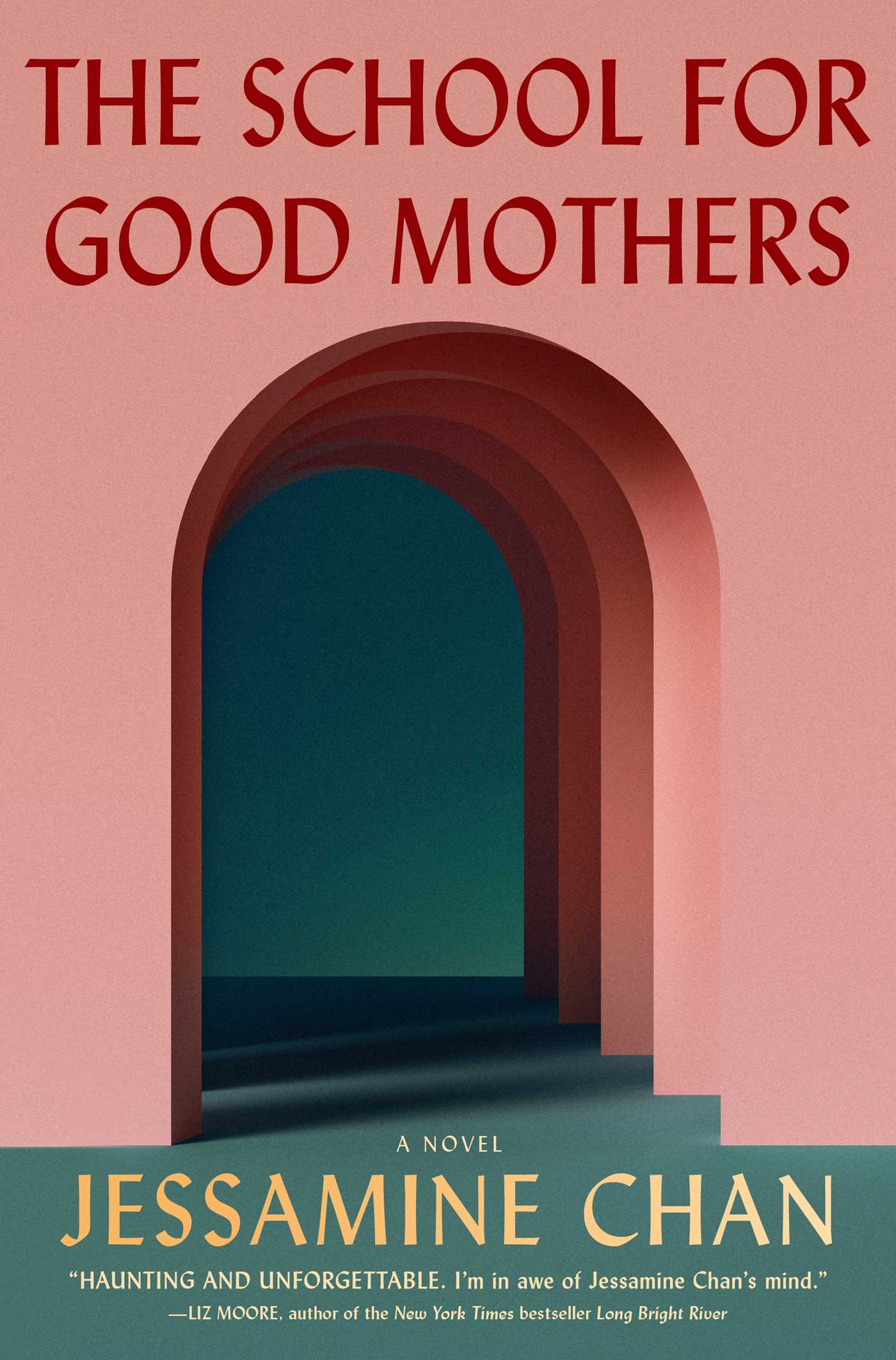
The School for Good Mothers (Chan)

The School for Good Mothers by Jessamine Chan (2022)

(Not a review, just some notes to help me remember the things I've read. But written this way because it's the Internet, and some people will stumble across this page.)

This was a book club selection and was a little difficult to get a copy of. There was a long wait at two libraries from the ebook, the print edition and the audio (which I really didn't want because I figured it'd be abridged). I also didn't realize that it was published in 2022, so of course it was difficult to get a copy of. Additionally, it was a selection for a celebrity book club. (I was told it was one of the Bush daughters, but I didn't verify this.)

As a writer, I see that a lot of magazines publish "literary fiction", which I'm at a loss to explain just what that is. This book is listed as literary fiction. So now I know. It's boring and depressing, even when it has elements of science fiction. Those elements aren't emphasized. They're just there to be assumed to be real, and go from there. Any questions or ideas that my sci-fi-oriented mind mind veer off into didn't pan out. That's fine, though, because it wasn't the point of the book.

The book is basically a downward spiral for the main character and a study on government overreach and bureaucracy. Frida is a new mother who is also newly divorced. She has a "bad day" and leaves her daughter alone at home for a couple of hours. (It should've been a quick trip for a file.) Social services get involved and the child is taken away from her. She isn't allowed to see Harriet any more.

Harriet remains in the custody of her father and his new girlfriend/wife. Throughout all of this, those two are supportive and don't think Friday should be denied access to Harriet, but they don't have any say in the matter.

Frida is given the option of going to the titular School for Good Mothers, which is a school for bad mothers, as they are constantly reminded. She will attend for a full year of schooling and counseling, at the end of which, if she passes, she will be entitled to see Harriet again. She goes. It's an old college campus in Pennsylvania. There is a Mens school across the lake that they will interact with at times.

The sci-fi element comes in when each mother is given a child similar to her own child (or similar to one of her children for some of the mothers). These children are lifelike robots that run on blue goo. The mothers have to teach them new words, learn to love and protect them, and have their children love them back. Frida names hers Emmanuelle.

The dolls record everything, and the school has cameras everywhere. (There are some blind spots.)

The entire curriculum makes it seem like they are being set up to fail. Everything gets recorded in their files. Frida constantly loses phone privileges because of rule changes, her counselor's opinions, and (in my opinion) the author's inability to write more video calls with Harriet. (I could be wrong on that one, but it made it easier.)

Frida pushes herself, denies herself, does everything so she can get Harriet back. And in the end, she fails. I saw this coming, so I kept waiting for the twist. Maybe her lawyer would finally do something worthwhile.

Nope.

It does end with a promise for the future that the whole thing will unravel when questions start getting asked, but it wasn't a satisfying conclusion.

One of the book club has already said she'd like to read a book about the Dad's school. I'd prefer to see a book where some of the dolls become self-aware and they lead the rest of the dolls into a rebellion of sorts.

Next month's book will be a Neil Gaiman book. I suggested three books and that was the one picked. I picked two books that I've been wanting to read but I had a problem with book three -- either they were 400 - 600 pages long or they were popular enough that I assumed the others had read them already. The Graveyard Book was listed as popular on Good Reads, so I picked that one. It won by one vote over the Murderbot series.

Monday, January 31, 2022

Flash Fiction Magazine, January 2022

Along with being on the Daily Science Fiction mailing list, I get weekly emails from Flash Fiction Magazine because I've submitted there. (Unlike DSF, I haven't been published there.) I'd forgotten that it published daily because of those weekly digests I got.

As always, if someone found this blog through a random search, I kept this log to remember some details of the things I've read (and to track my reading). It's not so much for reviews, but if I state an opinion, whatever.

Summary: Literary - 7, Fantasy - 1, Science Fiction - 4, Humor - 0,
Unclassified/Experimental/Out There - 0 (I'd otherwise classify as fantasy)

Week One

January 1, 2022: "Metamorphosis" By Evelyn Pearl Malina. I'm copying down this first paragraph:

In her black sequined off-the-shoulder taffeta dress, with a black and red ruffled lace asymmetrical hem, Allison’s grandmother Francesca looks ready to flamenco dance right out of the painting that hangs on the living room wall. Her long, thick jet-black hair is held back with a tortoiseshell hair comb that now lives on Allison’s mother’s vanity.

I love the name "Grannie Frannie". I believe that this is what would be categorized at "literary" and would explain why I haven't sold any of my stories here, but probably won't unless I wrote something specifically for this market. That said, how can I judge from one story -- except that it was a heck of a story (although devoid of conflict).

January 2, 2022: "The Surrogate" By Nancy Moir.

Women sit around the rim of a waiting room, elbow-to-elbow: short, tall, dark, pale. A stack of National Geographics elevates the table; an old-fashioned clock annotates the silence. The air smells of latex. The carpet is rough with sand.

The women are being artificially impregnated. With pandas or foxes or (in the narrator's case) dolphins. I counted it as scifi instead of fantasy, but again it's "lit".

January 3, 2022: "After the Argument" By Lori Cramer.

Andrea stomps upstairs to the bedroom and slams the door. Downstairs, Ollie cranks the TV volume up so loud that the floor beneath Andrea vibrates. Grabbing her phone, she jams in earbuds and paces the room. How could Ollie be so obtuse?

Two people don't talk to each other. One orders pizza and remembers the extra cheese. They eat in silence. Then go to bed. He apologizes.

It's a scene, not a story. I can see why my stories with plots don't do well here.

January 4, 2022: "Bumps in the Road" By Catherine Jordan.

Gone are the happy-go-lucky locals quick to hold up a fist with thumb and pinky extended—the shaka wave. Hang loose. Take it easy. No one does that anymore. Relax—everything is not okay.

The apocalypse comes through long dormant (millions of years) volcanos, particularly in Hawaii. This is combined with a plauge of leprosy spread with COVID through the fish, and through the air when everything was burned. Maybe the god Papa who created Hawaii was in a mood.

Interesting. End times.

January 5, 2022: "Tilt" By SE Zeller.

I am rudely reminded each morning, when I pour my first blessed cup of coffee onto the countertop, that I have absolutely no idea what is happening in this world.

Atomic blasts have tilted Earth's axis and somehow that's affected gravity enough that the narrator spills her first cup of coffee every morning when she pours it. Also gravity is pulling her husband Bernard away from her, in case the metaphor wasn't obvious enough.

Meh.

January 6, 2022: "Joy" by Mustapha Enesi.

Joy seeps through the layers of pain in our lives: massaging the tired muscles that rush through our days, unfurling the sun that lights our paths, letting us flourish. Joy is in the days I chase after Danfo buses with a tray of Agege bread balanced on my head.

I looked it up: Danfo are minibuses in Nigeria and Agege is a region in Nigeria. There are several more cultural references. And then there's the main character, chasing through the streets after his mother, until they get to a clinic, to have the growing lump on his head examined. No word what it is, only that they can't afford an operation. And that's it.

What did I just read? What's the lump? Is the story the "twist" that they're too poor to remove it?

January 7, 2022: "The Kindly Grocer" By Christopher Bruce.

Toby hadn’t changed out of his pajamas in what—a couple weeks? He was beginning to realize he should probably get out more often, and so he went to the Kroger Superstore to shop for groceries.

Toby needed to get more and just decided to be a nice person. No one knew how to deal with that.

This one was enjoyable.

January 8, 2022: "Mr. Abbington" By Michael Belanger.

Mr. Abbington is a glum person who married a dour soulmate and the two had a Little Abbington, whom they didn't give a name to. Over time, he notices that Mrs. Abbington is starting to smile and be playful with Little Abbington. Mr. A doesn't approve, but doesn't totally disapprove, and maybe he's starting to feel something.

A modern fairy tale? A gray world having color? Odd but not bad.

January 9, 2022: "The Crowded Velvet Cushion" By Derek Harmening. The narrator has mice in the house and doesn't want to cook because that will attract them. She sets traps to catch them. Her daughter, Marnie, thinks this is barbaric. The woman catches a couple of baby mice and dispatches them quickly without Marnie knowing. Then she discovers her daughter using olive oil to try to free the mother mouse when it's caught.

It's one thing to love all living things, it's another to put up with mice in your home. I'm not sure where the name of this one came from.

January 10, 2022: "Something in the Sky over Central Park" By Michael Harper. It was nothing. A helicopter or a drone or a flock of something. No one had a good look at it anyway. It can all be explained. If a group sees a UFO then they will talk themselves out of believing that and into believing something else. No one belives Grandma followed a fairy when she met Grandpa. This was good because you'd expect this. (I classified this sci-fi.)

January 11, 2022: "Kiss Kiss" By Peter F. Stine. A deconstruction of The Frog Prince where the frog talks normallys and isn't a prince, and the princess isn't a princess, either. It could've been a modern Fractured Fairy Tale. Didn't suck.

January 12, 2022: "No Pockets in a Shroud" By Kay Lesley Reeves. If Death comes for you with a suitcase, what would you take? What can't you bear to leave behind? I liked this one.

January 13, 2022: "Body Painter" By Malcolm Carmichael. Two grandparents with some regrets and some wild grandchildren have a crazy Friday night, after the "Law & Order" marathon.

January 14, 2022: A Saint of Sorts" By Stephanie Grella. Two kids go to see the statue of a saint that moves its eyes or arms or something, but it doesn't. Then they cause mayhen. Okay.


Summary of my thoughts: I don't think I will make it into this magazine. I can't say that I don't write as well as this -- I believe I do. I just write different from this. Okay, and better, in my own humble opinion. And I wrote this summary after reading fewer than 10 entries. Maybe I'll change it, and maybe this will stay here.

Maybe I'll try again next month. Maybe I'll look to see if there were any stories with intriguing titles from the latter half of this month. Or maybe I'll stick to reading more books.

Sunday, December 5, 2021

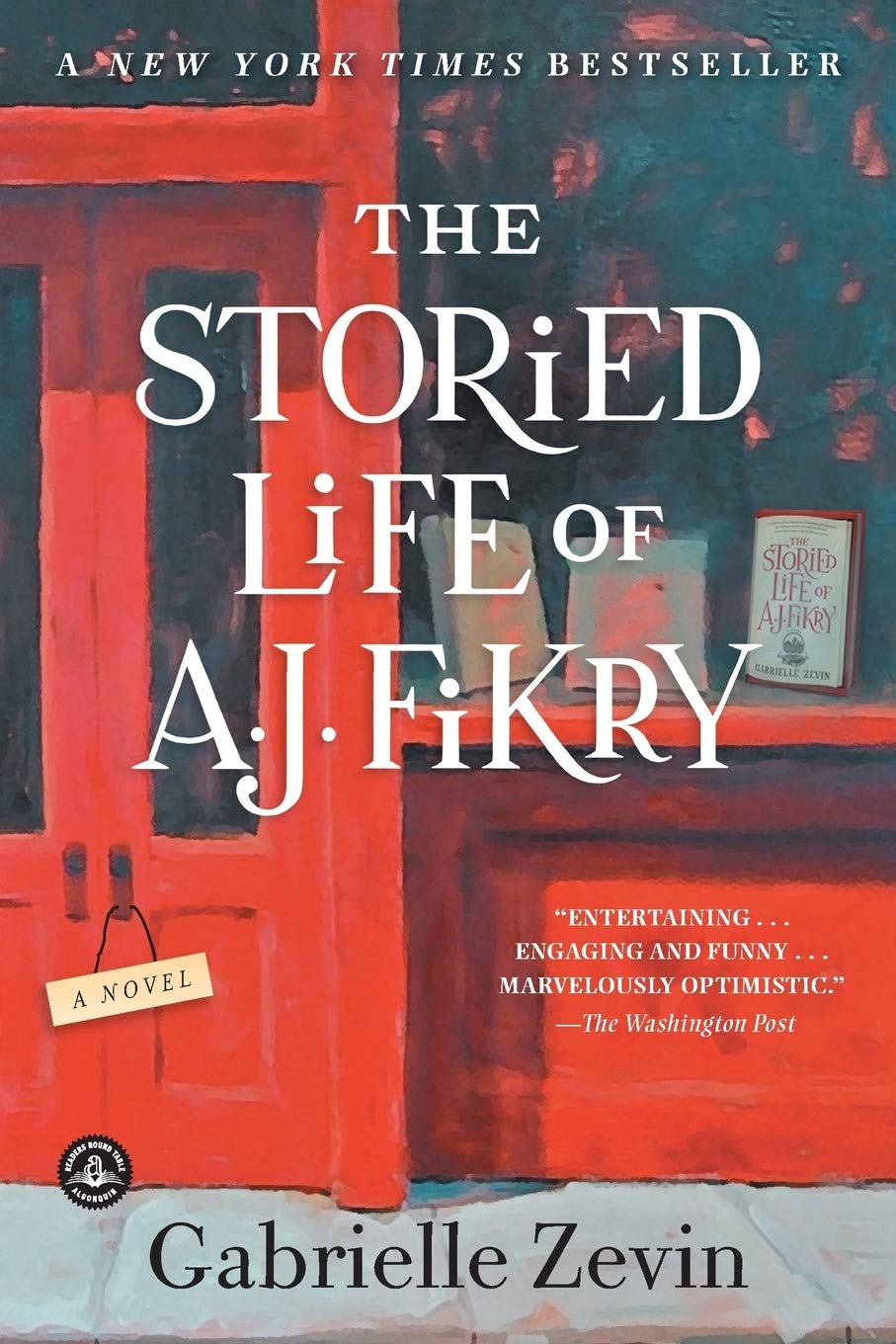
The Storied Life of A. J. Fikry (Zevin)

The Storied Life of A. J. Fikry, by Gabrielle Zevin (2014)

(Not a review, just some notes to help me remember the things I've read. But written this way because it's the Internet, and some people will stumble across this page.)

This was a book group selection. The club organizer had revealed that the vote for December book was split 2-2-2, which made me question my decision numerous times before voting. One more vote was cast after mine (I don't know if he know the standings at the moment) and it also went to "Storied Life". It's short and it reads very quickly. I breezed through it in a few days of subway rides, hall duty and and before bed reading. Apparently, there is a movie in production with Christina Hendricks and Lucy Hale.

The chapters are introduced with capsule book or story reviews written by A.J. Fikry to his daughter Maya and are usually about what makes a story good or what makes a writer good. I got a chuckle out of the first one, "A Diamond as Big as the Ritz" because back in the 90s I actually heard an Old-Time-Radio adaptation of it (probably for Suspense, but it might've been a different program), but I never actually knew the origin of the story.

The story opens with Amelia Loman of Knightly Press traveling to by ferry to the lone bookstore of Alice Island, near Hyannis, near Boston, to present the new books in their catalogue. The owner of Island Books, A. J. Fikry, is a cranky, old man (not actually very old) with peculiar tastes who is upset to hear that the last rep is no longer around as he knew A.J.'s tastes. He has certain tastes and won't carry what won't sell. The story then shifts to A.J. who we discover is a widower who is drinking himself to death in the year since his wife's (Nic) death. His sister-in-law, Ismay, checks in on him from time to time. She is married to Daniel, who is a somewhat successful author, whose first book sold well and everyone loves it better than all his later books.

A.J. wakes up one morning after drinking too much to find that the place has been cleaned, but also that someone has stolen his prized copy of Tamerlane, the first work ever published by Edgar Allen Poe, and credited only to "A Bostonian". Only 50 copies were printed, and he likens it to "the Honus Wagner of rare books". I understood that reference, and I pity anyone who didn't get either reference. He reports it to Alice PD officer Lambiase, who looks into it, but other than alerting the auction houses, there isn't much to be done.

A.J. is more depressed by this, seeing that Tamerlane was to be his retirement plan. He takes to not leaving the door locked when he goes for a run (he lives in an apartment above the store) because there is no longer anything worth stealing. He comes back to find that a woman has left a baby named Maya in his care. The mother washes up on the shore a few days later. A.J. ends up adopting the girl and raising her, and in the process becoming a changed man. So much so that he decides that he would like to see if Amelia (who I was wondering whatever happened to) if she'd be interested in dating. She's actually engaged to an American hero ... but that eventually dissolves before they can get married. Ameila and A.J. become a couple and she moves to Alice, even though she'll need to travel a lot.

The store grows a bit and changes, as A.J. stocks more children's books (things other than Elmo, or The Monster at the End of This Book, which is actually about Grover) and starts hosting events. In particular, he hosts an author event for a book that he never gave a chance to but Amelia loved. When he finally read it (four years later), he enjoyed it so much. He wanted this to be a surprise for Amelia and a good time to propose. Well ... there were a lot of surprises that night. But there were still book clubs and events in the store for years after, and the store seemed to thrive despite the coming of ebooks and ereaders.

I did like the reference that the only thing worse than a world with big chain bookstores was a world without them. Those chains (many of which have disappeared in the past 20-30 years -- this is me reporting this) allowed the little stores to carry more of the literary books and fewer of the mass market blockbusters. A small shop can't be all things to all people but it can respond to what the public enjoys, and it can try to persuade the public to try new things. It also helps that Ismay is an English teacher, so if her students need a book, she can tell A.J. to order it.

There was one bit, about halfway through, where the Cops book club were debating loose threads and leaving things unresolved, if ambiguous endings were okay. My takeaway from that section was, okay, I get the feeling we'll hear more about that Tamerlane before this book is over. And we do. And we leaving more about Maya's background.

I enjoyed the book, and it ended as I suppose it should have. I'm going to look for some Christmas-themed stuff to get me in the mood for the holidays, but I already reserved the other book club selection that I was deciding between. Maybe lightning will strike twice.

Sunday, June 7, 2020

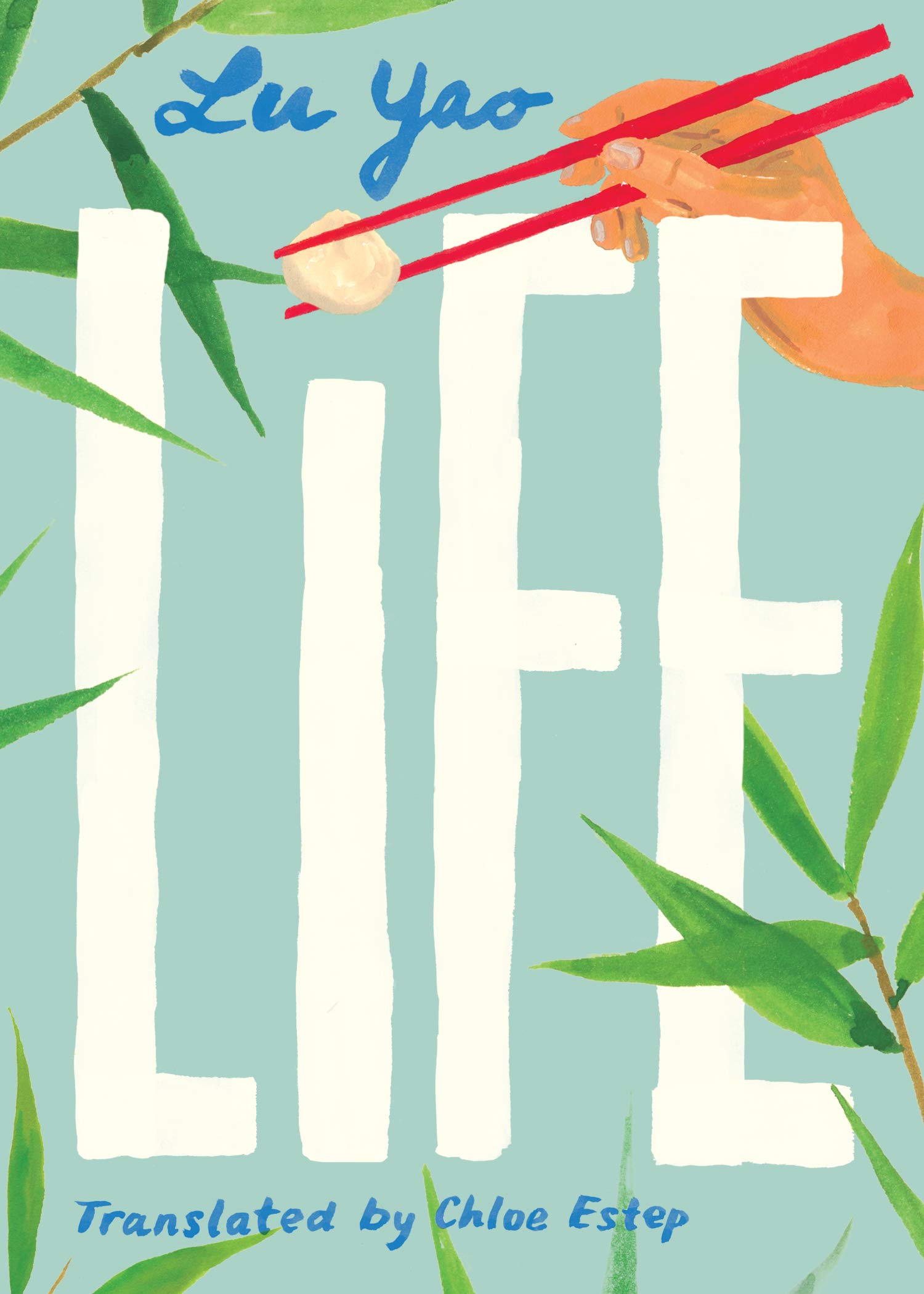
Life (Yao)

Life, by Lu Yao, translated by Chloe Estep (1982)

(Not a review, just some notes to help me remember the things I've read. But written this way because it's the Internet, and some people will stumble across this page.)

This was another book that I downloaded during Amazon's World Book Day promotion. I picked it mostly because it was near the top of the list and it was short. Yes, I wanted to squeeze a few more books in.

Life takes place in a peasant village in China, and in a nearby city. Everyone has their place dictated to them, and moving up is no easy task. The rules can be manipulated, but doing so has its consequences.

Many people follow old ways, and tradition is strong even in the ones who don't. But change is coming. Then again, it isn't there just yet.

The story centers around Gao Jialin, who is educated, but didn't place into university, so he went back to his village and became a teacher. Unfortunately, he gets displaced from this job by Gao Minglou, a village leader, in favor of the leader's son. (I was a little confused here if there was a relation between these two Gaos, because Gao Minglou seems to be some relative to the other muckety-muck, Liu Liben, aside from the fact that their families are connected through marriage.)

Jialin winds up doing the work of a peasant, so much so that he works his hands raw from overdoing it with the tools.

He also falls in love with Qiaozhen, the second eldest child of Liu Liben, who was never sent to school. The oldest daughter, Qiaoying, is also uneducated and married to Gao Minglou's son. The youngest daughter, Qiaoling, went to school. The similarity in names sometimes confused me with the oldest and youngest, as they aren't mentioned as much.

Although Liu Liben didn't educate his oldest daughters, he still wants better for them than the life of a peasant's wife. He is important in town, and he can marry them, he believes, to the sons of better off families. However, Qiaozhen shows no interest in any suitors or matchmakers. She's in love with Jailin. To many, it looks unseemly. To others, it's modern love.

When threats and schemes don't seem to work to discourage this relationship, a new solution is arrived at. Basically, in modern corporate parlance, they kick the problem upstairs. That is, get rid of the unwanted person by giving them a promotion and sending them elsewhere.

Jialin gets a job as writing reports in the city, and he becomes very good at it. He has less time for Qiaozhen, and she starts to seem more simple to him. At the same time, he meets Huang Yaping again. He knows her from school, and she works at the radio station. She is datng Zhang Kenan, another old friend from school, but she doesn't love him. She falls in love with Jialin, and tells him so. She convinces him that they should each break up with their other love interest, so they can be together, and then move to a bigger city together.

But Life has a way at laughing at the plans of ordinary mortals, as politics and petty revenge rear their heads.

It was an intereting read, although it took longer than I expected because I only read it at meals. Before bedtime, I tended to drift off, no matter how long I kept at it. (So, not engrossing.)

Sunday, January 4, 2009

The Bridges of Madison County (Waller)

The Bridges of Madison County, Robert James Waller, 1992


True story of an Italian immigrant housewife, who is nothing like Meryl Streep, who has an affair with a traveling photographer for National Geographic, who rides into Iowa from the Pacific Northwest in a pickup truck named Henry. He stops for directions and is sleeping with her within two days while her family is at a state fair with a prize cattle.
The children find out about it when they're grown after she dies.
"Literary" work turned into a movie that miscasts both roles.
Quick read. Not bad.


I guess I wanted to know what all the hubbub was about, so I read it. Kids find out that Mom had had an affair. So they write the "true" story (which no one really knows) and publicize it to the world. That's the way to remember mama.

On Earth as It Is on Television (Jane)

On Earth as It Is on Television Emily Jane (2023) [AUDIO ONLY -- no image] (Not a review, just some notes to help me reme...