Showing posts with label superhero. Show all posts

Friday, June 26, 2026

Defenders: Reign of the Bugs (Greenwood)

Defenders: Reign of the Bugs
by Leslie Greenwood (2026)


(Not a review, just some notes to help me remember the things I've read. But written this way because it's the Internet, and some people will stumble across this page.)

This book was a free Advanced Reader Copy from Library Thing. I'm encouraged (but not required) to leave reviews in exchange for the free books.

It seemed like an interesting enough premise, so I requested this book (along with maybe ten others), and this was one of the two that received last month. I was a bit behind with some other books, so I didn't get to it right away. And then when I did, I was a little sorry that I picked it.

Aliens take over the Earth, and give certain people superpowers so that they can defend the plaent from 20 invasions of the planet. This is book one, so there is a series planned from here.


I left the following review on the Library Thing website:

The comparison to Dungeon Crawler Carl is unavoidable, but instead of aliens creating an underground fantasy computer roleplaying game that Earth's survivors are pulled into, these aliens have created a reality show where some of Earth's population have been giving superpowers to defend the Earth from wave upon wave of invasions. Doing well gets you sponsors and better powers but not for a while. And this becomes a problem.

For one thing, a lot of the book deals with negotiations for better powers that won't come until a later round. This means that the main character, Chad, whose power is healing himself, has little to offer his team, and he tends to die a lot in the meantime. He's looked after by a Bigfoot, and android, and a leech monster (who gets refered to as literally "lecherous", which might be more amusing if she weren't a kid).

After the first space bug boss is killed, the rest is anticlimactic (with much of it happening "off camera"), and even the aliens agree. They want the heroes to fight and defend their planet, not shoot missiles at targets from afar.

There's a final side quest in Antarctica, not involving alien invasion, for a more exciting ending, and then everyone has to get ready for the next wave.


Basically, this is not a great book. And I can't even say that there's a good story under it, so if an editor stepped in to suggest a rewrite, it'd probably require a thorough redesign from the start.

As I told the author in email (and I will refrain from revealing email stuff), it reads like the two of us are at a con and Greenwood is telling me about this great story rather than telling the story. I realize that this might not make sense, but my first problem is in the narrative structure.

Other things that might've caused me to DNF the book if it wasn't an ARC: when the aliens invade, there's a very long info dump about the invasions, the tiered structure of superpowers, the frequency of each tier and their relative strengths, and other stuff; this dump ends with the alien "hanging a lantern" on the info dump, which is really just a sign of giving up on figuring out how to write it coherently and working it into the narrative when necessary; there are things other things that don't work.

In Carl the dungeon crawlers are living in a computer game, so everything acts like a game, including getting information on things. Here, everyone has information hanging over their heads with their names, their tiers, and their power set. This makes no sense because it's a reality show and these graphics would be on screen, not visible in real life. Consider the yellow lines that appear on TV at football games -- they don't appear on the field! Toward the end of the book, one character looks up at them and says, "oh, I keep forgetting about those." I don't see how any of them could forget about them, but I could see how the author (and the reader) might.

The four main heroes manage to take out the first bug boss (which was described as a space bug like in the movie "Starship Troopers", which, oddly, I haven't seen). After that, they get caught up with the military to go to South America and then to Antartica. Chad convinces them to practice their powers with a tournament, which would help them discover and develop their abilities and get an audience. While this is going on, five of the other six bugs are destroyed offscreen by missiles, annoying the showrunners. The military and the defenders, now with an indestructile superdog, sail to Antarctica along with a whale with mind powers, to find the last bug.

SPOILER: While the group of defenders is making their way through an ancient alien base under the ice, they receive word that the whale killed the bug. Done. First wave over. HOWEVER, a group of them are caught behind an unmovable wall and Chad figures that there's something that the producers would them to face, so they continue -- and find NAZIS. Except that they're not just Nazis, they're genetic clones of Nazis from WWII, including several clones of Hitler. And one Hitler has a S-tier level mecromancer power. ("Technomancer" might've been a better term, but then it couldn't be confused with "necromancer".)

Everything is televised on channels that the characters can view. These are shows on various networks (of which there are many) but they'll concentrate on any group that is doing something interesting. This means that this reality show has real-time cameras literally everywhere, but there are no cameras anywhere. I guess it's Microbots or Nanobots "or whaterver".

Through the entire book, there are side conversations with an agent trying to get good deals with sponsors (but not until the third level) which would add extra superpowers or abilities to each character, and another one trying to arrange interviews and instruct them with general tips how to survive longer. Again, a clumsy copy of Carl missing the logical structure to place these things.

My pettiest pet peeves: I had an ebook, so I couldn't toss the book across the room when I encountered the over-overuse of "or whatever" at the ends of sentences and responses of "Oh, I see." Both of these could be forgiven if each was confined to a single character that could be identified with it. Further, "or whatever" should only appear in dialogue and not in the narration. Either give me another option or delete those two words."

This was an ARC, and not a final copy, so I tried to ignore the typos, but there were a lot of them and some were some atrocious examples of misuse of language. (I didn't highlight these, so I can't reference them.)

One last thing: the only reason I had an email exchange with the author was because Greenwood emailed me asking if I could post a review by June 1 when the book launched (I was barely 20% in at the time), and I was offered the second book to review, which is launching July 1. I didn't respond to that, and I'm glad I didn't because I can't see how it could be better when they had to be written at the same time or at least during the time when the first one was being edited.


If you stumbled across my page via the Internet, please check out my short book series, Burke Lore Briefs. A fantastical foursome of flash fiction and short stories.

Tuesday, April 14, 2026

Watchmen (Moore)

Watchmen
Written by Alan Moore,
Artist Dave Gibbons, and Colorist John Higgins (1987)


(Not a review, just some notes to help me remember the things I've read. But written this way because it's the Internet, and some people will stumble across this page.)

I know this is Moore's story, but the artwork really drives it, sometimes incredibly so. Also, I added the colorist's name (above) along with the artist because the colors and shading were a major part of the atmosphere.

Alan Moore's Watchmen started publishing around the time I graduated college. I had friends who were really into it. Finally, a friend loaned me his trade paperback -- he overestimated the speed at which I read. Anyway, I have vague recollections of the story. And I remember the extra material wasn't exactly extra -- the stuff at the end was similar to online extras for movies these days. One of the problems I had back then was that the first couple of issues had fake excerpts of a biography of one of the heroes. It was several pages of small print. I don't read comic books for multiple pages of small print. If I wanted to do that, I'd just read a book -- and back then, I didn't read that many books. This was mostly because I didn't read quickly, didn't set a lot of time aside for reading, and often picked the wrong books.

Ironically, my graphic novel class is the reason I picked this up again. I would love to share this with my students but I just can't. Nothing wrong with the story, but the copy came from my brother's apartment and it's from the 80s. I can't say that it's a first printing or anything like that, but it's valuable to me sentimentally more than monetarily. And my students are just not into my class. It's "basket weaving" to them. Many of them can't even read English, and without the use of their phones, they can't translate the text. Basically, they don't care and wouldn't appreciate it. So I'm protecting this book, and I'll find others for them.

For those unaware, this was probably the first deconstruction of superheroes. (If not the first, it was the first one to make a splash this loud!) The heroes were based on the Charlton characters that DC acquired, but the concept was so out there that the characters would be forever tainted and unusable ever again. So the serial numbers were filed off and the story redone.

Reading this nearly 40 years later, it's amazing to see not only how well it holds up but to compare it with more modern graphic novels, or even comic book collections published as trade paperbacks (but not necessarily one complete story). I don't read so many regular comics any more, but, of course, I've upped the number of graphic novels. The nine-panel per page layout is a bit of a throwback just in itself. And now that I'm teaching about these comics, I'm noticing things, such as how the story manages to switch focus at the end of the page, and when it doesn't, the first pages of the following page serve as a transition. I noticed the reuse of a lot of artwork as themes and moments (and time in general) are repeated. That must've saved a bit of time.

I actually put the physical book aside for a while and waited for the ebook to be available from the library. Regardless, I still read the physical book in class on Fridays in front of my students. But the ebook had two advantages: first, zooming in on the dialogue and the backgrounds, second, screen grabs of images that I'd like to use in class next year. I was taking photos with my phone (fair use), but they are warped from bent pages and they have light reflecting. Many websites that I visit for information about graphic novels will use images from Watchmen, so I figured this would be the best way. If nothing else, I could replace the photos I took.

Moving on...

Once again, I skipped the additional material at the end of each chapter (issue) and went back to them later. Some of the stuff that I remembered was stuff people had told me from those pages. I came back to them before the book was due back at the library. The novel was probably the worst to get through. The sheer variety of the material was intriguing, even being true the subject matter, including typos or bad typesetting. I wonder how much time and effort went into making those right, as opposed to writing the regular book. If nothing else, you got the sense that the world really thought that the costumed heroes were a little nutty particularly after the villains traded in their crazy clothing for well-manicured suits. The real enemy of the 1950 (other than McCarthyism, of course) was organized crime. Even the Superman TV show went there - fighting organized crime instead of Lex Luthor or Brainiac.

If anything, I had a better feel for the older period, the past of the story, then I might've had 40 years ago when that stuff was only 40 years old. One thing that still stands out was Rorshach's origin, or at least, the origin of his mask, which was tied to Kitty Genovese, which was something that I learned about in college or somewhat afterward. I might've heard the story before that and hadn't known the name.

I didn't remember a lot of the imagery, especially involving the Comedian. Looking at it now, it's obvious. But, hey, I think I rushed to read it the first time so I could give it back.


If you stumbled across my page via the Internet, please check out my short book series, Burke Lore Briefs. A fantastical foursome of flash fiction and short stories.

Friday, February 20, 2026

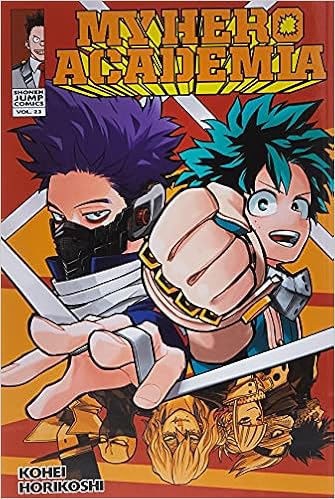
My Hero Academia Volume 41 and 42

My Hero Academia Volume 41, by Kōhei Horikoshi (2025) My Hero Academia Volume 41, by Kōhei Horikoshi (2025)

(Not a review, just some notes to help me remember the things I've read. But written this way because it's the Internet, and some people will stumble across this page.)

Somehow, I never posted a review for Volume 41, so I'll comment on what I remember about it.

It's just as well that I cover both volumes at the same time because, in reality, the story ended in volume 41, and all that's left is to pick up the pieces.

SPOILERS -- Because there's just no other way.

In 41, Bakugo stands up to the rejuventated All-for-One, which makes sense because Bakugo has been a protagonist alongside Deku the whole ride. There are two major villains and he should be get to deal with one of them. It's at this point that you realize that All for One is not the bigger of the two threats even as he's been pulling the strings with Tomura Shigaraki. And then there's the fact that there's a mental connection between the two, which makes them something of a hybrid individual.

Seeing Bakugo taking on All For One after getting messed up royally by Shigaraki is absolutely heroic.

Deku's fight with Shigaraki takes a weird twist in 41. He gives up One for All to Shigaraki, knowing (guessing, really) that Shigaraki's body can't handle it, the same way that Deku couldn't at first.

So in the matchup at the very beginning of volume 42, the story is already over. Deku finally realizes that that little boy that he wanted to save is beyond saving. He gives him a punch that sends Shigaraki into eternity, now that he's powers, including his healing, aren't working.

And that's it. Story over.

Almost the entire volume is epilogue.

We see Class 1A become 2A. We see Aoyama leave the school voluntarily, making room for Shinso to join class 2A. New kids come in, idolozing the Class 2. We see Kota being aged up to being only a year younger than Deku (instead of probably 6 years younger), just so he can be there. (The author acknoledges this.)

And then everything jumps to 8 years later. Crime is down. There's less work for heros, but they still exist and have agencies. Deku is teaching. Bakugo has his own agency.

We get to see new hero rankings, which include most of the former 1A and 1B. A few people have relationships. They all meet for dinner, but, of course, it's interrupted. And finally, it's up to Bakugo, of all people, to give Deku relationship advice, and Deku finally goes after Ochaco. And it's a wrap on the series.

It was a fun ride while it lasted, and I hope there are more side projects where we get to see these kids as actual heroes, even if Deku has only embers of All for One remaining.


If you stumbled across my page via the Internet, please check out my short book series, Burke Lore Briefs. A fantastical foursome of flash fiction and short stories.

Thursday, November 6, 2025

The Golden Age (Robinson / Smith / Ory)

The Golden Age
James Robinson / Paul Smith / Richard Ory (1995)


(Not a review, just some notes to help me remember the things I've read. But written this way because it's the Internet, and some people will stumble across this page.)

I don't know where this graphic novel came from. I don't believe it was in the FreeCycle donation I received, which means that it either came from a Little Free Library or from my brother Stephen's apartment. Despite it's age, it must've been a recent purchase. It hadn't been in his apartment for two or three decades.

No one had started reading this one, so I picked it up to be my Friday read in class.

This graphic novel was published in four parts in 1993 and 1994. It was first collected in 1995. It was reprinted in 2005 with "JSA:" added to the title. This means I read the 1995 edition.

The first thing I noticed was the collection of heroes on the cover. The central character wasn't anyone I was familiar with, so it was a moment before I realized that all the other characters were members of the Justice Society or the All-Star Squadron at some point. There were also members of the Freedom Fighters (who I recall retroactively were part of the All-Star Squadron or JSA), not including Uncle Sam. Many of the heroes were bought up from independent comic groups that went out of business in the 40s and 50s.

There were still a couple that I didn't recognize right away but I believe all of them show up in the story somewhere.

Some personal background. I was born into the Silver Age, when older heroes who had fallen by the wayside were being relaunched. It is the Silver Age versions of the characters that we have today. Some of them have been revamped again in the 21st century, but overall those changes were cosmetic, unless the heroes failed again in the 70s and 80s, leaving them open for a brand-new iteration.

I remember the annual JLA-JSA crossovers that usually featuring other heroes of the 40s-60s. And I read many of the reprints of "Famous First Editions", so I was aware of a lot of the old characters.

I was in college during the Crisis on Infinite Earths when all the Earths were combined into one (but there were still other dimensions). One fallout of this was that the characters who'd survived from the Depression and World War II, that is Superman, Batman, and Wonder Woman, whose origins, powers and identities didn't change, no longer appear as JSA characters. (Green Arrow was brought back very similar to his original self.) Only their Silver Age counterparts exist, as updated for the five decades that have passed since the Silver Age began.

Yes, the start of the Silver Age is nearly twice as long ago from now as the Silver Age was from the start of the Golden Age.

And speaking of the Golden Age...

This book is an Elseworlds, meaning that it happens outside the main continuity. Unlike Elseworlds where modern characters exist in older times (for example, a Victorian Age Gotham City), this story takes place in its proper timeline, so readers of these characters know whatever they need to know.

This book doesn't quite give "The Watchmen" treatment, but it does take some liberties.

I am aware of the Spear of Destiny, which allowed Hitler to take control of magic-based heroes and Superman (who is vulnerable to magic). In this story, that is a myth. The real reason that the heroes didn't go overseas was that FDR asked them not to go. They defended the homefront. Because of this, when the soldiers came home, many of the heroes retired because they weren't needed any more. Police, firefighters, and other personnel all came home.

One exception was Green Lantern, Alan Scott. He retired because he was bitter about the atomic bomb. His ring could've achieved the same results with less death and destruction. Likewise, Starman had a breakdown when he discovered that his cosmic energy helped to bring about the atomic bomb.

Tex Thompson, aka the Americommando or Mr. America, is one hero that did go to war and he killed many of the enemy. He comes back a hero and seeks political office. He becomes an early version of Sen. McCarthy. I didn't remember his name. I might have heard of both of his hero titles, not knowing they were the same person. I did know about Miss America, who is also in this book.

Another part of the story involves one of the heroes making a "Where Are They Now?" documentary while trying not to include too much Tex Thompson. It gets confusing because there are too many characters with the similar names. I think it was Johnny Quick doing this, not that he is separated from Liberty Belle, or Johnny Quick might've been the one trying to write the Great American Novel and failing miserably at it. This stuff rolls together after a while.

Among the ones that didn't retire are the Atom, Johnny Thunder, and Dan the Dyna-Mite, who are too young. They get involved with Tex's efforts to register all superheroes. Additionally, Robotman makes an appearance (much earlier than I was aware of his existence), and he is losing his humanity on his way to being a killing machine.

The Atom gets an office job because his body isn't right for an experiment that Tex is part of. Dan, however, is transformed into Dynaman. The two of them are very ambitious and plot a future where Thompson is elected president in 1952, by which point, the U.S. would likely have gone into Russia and China.

Manhunter, who is a vague memory to me, was also over in Europe during the war. When he finally comes back to the US, he's suffering from memory loss, and people are hunting him, trying to kill him. He meets up with Bob Daley, Thompson's former sidekick (Thompson is embarrased by the man now), and they eventually find Hawkman who helps Paul Kirk (Manhunter) get back his memories.

The things he saw changes everything and put all the events into a new light.

Everything after this would be a spoiler.

A couple other notes: Hourman is battling addiction, which I think is a topic that had been touched on before -- but not until the late 70s or early 80s, most likely. Granted, I don't remember exactly when it was revealed that Speedy was an addict.

I don't remember Captain Triumph. He's retired and haunted by a ghost that wants him to touch a tattoo to bring Captain Triumph out. He never gets his moment though because Lance Gallant tries to be a hero without the ghost.

Red Bee is in it, and not as comic relief. I'd seen one previous appearance in an issue of All-Star Squadron where he was one of the heroes that traveled to Earth X, where the Freedom Fighters were founded. His presence there was laughable as he was easily outclassed -- and I think he had his back broken almost immediately -- years before Bane did that to Batman.

I know who the villain is, and have read a couple of stories with him, but I don't really know much of his background, and he was never a favorite of mine. That said, he's appropriate for this story.

I enjoyed this story. Since it was an Elseworlds, the writers were free to experiment with the characters. Robotman becoming a killer was an odd choice, and far more heroes were killed off than was necessary for the story. It didn't have to be a bloodbath, but at least they didn't kill everyone just because they could.

It holds up well for a comic published 30 years ago that took place 50 years before that.

Addendum: I posted the following on Good Reads:

I didn't realize how old this book was when I picked it up. (My copy didn't have JSA on the cover.) The fact that it's from the 90s makes a bit of sense. I read some All-Star Squadron in the 80s (so I knew about the Spear of Destiny stuff) as wells as the JLA-JSA crossovers going many years before that, so I recognized many on the cover, even if I didn't recognize the most prominent character -- it's someone who gets reintroduced, so you wouldn't recognize him.

This also has a bit of a Watchmen influence to it with the characters get deconstructed a bit as most of them hang up their masks, capes, and cowls after the war when all the other rescue workers come home from overseas. Green Lantern and Starman have strong reactions to the war's ending.

The four parts (individual issues) read as one story. It had a good twist explaining the strange actions of some of the characters.


If you stumbled across my page via the Internet, please check out my short book series, Burke Lore Briefs. A fantastical foursome of flash fiction and short stories.

Wednesday, June 25, 2025

My Hero Academia Volume 40

My Hero Academia Volume 40, by Kōhei Horikoshi (2024)

(Not a review, just some notes to help me remember the things I've read. But written this way because it's the Internet, and some people will stumble across this page.)

The story is winding down with the former All-Might facing off against the foe that ended his career. All Might had been using all sorts of technology to mimic the powers of the students in 1A (who should be in 2A by now, right?)

All Might had no chance at victory, but as with Batman said in an episode of Justice League, I'm not trying to beat you, I'm trying to stall you. Bakugo arrives for a final showdown. Remember that Bakugo holds himself responsible for All Might retiring.

The story is winding down, and Deku will have to take down Tomura Shigiraki.

I'll be sorry when this story ends if it means that publication ceases. The story will have been told, but there's more stories to tell with all these heroes.

Volume 41 is on hold at the library.


If you stumbled across my page via the Internet, please check out my short book series, Burke Lore Briefs. The fourth book will be available by the time you see this!

Friday, December 27, 2024

My Hero Academia Volumes 38 and 39

My Hero Academia Volume 38 and 39, by Kōhei Horikoshi (2023)

(Not a review, just some notes to help me remember the things I've read. But written this way because it's the Internet, and some people will stumble across this page.)

Not really a lot to say other than I enjoyed them. This blog entry is mostly so they'll be counted in the year-end total. The final battle is still being drawn out. As with a lot of manga, the more action there is, the more difficult it can get for me to tell what's going on. But some of those background scenes and cityscapes are just amazing.

The books (in English) have caught up to the show (in Japanese with subtitles). The show recently eclipsed the books, particularly with Ochaco Uraraka and Himiko Toga.

Next book will be reserved as soon as possible.

Friday, July 12, 2024

My Hero Academia Volume 37

My Hero Academia Volume 37, by Kōhei Horikoshi (2023)

(Not a review, just some notes to help me remember the things I've read. But written this way because it's the Internet, and some people will stumble across this page.)

Spoilers for the "final battle", which may or may not be final because I don't know how long this fight and this manga continue afterward.

Deku arrives to confront Tomura Shigaraki, who is now melded with All For One (or possibly not). Bakugo is done but may survive with another hero's sacrifice. Spinner's added quirks cause trouble for some members of Class 1A (or 2A now, I guess), but they also cause trouble for Spinner whose mind is becoming as beastly as his body. And Todoroki's victory over Dabi may have been premature.

It was a quick read that became available sooner than I expected, and I plowed right through it, putting other things on hold.

Volume 38 is on hold. Hopefully, I'll have that in a few weeks.

Friday, June 21, 2024

My Hero Academia Volume 36

My Hero Academia Volume 36, by Kōhei Horikoshi (2022)

(Not a review, just some notes to help me remember the things I've read. But written this way because it's the Internet, and some people will stumble across this page.)

Now that I'm caught up, I'm reading these once every few months, so I'll list them separately.

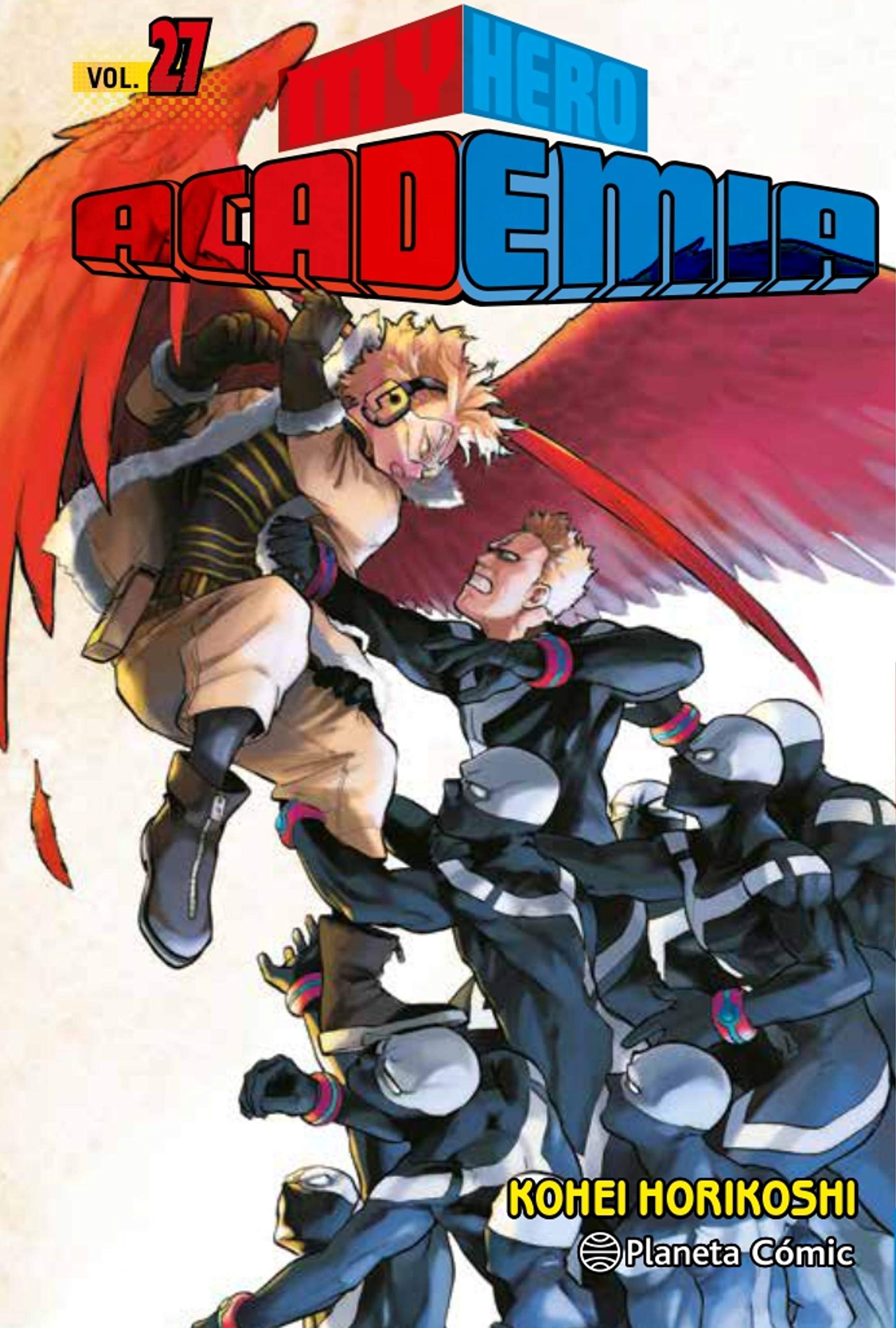
The "final battle" continues. I notice that the anime that I'm watching on Hulu has almost caught up with the books. This past Saturday, Monoma copied powers that allowed him to use Kurogiri warp gate abilities to separate all of the villains into groups where heroes would be waiting. (Deku unfortunately gets snagged and dragged into the wrong portal.)

As shown on the cover, the highlight is the showdown between brothers Dabi and Shoto. Dabi notes that Endeavor didn't come himself and assumes he's too ashamed to be there. This doesn't bother Dabi because he wants to destroy everything Endeavor holds dear before disposing of him.

At the coffin in the sky, Tomura Shigaraki still has the power to create more hands from his body as a natural ability. However, his Decay quirk is being negated by Monoma who is standing by Aizawa so that he can use his ability past the normal time limit. (Aizawa has one eye bandaged -- I don't remember if he lost it entirely -- and his ability isn't what it had been.)

Without Deku, they can't finish off Shigaraki.

Three month wait for the next book.

Friday, March 29, 2024

Graphic Novel: Superman in the Fifties

Superman in the Fifties (2021)

(Not a review, just some notes to help me remember the things I've read. But written this way because it's the Internet, and some people will stumble across this page.)

Last summer, I was in my local branch of the Brooklyn Public Library, and while there, I picked up 3 graphic novels. I read part of this one, and then put the pile on the side. I've been renewing them every three weeks since then.

Of the three, this was the one that it took the longest to read. Back in the fifties, the artwork in comics was much simpler but there was a lot more text to read. The pictures are interesting enough, but nothing is visually stunning. And, of coure, the story lines are about 70 years old.

The funny thing about this was the number of other rockets that landed on Earth and how many of those came from Krypton. There were three villains, not the Phantom Zone villains, who were imprisoned in a rocket. There was Krypto and Supergirl. And there was another alien, whose name I unfortunately forget, who thought he was Superman's big brother -- I remember the story being Mon-El, and maybe they reprinted this and changed it to Mon-El for the Legion of Super Heroes, but that wasn't his name. There were Bizarro stories. And, of course, Superman's Best Friend Jimmy Olsen and Superman's Girlfrien Lois Lane.
I remember in the late 70s or early 80s when a grownup Lana Lang came to Metropolis. Apparently, she'd done this back in the 50s as well.

It was an interesting look into the past. Two things that stand out: Superman didn't have "heat vision" then but rather used his "X-ray vision" to heat things up; and he used his "super-ventriloquism" more than once in the book, and the outcome of one story depended upon it. Yes, Superman could literally throw his voice and have it appear to come from somewhere else.

It was a fun but long read. I'm glad I read it, and I'm happy that I finally brought it back.

Monday, March 11, 2024

Graphic Novel: Superman '78

Superman '78 (2022)

(Not a review, just some notes to help me remember the things I've read. But written this way because it's the Internet, and some people will stumble across this page.)

Last summer, I was in my local branch of the Brooklyn Public Library, and while there, I picked up 3 graphic novels. I read part of this one, and then put the pile on the side. I've been renewing them every three weeks since then.

Superman 78 is a vit of an anomaly. Batman 66 holds a place in the hearts of many in a generation who grew up with reruns of the classic series day after day. At the same time, many of those same people, or their older siblings, grew up with the Adventures of Superman from a decade earlier.

While people have fond memories of Christopher Reeve as Superman, there were only four movies to work with, the last time being a little different from the first two, and the mythology isn't quite the same as the comic book. Granted, some of that mythology has been adopted into comics or television every now and again, but DC Comics had made a habit of rebooting their entire line-up on a regular basis.

Basically, we have a bunch of Superman stories with movie lookalikes. The book consists of six issues of the a series of the same name, starting after the movie took place. Luthor is released to work on science for the betterment of the world instead of the betterment of Luthor. Next, Brainiac comes along. He's been collecting pieces of planets in his museum. When he detects a Kryptonian on Earth, he demands Superman surrender himself to prevent the contamination of Earth. Superman reluctantly agrees. We then find the Bottle City of Kandor on Brianiac's ship where Jor-El and Lara have survived. Superman eventually escapes with the help of Lex Luthor, who needs to prove that he can succeed where Superman failed.

It was an interesting group of stories, but nothing special. Just another take on territory well-traveled. I was happy to see that the date was only 2021-2022, so that explains why I wasn't familiar with the comics existence.

One more graphic novel to finish.

Tuesday, March 5, 2024

Graphic Novel: Power Girl: Power Trip

Power Girl: Power Trip (2014)

(Not a review, just some notes to help me remember the things I've read. But written this way because it's the Internet, and some people will stumble across this page.)

Last summer, I was in my local branch of the Brooklyn Public Library, and while there, I picked up 3 graphic novels. I read part of this one, and then put the pile on the side. I've been renewing them every three weeks since then.

I finally spent a couple hours getting through the rest of Power Girl so I could return the book already.

Power Girl has an odd history. For anyone past the half-century mark in their life's journey, they will recall that Power Girl was the Earth-2 Supergirl analogue, back when there was an Earth-2.

Then in the mid-80s, DC Comics decided to "simplify" something that many of their fans didn't find all that complicated. (Yes, there were some contradictions that could've been cleared up by Fiat, but that's another issue.) When the "Crisis" ended, many characters that existed on both worlds were combined into one, some disappeared completely, and in cases such as the Flash, the Golden Age and Silver Age heroes co-existed.

The problem is that the Earth-2 Superman went away but Power Girl remained. There were attempts to give her new backstories until one would stick. I remember from back then when Arion, king of Atlantis. This book addresses that and other theories. It then dismisses them as delusions of the Psycho Pirate. I don't know if that part happened back then.

As a graphic novel goes, it got off to a choppy start and then got a bit smoother. Afterward, I checked, and that was because the last 12 chapters of the book were taken from a single series, when the opening chapters came from a few different sources.

Power Girl takes on the Ultra Humanite who wants her for her body. Literally. He wants to put his brain in her indestructible body. It doesn't go so well, but he'll make a return appearance, as will some of his allies. Also in the background is Dr. Sivanna from Captain Marvel (Shazam!) stories. He's not an active menace to Power Girl but makes his presence known.
The surprise character (for me) is the new Terra. Not to be confused with the Teen Titans traitor Terra, this teen is actually from deep underground but also earth-moving powers. The two team up well.

I enjoyed this, for the most part. The explanation about the hole in her uniform was a little silly. And there were plenty of references to staring at her boobs, which is to be expected.

Tuesday, October 31, 2023

My Hero Academia Volumes 32-35

My Hero Academia Volumes 32-35, by Kōhei Horikoshi (2021-2022)

(Not a review, just some notes to help me remember the things I've read. But written this way because it's the Internet, and some people will stumble across this page.)

Apparently, I haven't listed a review of one of these manga books since last November. I've been requesting them whenever they become available at the library. These are the past four books. There is one more listed online, but it isn't available at any library at the moment.

We're getting new adult heroes as the continuation of the All-For-One story line continues, along with the development of Shiguraki, and the big reveal over who Dabi really is. There is less about the students, but they do get bck into the action.

The time jump has Deku out of school on his own. It gets dark as he pushes himself farther and farther, and the heroes let him. Eventually, his former classmates are able to bring him home before he falls too far. He costume is fuzzy and raggedy, and it isn't so obvious that he's a hero.

The world isn't happy with heroes, especially with all the villains on the loose. (The prisons have been emptied.) And my heroes are just quitting. And then we learn that there was a traitor in the midst at the Academia, and the writers even pointed out just where they planted the seeds and nearly did the reveal sooner.

One book brings in another new American hero into Japan so we see more of what is happening around the world.

If anything bothers me here, it seems like the end of the series is coming with the conclusion of these story lines, even though this is the story of how Deku became the world's greatest hero, according to the intro of every issue. He hasn't even graduated high school yet.

Next issue isn't available at the library, but as soon as it is, I'll have it on hold.

Monday, November 14, 2022

My Hero Academia Volume 31

My Hero Academia Volume 31, by Kōhei Horikoshi (2017-2019)

(Not a review, just some notes to help me remember the things I've read. But written this way because it's the Internet, and some people will stumble across this page.)

This is the most recent issue available, and it merits a separate entry even if it was only 40 minutes of reading.

I'll have a separate entry for the spinoff My Hero Academia: Vigilantes, which I'm also up to date on.

This book came as a little bit of a surprise. I put a hold on it at the library a while back and suddenly there it was.

The series has gotten a bit dark, with its emphasis on the League of Villains and the Paranormal Liberation Front. but now we discover Dabi's true secret, and the revenge that he's been waiting for. No spoiler, but it's dark, and it concerns the new Number 1 Hero.

Despite being on the cover, Izuku Midoriya (Deku) has little to do since he's in the hospital from his battle with All for One's vassal Shiguraki.

So if I had a problem with this series, it's this: it's supposed to be about a high school. While I'm happy Japan's active heroes appear and get showcased, and even happier that a squad of high schoolers do NOT run off and save the world every issue, the focus has shifted. The bigger issues in the world have taken center stage. But we seeing it from the front lines, not through the lens of the teens in training.

And, again, without a spoiler, after 30+ issues that just about got us through a single year, the reveal on the last page with Mioriya was a head scratcher. There's a sudden jump in the timeline (a few months) and a rash decision for someone training to be the world's greatest hero. And it's practically an off-the-cuff aside.

Oh, yeah, I'll have the next issue on hold at the library.

Monday, April 25, 2022

My Hero Academia Volumes 22 Through 30

My Hero Academia Volumes 15 Through 21 , by Kōhei Horikoshi (2017-2019)

(Not a review, just some notes to help me remember the things I've read. But written this way because it's the Internet, and some people will stumble across this page.)

I am now caught up with all the books that are currently available at the New York Public Library in ebook format. I could switch to one of the spin-offs next month or later.

In these 9 volumes, I have caught up with and passed the TV series. Now I know why the last season of the show obsessed with the League of Villains for almost the entire run. Because the manga was obsessed with it and Re-Destro for several volumes, and beyond.

The thing is, this was a show about a high school for future heroes. And while it's great to get more backstory, and see more of the active heroes, the high school itself gets lost. There are occasional training bouts between the classes. And we've gotten more of Midoriya, Bakugo and Shoto and a few of the others, but the rest are almost minor characters. Yes, there's a greater storyline going on, but it does seem to drag out a bit.

The students in Class 1-A still haven't finished their freshmen year yet.

If there's another complaint, it's that Shigaraki has the powers of All-for-One, but Eraser stared at him for a couple of volumes to nullify his powers. Even still, he withstood super furnace blasts from Endeavor, which should've incinerated him. Now, the hero isn't looking to kill the villain, but if he's pumping his power up that high, how is the guy still standing?

The last volume I read (30) had a big reveal for Dabi, and what the source of his powers are, and what's up with that jaw of his. I wonder if that had been planned from the start or they thought it up along the way. The creator said that he could imagine the story running 30 issues, and here we are, so maybe. But there's more to do. Midoriya hasn't become the Number 1 hero yet. He hasn't finished school yet. And he hasn't had all of his powers manifest yet (even if they didn't all manifest for prior holders of One-for-All.)

I'll have to keep an eye out every so often for the next volume. Then again, I read 8 of the 9 parts of that other thing. I wonder if it ever came out.

Thursday, January 27, 2022

Super City Cops #1: Avenging Amethyst (DeCandido)

Super City Cops #1: Avenging Amethyst, Keith R. A. DeCandido (2016)

(Not a review, just some notes to help me remember the things I've read. But written this way because it's the Internet, and some people will stumble across this page.)

This was another bonus Kickerstarter Edition, but the book is from 2016. It's a short novel of roughly 100 pages, but it was a quick read.

The first thing I was curious about was if the "Avenging" in the title was an adjective or a verb, but it's a little of both, I think. (And an allusion to The Avengers, perhaps?)

It takes place in Super City, a city with a lot of costumed heroes and villains running around, and quite a few names get dropped. But it's the story of the regular cops who deal with them, so it deconstructs the hero mythos a little.

The story jumps around between a pair of cops, a pair of detectives, and a cop who's been sidelined because of an accident and works in the evidence room because he doesn't want to go out on disability and be an ex-cop just yet.

Amethyst (a guy, by the way, unlike the tween in the old DC Comics comic), a flying hero who's been around for 25 years, falls from the sky, landing dead on a roof. Was he killed, or did the fall kill him? And why does the guy look like he's under 30?

Detectives Kristin Milewski ("Mi-love-ski") and Jorge Alvarado investigate. Also of interest are two police officers who are newly paired Officer Paul Fiorello and Officer Trevor Baptiste who keep running into costumed people. Fiorello seems to have abilities that he isn't aware of. Finally, there's Sean O'Malley, the guy on disability, who has the dumb luck of attracting the Amethyst gem out of the evidence lock-up where it lodges into his chest. His disability is no longer an issue, but he's also the new Amethyst.

The detectives catch the villain, but his lawyer argues for his release. For one thing, Amethyst is obviously alive. (Now, there's a new Old Glory, so why couldn't there be a new hero. After all, there is a body in the morgue.)

Everything works out, except for Sean. The Amethyst crystal has its downsides, which he'll probably learn about later in the series. There are three books (that I know of), and I have all three from the same Kickstarter event.

It was a quick read and enjoyable. If I had one quibble, it was the jumping back and forth with the chapters. A chapter with O'Malley ends when something happens outside. We switch to the detectives going to meet a CI. The chapter ends in the middle of an attack by the villain with the next chapter back to Amethyst at the moment we left. When that gets resolved, we're back with the detectives at the exact moment we left. I'm guessing there were two long chapters that needed to be broken up in a way that created tension.

Also, there's a little too much with the deconstructing of the supers mythos. As presented, I'd find it hard to believe that such a world could sustain itself, unless it did a better job in the past and the times have just changed. But there have obviously been supers for at least 25 years, so you'd think some of the legal issues and ramifications would've been worked out already.

Not that any of that will stop me from reading the next book. Soon.

Friday, September 3, 2021

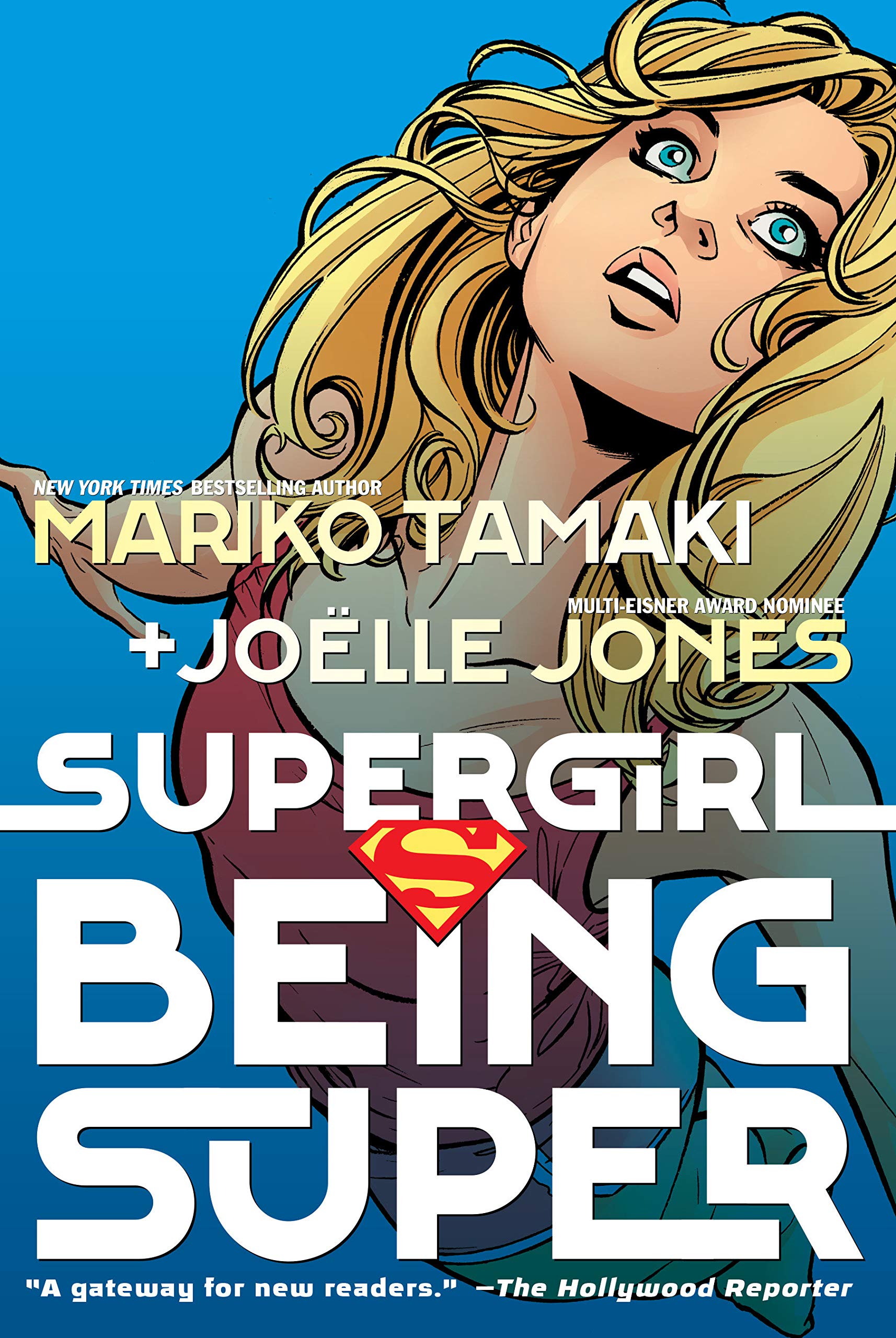
Supergirl: Being Super (Tamaki/Jones)

Supergirl: Being Super by Mariko Tamaki and Joelle Jones (2018)

(Not a review, just some notes to help me remember the things I've read. But written this way because it's the Internet, and some people will stumble across this page.)

Back at the library, looking for the next Ultraman, when I spotted a Supergirl book. Unlike other graphic novels, this one looked like it was made to be a trade paperback. Maybe it was, and maybe it was not. I just now, while searching for the image, saw images of the individual comic. The cover of this book is modified from issue #1, but this looks better.

However, unlike the recent Superman book I read, this is all one story, not parts of stories here and there. But I have to say that the fact that this was an actual comic first just makes it even more confusing. Not that I liked it less.

Supergirl is one of those charcters that has gone through many changes over the years. I remember when she was Linda Lee Danvers before she was Kara Danvers. My following her in the comics pretty much ends with Crisis in the mid 80s. And then there's the current TV show, which is completing its run. She's been a teenager, an adult, back to a teen and then allowed to age again. On TV, she has a job and a life.

This version starts off strangely. She apparently landed on Earh in her pod when she was about 8 years old with no memory of her past, even though she was 8. But she does have dreams. And she's found by Mr. & Mrs. Danvers, in a variation that I've never seen before, who take her in and raise her. And there's no mention of You Know Who until very late in the book. In every other incarnation, either Kara was sent off with Clark (and was either older or younger at the time), or she was on Argo City, which survived the destruction of Kryton for while before it, too, was doomed.

She has two Best Friends, and in what seems like boxes checked off, the minority friend, within the first couple of pages, makes it known she's a lesbian, which is a detail that while mentioned again, won't actually come into play for the remainder of the book, until a couple of pages at the end, which seemed tacked on to the story. Her other best friend dies and she can't save her because her powers are going wonky. It could be puberty hitting at 16, or maybe it's something more nefarious.

I enjoyed the book and it's a good YA title, but I wished that there had been more closure at the end, particularly with the new Kryptonian added, who apparently has been on Earth for 40 years and had no idea that Krypton is gone.

If I see another issue in this series, I might check it out. It was well-done even if it wasn't a Supergirl I know.

Sunday, May 16, 2021

The Oracle Year (Soule)

The Oracle Year by Charles Soule (2018)

(Not a review, just some notes to help me remember the things I've read. But written this way because it's the Internet, and some people will stumble across this page.)

The was a book group book. Yes, I've somehow become part of a book group.

The book follows Will Dando who becomes known as "The Oracle" because of a Site he operates (it's refered to with a capital S) where he lists some predicitions which come true. Will had a dream where he was told 108 predictions. He writes them in a notebook, but he can't forget them, even after he burns the notebook.

Will has a friend named Hamza who helps him operate the site and sell some of the predictions for more money than they know what to do with. Some of the predicitions seem like nothing, other than obscure bits that will prove to people that his predictions will come true. But after a while, they start to come together in a way that shows that they're interconnected, and Will is afraid what the consequences will be. He can't seem to pull the plug on the Site, and starts to feel that the Site is controlling him, despite his free will to decide his actions. He demonstrates this to Hamza and his wife Miko by blindly walking out into traffic on a busy road and crossing to the other side unharmed. The Site needs him.

Enjoyable story, for the most part. There's a televangelist that decides that the Oracle is a threat to business, and his is probably the weakest part of the story, but some of his decisions will drive later action. He's an easy fall guy. Then there's President Green, who is up for re-election, and can't make any statements on the Oracle until he knows who it is. He's a bit more believable than the televanglist, and the people who work for him as stereotypical government flunkies and operatives. Then there's The Coach, who's a freelancer outside of government who gets things done by any means necessary, including threats of and actual violence, torture and possibly death. Not to mention bringing down the power grid for much of the world, causing many deaths, just to find the name of one person.

This brings to mind (to me) two things in the book, and I'm not sure which annoys me more: that they telegraphed taking out so much of the world's power grid even before they set that into motion, of when they finally get into the code, the hacker sees a programming comment that instantly reveals to him the identity of the woman who set up the Site. If the phrase in the comment had been foreshadowed, I didn't recall it, and there was nothing to suggest that these two should know, or be aware of, each other.

Problems aside, it was a decent enough book which kept my attention mostly. I didn't read the preview of the next book, not am I in a rush to read another one.

Thursday, October 1, 2020

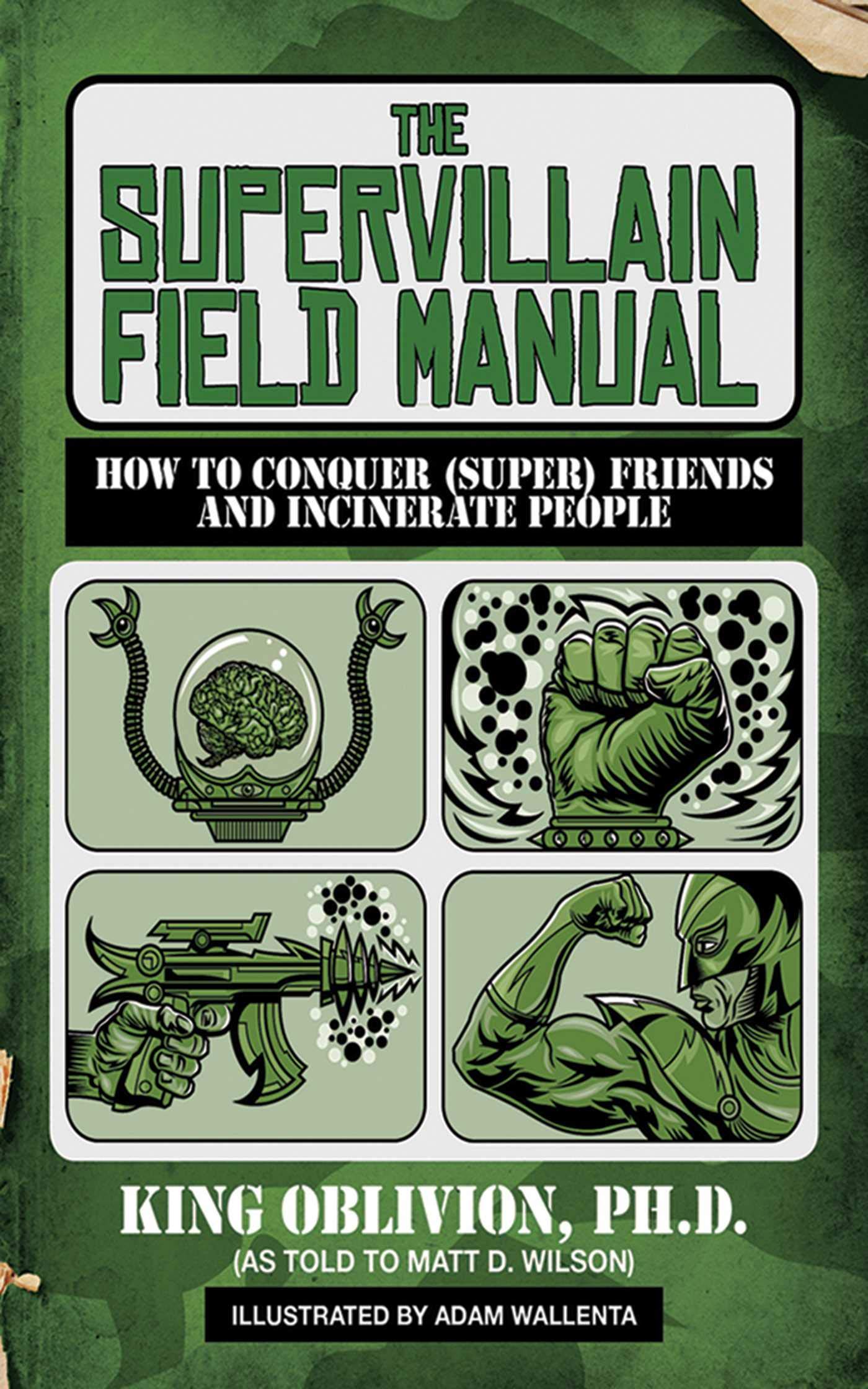
The Supervillain Field Manual (Wilson)

The Supervillain Field Manual: How to Conquer (Super) Friends and Incinerate People, by King Oblivion, PhD, as told to Matt D. Wilson (2013)
Illustrated by Adam Wallenta

(Not a review, just some notes to help me remember the things I've read. But written this way because it's the Internet, and some people will stumble across this page.)

This will be short because I wrote this up and it dissovled in the digital round file.

Every now and then, I check what's free on Amazon, and this appeared. It looked interesting, and it was. I thought it might be a graphic novel. It was not. It's a humor book, and it was sufficiently amusing.

The first thing I noticed was the reviews, starting with one by Stan Lee and moving on to other comic industry professionals. This told me something worth reading was coming. (You have to watch out for free things.)

The second thing I disovered, as was mentioned many times throughout the text that this was a sequel. This was a little odd. Usually the first book in a series is the free one. It could have been just a matter of timing.

The conceit of the book is that King Oblivion is sharing his wisdom and telling the reader how to succeed as a supervillain. And he knows if you are understanding him because (as he reminds you constantly) he is reading your mind. The text covers announcing yourself, winning, losing, making alliances, dissolving alliances (sometimes with acid), acquiring power and wealth, keeping power and wealth, weilding power and spending wealth, and preparing for destruction. There's a lot of killing everyone involved.

Worth reading, even if it was sometimes repetitive. Some of the jokes fall flat, but Wison does turn some funny phrases. And if you're planning on being a supervillain, it isn't a bad guide book to have.

I labeled this "How To" just because. Maybe it's fictional, but it's not you're usual fiction.

Saturday, August 10, 2019

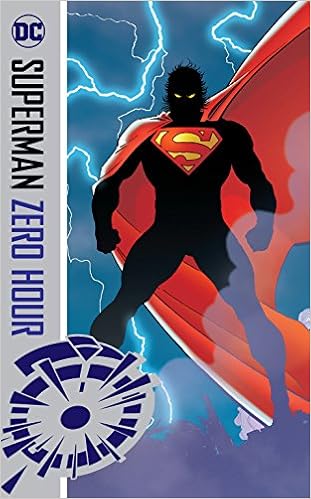
Superman: Zero Hour

Superman: Zero Hour, Writers: Dan Jurgens, Karl Kesel, David Michelinie, Louise Simonson (1994)

Not really a review, just reminding myself about some of the details of what I read ...

I vaguely recall when Zero Hour happened in DC Comics, but if I had to guess it was back in 1994, I would have been way off. I remember the bit where every comic was Issue #0 for that month, but I wasn't regularly reading any comics by that point. This was also sometime after the Doomsday plot line where Superman died and there were suddenly four new Supermen. Again, I never read that story line, but it did make it into the papers and get discussed at a convention. Plus, later on, I listened to an audio presentation of it in my car. (Back in the days of the 50-mile one-way commute.)

The stories up front are connected because of some time storm happening, which causes characters to shift universes. This allows for Batman to appear numerous times, as various incarnations that have been published over the past 80 years (or 55 or so, at that point), and none of them had a broken back. (Note: Bane story line, which made it into the movies. I actually did read some of those books way back when.) Also of interest, Superman has long Hercules-like hair and Clark Kent wears it in a pony tail. That just seemed weird. He and Lois were an item (at least in some realities), and she's also involved with Superman, but no one asks.

Oddly, the core of the Superman portion of the book is taken up by a lengthy piece about a childhood friend of Clark's, one we've never met before, who was born on the same day as Clark (in the post-Crisis DC Universe, Kent was basically hatched on Earth, not rocketed to Earth as an infant or baby), and who always played second fiddle to Clark. Clark's powers didn't manifest until he was nearly an adult, so there was no need to hide his powers when he was younger and feign weakness. He was basically the Olympian ideal, so his competing against humans was really cheating, except that his poor shmoe of a friend, who never had a clue about Clark's extraterrestrial ancestry, still feels cheated, and turns into a jerk, and then into an evil jerk, then super-powered evil jerk.

Side note: the character was so forgettable that I forgot him a week later -- and he wasn't mentioned on the summary pages I found online because he wasn't part of the overall theme of the book despite being such a major part of it. The story should've been one issue, possibly two if you really wanted to build him up. Four parts? And Clark is that stupid throughout, despite Lois stating the obvious.

After all that were a couple of Superboy stories, with his "tactile telekinesis" on full display. Okay to read, and a pleasant distraction after that Superman story. Closing out the book were two stories with Steel, who I'd forgotten about. I knew in the aftermath of Doomsday, one of the comics published was The Man of Steel, but I never saw it. When they first showed the character, I thought it might be a robot or android. Then they showed a villain that looked enough like Clark to make me think that it was a clone (until I realized it was an unrelated villain, and not Steel). The background in the #0 issue refreshed my memory of whatever mention the character got in the audio drama.

I assume Superboy and Steel were included for completeness, but they seemed disconnected to the rest of the book.

That'll probably do it for graphic novels for a while, although there are Manga Classics Illustrated at the library which look interesting (but a little too thick to carry around), and I found a Classics Illustrated book of Romeo & Juliet in my garage that I don't remember acquiring -- or leaving in my garage.

Note: Collects ACTION COMICS #0 and #703, ADVENTURES OF SUPERMAN #0 and #516, SUPERMAN #0 and #93, STEEL #0 and #8, SUPERMAN: MAN OF STEEL #0 and #37 and SUPERBOY #0 and #8.

Sunday, July 28, 2019

Superman Adventures, Vol 4 (Millar, Michelinie, et al)

Superman Adventures, Volume 4, Writers: Mark Millar, David Michelinie; Illustrators: Terry Austin, Aluir Amancio, Neil Vokes, Mike Manley (2018)

In the past, I've complained about graphic novels that weren't novels, but rather collections of comics and sometimes not even cohesively or coherently so. And yet I continue to pick them from the library shelves. This one isn't a novel, and I'm absolutely fine with that. It is what I expected it to be: a bunch of one-off adventures, each self-contained. Basically, it's like watching a three-hour marathon of the show, which, by the way, I have never seen. (I should rectify this.)

Note: I have seen all of Justice League and Justice League Unlimited, which has the same animation, voice actors and a couple of story lines, so I am familiar with it. And because of that, Lobo sounds in my head like Robert from Everybody Loves Raymond (Brad Garrett), and Kalibak sounds like Worf from Star Trek: the Next Generation (Michael Dorn).

Fun quick read for the train, even if I got some amused looked from people watching this gray-hair distinguished fellow reading a comic book. Great appearances by Doctor Fate and Batman.

Note: I found a reference that says the stories came from Superman Adventures #26-35.

On Earth as It Is on Television (Jane)

On Earth as It Is on Television Emily Jane (2023) [AUDIO ONLY -- no image] (Not a review, just some notes to help me reme...