Wednesday, July 27, 2022

At Wit's End (Bombeck)

At Wit's End by Erma Bombeck (1965)

(Not a review, just some notes to help me remember the things I've read. But written this way because it's the Internet, and some people will stumble across this page.)

This was a paperback that I had for a very long time and which became my in-pool reading book. That is, a book, should it happen to fall in, I wouldn't be too concerned about it. Obviously, this is not something I could do with loaners or books that I'd prefer to hold onto.

I used the Good Reads image because it matches the edition I have. It's old, although not 1965-old. Actually, I was surprised that the book itself dated to 1964. I know Bombeck was a pioneer and that my parents and older siblings read her newspaper columns, but I didn't think she'd started back then. Given the idyllic family life that she takes to task, I should've realized it.

Where this book came from, I couldn't possibly remember. Likely a used book store, or a used whatever store that also had books. It was something that I wanted to read and never got around to reading. Erma Bombeck was one of the names that I remember my high school Creative Writing teacher (Mr. Jon Marc Mucciolo) suggesting that I should read. Her name is the only one of the three or four that I remember now. Probably because I knew who she was. I was trying to write humorously, and these were people who knew how to turn a phrase. Also, "Mooch" was trying to impart upon me the idea that humor needed to be about something. For all I knew, it could be a bunch of one-liners. I didn't write bunches of one-liners, but if someone printed them, I probably would read them!

Last two things before I get to the book: first, I titled my final column for my college newspaper "At Wit's End" -- I had thought about calling it "This Wit's End" but I'd only had four columns published in 2 years, along with one that was held so long that I bumped it myself for my final column; second, the only column of Bombeck's I remember was, unfortunately, a more serious piece -- the kind humorists write when they think an issue is so important that they believe it's okay not to be funny while they talk about it. (For the record, I thought it was a stupid column. It's point was made in the first 50 words and the rest was beating the dead horse. Not her best work.)

Okay, so this book is broken down into sections that are labeled by calendar months. I thought that meant that this was going to be a year's worth of columns. I'm not sure what it is. The months are more thematic, where you'll find stuff about particular holidays, school events, summer vacations, and more holidays. There are some short columns, but then there are longer pieces which I don't know if they're related columns strung together, or if individual columns were expanded for the book. Some of these go one for a while and the tone changes after a couple of pages. In syndication, it's rare for one column to continue to the next, but not uncommon for the topic of a popular piece to be revisited. These revisits are pieced together.

Some of Bombeck's complaints are universal, but others are dated and not very relatable. Keep in mind, I'm old, so I have a greater frame of reference to relate to, but a lot of what she presents would be like if the origin Roseanne series had been made at the same time as Father Knows Best or Ozzie and Harriet. The type of family and situations she writes about where not the typical family of 50s and 60s television. But kids are kids, even if the only entertainment was the single television set and the only phone hung on a wall and was used by everyone.

Anyway, I'm glad I finally read this, even though I started it at least four years ago. I was reading it as a substitute when I was covering classes before I made it the pool book. Now I have to find another pool book. I had used old sci-fi magazines, but the print is small and I don't wear my glasses. I don't think I've ever finished one of those. Maybe, one. I do have some old math books, but I'm not sure I want to get those wet. I'll figure it out before my next morning in the pool.

Tuesday, July 26, 2022

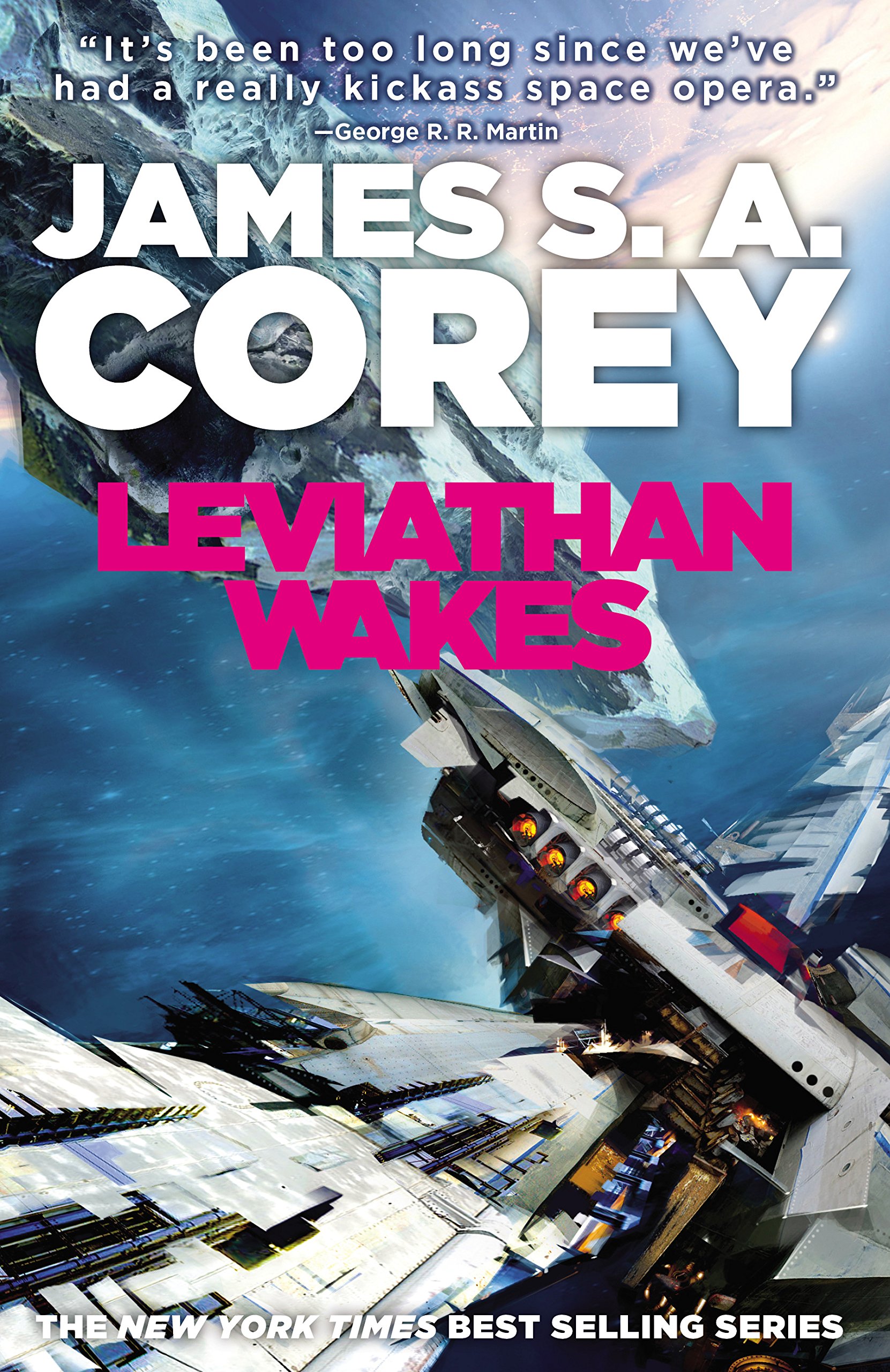
Leviathan Wakes (Corey)

Leviathan Wakes by James S. A. Corey (2011)

(Not a review, just some notes to help me remember the things I've read. But written this way because it's the Internet, and some people will stumble across this page.)

I watched the first season of The Expanse when it first aired on Syfy. I have to admit, I was somewhat lost and couldn't follow a lot of lost was going on. I couldn't even understand some of what was being said. Had I thought about it, I might've deleted the timer I had set for the series. However, I forgot to, so it taped the second season, which I watched and enjoyed more. I think a third season aired on Syfy before it moved to Amazon.

I considered suggesting the first book recently for my book club. I rejected the idea for two reasons: first, since it's been around for a decade, anyone with an interest might've already read it. Second, the length of it -- if I didn't like it, I'd have to slog through 400+ pages before our next chat.

Still, I reserved it from the library. Even after all this time, there is a wait list for the book. Reading it on my own would allow me to bail if I didn't like it.

That was not a problen in the slightest. Yes, the length bothered me -- when is this going to end? But the book moved. It just didn't move by the time my loan was up, so I had to shut the wifi off on my ipad and finish half the book in about three days.

I didn't remember much about the first season of the show, other than the ship and some parts on Earth with Shohreh Aghdashloo. Yes, I just looked up her name, but I remembered her from 24 at the time the show first aired. Oddly, her role is NOT in the book. In fact, none of the book takes place on Earth at all. Earth is only referenced, and we hear reports from there.

In fact, the entire thing, after the prologue with Julie Mao, is told through the perspective of either Holden, the Rocinante captain, or Miller, the Belter cop. It even switches perspective when the two of them are together. Also in the book, Holden's crew, Naomi, Alex, Amos and Shed, don't have a problem with him. He was the XO of the Cant and now he's the captain and Naomi is the XO. Furthermore, he relies on Naomi for a lot. (TV Holden isn't trusted immediately despite having been on the ship for a long time. He's got nowhere else to go.)

Julie is a rich girl who defied her parents and joined the OPA (Outer Planets Alliance, i think). She's on the Scopuli when it's hijacked by terrorists. A fake distress call brings the Canterbury to the rescue. They send a shuttle and a crew of five to check it out. They realize it's a trap. A ship using Martian stealth tech ignores them and destroys the Canterbury. The shuttle is then rescued by the Martian ship Donnager, which is then attacked and destroyed. But not before Holden and his crew get off in a Martian attack shuttle.

Someone is trying to start a war to cover their own tracks, and Julie Mao is in the middle of it.

Miller was given the case to find Mao and drag her home. He discoveres that she isn't on Ceres. He's told to let it go but he can't. He falls in love with Mao from reading her files and her emails.

Space adventures, of the hard sci-fi variety, ensue. The entire story happens "out there" between the Belt and Saturn. It's discovered that the Earth should have been destroyed two billion years ago by a biological weapon that accidentally was caught up in Saturn's gravity well on its way to Earth. The race that created it were already gods then. Scientists here (the ones without morals) want to be able to duplicate the programming of the virus so that the human race could be on equal footing and make our way out into the galaxy.

Saner heads prevail. Mostly.

I enjoyed this and started rewatching the series on Amazon. I immediately noticed differences in the narrative, so which just moved the story along and some that didn't seem to have a point. I assume that the Earth sequences are to set up characters for later books in later seasons. I have the second book on reserve. Hell, at this rate, I should probably put the third book on reserve as well. Or maybe when I'm done with that, I can get the next Sue Grafton book. I think I'm up to T.

Monday, July 25, 2022

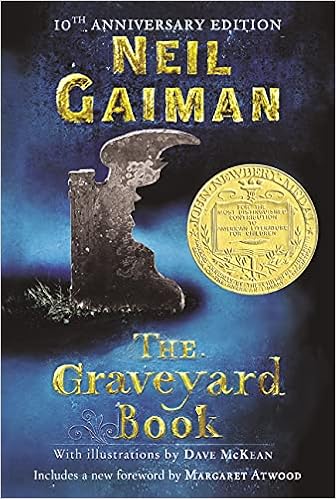
The Graveyard Book (Gaiman)

The Graveyard Book by Neil Gaiman (2008)

(Not a review, just some notes to help me remember the things I've read. But written this way because it's the Internet, and some people will stumble across this page.)

This was a Book Club selection, and it was one of my choices. I was asked to pick three books that I wanted to read. I selected the first of the Murderbot series, and "The Three-Body Problem", both of which I've had in my kindle for quite a while. I considered a few other books but all were well over 400 pages. I didn't want to obligate myself to something that I'd have to slog through. For this reason, I didn't select the first book in The Expanse series (which I've since read on my own). I perused Good Reads for suggestions. Neil Gaiman had quite a few books listed, so I decided to go with one I hadn't heard of, and hoped that the others hadn't either. Less of a chance that they'd already read it.

The Graveyard Book was the clear winner, with Three-Body getting no votes at all.

In the book, a man named Jack (who is referred to in that manner repeatedly) kills a family, but he misses the baby, who had climbed from his crib and toddled up the road to the cemetery. There he is protected by some of the spirits which live there, and one who has taken residence there. The ghost of the baby's mother frantically arrives and implores the spirits to protect her child. She cannot stay because she won't be laid to rest there. But Mr. and Mrs. Owens take charge of the baby and call him Nobody Owens (aka "Bod"). He is given Freedom of the Graveyard like his protector and teacher, Silas, has been given. Silas clouds the mind of the killer to leave when he approaches.

Years pass and Bod gets restless. He wants to go to school and meet people. He outgrows his playmates in the cemetery.

He gets into misadventures and finds but he is protected, and becomes the subject of an ancient prophecy. Meanwhile, the man called Jack returns looking to finish the job he started. We learn more about Bod's family and the fact that Bod's disappearance was covered up.

I enjoyed the book. I expected the ending, and yet I was a little disappointed in it. Bod would eventually have to leave the graveyard and face the world, and he would have to do it alone. However, he seems to be a little young to be doing that at this point. Granted, had I read this as a teen, I might not have thought that was a problem. But as a teen, I didn't have a good grasp at how life worked either.

It was a good read, and I really need to read more of Gaiman's works. I have so many as ebooks from a Humble Bumble years ago. (That's how I found out that I'd actually purchased his first book as a gift -- it was a quickie book about Duran Duran.

Sunday, July 24, 2022

Exactly How I Promote and Sell Books (Dee)

Exactly How I Promote and Sell Books
A 30 Minute Read
(Kathy's Practically Perfect Plan Book 6) by Kathy Dee (2021)

(Not a review, just some notes to help me remember the things I've read. But written this way because it's the Internet, and some people will stumble across this page.)

This was a freebie, probably from r/FreeEBOOKS, so she didn't make money from me selling this book. Kathy Dee has a series of 15-minute reads, but this one, she says, has so much material in it, it's more of a 30-minute read. And it was. Note: I read this a month ago and just didn't get around to posting about it. In truth, I wanted to wait until I finished the next book because I didn't want this to be the top post on my blog for more than 1 day.

There's should good information in here if I want to self-publish books, particularly if I want to use Kindle Unlimited to get more eyes on my pages. Let's face it, at this point, I'm not going to sell books on my name.

But it keeps coming back to this: you need a cover, and covers aren't cheap. You can do it yourself but it won't look all that great. And worse is when I looked for cheap royalty free artwork to use, I couldn't find a way to buy one thing. They wanted to sell a package for more all than I needed or make it a monthly subscription, as if I'd need more for my one book. Granted, it makes sense to use two or more images and blend them just so I'd have an original final cover that couldn't be duplicated by someone looking to make a similar cover with a similar title. That's actually an issue.

Over than that, it was like I read an online article -- the kind I wish I could find on the subject.

Sunday, July 17, 2022

ANALOG PLUS 50: Analog Science Fiction/Science Fact June 1972

ANALOG PLUS 50: Analog Science Fiction/Science Fact, June 1972

Update the photo

June came and went along with the last of the school year and an exess of overtime grading Regents exams. As a result, I fell behind on this blog and have felt too tired to catch up with it along with my math blog. Life happens. I'm back. For now. I'll still be reading even if I'm not posting about it. I don't want to neglect this blog for 4 years, like I did once before.

The June issue of Analog has a noveltte by Joe Haldeman, which was the only name I recognized aside from the serial by Harry Harrison. I'll read that one separately.

For anyone finding these reviews, my purpose is two-fold: enjoying some "classic" sci-fi, and looking for stories that I think could be adapted for TV broadcast since so much of what shows up on anthology shows is rough to awful. Additional Note: I do NOT work in television. I just watch it.

In this issue:

The Editorial: "The Mystic West". Fifty years ago, a war between science and poetry, technology and the arts. Silly but presented sensibly.

Novellette: "Hero", by Joe Haldeman with an illustration by Kelly Freas, showing several men in spacesuits, armed, running across an alien landscape, at night. There's an explosion in the background., A couple have fallen. The caption reads, With a highly-advanced technology, you'd hardly expect warfare to be anything but push-button automation, right? Wrong! The infantry is still the Queen of Battle, even out among the stars."

Taking place in the far future, 1997, the Earth is an war with the Taurans. No one has seen them yet, and they were given that name because they came from somewhere from the constellation Taurus. The military leaders fought in the last earth war, which took place in Asia in the 1970s. The planet that most of the action takes place on is Charon, which is not the moon of Pluto (not discovered yet). For that matter, Pluto is still a planet and probably larger than we now know it to be. Charon in the story is twice as far out as Pluto is. That's where the training is, and mistakes are death. Also, the only ride home is the go the distance with the mission.

The hard science is understandable for me, but that's also because I'm older and reading more of it. It's moralisti at the end where the Taurans aren't as dangerous in a land battle, but they'll likely be ready for us the next time Earth encounters them.

This could be a good movie or shot TV series. Given that the Expanse does so well, it could try to copy its success. Except that this is much smaller. On the other hand, more open-ended. There's a lot of female representation in the military and the role could be any nationality, so you have diversity. Something worth filming but possibly similar to other things that have already been filmed -- particularly after Hollywood writers get through with it.

Short Story: "Klysterman's Silent Violin", by Michael Rogers, with an illustration by John Schoenherr, showing a simple image of a man in the background playing an electronic violin while wearing a pair of headphones. There's the face of a man in the foreground who appears to be annoyed. I don't know if there's something on his forehead or if it's just a bad image of his hairline. The caption reads, "The path of scientific research sometimes takes unexpected turns -- and so does the path of evolution."

The story is told in the form of journal entries. I just scanned the text looking for the name of the writer, who is in charge. I figured that there might be dialogue in one of them. I didn't see it. Klysterman is a scientist who works on his violin in his spare time. There is a female scientist named Ludmila W., and there appears to be a love triangle. Except that it isn't. Klysterman seems interested in her, and she seems interested in him and his violin. The projet leader tries to separate them -- for her sake, of course, because he's a ne'er-do-well, or something -- going so far as to put her on his research project. It doesn't help.

The narrator becomes more erratic in his tale as it goes on and I thought it was going to be beause of the "silent" violin actually driving him mad. Nope. Doesn't happen and that's a missed opportunity.

Instead the plot resolves around augmented wheat rust, which is allowed to germinate so it could be studied. No, I didn't fully understand the reasons for this. Klysterman takes an interest in the project. It appears that the rust has psychedelic properties. And in the end, the rust's mutations expand so far as to cause a mutation of Klysterman and Lucinda W, which they undergo willingly.

This could be interesting visually but I don't know if it could be done cheaply enough such a short story. It could be the last (short) segment of an hourlong anthology show.

Science Fact: "Strong Poison 2", by arl A. Larson

It was long and I didn't read through much of it. It could have ideas to be used in writing, maybe. I don't recall Strong Poison 1, whenever that was published.

Novellette: "The Darkness to Come", by Robert B. Marcus, Jr., with an illustration by John Schoenherr, showing a large black bird-like creature with human-like arms and hands not attached to its wings. The caption reads, In a situation where fats are scarce, faith counts as much as logic. But when the faithful reach the wrong conclusion, they still cling to it stubbornly!

Jans Deriae is an old scientist. He takes pills (which appear to be illegal) to prolong his life. He has calculated that the world (Rangi) is cooling because it is moving away from the primary sun, which would be obviously if the clouds would get out of the way. The population of the world lives underground and most have never seen the sky through gaps in clouds.

Jans Deriae has realized that the world has traveled through the dark of space from one star to another but it has now passed that star. The world won't survive another trip through the darkness.

He's opposed in the scientific community, so none will listen to him, and they ridicule him. He finds a way into Chamber of the Gods, which is off-limits to all. He learns the truth that the "gods" were just men, from a planet called Earth, and they set in motion a plan to save Rangi. But the gods even acknowledged that their machine were fallible and left instructions on what to do if the planet did not enter orbit about the new star on its own. (Diagnostic says that the surface sensors froze.) Now it needs to be fixed before he can be stopped.

An enjoyable story, which could be made with a good budget or an austere one. (Not too austere, make sure they look like bird people, not people with beaks and a few feathers.)

Short Story: "Out, Wit!", by Howard L. Myers, (no initial illustration) The caption reads, As was pointed out long ago, "It ain't what you say, it's the way you that you say it!" that counts.

The story is told in the form of letters between D. R. Dayleman, Editor of the the North American Physical Journal in Virgina and Harmon McGregor, Chairman of the Department of Physics at Grandview University in Ohio. It concerns recommendations of a former student who goes on to make a presentation that includes a joke that is not well-received among his colleagues. He becomes an outcast and the two correspondents are all "woe is me" about it.

As time passes however, science marches on and breakthroughs are made. The chairman is unable to ascertain how he came upon a certain idea, as it doesn't appear in any scientific literature, and assumes that it was just germanating in the back of his mind for a long time. In the end (some ten years later), there's a note about the young man who never amounted to anything in life, going crazy, and they really dodged on, didn't they. Of course, it was the young man's initial idea.

Not only could it be filmed, but it's likely that something of this sort has been. Obviously, there would have to be more than random correspondece. And one would think that the replies to these letters would come much sooner.

I recognized the name, but I couldn't remember from where. The Analytical Library shows that he wrote "War in OUr Time" in March 1972, which I remember had a sequel story a month or two later.

Serial: "A Transatlantic Tunnel, Hurrah!", by Harry Harrison, Part Three of Three.

I'll get to this soon, I hope.


The Reference Library , by P. Schuyler Miller. Reivews include The Lathe of Heaven by Ursula K. LeGuin, A Choice of Gods by Clifford D. Simak, The Devil is Dead by R. A. Lafferty, Russian Science Fiction Literature and Criticism: A Biblioraphy" by Darko Suvin, and Orin by Piers Anthony.

Brass Tacks: Several letters about the illustration of a nude man extending a raised middle finger and the sex that appears in the pages of sci-fi as of later (ie, early 1970s).

I hope I read July's issue before July ends. I also want to read the Harrison serial. On top of this, I seem to have it in my head that I need to keep my daily Kindle reading streak going, and pdf files don't count toward that goal. So other books have to be sprinkled in, even if its only a dozen pages per day.

Wednesday, June 8, 2022

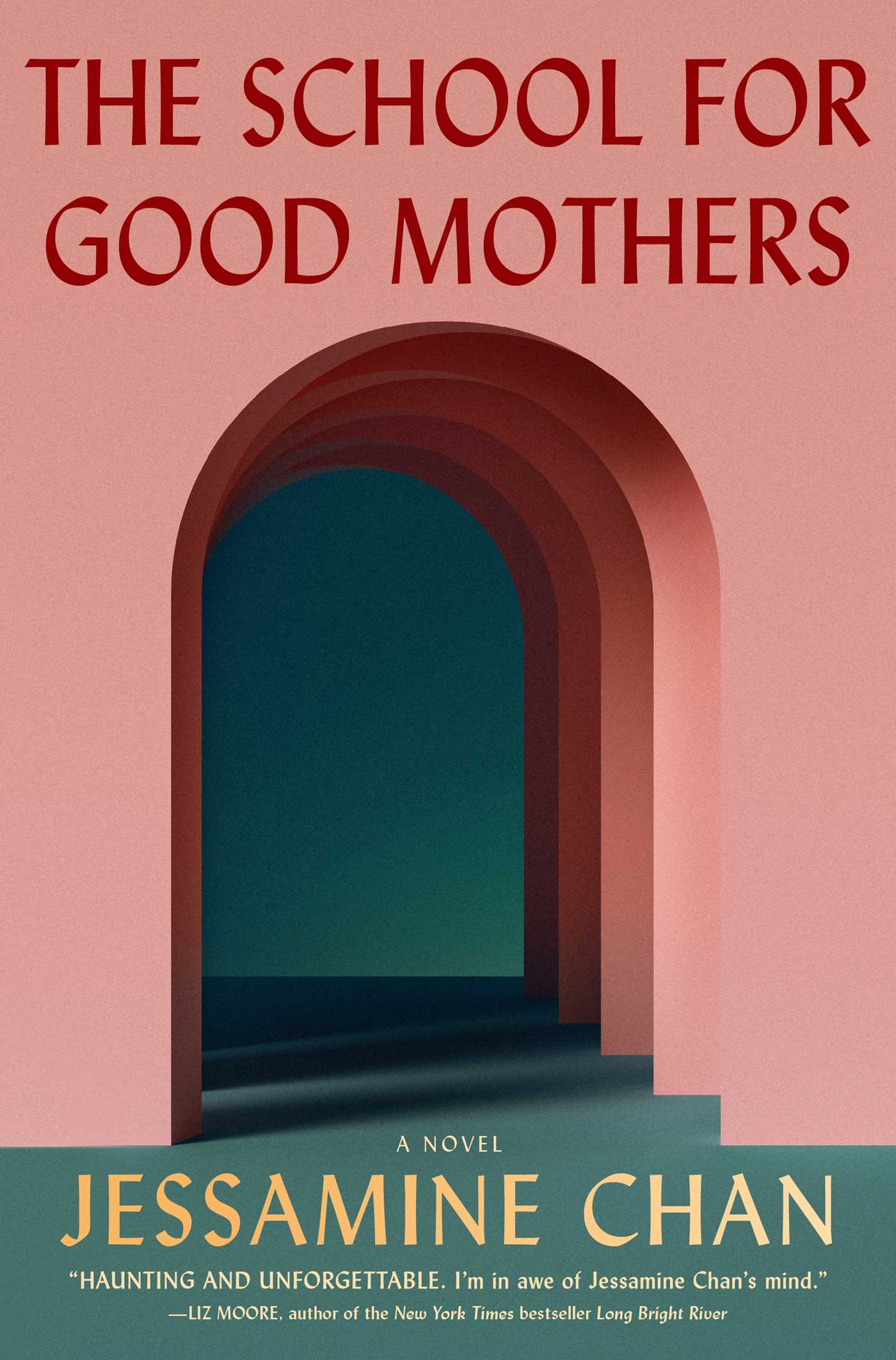
The School for Good Mothers (Chan)

The School for Good Mothers by Jessamine Chan (2022)

(Not a review, just some notes to help me remember the things I've read. But written this way because it's the Internet, and some people will stumble across this page.)

This was a book club selection and was a little difficult to get a copy of. There was a long wait at two libraries from the ebook, the print edition and the audio (which I really didn't want because I figured it'd be abridged). I also didn't realize that it was published in 2022, so of course it was difficult to get a copy of. Additionally, it was a selection for a celebrity book club. (I was told it was one of the Bush daughters, but I didn't verify this.)

As a writer, I see that a lot of magazines publish "literary fiction", which I'm at a loss to explain just what that is. This book is listed as literary fiction. So now I know. It's boring and depressing, even when it has elements of science fiction. Those elements aren't emphasized. They're just there to be assumed to be real, and go from there. Any questions or ideas that my sci-fi-oriented mind mind veer off into didn't pan out. That's fine, though, because it wasn't the point of the book.

The book is basically a downward spiral for the main character and a study on government overreach and bureaucracy. Frida is a new mother who is also newly divorced. She has a "bad day" and leaves her daughter alone at home for a couple of hours. (It should've been a quick trip for a file.) Social services get involved and the child is taken away from her. She isn't allowed to see Harriet any more.

Harriet remains in the custody of her father and his new girlfriend/wife. Throughout all of this, those two are supportive and don't think Friday should be denied access to Harriet, but they don't have any say in the matter.

Frida is given the option of going to the titular School for Good Mothers, which is a school for bad mothers, as they are constantly reminded. She will attend for a full year of schooling and counseling, at the end of which, if she passes, she will be entitled to see Harriet again. She goes. It's an old college campus in Pennsylvania. There is a Mens school across the lake that they will interact with at times.

The sci-fi element comes in when each mother is given a child similar to her own child (or similar to one of her children for some of the mothers). These children are lifelike robots that run on blue goo. The mothers have to teach them new words, learn to love and protect them, and have their children love them back. Frida names hers Emmanuelle.

The dolls record everything, and the school has cameras everywhere. (There are some blind spots.)

The entire curriculum makes it seem like they are being set up to fail. Everything gets recorded in their files. Frida constantly loses phone privileges because of rule changes, her counselor's opinions, and (in my opinion) the author's inability to write more video calls with Harriet. (I could be wrong on that one, but it made it easier.)

Frida pushes herself, denies herself, does everything so she can get Harriet back. And in the end, she fails. I saw this coming, so I kept waiting for the twist. Maybe her lawyer would finally do something worthwhile.

Nope.

It does end with a promise for the future that the whole thing will unravel when questions start getting asked, but it wasn't a satisfying conclusion.

One of the book club has already said she'd like to read a book about the Dad's school. I'd prefer to see a book where some of the dolls become self-aware and they lead the rest of the dolls into a rebellion of sorts.

Next month's book will be a Neil Gaiman book. I suggested three books and that was the one picked. I picked two books that I've been wanting to read but I had a problem with book three -- either they were 400 - 600 pages long or they were popular enough that I assumed the others had read them already. The Graveyard Book was listed as popular on Good Reads, so I picked that one. It won by one vote over the Murderbot series.

Tuesday, May 31, 2022

ANALOG PLUS 50: Analog Science Fiction/Science Fact May 1972

ANALOG PLUS 50: Analog Science Fiction/Science Fact, May 1972

Update the photo

The may issue of Analog has stories by Clifford D. Simak and Isaac Asimov, as well as the continuation of the serial by Harry Harrison.

For anyone finding these reviews, my purpose is two-fold: enjoying some "classic" sci-fi, and looking for stories that I think could be adapted for TV broadcast since so much of what shows up on anthology shows is rough to awful. Additional Note: I do NOT work in television. I just watch it.

In this issue:

The Editorial: "Life Cycles". There are complex carbon molecules in interstellar space. Not life, not even pre-life, but the building blocks for life.

Short Novel: "Solo Kill", by S. Kye Boult. with an illustration by Leo Summers showing a winged creature with a beak, carapace, and taloned feet is on the ground in the foreground. There's a small plane flying over some high mountains on the left page. On the right page, there is another plane flying lower and trailing something. There are more winged creatures, including on taking off. The caption reads, Competing species may battle each other until one of them is driven into extinction. An intelligent species can speed the process -- but pays a cost of guilt.

I saved this for the end of the month to read. Halfway through I was losing interest but still reading. Actually, I didn't expect to get past the first few pages where there is a battle between two different winged creatures, neither of which is in a plane. The one that wins is the protagonist for the story, Baron Amarson, who can fly a plane. The other creature was one of "The Drak" which seem to be more animalistic in nature. This was a battle of honor for the Baron.

We're later introduced to the Rivermen, who appear to be the scientists. They have machines that measure celestial movements. There's one large red sun and a smaller yellow sun distant from the planet.

I'm not sure if I will finish this because as I went back to review the text to type some things above, I couldn't remember reading some of the pages that he passed by. Did I forget them? Did I skip them while I was falling asleep and didn't notice?

I was also distracted by continued references to flying above the mole where "mole" was obviously a place. Apparently, the fifth definition in Websters is a place formed by masonry and large stones, and the sixth is a harbor formed by a mole. Also, the machine I described above is apparently called an "orrery".

Maybe I should've known these things, but they were distractions. And since I was reading a PDF, the dictionary wasn't an option.

Anyway, it's a long story with different sets and winged creatures, so I don't know if this is something that an anthology series would want to take on. It could be a movie in its own right if a screenwriter could make it interesting and accessible.

Serial: "A Transatlantic Tunnel, Hurrah!", by Harry Harrison, Part Two of Three.

I'll get to this next month.

Short Story: "Lunch Box", by Howard Waldrop with an illustration by Kelly Freas showing an alien landscape and a lunar lander of some kind. The caption reads, Intelligent creatures can recognize the benefits of high tenchology -- even if it's not their own!

I didn't make note of Myers name when I started reading this, but it became obvious with the mention of Radge Morimet and a reference to "war in our time" that this was a sequel last month's story.

Science Fact: "Celestial Mechanics", by Rowland E. Burns. The caption reads, If you wonder why the astronauts don't whip out their trusty slide rules and quickly compute a new orbit when something goes a little wrong -- try this basic course in "Celestial Mechanics and why it drives people nuts." There *is* a solution to the three-body problem ... only it can't be worked out. To catch up to a ship ahead of you in orbit, you must slow down! Rowland E. Burns is a NASA orbital mechanics mathematician and knows the frutstations of which he speaks.

Sounds like it'll be over my head. If I can get back to it, great, but it's 27 pages long, so maybe not.

Short Story: "The Observer", by Clifford D. SImak with an illustration by Kelly Freas showing a volcano in the background with a large Sun-like object with a human eyeball in the center of it. There is what looks like a snake-like staff or the underside of some kind of creature. There are weird looking trees which look like vertical stalks with large tomatoes on top of them. The caption reads, To make a workable data-gathering system, you must understand what kind of information is being sought, why it's being sought, and -- ultimately -- who is the seeker.

The first of two "big names" that I wanted to read. It seemed like the story was going to be about an AI that became self-aware. It later seemed to be an actual person, or something that used to be a person, which has its memory erased after every mission. It remembers things and then realizes that it has remembered things.

In the end, it senses that it has been cut off from whoever launched it because it knew too much and was no longer of any use to them.

This could be a quick short story. It doesn't need much except a studio backlot or a remote section in the desert. A little cerebral though.

Short Story: "Mirror Image", by Isaac Asimov with an illustration by Leo Summers a seated man and another standing near him, both looking at a giant robotic head, which seems to be speaking. The caption reads, Lije Bailey could understand how two humans could tell exactly equal but opposite stories -- one of them was lying. But robots can't tell lies, it's a violation of the Laws of Robotics. And here were two robots telling exactly the same story ... except that they contradicted each other on every point.

With the exception of the I, Robot, I have not read any of Asimov's robot novels. (Amusingly, I used picked up a used copy of a book thinking it was Caves of Steel when it was in fact The Currents of Space, which is an Empire novel, and I was wondering where the robots were.)

I know of Elijah Bailey and R. Daneel Olivaw, but not much about them. (Like, I might've guessed that the R. stood for "Robot", but I didn't know that for a fact.)

The robot has worked with the private detective before, and he contacts him about a Spacer problem -- a case of theft among two Spacer academics, old elderly and ready to retire, and one young and new in the field. Each has a robotic assistant that supports their master's claim. Olivaw is allowed to contact Bailey, who must solve the problem from his living room because Spacers would never allow an Earthman on their ship.

Bailey figures out that under the Laws of Robotics a robot could lie to protect its master's career and public image. He even applies enough logic to the situation to get one of the robots to recant its testimony. Olivaw is pleased. However, Bailey tells him that he isn't done because the robot might've changed his testimony from truthful to falsehood for a logical reason.

Bailey figures out the problem based on human nature, and the fact that the young academic would be much more likely to consult the older fellow than vice versa, while the older academic would want one last hurrah while his younger college would have over a century ahead to make a name for himself. (Spacers live long lives in space.)

This requires one set, two humans, and a couple of retro-looking robot masks. It could be filmed tomorrow except that Asimov stories probably cost more to option. This one could be a good test to see of filming a novel might be successful.


The Reference Library , by P. Schuyler Miller. Reivews include Riverworld by Philip Jose Farmer, many years after the fact as Miller had always assumed it to be fantasy and not sci-fi, The Transvection Machine by Edward D. Hoch, Science Fiction: The Future by Dick Allen, 20 Years of Analog/Astounding Science Fiction Science Fact compiled by Jan A. Lorenzen.

Brass Tacks: A letter from Leslyn Campbell Randazzo, John W. Campbell's youngest daughter. A couple of readers sound off about a January letter. Someone else liked "Ecology Now" after thinking that they wouldn't. A letter about "Galactic Geopolitics", a complaint about an illustration of a vessel that should've had a gaff and boom on each of two masts, and a couple more round out the column.

Can I keep up with June? It depends if I read other things as well. I already figured out that reading more than one magazine a month wouldn't work unless I quit my book club and deleted most of my kindle library.

Monday, May 30, 2022

The Deep (Solomon)

The Deep, Rivers Solomon
with Daveed Diggs, William Hutson, and Jonathan Snipes (2019)

(Not a review, just some notes to help me remember the things I've read. But written this way because it's the Internet, and some people will stumble across this page.)

I browsed Good Reads looking for something short to read, something that I might not have picked up (or even heard of). I saw The Deep. The premise was interesting enough: it was about a society of sea beings who were descended from pregnant slaves who were tossed overboard from the slave ships traveling from Africa to America.

It turns out, and there are notes after the novella, that the book was inspired by a song. If you are familiar with the song, you might have a greater appreciation for the story since you have an idea what's coming. For me, I just got to enjoy the ride for the first time.

How the unborn human infants were transformed into these creatures is glossed over, but that's fine -- this is fantasy. It can be vague about this part. If I had any problem with the "wajinru", it was any time later in the text where they became even less human, more removed from the first women. This is, basically, a matter of identifying with the characters, along the lines of thinking "the wajinru are like human beings except..." and then listed one or maybe two traits. The more that changes, the more alien they become. A minor quibble.

The story is that there is a Historian, Yetu, who "remembers" all of their history. She remembers it so that the rest of them will not have to. Unfortunately, she experiences a loss of self because of this, and she is overcome with pain and memories because of it.

There is an annual Remembrance where for a few days, the Historian passes the memories back to all the people so that they can remember where they came from. However, Yetu takes this opportunity to flee and leave her people behind, free of these memories. She gets caught up in a storm and wakes up injured in a tidal pool of an island. Where this island is, I don't know. One would imagine that if must be in the Atlantic somewhere near the equator. I didn't realize until the end that this island is not the same one mentioned earlier in a flashback where some wajinru encountered a human lost at sea.

Yetu makes friends with a mysterious woman named Oori, who brings her food to help her get stronger. Oori leaves when a storm is coming. She invites Yetu to go with her, but Yetu decides to go home. The storm is from her people locked in the Remembrance.

A quick read. Again, not something I would've picked out normally, so I'm glad I did.

Final note: I like the cover shown above. The cover that my kindle showed (from the library loan) only had words and color patterns but no image. The image above comes from amazon UK.

Saturday, May 21, 2022

The Geometry of Pasta (Hilderbrand, Kenedy, Vandy)

The Geometry of Pasta, Caz Hildebrand, Jacob Kenedy, Lisa Vandy (Illustrator) (2010)

(Not a review, just some notes to help me remember the things I've read. But written this way because it's the Internet, and some people will stumble across this page.)

I saw a picture of the book cover on Twitter. Without knowing anything about it, I searched both the Brooklyn and New York Public Libraries for a copy. I found a hardcover, which I'm not used to reading any more.

First off, it's a cookbook. Yes, I read it. I skipped the recipes and read all the introductions.

The book is organized by pasta type, listing over 100 of them, many that I never heard of, and some that are likely only available in Italy (or in heavily-Italian neighborhoods in NYC, of course). Some of them are only good if they can be made fresh (which I'll never do, nor am I likely to go buy them freshly made).

The introductions mention the shape and what sauces would be good with them. Some shapes scoop up sauce better than others. Some have to be cooked in a certain manner because the thinner parts might be overdone before the thicker parts are cooked.

Interesting read, and I'm glad I got a copy of it. I took photos of a couple of the sauces that seem easy to make, and of a few recipes for more common pastas that I could attempt on my own. I didn't bother with "simple" ones that called for ingredients I'm not likely to buy, like salmon or boar meat (or boar fat).

Friday, May 20, 2022

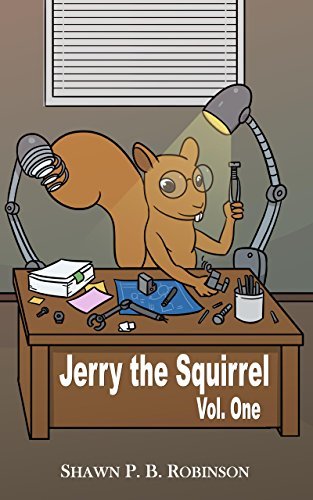
Jerry the Squirrel, Volume 1 (Robinson)

Jerry the Squirrel, Volume 1, Shawn P.B. Robinson (2018)

(Not a review, just some notes to help me remember the things I've read. But written this way because it's the Internet, and some people will stumble across this page.)

This was a freebie in a Book Bub list. Once again, I thought it might be something to share with my nephew. Unlike The Monkey God, this one could be -- except I realized after the fact that I do know how -- if there is a way -- to send something from my kindle to his.

Jerry's an inventor, as it states at the beginning of every story, but his inventions dont' seem to go as planned.

Not objectionable about the book, except I'm not sure who it's targeted at. It's a chapter book which might be, say, grade 4, but the story is for a younger audience. Maybe this would be a good read-around book for earlier grades, one story at a time.

Thursday, May 19, 2022

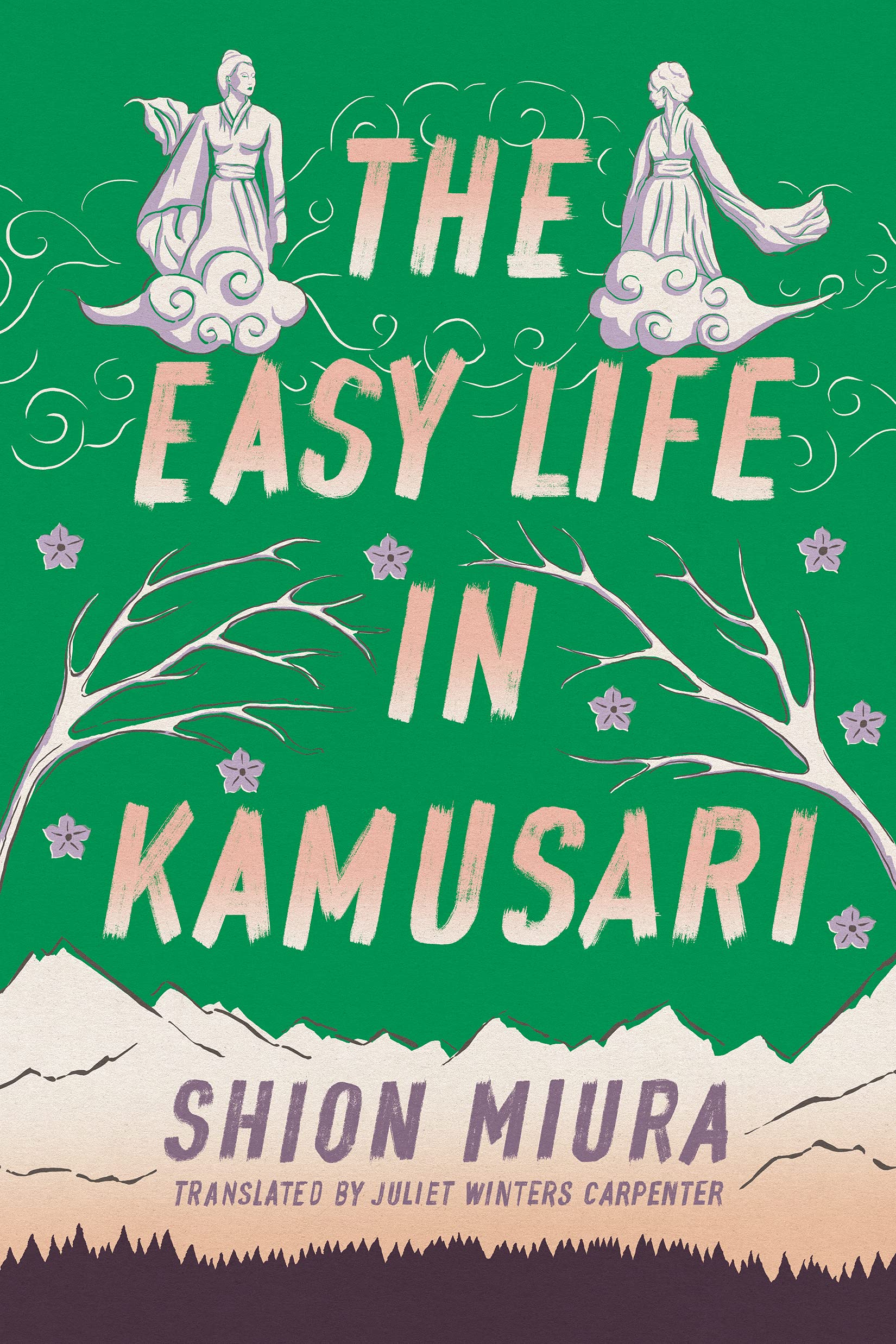
The Easy Life in Kamusari (Miura)

he Easy Life in Kamusari , Shion Miura (2009)
Translated by Juliet Winters Carpenter (2021)

(Not a review, just some notes to help me remember the things I've read. But written this way because it's the Internet, and some people will stumble across this page.)

This was one of the free books I downloaded on Amazon's World Book Day.

The book is written as a memoir, but it's fiction. For one thing the main character is a man named Yuki (not to be confused with his coworker Yoki, who I did confuse him with at first). Less obvious, the author is female. (Obvious when you get to the picture and bio, of course.)

Also, when two woman appear who seem to be goddesses of the mountain, you can be sure that you've left memoir territory.

Wednesday, May 18, 2022

The Caiman (Manrique/Paris)

The Caiman , Maria Eugneia Manrique (2019)
Illustrated by Ramon Paris
Translated by Amy Brill

(Not a review, just some notes to help me remember the things I've read. But written this way because it's the Internet, and some people will stumble across this page.)

This was one of the free books I downloaded on Amazon's World Book Day. It was a delightfully illustrated children's book about a caiman, which is a black alligator, named Negro, who was kept as a house pet. It's a children's book, so nothing horrific happens. In fact, it's quite sweet.

According to the notes, this is a true story that happened many years ago in San Fernando de Apure. A little girl named Julia found a baby alligator and was about to put it back in the river when the town watchmaker, Faoro, came along and adopted it.

The caiman was very friendly and gave children rides (including, according to the notes, the author), and slept in the bed with Faoro at night, even as he got bigger.

Faoro marries his neighbor Angela, but only after making sure that she and the caiman were okay with each other. Both Angela and the caiman are sad when Faoro passes away.

I classified this as fiction and nonfiction because it's a fictionalized account of a true story, and I'm too lazy to come up with a different label.

The Last Letter (Lehn)

The Last Letter by Fiona Lehn (2011) (Not a review, just some notes to help me remember the things I've read. But writt...