Saturday, April 30, 2022

ANALOG PLUS 50: Analog Science Fiction/Science Fact April 1972

ANALOG PLUS 50: Analog Science Fiction/Science Fact, April 1972

Update the photo

This April issue of Analog has stories by Poul Andersen and Stanley Schmidt along with the beginning of a serial by Harry Harrison.

For anyone finding these reviews, my purpose is two-fold: enjoying some "classic" sci-fi, and looking for stories that I think could be adapted for TV broadcast since so much of what shows up on anthology shows is rough to awful. Additional Note: I do NOT work in television. I just watch it.

In this issue:

The Editorial: "What Good Is It?".

Serial: "A Transatlantic Tunnel, Hurrah!", by Harry Harrison. I know I'm falling behind with serials, but I definitely want to read this one. (Note that with the last serial Analog published, I took the book out of the library only to find that it wasn't the same version and it was late in a series of books.)

Short Story: "Wings of Victory", by Poul Anderson with an illustration by Laurence MacCaskill showing two armed men on the ground and a very large bird-like creature in the air. The caption reads, Simply because no terrestrial animal can achieve such performance does not prove an alien life form can't ...

A Grand Survey of Alpha and Beta Crucis brings three people from the Olga to a planet with 75% of Earth's gravity that's orbiting a G9 star with half the Sun's luminosity. The crew notes that there are no roads between towns and towns generally consist of just a few buildings. When they land, giant birds emerge from a building large enough to be a castle and fly off.

There is disagreement between whether those birds were pets of the absentee dwellers or if they were the dwellers. A strong argument is made that these creatures lack to the ability to do what would be necessary to build these homes or to carry tools or weapons of any kind.

On an Earth-like planet, these arguments might've neld/ But the lighter gravity as well as the differnt evolutionary track their creatures took put a lie to all that.

It was a lot of arguing for a story, but could make for an interesting segment on an anthology series. The sets could be found anywhere, with roads digitally erased from any overhead shots. The problem would be the cost of the CGI required for all the birds.

Short Story: "Misinformation", by Howard L. Myers with an illustration by Vincent DiFate showing the back of a man in some kind of science-fictiony suit standing in front of a long-barrelled weapon or a telescope of some kind. There are balls floating around here and there, with curved lines like seem on a basketball. The caption reads, The peculiar characteristic of creativity is that a man, given false clues, two misconceptions and eighty percent erroneous data comes up with a brand-new right answer!

I didn't make note of Myers name when I started reading this, but it became obvious with the mention of Radge Morimet and a reference to "war in our time" that this was a sequel last month's story.

Science Fact: "Skylab" by Joseph Green. The caption reads, Conclusion. The first three astronauts to fly in Sklab for 28 days have a tough job. But the real scientific work will be done by the two follow-up crews scheduled to live in space for a record 56 days each!

It is very strange to read about Skylab in future tense, as well as the record 56 days in space. I vaguely remember when it was launched. And I remember when it came down, scattering debris across Australia.

As I'm falling behind again, because I've been reading other things, this will have to wait. Maybe I'll read it. Maybe (most likely) I will not.

Novelette: "The Prophet", by Stanley Schmidt with an illustration by John Schoenherr showing what looks to be a face with a light shining from a ball on the forehead which radiants outward, shading the entire face. As the image pans to the right there is a planet or moon in the way of the shading. The caption reads, There's a take about a boy who cried wolf. But when a wolf is really out there and nobody wants to admit it, all the hollering in the world won't help.

It's been a while since I read this. I don't know why I didn't write something at the time. Here's a key thought: How do you get people to feel a sense of urgency about a problem which doesn't need to be solved for a long time -- but which will take a long to solve?

The story takes place in the future on a planet revolving around a star that isn't too far from another star. Through the detections of neutrinos (which might've been a new idea 50 years ago), a scientist determines that the other star is going to go nova (or supernova) in the near future, which could be a year, 10 years, or more than 100 years. There is no way to know from the original readings.

The science council and the powers that be won't take it seriously. They won't divert funds from something that is a maybe to research it. And they don't want to alarm the public, especially since there wouldn't be any means to save everyone.

This could've been a shorter story, but it kept moving, and it's supported by science, so it nees to extra pages. In the end, a century in the future, the world will end. However, the protagonist spent some time so that he and some others could be saved. But most will perish due to a century of inaction.

A cautionary tale, it might make for good TV.

Short Story: "Succor", by F. H. Rounsley with an illustration by Leo Summers showing a lizard on a rock in the foreground. A rocket in the middle ground and in the air in the background is another ship. The caption reads, Sometimes it's awful hard to tell what is "them aliens" or "us people".

It's either a search and rescue mission or seach and recover. A few aliens (they aren't from Earth) named Shorly, Slogan and Flinch are looking for an Earthman who disappeared 50 years earlier. They search on a hot desert rock where he had been headed.

There's a lot of backstory about the trust Jones set up to protect his assets from his family (after 7 years) and he even ensured that someone at some point would come looking for him and his descendants to bring him home if he couldn't do it himself. (Papers were unsealed 50 years after he left with an all-female crew .)

There doesn't seem to be anything on the planet except lizards, and there isn't any sign of what food the lizards eat or how they regulate body temp when it gets to 160 degrees outside. The aliens are ready to shove off.

The POV shifts to a man named Paul going underground. He has a son who is learner underground farmer. They open up the rock to let some light in. The old man had waited 50+ years for a ship to come get him and when one arrived, instead of humans, it was furry aliens. He was disappointed. They went back "home" underground.

This was a little disappointing. And it makes me understand what an editor told me about shifting POV. Paul is introduced out of nowhere, and at first I thought he was Jones. And then I realized that he had to be one of Jones' son. Also, Jones would be over 100 at this point.

This could be filmed, but I don't get the point of it. Surviving for so long and then ignoring a ship because it wasn't from Earth?

Novelette: "The Prophet", by Stanley Schmidt with an illustration by John Schoenherr showing a darkened face with an illuminated sphere in its forehead and concentric circles radiating out from it. THe fact seems to be superimposed over a background of empty terrain. Off the the right is a moon of another planet, which may or may not be affected by the lines emanating from the face. The caption reads, There's a tale about a boy who cried wolf. But when a wolf is really out there and nobody wants to admit it, all the hollering in the world won't help.

Short Story: "Answer "Affirmative" or "Negative"", by Barbara Paul with an illustration by Leo Summers showing an older woman in the foreground with white hair and a wide collar. In the background is a man in a suit with a hand to his face. The caption reads, Physics is an exact science, while language ...

There's a computer called WOMAN, Wideband Overlay Monitor and Assmblage Computer, which is the size of a university building (as supercomputers were imagined to be back then). It has a lot of information in it. Whenever it is fed technical data, it returns a poetic answer, sometimes quoting Shakespeare or the like. This annoys Gen Downs and Gibbs (does he have a title or other name?) is at a loss to explain. The answer comes from Miss Mickley and the humanities department. Oh, the humanities! WOMAC takes the drudgery out of literary research. Poetry is the most exact language.

A quirky little story. It could be played for laughs in a retro-future-tech set on an anthology series.


The Reference Library , by P. Schuyler Miller. Reivews include Best SF: 1970 edited by Harry Harrison and Brian W. Aldiss, World's Fair 1992 by Robert Silverberg, Dinosaur Beach by Keith Laumer, The Electric Bibliograph, Part I: Clifford D. Simak compiled by Mark Owings, Moonferns and Starsongs by Robert Silverberg, Stardreamer by "Cordwainer Smith" (Dr. Paul Linebarger), The Yngling by John Dalmas, and SF Published in 1970 by Joanne Burger.

Brass Tacks: No letters this month.

Now onto May. I hope I can keep up with my posting as well as my reading.

Friday, April 29, 2022

The Guest List (Foley)

The Guest List , Lucy Foley (2020)

(Not a review, just some notes to help me remember the things I've read. But written this way because it's the Internet, and some people will stumble across this page.)

This was a montly book club selection from my Pandemic book club (which is keeping that name even if we're all back to work).

I read PDF and hardcover editions. There were wait lists at both libraries for the ebook. I've gotten used to using the dictionary with ebooks.

Updated 5/18/22

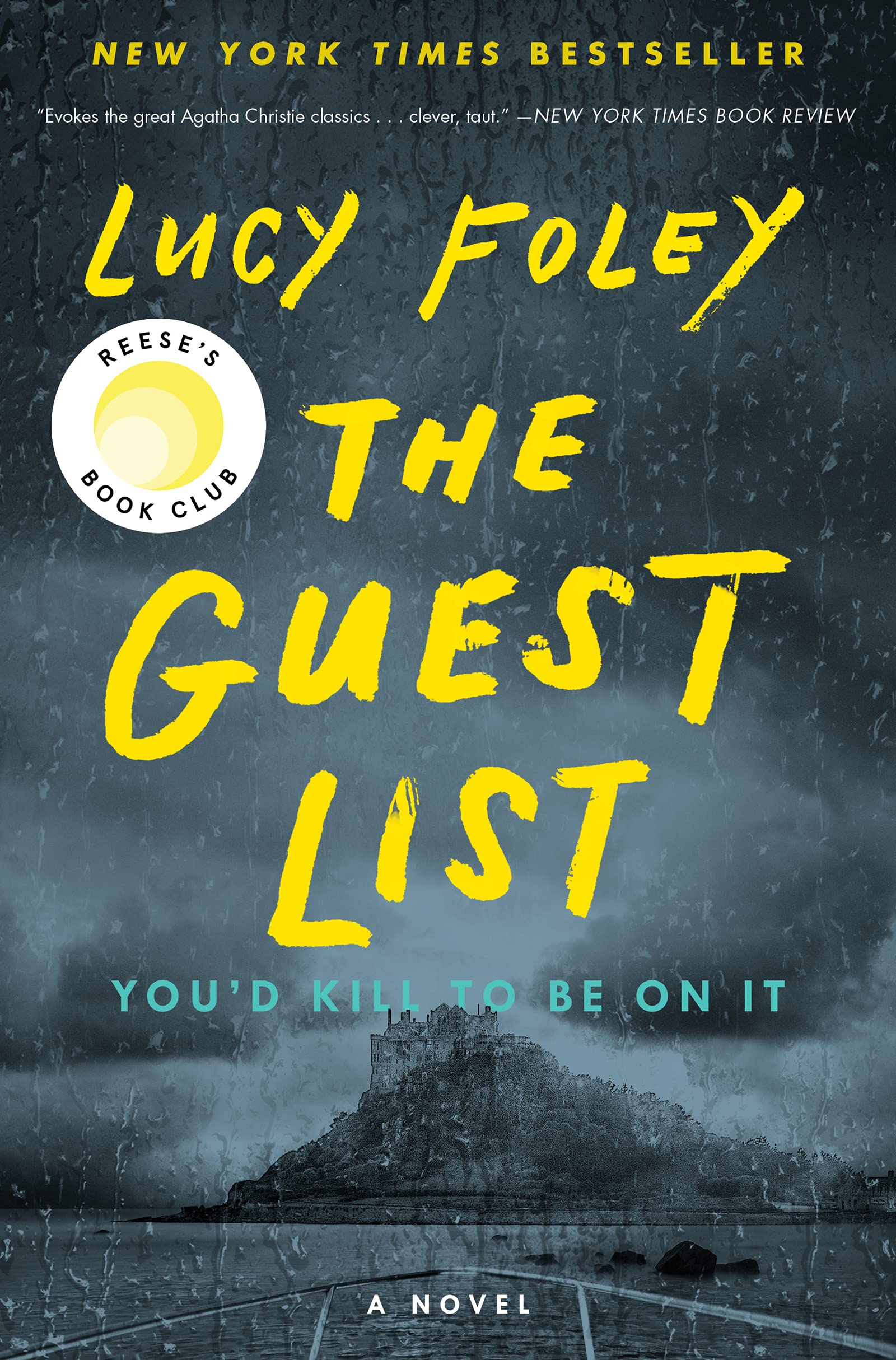
This was a murder mystery where no one is murdered until very close to the end of the book.

The first scene throws you into a stormy wedding reception (in two senses of the word) between a woman's magazine publisher and a male TV star of a survival show. Someone's screaming and people going to investigate. Then you're pulled back to the day before the wedding.

This in itself isn't bad, but the narrative is fragmented across narrators and across time.

The book switches back and forth between past and present so that by the end, the "yesterday" timeline has caught with and passed where the "now" timeline had begun. It continues to go back and forth across the wedding night.

The narrators are the bridge, her sister, the plus one of the bride's best man, and the groom's best man. It stood out that the groom wasn't a narrator until very last in the book. It's also obvious from what people think of him and all the revelations that he will either be the one killed or the killer.

I based this on the fact that Foley didn't want us inside the groom's head for any prolonged amount of time. When we finally are in it, his account of events would make him seem pathological because his narration doesn't agree with any known facts -- and this isn't when he's talking (lying) to other people.

Where the book fails (and where some might think it succeeds) is that it gets to a point where all the narratives end with the lights going out. At this point, I could liken it to a specific episode of "Matlock" or the Broadway show The Mystery of Edwin Drood where you can vote on who you want to be the killer. Several people have been set up and given motive and opportunity.

If anyone else had been the killer, the result might have been just as satisfying (maybe even more so). I get the feeling that my book club wasn't happy with the outcome.

No spoilers here, but was the ending a fair one? Not likely. Did everyone get what they had coming to them or what they deserved? Again, no. Obviously, the dead person wasn't particularly nice, but the survivors didn't exactly get justice either.

Monday, April 25, 2022

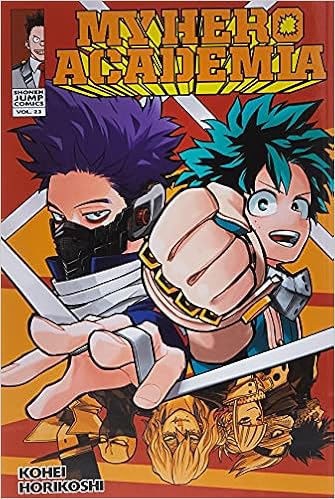
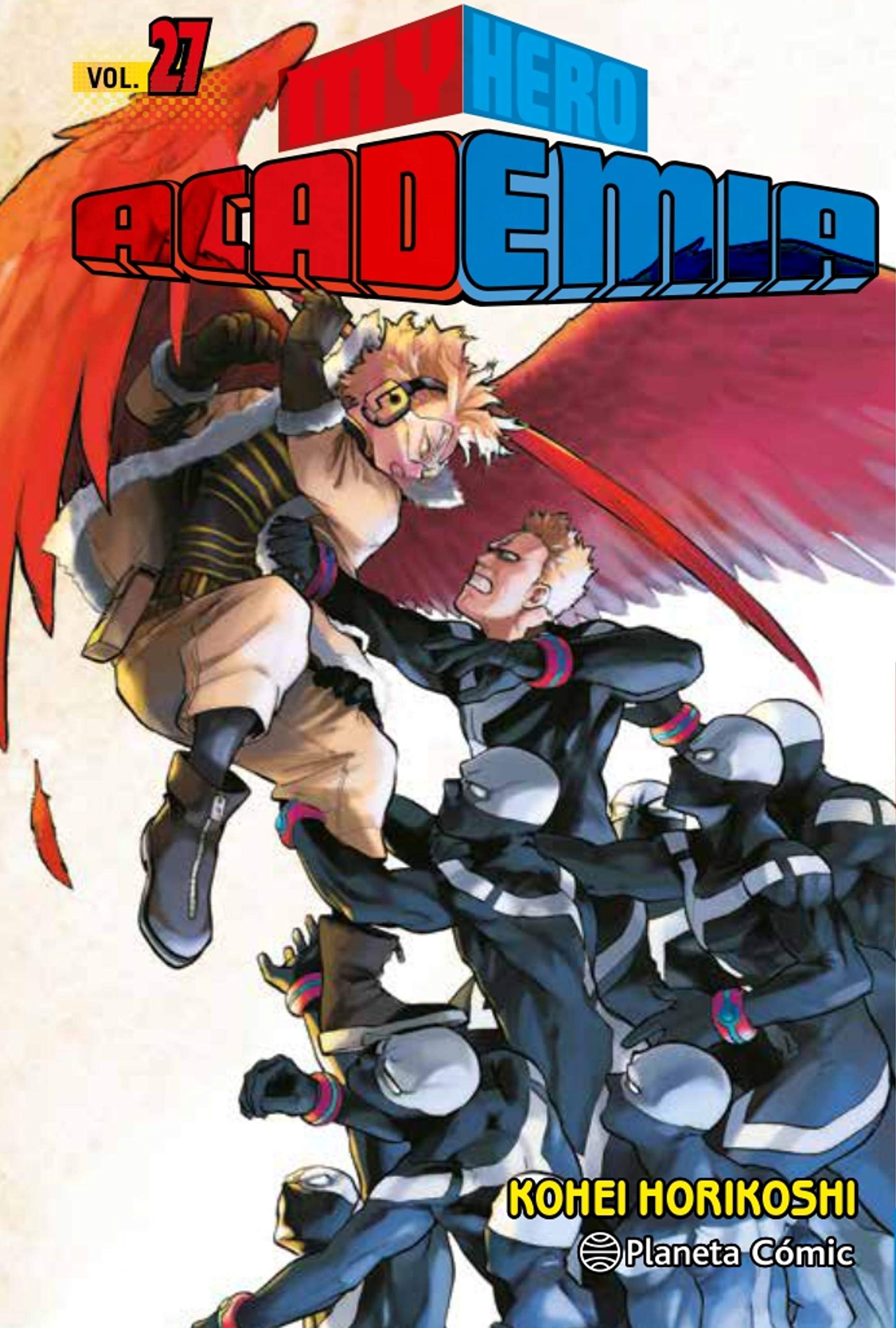
My Hero Academia Volumes 22 Through 30

My Hero Academia Volumes 15 Through 21 , by Kōhei Horikoshi (2017-2019)

(Not a review, just some notes to help me remember the things I've read. But written this way because it's the Internet, and some people will stumble across this page.)

I am now caught up with all the books that are currently available at the New York Public Library in ebook format. I could switch to one of the spin-offs next month or later.

In these 9 volumes, I have caught up with and passed the TV series. Now I know why the last season of the show obsessed with the League of Villains for almost the entire run. Because the manga was obsessed with it and Re-Destro for several volumes, and beyond.

The thing is, this was a show about a high school for future heroes. And while it's great to get more backstory, and see more of the active heroes, the high school itself gets lost. There are occasional training bouts between the classes. And we've gotten more of Midoriya, Bakugo and Shoto and a few of the others, but the rest are almost minor characters. Yes, there's a greater storyline going on, but it does seem to drag out a bit.

The students in Class 1-A still haven't finished their freshmen year yet.

If there's another complaint, it's that Shigaraki has the powers of All-for-One, but Eraser stared at him for a couple of volumes to nullify his powers. Even still, he withstood super furnace blasts from Endeavor, which should've incinerated him. Now, the hero isn't looking to kill the villain, but if he's pumping his power up that high, how is the guy still standing?

The last volume I read (30) had a big reveal for Dabi, and what the source of his powers are, and what's up with that jaw of his. I wonder if that had been planned from the start or they thought it up along the way. The creator said that he could imagine the story running 30 issues, and here we are, so maybe. But there's more to do. Midoriya hasn't become the Number 1 hero yet. He hasn't finished school yet. And he hasn't had all of his powers manifest yet (even if they didn't all manifest for prior holders of One-for-All.)

I'll have to keep an eye out every so often for the next volume. Then again, I read 8 of the 9 parts of that other thing. I wonder if it ever came out.

Wednesday, April 20, 2022

Envy of Angels

Envy of Angels, Matt Wallace (2015)

(Not a review, just some notes to help me remember the things I've read. But written this way because it's the Internet, and some people will stumble across this page.)

This book was a freebie from the Tor dot com reading club.

For the record, my first mention online of "The Sin Cafe" came in a closed writing blog, which was open at that time, back in 2011. It had its origins in a trip to Punta Cana, in the Dominican Republic, several years before that. I mention this because "Sin du Jour" appears to be a series. However, I will continue to write Hell's Diner stories as the moods strike. I have at least two more in mind for whenever I work them out.

I started it a couple months ago. It had my attention but I wasn't sure I wanted to go where it was going. But I went back to it. It was actually a quick read and a short book. (It's actually a novella.)

Lena and Darren are out-of-work chefs in NYC and can't get a job. They get to try-out as substitutes at Sin-du-Jour (which along with the cover should be a massive hint). They are given a hands-on interview by someone who could make Gordon Ramsey cry, but they manage to pass while creating things they've never made before using the hottest of spices and ingredients that they've never tasted before. It's a bit exotic. And there's a forbidden food pantry. If you need something, ask the person authorized to go in there.

Well, they go in there, and all Hell breaks loose. Sort of. A creature is released from a jar that instantly starts growing in size and wreaking havoc.

Rather than fire them, the Chef tells them that their exclusive clientele is rivals groups of demons, and that these get-togethers are funded by the U.S. government, which mediates and helps keep the peace between the factions.

They it starts getting interesting when demons arrive with a special dish that they want prepared -- it's an angel, a spellbound, living angel, although more akin to one of ancient writings than of popular paintings. The crew is split on this because they don't want to slaughter an angel. But they can't refuse, so the best that they can do is fake what an angel tastes like. The crew discovers that angel tastes like Chicken Nuggies from Henley's (a fictional food chain). This leads to some industrial espionage, which leads to something else fantastical. It gets crazy from there.

One thing that doesn't make sense in the resolution is this: [SPOILER] Although the Nuggies have been created through fantastical methods for decades, the magicked Nuggies were based on an actual original recipe. How did those turn out to taste like angel? I guess I would've had an easier time believing that angels taste like "magic chicken" more than that they taste enough like chicken to form a demon.

Monday, April 18, 2022

Me & the Monkey

Me & the Monkey, Andy Darby (2021)

(Not a review, just some notes to help me remember the things I've read. But written this way because it's the Internet, and some people will stumble across this page.)

This title popped up in a mailing list. I saw the monkey in reddish/brown water in a jungle (I didn't notice the helicopter in the thumbnail, I don't think), and it carried the banner: Chronicles of the Monkey God. My nephew loves monkeys and this had a cartoonish cover, so I gave it a try. Who knew? Maybe it could be something I could share with my nephew!

Note: This could NOT be shared with my nephew. Cursing, sex, violence, death, and spooky crap besides. I found it amusing (the humor was also not age-appropriate) but it wasn't something for him.

The story is told in blog form, which is daring for 2021 when blogs are mostly done, really. (And I say that as someone who has multiple blogs, I know.) It starts out slow and unassuming, setting stuff up. Even the first few "off" days set things up. The narrative continues for almost a year, and the entries will get longer and longer.

The Monkey's name is monkey and the narrator (I have to find his name again, sorry -- that's the point of this blog!) we later find out won the Monkey in a game of Othello from his previous owner (who was old). When we first meet The Monkey, he's conducting rituals up in the spare room to stop the rain outside. He eventually succeeds (after the rain has stopped) but appears to have left a black hole behind. He tells the guy to vacuum around it. Later, tentacles pop out of it. And the Monkey makes sushi.

The Monkey has flashbacks to Nam, and we later find out a couple of things. First, he is someone who was in the Viet Nam War. Second, he's actually a Monkey God, which would explain the walking, talking, smoking, and drinking Jack Daniels while no one flinches. And for a dumb Monkey conducting silly rituals, he's pretty adept on the Dark Web and has contacts around the world.

Rounding out the cast of characters, there are a group of nerds who detect the activity from the Black Hole and later join Team Monkey to study it and to find out who else is watching the house. And then there are two Monster High goth chicks (refered to as "the Monster Highs" throughout the book). Thanks to an episode of Face-Off, I knew what that was. Apparently, those two characters were also ghouls who knew the main characters from a previous life, a story which they never got to tell.

If the main character had a job, I don't recall what it was. But whatever it was, he was able to take all the time he needed, and he didn't seem to want for cash.

Anyway, the story gets sillier and sillier as it goes on as they take adventures through the black hole and confort a villain with a blurry face. It had enough of an ending where you didn't need to rush out and find the second book. Obviously, they will have more adventures together.

I enjoyed it. I might look for the next book.

Saturday, April 16, 2022

Famous Legends From Portugal (Abrantes)

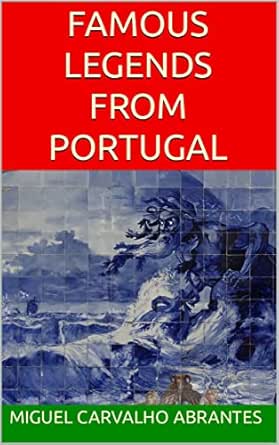
Famous Legends From Portugal, Miguel Carvalho Abrantes (2021)

(Not a review, just some notes to help me remember the things I've read. But written this way because it's the Internet, and some people will stumble across this page.)

This was a freebie, and I was interested in legends other than the usual ones I see.

Divided into sections dating back to before Portugal was even Portugal, it's a collecton of stories about the stories. The tales aren't told, except as a summary of the legned (and sometimes popular variances). These are sometimes accompanied by travelogues, by which I mean, if it is the elgend is associated with a certain place, you are informed where that place is and what structures or artifacts remain from that time period. (Some have been completely torn down.

There are legends of kings and explorers along with religious legends and some famous people and places. Nothing that stands out, though, as I've finsihed two other books that I remember more.

Free ebook.

Friday, April 15, 2022

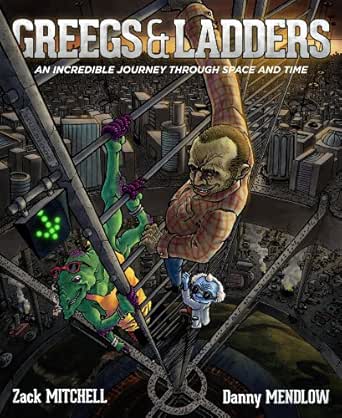
Greegs and Ladders (Mitchell and Mendlow)

Greegs and Ladders, Zack Mitchell and Danny Mendlow (2013)

An Incredible Journey Through Space and Time


It was not. CJB

(Not a review -- but if it were, it would be "this is bad. just bad." --
just some notes to help me remember the things I've read -- except that this is probably one I won't want to remember.
But written this way because it's the Internet, and some people will stumble across this page.)

So I downloaded this book many years ago. It's one of the oldest things in my kindle app, and I can't transfer it to my new iPad because the book was never archived anywhere. What I mean by that is that I didn't download this to my PC and then email it to my kindle account. I must've saved it directly into the app. So if I delete this book, it's gone.

Having no way to move it, I finally decided to read it while I was in between other things (my book club book and last month's Analog, specifically).

I managed to get through 10 chapters of rambling, possibly not pointless but hard to tell, exposition, that should've been a single chapter, possibly two. And while I made it through 10 of the book's 50 chapters, I was barely at 10% of the book. Something seemed off there.

It would appear that the authors are trying to make some kind of commentary, but they didn't get to that by a point where I gave up.

One thing I noticed was that if I read it to myself imagining the voice of the narrator from the old "The Hitchhiker's Guide to the Galaxy" TV series, I chuckle at least chuckle at the voice in my head reading this dreck, even though it didn't make the text itself any funnier.

Around this point I might mention the names of the main characters, but so far, there aren't any. A couple are introduced in Chapter 11, and the first thing you read is "He". Neither name appears until the next page. Again, this is on purpose, and there's a point to it, but whatever that point might be, it appears pretty dull.

I almost skipped making a record of this book. Instead, I'll post this the day before I finish my next book, so it doesn't stay at the top of the blog for longer than necessary.

And now I can delete this book, so it will be gone. After that, I wil not be able to have any discussions about it (not that I would) because I won't have a copy to refer back to.

I'm reading about a Monkey God now. Going quicker.

January 2026 Update: There was an offer for Book 2 for free. I went to look at what book one was. The word "GREEG" sprung out of a dark recess of my mind. I came to the blog and searched for this entry. I did NOT get book 2.

Thursday, March 31, 2022

ANALOG PLUS 50: Analog Science Fiction/Science Fact March 1972

ANALOG PLUS 50: Analog Science Fiction/Science Fact, March 1972

Update the photo

This March issue of Analog has stories by Frederick Pohl and Larry Niven. What more could you ask?

For anyone finding these reviews, my purpose is two-fold: enjoying some "classic" sci-fi, and looking for stories that I think could be adapted for TV broadcast since so much of what shows up on anthology shows is rough to awful. Additional Note: I do NOT work in television. I just watch it.

In this issue:

The Editorial: "Born to Lose". The Attica Prison riots occurred in September 1971. This editorial is likely a response to that. (It is referenced.) Ben argues that orgazined crime pays pretty well because professional criminals rarely go to jail. It's the amateurs that go to jail, over and over. And even though every inmate thinks of nothing before getting out, so many of them want back in as soon as they are out. This leads to jail referm without the stone walls and iron bars. Jails could be most like military bases with high-tech surveillance. And inmates could be taught to code. And more stuff that I've heard over the past 50 years. But this would be one of the earliest arguments I've encountered.

Novelette: "The Gold at the Starbow's End", by Frederick Pohl with an illustration by John Schoenherr showing a spaceship rocketing through space. The caption reads, The only way to save the world was to create a group of supermen. But supermen see things very differently from mortals.

A scientist named Knefhausen has discovered a planet named Aleph-Aleph which is orbiting Alpha Centauri. He has a government backed project to send 8 scientists on a ten-year mission to get there. To alleviate boredom along the way, they are supposed to work on math problems to keep their minds sharp. They would get tired of chess fairly quickly.

It starts off that they work on these things to the point of solving the Goldbch Conjecture (which Knefhausen isn't familiar with, but this is progress). The doctor, who apparently came over after WWII, wants the men and women to expand their minds so the universe can do so as well.

Several things go wrong with this project: first, the scientists on board seem to be more interested in sex and drugs -- they use the contraception pills along with byproducts of waste filtration to make mind-altering substances. At some point, they are amputating toes for bone dust. A second problem is that they don't have the power to append large amounts of data to the transmission, so they send an equation which would yield a huge number that is a Godel cipher, which will take twenty years to crack. Important scientific discoveries are buried in there.

The biggest problem, however, is that There Is No Planet. Knefhausen sent them to their deaths for the good of mankind. The president is aware of this. Along the way, the Constitution is amended so the president can stay in office for the entire ten years.

If reads as though the scientists are going crazy and will likely be dead before they make it there. Knefhausen, however, believes that they are advancing. In the end, the ship sends back a beam of particles that causes the ice caps to melt, on purpose. Global castrophe. The final transmission says they got there and established a new planet and will return in three days time. It appears that they have actually become superhuman.

It was interesting until it stopped being hard science fiction and made the leap to fantasy. I have read a lot of Pohl in many years, so I can't compare this to anything.

As for filming this, it has all the tension and drama you would want, with limited sets and limited CGI. Plus it has sex and drugs. The only problem is that I would think audiences would think that they "Hollywood-ed" the ending. But that would be the payoff TV audiences would want.

Short Story: "War in Our Time", by Howard L. Myers with an illustration by Vincent DiFate showing a man in the air in the foreground against a background of buildings and a night sky. The caption reads, Ever seen square gears? Or elliptical gears? They mesh just fine and for some purposes, a weirdo gear in a complex machine works wonders!

Radge Morimet is on the High Board of Trade. He's also a little insane and if he wasn't who he was, he'd have been sent for a "psych-release" long ago. Everyone in society can communicate psychically, so they can reach consensuses.

There's a war with the Lontaste Federation going on, and Radge's side is losing. They have a new creature, dubbed "Monte", who is apparently as big as a mountain.

To combat this, and even out the war, the Board enacts Morimet's idea for an Executive who can make decisions (with help from a mental suggestion that he wants to be on the winning side) to speed up decision processes. That man does a great job, until he defects.

And there's the rub, Morimet wanted him to defect because now they have the Executive and Monte, so they now have a committee, which is bad. The "good guys" now elect a new Executive with a different suggestion so he won't defect. And the war continues for our time. The next generation can deal with it in theirs.

A little too cerebreal for TV as everything is mental.

Science Fact: "when the sky falls" by Ben Bova, with an illustration of something by somebody (no name and no idea what I'm looking at -- Rorshach test). The caption reads, What goes up must come down." Whether it's a gentle little star like our Sun, or a whole galaxy.

On the nature of quasars and the Big Bang Theory vs Steady State. Quasars are either really distant objects, or they're a lot closer than we believed. I get the feeling we've learned a lot more about them in the past 50 years.

Novelette: "Cloak of Anarchy", by Larry Niven with an illustration by Jack Gaugan showing a guy swinging a large stick and two others throwing rocks at large spheres in the sky. On the facing page is someone else throwing something or possibly controlling the balls. The caption reads, TThe concep "Complete individual freedom" means, to every individual, "what I mean by right and proper freedom". But since individuals don't agree...

There's a Freedom Park where everyone is free to do as they wish. You are free to build whatever you want, but everyone else is free to take it apart. The only thing you can't do is attack someone. If you do, you and the victim will each be zapped by a flying, basketball-sized copseye.

Some people throw rocks at them, and occasionally take one down.

The Freedom Park is an abandoned stretch of California highway that's been turned into a greenway. The exits are where the old exits were. People are free to walk about fully or partially nude, if that is there choice and no one will bother them.

An anarchist who asked some guys to take down a copseye takes it apart to see what makes it tick. He's a proponent of anarchy as a form of government. He managed to shut down all the copseyes. And then mayhem ensues.

Suddenly the nude feel exposed. People can strike anyone they disagree with, including a psych major carrying a blank protest sign (which is taken and broken) for an experiment. But the exits closed at sundown and people are still inside. Folks group together, but there are idiots guarding the fountain because they are bored and won't let anyone near them.

Violence ensues until more copseyes appear. Maybe anarchy isn't a good model after all.

This is filmable. It just needs a little CGI for the flying balls. Also, it would probably be better to have skimpy outfits instead of nudity.

Short Story: "The Long Silence", by Donald Noakes with an illustration by Leo Summers showing a couple people in the foreground (to the left) yelling/arguing. In the background is a police officer with a bullhorn, standing in front of a futuristic police scooter. The caption reads, Silence is golden, eh? Always? For everyone?

Either I didn't read this or I forgot everything about it. I'll give it a (re)read and get back to you.

Science Fact: "Skylab", by Joseph Green with illustrations from NASA (I think). The caption reads, With the Salyut space station the Russians have once again beaten the United States to a "first" in space. The tragic deaths of the three cosmonauts overshadowed the technological success they achieved. But the Unitid States program will, as usual, be bigger and better!

Obviously, this article will be of interest to me because I have vague memories of Skylab going up ... and better memories of it coming down. And where it falls nobody knows. (It fell across the Pacific and Australia.)

I want to get back to this one, also, but I read the fiction first.


Novelette: "Child of the Gods", by James Schmitz with an illustration by Kelly Freas showing a woman (Telzey) from the waist up (below seems to be buried or just disappearing) with her wrists tied to two poles on either side of her. In the distance is a giant bubble (like Rover?) or sphere of some kind. The caption reads, Telzey found that being under someone else's control wasn't pleasant ... but the question was who is controlling whom?

I'm recognizing James Schmitz' name and knowing a Telzey story is coming. I've enjoyed all the ones I read, although the one that wasn't broken into two parts a little less so.

The story opens with Telzey already under someone else's influence. In today's parlance, she was conning by a phishing email of the psionic kind. A powerful psi gets hold of her and wants her to investigate something for him. He's afraid to show himself, and wants her to be his proxy. He puts safeguards on her to prevent her from using psi bolts and makes it so she will always take actions that are in his best interest.

The man's name is Alicar and he runs a small mining operation. He was mining a particular crystal when they can open djeel oil (or whatever gets refined into that). No one knows what it's good for (other than blowing things up good) but the Federation confiscates all supplies. Alicar has been stashing everything on random asteroids that only he knows about.

It turns out that only the people that know about the djeel oil remain in the area. The rest are gone. They find that those three have been converted to believe in the Soad, the Child of the Gods, who appears as a giant round blob of water, and who only comes out at night because the radiation from daylight it too much for him. Soad wants all the djeel oil, including what Alicar has taken. He needs it to get back to wherever he belongs. (Another galaxy?) Soad is also psionic in his own way.

It turns out that Soad likely influenced Alicar to pick the spot where he started mining and convinced him to start refining the djeel oil in the first place. However, whatever Alicar did after that is on him, as far as Telzey is concerned.

Telzey manages to get out from under Alicar's control when he's wounded and Soad is on the move. She is under orders to do what she needs to that's in his best interest. At the time, that meant being able to dismantle all the blocks he put on her so she would have her defenses, her offensive power, and would not be hesitant to take action while deciding what's the best course of action.

Soad is defeated at the end, and the two wake up in a hospital run by Psychological Services.

All of Telzey's stories (so far) are great source material for television (or even a series of one-shot films). This one doesn't have too many characters in it, and the CGI shouldn't be too complicated.


Short Story: "BCL 362" by Vernon W. Glasser with no illustration (the color of the title is inverted). The caption reads, How honestly just would a real race be in allowing such an experiment to continue freely?

Let me just to the end here. This is an experimental type story in the form that it is written. It's a Civil Memorandum Opinion and Order of a complaint against Bio-Chem Labs, Inc brought by Society for Prevention of Cruelty to Life Forms. The opinion contains testimony of several individuals.

This is film-ready. The opinion equates to the narration and the testimony is the dialogue. Most of this could be in a court room (of any kind), with the rest being shot in a lab or on a planet with aliens that look like humans (should be easy to cast, no?)

The story involves experimenting on a race of non-humans that was created by the labs and forced to evolve so that they are on par with humanity now. And they are being held back so they don't evolve too far too fast because then they're usefulness in predicting human behavior would be gone. The laws only apply to humans, but how close are these creatures? Is there anything significant about them that differs from actual humans?

As a written story, it's a little lacking. It's fairly obvious where it's going. The unique thing is the format (and at least it isn't told in letters). But it could be filmed very easily.

The Reference Library , by P. Schuyler Miller. Reivews include Science Fiction Story Index: 1950-1968 by Frederick Siemon, and Camp Concentration by Thomas M. Disch. The intro contains a long review of "A Time of Changes", which is an "inner space" story, whoever coined that term.

Brass Tacks: A letter about the movement to put John W. Campbell on a stamp. Someone brings up the ecological problmes with the ill-fated SST. (Ben says no one is certain about the effects. I remember when they wouldn't let them land in certain places. By I know they were still flying in the early 2000s because one flew over me every afternoon on the highway.) There's a letter about Kelly Freas's artwork and the science articles, and a few more about a story with a Freas illustration that contained a middle finger and a naked butt, and the readers were not amused. (Note that J.W.C. bought both the story and the artwork.)

Now onto April. I hope it's as good. I don't know if I'll read a second old magazine. I'm behind on the others.

Tuesday, March 22, 2022

The Book of Koli (Carey)

The Book of Koli, M. R. Carey (2020)

Book One of the Rampart Trilogy

(Not a review, just some notes to help me remember the things I've read. But written this way because it's the Internet, and some people will stumble across this page.)

This was a Book Club selection. It's a post-apocalyptic story set somewhere in England (toward the end we find out it's 200 miles north of London). It is written as a narrative of a young man with little education from a village of people with limited education. The text is difficult to read at first, but you get used to it and ignore it, except for the times that you don't.

The biggest "offender" is the use of "of" in place of "'ve" in contractions. Every. Single. Time.

There are also times when you need to sound something out loud to figure out what he's refering to, and other times, I just didn't bother if I could figure it out from context.

It's also very conversational in how he recounts a bunch of stuff you need to know before he can tell you the story he wants to. It drags on a bit. Once again, had this not been a book club book, I might've bailed out after 30 or 60 pages. The pace picked up later on, but not nearly enough.

Koli and his family live in the village of Mythen Rood, which supposedly means something, or it could just be a corruption of "road". ("Rood" means Crucifix. It's also "door" backward but that doesn't mean anything.)

You never get a good idea how big, how populated, this village is. Is it dozens, hundreds, a thousand?There don't seem to be a lot of people mentioned and there are only three "Ramparts" protecting everyone. Ramparts are people who can wake up the ancient tech, except that there's only three pieces of working tech, and all the people who passed the test to wake the devices are come from a single family.

Like in Armored Saint, everyone's last name is their occupation. When they become an adult, if they don't become a Rampart, they choose the name they will be known as. Koli wants to be a Rampart but he ends up being woodworker. His best friend becomes a Rampart (and he's a member of that same family) and asks their mutual female friend to marry him. Koli is sad but doesn't stand in the way (nor does he stand up for him.) Koli finds out from Ursula, a medic who travels from village to village accompanied by a "drudge" that is apparently the size of a mini-van, that there are ways to activate tech and ways to authorize users. Koli comes up with a plan to acquire tech.

Koli's father was a traveling locksmith. He installed the lock on the door in the basement in Rampart Hold ("the Count and Seal") and another lock in the woodshed of Koli's mother. He installed the same lock with the same key. Koli uses the key, sneaks in the Hold and makes off with a bunch of devices, which turn out to be same kind of tech. (He also forgot to bring a bag to carry them, so he could only take what he could hold.) Of all of these, he gets a single item to charge up with sunlight: a Sony Dreamsleeve music and entertainment player, with a young woman AI interface named Monono Aware (A-war-ee). We find out more about her later on.

Koli keeps hoping that there's a weapon in the device, but there isn't. He also wants to be sure that he is authorized and that no one else is. He manages to make a verbal passcode for anyone other than him. Monono tells him that she can still access a site were the upgrade with the personal alarm is stored but it'll take a while to get it. Koli says okay, and the device goes silent for a long time. Koli thinks he broke it or chased the girl away. She returns at his friend's wedding (I forget his name already, but he married Spinner, but they won't be in the story much longer). He declares himself to be Koli Rampart.

The Ramparts disagree and imprison him. Half of them want to kill him and the rest want to make him Faceless and banish him. The Faceless men in the woods are mostly cannibals. So he sets out, without the Dreamsleeve, and tries to make his way to Ludden (which turns out not to be London, as I figured, but it was only 4 miles away, so it didn't make sense that it would be London.). The problem is that the trees can kill you either with vines or by boring seeds or whatever into you. But they are usually only active on sunny days. Overcast days are okay.

He makes it through the trees to the gate of Ludden. He finds out when he gets there that Ludden is dead. Everyone died off. (They weren't making enough babies, and not enough of those lived.) While he's there, he's ambushed by one of Rampart Cutter who followed him because he wants to know how to make the dreamsleeve work. Koli refuses to tell him and dares him to kill him already. There's a fight, and first the Rampart is cut with his own tech. The Rampart threatens to destroy the Dreamsleeve, but Koli uses a large rock to destroy the cutter, which blows up, taking the Ramparts arm with it. He dies.

Koli climbs a tower to spend the night (instead of finding a bed in any of the houses that remain). While up there, he hears voices. There are three people out looking for someone. They capture Koli and carry him back to a religous cult that is in an underground railway station. (They followed the tracks for quite a while.) When he gets there, the leader is ready to make him his altar boy, who will lead the land that was (shades of Hale-Bopp Comet folks). He's tossed in a cell, and there's Ursula, who is described as missing an eye, but it's actually just messed up a bit.

They eventually escape by creating a diversion, spilling gasoline onto the train and setting it on fire, and making a run down the tunnel. Many of the cultists leapt into the flames, thinking it would take them to the promised land. It did not. They make it outside, but Sky and some men capture them and are going to bring them back. Then the drudge strikes. They are free to make their next move.

At this point, the youngest cult member who helped catch Koli, Cup, catches up with him and is ready to kill him. Koli prevents the drudge from killing Cup. Cup is then revealed to actually be a boy who ran away from his village when they were going to marry him off to an old woman, which makes no sense if marriages are supposed to produce children from the villages to survive. This revelation wasn't foreshadowed and doesn't add anything to the story. If it was cut out, the story wouldn't be affected at all. If you skip a half dozen paragraphs, you'd have no idea.

At this point, they're ready to head to London. We don't have any closure on any of the earlier story elements, but since it's stated up front that it's a trilogy (and not some open-ended series), that is less of a problem. The only problem is that I don't think I'm going to look for book two, because reading book one was a bit of a drudge. (I didn't plan that, but it fits.)

Last note: apparently the apocalypse was caused by climate change, and a time very soon to now, but far enough away from all this wonderful tech to be developed. How climate change created those killer trees is not explained or readily apparent.

Wednesday, March 9, 2022

An Ignorant Witch (Graham)

An Ignorant Witch, E. M. Graham (2019)

(Not a review, just some notes to help me remember the things I've read. But written this way because it's the Internet, and some people will stumble across this page.)

This was a free book in an email. It's the first in the Witch Kin Chronicles, which includes similar titles where the adjective is changed. In fact, a few times while reading this, I thought it was "An Arrogant Witch". Nope, that was just Kindle trying to sell me the next book. (Granted, there are arrogant witches in this volume.) They also have similar covers, but they wouldn't lead me to believe that this is happening current day. The outfit the witch wears is old-fashioned.

First off, it's not exactly my cup of tea but there wasn't much to complain about for the most part. I can see why the series might be popular. I do have complaints about the ending, and the lack of closure. Yes, it's a series, and there are things that can be resolved later, but there are some things that needed to be resolved to complete this story in the series. Dara has the ability to see into Alt, which is a magical realm that exists right on top of our own, although at a different time period, even though the timelines run parallel.

Dara Martin is a bit of a ghost whisperer by way of being a half-blood witch. Her father is John De Teilhard, an important member of his Witch Kin, who had an affair with her mother 20 years earlier. The mother is now missing, and Dara lives with her Aunt Edna, who is a aware of the situation but keeps herself blissfully ignornat to the particulars. Her father gives her a stipend to go to school and to stay away from magic. It's dangerous for half-breeds, partiuclarly those with no training and no idea what they're doing. (Note that Dara has older step-siblings, so it wasn't like John stayed outside of witch kin first and then married into it. He had an affair with a woman he seemed to have love and then went back to his wife. And she took him back.)

Dara is friends with Alice Hoskins, who is Dara's only friend besides a ghost in Aunt Edna's house that won't leave its room. That ghost doesn't figure into this story. Alice has a brother named Benjy, who is trouble, and a dead great-grandmother, Old Nan, who is another ghost who has been acting up lately and won't leave the house. Dara can't make her leave, and Alice doesn't want to be in the room with her.

Benjy went to pick berries from a secret family patch days ago and hasn't returned. But it isn't unlike him to disappear with friends on a bender for a week. While hiking, the girls find the red bucket (insert poetic waxing about the perfectness of the bucket) that Benjy had. He's actually under the hill being held by fairies. Alice climbs in and Dara follows. Dara can see through the illusions and knows that everything is not as pleasant as it appears to be. Benjy is being held captive and he doesn't even know how miserable he is. If they can't rescue him, he will fade into a shade, like the band against the rock wall. Dara and Alice escape to figure out what to do, and to consult old Nan.

Dara looks for help. She goes to the new magic shop. She feels around but there is nothing magical about the shop, except for one coin in a barrel in the back of the shop, which seems to radiate evil, beckons to her, and reminds her of her mother. She stays away from the coin without asking anything the proprietor anything about it. This coin isn't referenced again, excpet when the shop is burned down later in the book. When Dara leaves the store, she is seen by her father and his wife who just happen to be passing by. The scene frustrates her so much that she shifts into Alt accidentally and nearly falls into the water because the shoreline has been built outward in the past hundred years or so.

Another half-breed, Hugh, calls her out. He saw her shift into Alt and back again. He's a witch from Scotland who is visiting Newfoundland, and staying at her father's house. Now we have most of the important players.

No one wants to help Dara save Benjy, so she tries herself. She speaks to the fairies and one of them wants a bottle of breast milk to help cure another one of them. Dara babysits, so she reluctantly agrees. The fairies follow her, get into the house, steal a bottle on their own, and also take the baby, leaving a changeling. Dara knows its a changeling but she can't explain it to her.

She continues blundering her way through plans and ideas to get help and nothing works. But she does wind up getting herself and Alice targeted for a ritual killing on the equinox the following night. With her from Hugh, they managed to foil the death plans. And Dara is finally ready to go away and learn about real magic.

Okay ... EXCEPT ... the plot at the start was to save Benjy, and in the middle of the book it grew to save Benjy and the baby. By the end, they needed to rescue Alice, too, which they do. And what about Benjy and the baby? Maybe it was a changeling? Maybe I was wrong? Ho hum? What if Benjy doesn't want to leave?

What?

I can understand not answering what happened to the mother. That happened before the book and would obviously be important to the series later on. And, okay, that stupid coin was some kind of plot hook left out for the future. But Benjy and the baby needed to be resolved. Even if they managed to save one but lost the other at the last minute.

Instead, it's all simply forgotten just because Hugh helped her solve a problem she got into in the latter half of the book because the events in the first half were so important, but not so much any more. Ho hum, what can we do? I don't buy it.

So while the book was written well enough, the story was not told enough. Would I read a second book? If it shows up for free on BookBub, maybe. Until then, probably not. I won't even try the library (which isn't likely to have it anyway.)

Thursday, March 3, 2022

Armored Saint (Cole)

Armored Saint, Myke Cole (2018)

(Not a review, just some notes to help me remember the things I've read. But written this way because it's the Internet, and some people will stumble across this page.)

I had to do some research on this book. It's been in the kindle app on my iPad for a long time, but I couldn't Archive it to make space. I could only Delete it. I found an email from Tor.com for a free download late in 2018. However, I don't have a copy of the book on my hard drive that I can find. Either I deleted it from my Downloads without storing it elsewhere, or I never downloaded it at all. It's possible, I guess, that I may have downloaded it straight into the kindle app from the mail app on the device.

The other thing that stands out is that I have an uncle by this name, except that he spells it differently.

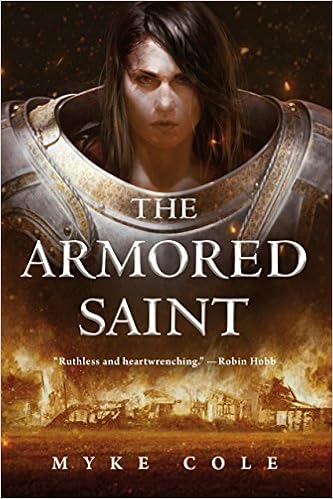
The cover of the book shows the head of a woman (or a long-haired boy) poking out of the top of an oversized suit of armor. The bottom of the page shows a town on fire.

So, it was an okay book. It was different, not your standard run-of-the-mill fantasy. I thought it was going to be steampunk, when the Tinker and his family appeared. I haven't really read any steampunk to speak of. There were machines with engines that ran with seethstone which produced steam when it got wet to run the engines. And then nothing like that appeared for about 60-70% of the book.

The story centers around a girl almost a woman grown but not yet betrothed named Heloise, who is the daughter of Samson Factor, who writes letters (among other things). His name is Factor because it's related to his job (although I wasn't familiar with the occupation). She's headstrong and speaks her mind, even when it might get her into trouble. You know, a teenager.

Except in this world, it's hard to believe that she's still alive given how she acts and the things she says. That said, a great number of the deaths in the book and the trouble caused can be attributed to her acting out. But she'll come out as the hero in the end.

We meet Heloise and her father, Samson, on the road to Hammersdown. They are approached by Pilgrims riding on horses and led by a Sojourner who are agents of the Emperor, who is Holy and responsible for all good things. They ride up to the two Factors and ask directions. Samson cautions Heloise to be still and hold her tongue. She does neither.

The Pilgrims, who are dragging two bodies behind them which are no longer recognizable, and for food or drink. Samson says that their is no food, open ink and paper. A Pilgrim turns the bag upside down to prove it. Paper falls in the mud and Heloise moves to retrive it and keeps trying to explain herself, getting herself into further trouble. One finally checks Samson's eye for a portal of light which would allow devils through. The Pilgrims ride off following Samson's directions so they can reach their destination before nightfall.

At Hammersdown, we meet some of the town residents, including a girl around Heloise's age. There is also someone who has basically lost his mind. He utters nonsense and starts proclaiming that he is a wizard. Samson refuses to do business there and tells the people that they need to turn the crazy man out because he's a risk to the entire town, even if he's not really a wizard.

They return home, we meet the Tinkers (father, mother, two strong boys, and a daughter Basina), and then we meet the Ranger Clodio who trades supplies with Samson so he can create special ink. In payment, he wants Samson to write a letter for him, even though Samson thinks it's pointless. It's a love letter for someone who no longer acknowledges him.

Clodio disappears when the Pilgrims show up. It's not easy to catch a Ranger who doesn't want to be caught. Brother Thone makes a point to mention Clodio's homosexuality as being a sin against the natural order or whatever. (I don't remember, I just wondered when the lecturing would come in.)

The folks of the town participate in a Knitting to fix the Veil who that devils cannot get through. Basically, they are all armed with spears and they travel to Hammersdown. The townspeople's job is to kill anyone who gets past the Pilgrims as the burn the town down (because of the mental guy). In the process, they have to kill the young girl we see earlier. Samson lets her pass, and Thone tracks her down and kills her. This sets Thone and Samson against each other for the rest of the book. Thone will have his vengence. Yada yada.

After this the Factor family needs to be hidden, in separate houses, and the town will say that they ran away. Most of the town owes the lives to Factor who had their backs in the last war. Samson says with the Sigir, the Mayor. His wife stays with the Herbalist. And Heloise stays in the Tinker's vault. This is great for Heloise because she has realized that she wants to be more than just best friends with Basina, who is betrothed to a man we don't know.

While she is in the vault and bored, she starts looking at the Tinker's special projects for the Emperor, which includes the set of armor from the cover. This is the first time we hear of it. Heloise is playing around climbing inside it when she hears the signal that danger is coming. She's tangled in the straps, so she covers herself with a blanket. Thone appears in the doorway and asks questions. Tinker is surprised that the girl is missing but sees the blanket and explains it away.

After the Pilgrims ride off, Heloise spends some time with Basina. She convinces Basina to let her kiss her like her husband might kiss her. Basina agrees but tries to break it off while Heloise is still leaning in, not letting go. Basina is upset and Heloise runs off into the night. She comes across Clodio who camps under the stars. We learn that he is actually a wizard and wizards aren't bad. He has the ability to shape plants into his furniture. He demonstrates this for Heloise.

We then get preached to like it's 80s or 90s basic cable or a Very Special Episode of some sitcom. This goes on for quite a while. It takes a while for Clodio to get Heloise to return to her village even though he knows peope will be stumbling in the dark looker for her. She finally goes back but instead of facing the Tinkers, she decides that she will go see the Mayor to see if she can see her Dad for just a minute. At this point, the Pilgrims are returning and there's no place for her to go.

Instead of returning to the woods (which it would seem might have been possbile), she gets herself captured by Thone. This brings the father out of hiding to protect his daughter from torture. The father and the entire town are now in danger AGAIN but along comes Clodio who actually has must greater magic that he can work. Trees grow and move and take on the Pilgrims, who turn scared and run.

After this Clodio collapses from overusing his abilities. Many in the town are ready to turn Clodio over to the Pilgrims because he is a wizard. Samson believes that Clodio will be needed if they come back again. Samson and Heloise try to help Clodio, except for one thing...

He open a portal allowing a devil to come through. He transforms into a six-armed thing which is unstoppable -- until Heloise runs back to the vault and climbs inside the armored suit. She takes a lot of damage but manages to kill Clodio. She wakes up in bad shape.

At this point, the father wants to see her protected. The Tinker is proclaiming her as a Palantine and wants her to lead. They know the Pilgrims will be back and they have no wizard to save them.

And the book is over.

It was okay as a book. I would've like more of the steampunk in action. Less of the Very Special Preaching. The wizard reveal about 50 pages earlier (maybe halfway through the book), and whatever is going to happen in book 2 to happen at the end of book 1.

Anyway, I can now remove this from my iPad. I'm not likely to look at for the next book. I read the author's story about how this story was trunked and revived. And I am happy for him that this found a home at Tor instead of going the self-publishing route. But I can't describe it as better than okay. It didn't suck, so this could serve as a benchmark for other books.

Monday, February 28, 2022

Whiskey (Diller)

Whiskey, Tadio Diller (2016)
A Guide to the Most Common Whiskeys, and How to Know the Difference between the Good, Bad and the Ugly, 2nd edition

(Not a review, just some notes to help me remember the things I've read. But written this way because it's the Internet, and some people will stumble across this page.)

This probably came up in Book Bub, but it might've been in Reddit's FREEebooks.

It's a short primer about different kinds of whiskey, whisky, Scotch and bourbon. A bit of history and a "listicle" that includes information found elsewhere in the book. It explains the difference in spellings and what must (or should) be in each variety. If it explained what "Kentucky Straight" meant, I missed it.

It was a book to read between other books. Also, and this sounds really dumb, according to kindle, I've been reading for something like 180 straight days. Excpet that I've been reading even longer than that. But it appears that it doesn't count .PDF files, such as the Analog magazines, or some of the eSpec Books stories as reading a book. The .DOC files are a toss-up. I can't tell because the results don't always update right away.

So I was reading chapters of this book while I was reading other things just to update that stupid counter that I shouldn't care about ... but I do.

Most of this information could probably be found online, but it's nice that someone collected it together. It's more entertaining that a dry wiki article.

West With Giraffes (Rutledge)

West with Giraffes Lynda Rutledge (2023) (Not a review, just some notes to help me remember the things I've read. But...